

Duct Cleaning: Do You Need It, and How to Know
The maintenance that's both under-done and over-sold — what air-conditioning ducts collect, the honest signs you genuinely need cleaning (versus a scare-sale), how professional duct cleaning works, and why sealing and filtration often matter more.
Duct cleaning is a strange corner of HVAC maintenance — simultaneously under-done (many ducted systems are never cleaned) and over-sold (aggressive marketing scares people into unnecessary cleaning). The truth sits in between: ducted and central systems do accumulate dust and, in damp conditions, can grow mould — and that dirty air gets blown into your rooms. But most homes with wall splits have little or no ductwork, and good filtration and sealing often matter more than periodic cleaning. This guide gives the honest picture: whether you need it, and how to tell.
It builds on the Maintenance Guide, part of the HVAC Knowledge Hub.
The safety line & scope. Professional duct cleaning is specialist work with proper equipment. This guide helps you judge whether you need it and avoid being over-sold; the cleaning itself is a qualified professional's job.
First: do you even have ducts?
An important reality check:
- Wall split ACs have essentially no ductwork — the air is cooled and blown directly into the room, so "duct cleaning" mostly doesn't apply; clean the filters instead.
- Ducted, cassette, VRF-ducted and central systems have real ductwork carrying air around the building — these are what duct cleaning is about.
- So the first question is simply: is your system ducted? If not, focus on filters, not ducts.
What ducts collect — and why it matters
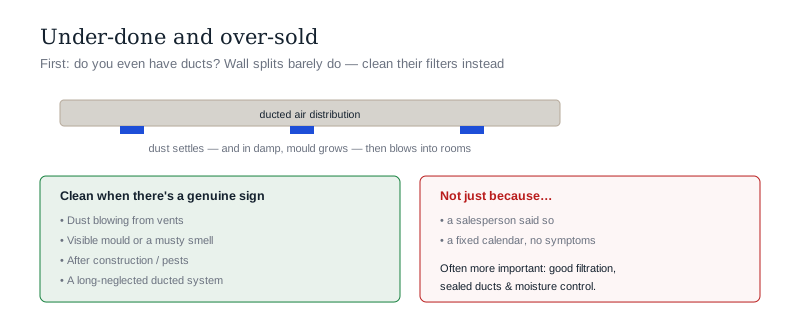
In a ducted system, the ducts are the lungs of the building:
- Dust and debris settle in the ducts over years, especially with poor filtration.
- In damp conditions, mould can grow inside ducts (a real concern in humid India if there's moisture), releasing spores into the air.
- The air blown into your rooms carries whatever's in the ducts — so genuinely dirty ducts affect the air you breathe (see indoor air quality).
- Very dirty ducts also reduce airflow and efficiency.
So dirty ducts are a real (if often exaggerated) air-quality and efficiency issue for ducted systems.
The honest signs you need cleaning
Cut through the scare-sales — genuine reasons to clean:
- Visible dust blowing from the vents/diffusers, or dust building around them.
- Visible mould inside ducts or at grilles, or a persistent musty smell when the AC runs.
- After construction/renovation — building dust and debris in the ducts.
- Pest infestation in the ductwork.
- A long-neglected old ducted system never cleaned, with reduced airflow or air-quality complaints.
- Not just because — a salesperson said so, or on a fixed calendar with no symptoms. Routine cleaning of a clean, well-filtered, sealed system offers little benefit.
The evidence-based position: clean when there's a genuine reason (mould, visible dust, post-construction, neglect), not as blanket routine.
How professional duct cleaning works
- Inspection first — a good service inspects (often with a camera) to confirm there's a genuine need before cleaning.
- Mechanical cleaning — brushes/agitation dislodge dust, with powerful vacuum extraction capturing it (not blowing it around).
- Coil, grille and drain-pan cleaning as part of the job.
- Sanitising only where mould is genuinely present, with appropriate methods.
- Fix the cause — cleaning without addressing why it got dirty (poor filters, moisture, leaks) just delays the problem.
Often more important: filtration and sealing
The measures that prevent duct problems in the first place:
- Good filtration — quality filters, cleaned/replaced on schedule, stop dust entering the ducts (see maintenance).
- Sealed ductwork — well-sealed ducts don't leak (leaks pull in dust and waste energy).
- Moisture control — keeping ducts dry prevents mould (the real hazard); fix leaks and condensation.
- These upstream measures often deliver more, for less, than repeated cleaning.
The one-line answer
Duct cleaning is both under-done and over-sold, so judge it honestly. First, check if you even have ducts — wall splits barely do (clean their filters instead); it's ducted, cassette, VRF and central systems that have real ductwork. Those ducts collect dust and, in damp conditions, mould, and blow it into your rooms — so clean when there's a genuine sign (visible dust from vents, mould or a musty smell, after construction, pest infestation, or a long-neglected system), not on a scare-sale or blanket calendar. Good cleaning inspects first, uses mechanical agitation with vacuum extraction, and addresses the cause. But the upstream measures — good filtration, sealed ducts and moisture control — often prevent the problem more cheaply than repeated cleaning, so prioritise those.
Where to go next
- The overall routine: AC & HVAC Maintenance Guide.
- The air quality it affects: Indoor Air Quality Guide.
- The ducted systems it applies to: Ducted & Cassette AC Guide.
- Prevent moisture/mould: Humidity Control Guide.
References
- ISHRAE — HVAC hygiene, duct cleaning & indoor air quality guidance.
- National Building Code of India, SP 7 (Part 8 — Building Services, air distribution; verify current edition), Bureau of Indian Standards.
- Central Pollution Control Board (CPCB) — indoor air quality guidance: https://cpcb.nic.in/
Duct cleaning need is system- and condition-specific; beware over-selling. Cleaning is specialist professional work, and the underlying cause (filters, moisture, leaks) must be addressed. Verify any standard's status via the BIS catalogue.
Export this guide
Related Guides — Deep-dive reading
AC & HVAC Maintenance: The Simple Routine That Keeps Cooling Efficient
Neglect is the quiet killer of cooling — the maintenance that keeps an AC efficient, healthy and long-lived: what you can safely do yourself (filters above all), what a technician must do, how often to service, and the warning signs that mean call for help.
HVAC & CoolingBathroom Condensation and Mould India: Stop Damp, Black Mould & Musty Smell for Good
Why warm, wet shower air keeps fogging your tiles, ceiling and walls with black mould — and the full Indian playbook to stop it: exhaust run-on, anti-fungal paint, wet-dry separation, wiping down, a dehumidifier, and safely cleaning the mould you already have.
BathroomsNVR and DVR Maintenance in India (2026): Keeping the Recorder Alive, Cool and Secure
The recorder is the brain of a CCTV system, and a neglected one quietly loses footage, drops cameras or gets hacked. A practical upkeep routine for NVRs and DVRs in Indian conditions — heat and dust, clean power, firmware and security patches, network hygiene, time sync and the disk — with a clear split between what a facility person can safely do and what belongs to a technician.
SecurityRelated Tools — Try Free
Access-Control Schedule Generator
Build the time schedules that decide when each access group can enter — an editable list for your integrator.
Time SchedulesBefore & After Studio
Generate AI before-and-after renders to preview how your redesign could look.
DesignAIMonsoon-Readiness Checklist
Pre-rain home audit across 9 categories — terrace, drains, waterproofing, electrical, HVAC, pest, vehicles, documents.
Seasonal Audit