
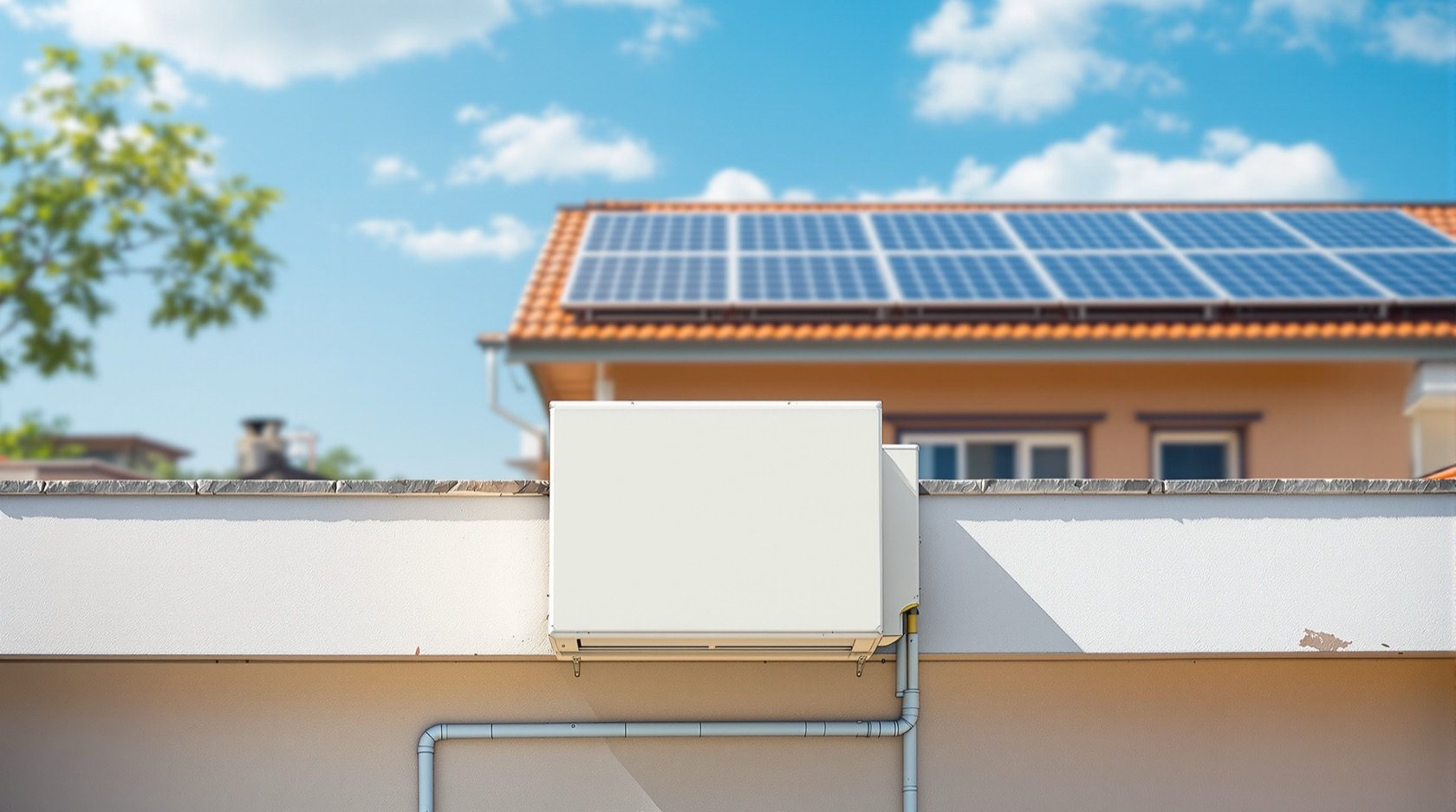
Solar Air Conditioning: Cooling Powered by the Sun
The sun is hottest exactly when you need cooling most — the honest guide to solar cooling in India: the practical route (efficient AC on rooftop solar PV) versus the exotic ones (solar-thermal and hybrid), what actually makes sense, and how solar and cooling fit together.
There's a beautiful logic to solar cooling: the sun is at its hottest and brightest exactly when you need cooling most — a summer afternoon — so why not use that same sunshine to run the AC? "Solar air conditioning" gets marketed in confusing ways, from genuine to gimmicky, so this guide is the honest version: the practical route that actually makes sense for most people (efficient AC powered by rooftop solar), the more exotic routes, and how to think about it clearly.
It builds on the Sustainable HVAC and Rooftop Solar guides, part of the HVAC Knowledge Hub.
The safety line & scope. Solar and AC installation are qualified-professional work — a licensed solar installer/electrician and HVAC technician. This guide helps you understand the options and decide, not to install anything.
The practical route: efficient AC on rooftop solar PV
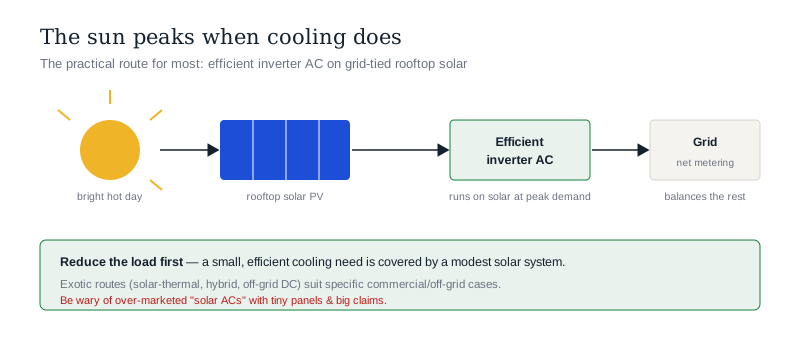
For almost everyone, "solar air conditioning" sensibly means this — and it works beautifully:
- Rooftop solar PV generates electricity during the bright, hot daytime — exactly when cooling demand peaks.
- An efficient inverter AC runs on that solar power, so daytime cooling is powered by the sun.
- The grid (with net metering) balances the rest — you draw from it when solar is low and export surplus when it's high, netting out over the year.
- The daytime coincidence is the magic — solar peaks with cooling demand, so a lot of your cooling genuinely runs on the sun, cutting bills and emissions.
- No exotic equipment — a normal, well-sized solar system plus efficient ACs. This is the route that makes sense for homes and most buildings.
The key move first: reduce the load (efficient, passively-cooled building) so a modest solar system covers the now-small cooling need — the sustainable-HVAC hierarchy.
The exotic routes — and an honest take
Beyond PV-plus-AC, there are more specialised approaches:
- Solar-thermal cooling (absorption/adsorption chillers) — uses solar heat (not electricity) to drive an absorption chiller. Real technology, used in some large commercial/industrial projects, but complex and rarely economical at home scale.
- Hybrid / "solar-assisted" ACs — units that use some solar (PV or thermal) to supplement grid power. Genuine ones exist; be wary of over-marketed "solar ACs" with tiny panels making exaggerated claims.
- DC / off-grid solar ACs — run directly on solar DC with batteries, for off-grid locations; niche but useful where there's no reliable grid.
- The honest take — for grid-connected homes, efficient AC on grid-tied rooftop solar almost always beats exotic systems on cost, simplicity and reliability. The specialised routes suit specific commercial or off-grid cases.
Does solar cooling add up?
- Yes, as PV-plus-efficient-AC — the economics of rooftop solar work in sunny India (with schemes like PM Surya Ghar), and cooling is a big daytime load solar offsets well.
- Reduce first — the smaller and more efficient your cooling load, the smaller (cheaper) the solar system needed to cover it.
- Storage optional — a battery lets you run cooling on solar into the evening, but net metering often makes grid-tied without a battery the better economics; decide per your tariff.
- It's genuinely green — cooling powered by daytime sun instead of a fossil-heavy grid cuts real emissions, and gets cleaner as the grid greens.
The one-line answer
Solar cooling makes elegant sense because the sun peaks exactly when cooling demand does — a hot summer afternoon — and for almost everyone the practical, sensible route is simply an efficient inverter AC powered by grid-tied rooftop solar PV, with net metering balancing the rest: no exotic equipment, real bill and emission cuts, and a lot of your daytime cooling genuinely running on the sun. Reduce the cooling load first (efficient, passively-cooled building) so a modest solar system covers it. The exotic routes — solar-thermal absorption chillers, hybrid and off-grid DC ACs — are real but suit specific commercial or off-grid cases, and you should be wary of over-marketed "solar ACs"; for a grid-connected home, PV-plus-efficient-AC almost always wins on cost, simplicity and reliability. Installed by a licensed solar/electrical and HVAC professional.
Where to go next
- The generation side: Rooftop Solar Guide.
- Reduce the load first: Passive Cooling Guide · Sustainable HVAC Guide.
- The efficient AC to run on it: Air Conditioning Basics Guide.
- What cooling costs to run: AC Running Cost Calculator.
References
- Ministry of New and Renewable Energy (MNRE) — rooftop solar / PM Surya Ghar; solar cooling (verify current terms): https://mnre.gov.in/
- Bureau of Energy Efficiency (BEE) — Star Labelling for efficient ACs; ISHRAE solar-cooling guidance.
- Net metering — your State Electricity Regulatory Commission / DISCOM (state-specific).
Solar and AC sizing, economics and net-metering terms are site- and state-specific and evolve; verify with your installer and DISCOM. Installation is qualified professional work.
Export this guide
Related Guides — Deep-dive reading
Hybrid Solar System Guide for Indian Homes: Solar Plus Battery Backup (2026)
A design and specification guide to the hybrid solar system -- grid-connected solar with a battery that keeps critical loads running through a cut. How it works, how it differs from pure on-grid and off-grid, the components, sizing the battery, the trade-offs, and when hybrid beats an on-grid system with a separate inverter.
Solar & EnergySmart Home Energy Management in India: Metering, Solar, EV & Load Control
As DISCOM smart meters, time-of-day tariffs, rooftop solar and EV charging arrive together, the Indian home becomes a small power system you can actually manage. A practical, rupee-first guide to seeing, shifting and shrinking your electricity bill.
Smart HomeNet Metering Explained for Home Solar in India (2026)
How a grid-tied rooftop system settles energy with the grid: net metering (the meter runs both ways, you pay only the net), versus gross metering and net billing, plus year-end surplus, capacity caps and why net metering is what makes home solar pay.
Solar & EnergyRelated Tools — Try Free
Solar CCTV Sizing Calculator
Enter cameras, sun-hours and backup days to get the solar panel wattage, battery Ah and an indicative kit cost for an off-grid camera.
Solar SizingInverter & Battery Calculator
Size a home inverter (VA) and battery (Ah) for the load you want to back up and the hours of backup you need.
Backup PowerSolar Sizing Calculator
Size a rooftop solar system from your monthly electricity use — the kW system, number of panels, roof area and yearly generation.
Solar