

How to Hire a Building Contractor in India: Find, Shortlist, Compare Quotes and Vet the Right Builder (2026)
A homeowner's guide to choosing the main civil contractor who will build your house - where to find them, how to shortlist and evaluate on experience and finances, how to get comparable quotes on one scope, which contract type suits you, what to verify, and how to set clear expectations - with an evaluation scorecard and a questions-to-ask table.
Once your drawings are ready, the single decision that most shapes how your house turns out is who builds it. The main civil contractor sets the timeline, the day-to-day quality, and whether the budget holds or drifts. A good one turns a set of drawings into a sound house with few surprises. A poorly chosen one can leave you with cracks, cost overruns, a stalled site and a dispute you did not want. The reassuring part is that hiring well is a process, not luck: you find candidates through people who have already built, you shortlist and compare them on the same basis, and you check a short list of facts before you commit. This guide walks you through that process for a self-built home in India.
It sits alongside the rest of the Hiring Professionals hub. If you have not yet engaged a designer, start with how to hire an architect and how to vet an architect's CoA credentials; to understand who does what on site, see architect vs interior designer vs contractor. This guide owns one job: choosing the builder well.
Scope and a plain disclaimer. This is an explainer to help you choose and brief a contractor so you are not taken advantage of. It is not legal advice, and it is not a valuation. Every fee, percentage, payment stage and process note below is INDICATIVE and varies by city, project scale, specification and the individual contractor. Get the binding CONTRACT WORDING drafted or reviewed by a lawyer, leave structural and technical calls to your architect or engineer, and treat only real, written quotes from local contractors as your actual prices. Confirm everything before you sign or pay.
Key takeaways
- Find candidates through your architect, completed sites you can visit, and word of mouth from people who have actually built - not just adverts.
- Shortlist three to four contractors, then evaluate them on the same criteria: experience with your scale and type, current running sites, financial stability, labour strength and honest past-client references.
- Decide early whether you want a labour-only, item-rate or turnkey arrangement, because it changes what you are asking each contractor to quote for. See labour vs item-rate vs turnkey.
- Get COMPARABLE quotes: hand every contractor the same drawings and the same bill of quantities or scope, so the prices mean the same thing. Learn to read them with how to read a construction quotation.
- Before you commit, verify GST and business registration, put timeline, payment stages and quality in writing, and have a lawyer review the construction agreement.
First, know what you are hiring: contractor, labour-only or turnkey
"Contractor" is not one thing, and the arrangement you choose changes everything about how you evaluate and pay. There are three common models in Indian home-building, and it helps to name them before you start.
In a labour-only (labour rate) contract, you buy all the material yourself and pay the contractor a rate per square foot, or per stage, only for the labour. You keep tight control of quality and spend, but you carry the buying, storage and coordination, which is real work. In an item-rate (with material) contract, the contractor supplies both labour and material against an agreed rate for each item of work, so you buy less directly but must specify brands and grades carefully so quality is not quietly downgraded. In a turnkey contract, one party takes the whole house to a finished, handover-ready state for a lump sum against a defined specification - the least effort for you, but only as good as the specification and the trust behind it.
None of these is "best". The right one depends on how much time you can give the site, how much you want to control materials, and how much you trust the contractor. Read labour contract vs item-rate vs turnkey in full before you brief anyone, and if you are weighing handing design and build to one firm, see design-build vs hiring separately. Whichever you choose, ask every shortlisted contractor to quote on the SAME model, or the numbers will not compare.
Where to find good contractors
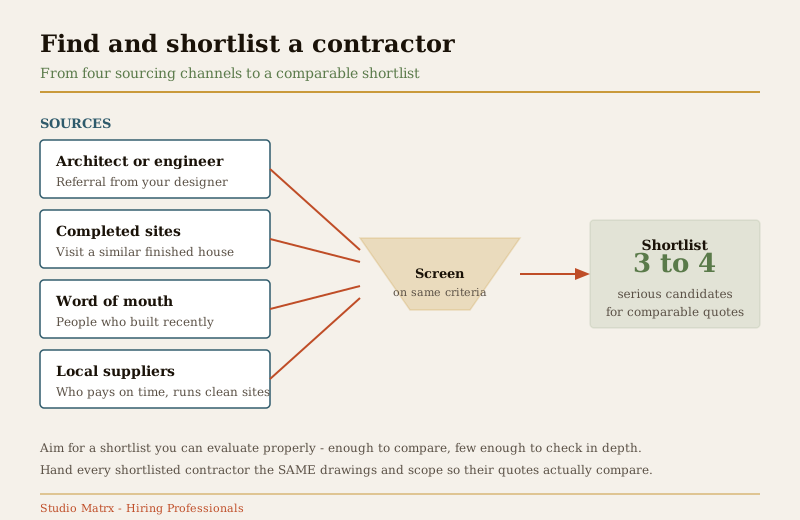
The best leads come from people who have skin in the game. Start with these sources.
- Your architect or engineer. If you have a designer, they work with contractors constantly and know who delivers to drawing, who is clean on billing, and who disappears when problems start. A referral here is worth a great deal - but still evaluate the contractor yourself rather than accepting the name on trust.
- Completed sites you can actually visit. The strongest signal is a finished house of similar scale that you can walk through and a homeowner you can question. A contractor proud of their work will happily arrange this.
- Word of mouth from people who have built recently. Friends, relatives and neighbours who finished a house in the last few years have lived through the process and will tell you what a brochure never will - how the contractor behaved when things went wrong.
- Local presence and suppliers. Established building-material suppliers and hardware merchants know which contractors pay on time and run disciplined sites. A contractor with a steady local reputation has something to protect.
Treat online listings and glossy adverts as a starting point only, never as proof. The figure below shows the whole path from sourcing leads to a shortlist you can compare fairly.
How to shortlist and evaluate
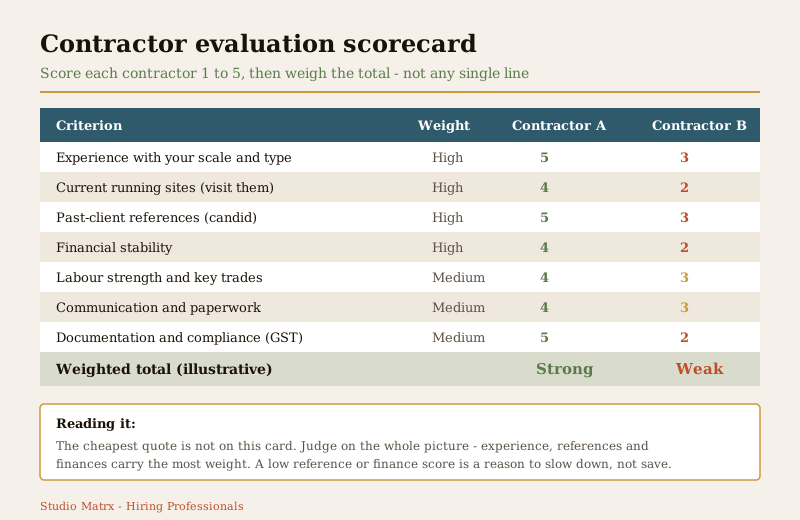
Aim for a shortlist of three to four serious candidates - enough to compare, few enough to evaluate properly. Judge every one against the same criteria rather than going on gut feel or the lowest number. The scorecard below is a practical way to keep the comparison honest; score each contractor and weigh the total, not any single line.
| Criterion | What to look for | Weight | Red flag |
|---|---|---|---|
| Experience with your scale and type | Has built houses of similar size, floors and finish level, not only larger or smaller jobs | High | Only does very different work, or cannot show a comparable house |
| Current running sites | Two to four active sites you can visit; work looks clean and on schedule | High | No site to show, or sites that are stalled and untidy |
| Past-client references | Two or three recent homeowners who will speak candidly and let you visit | High | Reluctant to share references or "clients are travelling" |
| Financial stability | Pays labour and suppliers on time; not over-committed across too many sites | High | Asks for a large advance to "start", or is chasing your money to finish another job |
| Labour strength and key trades | A stable core team - mason, bar-bender, carpenter - not fully sub-let to strangers | Medium | Everything sub-contracted with no continuity or accountability |
| Communication and paperwork | Answers clearly, quotes itemised, comfortable with a written agreement | Medium | Vague answers, resists anything in writing, "we will adjust later" |
| Documentation and compliance | Valid GST and business registration; willing to bill properly | Medium | No GST, cash-only insistence, no registered identity |
Financial stability deserves a special word. A contractor stretched too thin across sites will fund your job with your advance and then slow down when the next client's advance arrives. Ask how many sites are running, visit one or two, and pay attention to whether labour and suppliers on those sites are being paid on time. When you take references, do not just ask "were they good" - ask whether the contractor stayed on schedule, how they handled extra work and cost changes, whether billing matched the quote, and whether the homeowner would hire them again.
Get comparable quotes on the same scope
The most common way homeowners get misled is by comparing quotes that are not comparable. One contractor prices premium fittings and full waterproofing; another leaves half of it out and looks cheaper. To compare fairly, give every shortlisted contractor exactly the same inputs: the same drawings, the same specification, and ideally the same bill of quantities or defined scope. Then the differences in price actually mean something.
If you do not have a bill of quantities, ask your architect for one, or read BOQ explained and use the BOQ calculator to frame the quantities. For a rough all-in benchmark before quotes arrive, the house construction cost calculator gives you an indicative figure to sense-check against - not a substitute for real quotes. When the quotes come back, do not simply pick the lowest. An unusually low number often hides cheaper materials, missing scope, or a plan to recover margin through "extras" later. Learn to read each one line by line with how to read a construction quotation: check what is included, what is excluded, which brands and grades are named, how measurement is defined, and how variations will be priced.
Check the contract type suits you, then verify the basics
Once you have a preferred contractor and a fair price, confirm the contract type matches how you want to run the project, and check a short list of facts before you commit.
Confirm the arrangement - labour-only, item-rate or turnkey - is the one you chose, and that the quote is built on that basis. Then verify the contractor's standing: a valid GST registration if they are billing with tax, a registered business identity or firm name, and, for the trades that need it, appropriate licences. Verifying these is not about distrust; it is ordinary diligence that also protects you on tax and on any future dispute. A contractor running an honest business will have no problem showing you these.
Do not sign a one-line letter. A proper construction agreement should capture the scope and drawings referenced, the total price and how it was arrived at, the payment schedule tied to stages, the timeline with a completion date, the quality and material specification, how extra work and variations are priced, the defect-liability period, and how disputes are handled. Draft the concepts yourself, but get the binding WORDING reviewed by a lawyer - that is not a step to skip.
Questions to ask before you commit
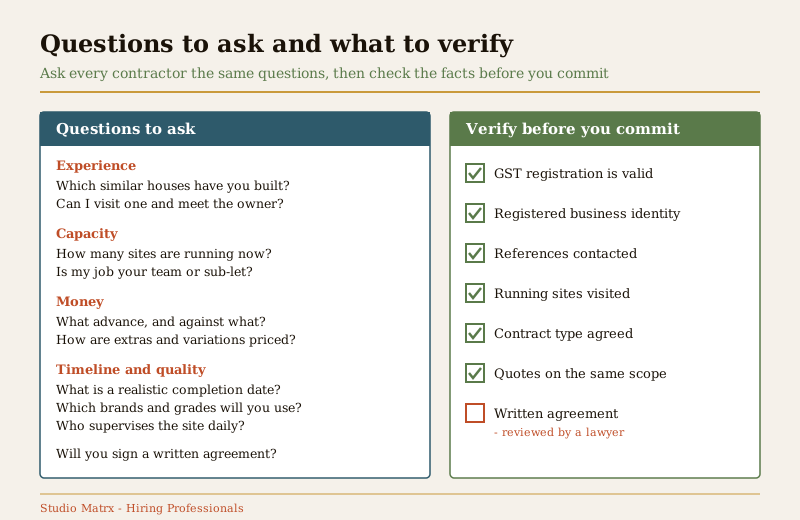
Use a fixed set of questions with every contractor so their answers compare. The table below groups the ones that matter, and the figure after it pairs the questions with a short verification checklist.
| Theme | Questions to ask | Why it matters |
|---|---|---|
| Experience | Which similar houses have you built recently, and can I visit one? How many floors and what finish level? | Confirms they have done your scale and type, not just adjacent work |
| Capacity | How many sites are running now? Is my job on your own team or sub-let? Who is my point of contact? | Reveals whether they can actually give your house attention |
| Money | What advance do you need and against what? How are payments staged? How are extras priced? | Prevents front-loaded advances and surprise "extras" later |
| Timeline | What is a realistic completion date, and what causes delay? What if it runs over? | Sets a shared, written expectation instead of a vague promise |
| Quality | Which brands and grades will you use? How is waterproofing and curing handled? Who supervises daily? | Locks specification so quality is not quietly downgraded |
| Paperwork | Do you have GST and business registration? Will you sign a written agreement? | Confirms a real, accountable business you can bill and enforce against |
Set expectations before work starts
The projects that go smoothly are the ones where both sides agreed, in writing, what "done well and on time" means before the first bag of cement arrived. Put three things beyond doubt. First, timeline: a realistic completion date, the major stage milestones, and what happens if it slips. Second, payment stages: money released against completed, inspected stages - foundation, roof slab, brickwork, plaster, finishing - never far ahead of the work, with a retention held back until the defect period passes. Third, quality: the specification, brands and grades named, and who supervises the site day to day. Agreeing these upfront is not distrust of a good contractor; it is the clarity that lets a good contractor do their best work.
Even a well-chosen contractor needs an owner who stays involved. Plan your site oversight with managing your contractor and site supervision, and if you cannot be on site regularly, consider a project management consultant (PMC) to represent you. Finally, know the warning signs early: read red flags when hiring a contractor and, for fit-out work, interior contractor warning signs, so you can walk away before a bad fit becomes a bad build. For the wider journey, the Hiring Professionals hub and the cost and budget hub collect the rest.
References
- Council of Architecture (CoA) - guidance on engaging registered architects and the architect's role in supervising construction: council-of-architecture.org.
- Real Estate (Regulation and Development) Act, 2016 (RERA) and state RERA portals - relevant where a project or promoter falls within its scope.
- Goods and Services Tax portal - for verifying a contractor's GST registration status: gst.gov.in.
- Studio Matrx guides: how to hire an architect, labour vs item-rate vs turnkey, construction agreement with a contractor, how to read a construction quotation and red flags when hiring a contractor.
_This guide is general and indicative. Fees, payment stages and rules vary by city, scale and contractor, and change over time. Have a lawyer review any agreement, leave technical calls to your architect or engineer, and confirm every figure against real local quotes before you sign or pay._
Export this guide
Related Guides — Deep-dive reading
The Complete Guide to Planning Your Home Before You Spend a Rupee
Why the cheapest, most powerful work happens on paper — a planning playbook for Indian homeowners before any money moves
Home PlanningContractor Red Flags: Warning Signs When Hiring in India (2026)
A homeowner's plain-language guide to the warning signs before you sign and while work is on site - and the practical safeguard for each. Even-handed: most contractors are honest, and these habits protect you against the minority who are not.
Hiring ProfessionalsHow to Hire an Architect in India: A Homeowner's Guide (2026)
A plain-language walkthrough for homeowners - whether you even need an architect, what one does across the stages, how to find and shortlist, how architects charge, what the scope and agreement should cover, and how to work well together.
Hiring ProfessionalsRelated Tools — Try Free
Contract Studio
AI generates professional architecture service agreements with milestones and scope.
ArchitectAIInterior Contract Clause Checklist
16 sections and 98 checkboxes covering scope, BOQ, milestones, penalties, warranty, and disputes.
Contract ChecklistClient Brief Generator
8-section questionnaire that produces a professional design brief PDF with signature lines.
Brief Generator