

The Complete Guide to Planning Your Home Before You Spend a Rupee
Why the cheapest, most powerful work happens on paper — a planning playbook for Indian homeowners before any money moves
Most Indian homeowners begin their project at the wrong end. The first phone call goes to a contractor, the first cheque clears for cement, and the first real "design decision" happens on a dusty site when a mason looks up and asks where the kitchen platform should go. By then the most expensive choices have already been made, quietly, by default — and undoing them means breaking what was just built.
There is a better order. Before a single bag of cement is opened, before the modular kitchen vendor is even called, the whole home can be thought through on paper, on screen, and in conversation. On paper a wall costs nothing to move. After the RCC is poured and the plaster is on, that same wall costs ₹40,000 and a fortnight to relocate — if the structure even allows it.
This guide is about the planning you do before you spend a rupee. It is the cheapest and most valuable work in the entire project, and almost everyone skips it. Done well, it is the difference between a home that fits your family like a tailored kurta and one you spend the next decade quietly resenting.
Why Early Decisions Cost the Most
There is a cruel arithmetic at the heart of every building project: the decisions that matter most are made when you know the least. On day one, before you have lived with any drawings, you are asked to fix the floor plan, the budget envelope, the structure. By the time you actually understand the consequences — standing in the half-built rooms — those decisions are set in concrete, literally.
The further along a project travels, the more a change costs to make. Moving a bathroom on a plan is an eraser and five minutes. Moving it after the plumbing chase is cut, the waterproofing is done, and the tiles are laid is a demolition job that touches three trades and the flat below you.
On paper, a mistake costs an eraser. In RCC, it costs a hammer, a fight, and a fortnight.
The table below shows how the cost of a single change — say, relocating a bedroom door or adding a power point — escalates as the project advances. The figures are illustrative for a mid-segment metro project, but the shape of the curve is universal.
| Project stage | Change being made | Rough cost to change | Time impact |
|---|---|---|---|
| Concept / floor plan | Move a door, resize a room | ₹0 (just redraw) | Minutes |
| Detailed drawings | Relocate kitchen, add a bathroom | ₹2,000–8,000 (redraw + recost) | A few days |
| After civil / blockwork | Shift a wall already built | ₹15,000–50,000 | 1–2 weeks |
| After electrical & plumbing | Move a switchboard or water point | ₹8,000–30,000 + chasing | 1–2 weeks |
| After false ceiling / tiling | Add a downlight, move a tap | ₹20,000–60,000 + redo finish | 2–4 weeks |
| After handover / move-in | Any structural or service change | Often 2–4× the original cost | Disrupts living |
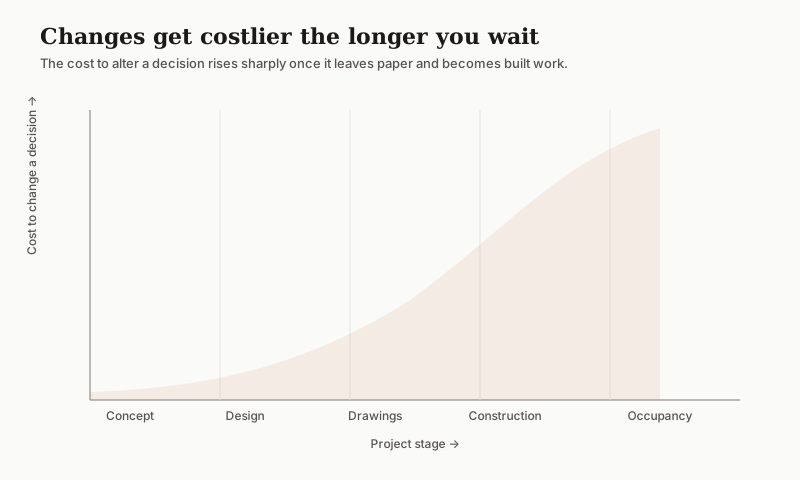
The lesson is not to fear decisions. It is to make them early, on purpose, when they are cheap — and to invest your thinking up front, where it returns the most. Every hour spent planning before you spend saves many hours and many rupees later.
Plan Before You Draw
The instinct of an excited homeowner is to jump straight to plans — to ask an architect or a draughtsman for a layout, or worse, to download a 3BHK plan off the internet and hand it to a contractor. But a drawing is an answer, and you cannot draw a good answer to a question you have not asked.
Before any plan is drawn, there is a quieter kind of planning: deciding what the home must do. Who lives here, how they spend a normal Tuesday, what a festival looks like in this house, where the help washes the vessels, where the kids do homework, where an ageing parent will eventually sleep when stairs become difficult. These are not drawing questions. They are living questions, and they belong before the pencil.
This is the single most common failure I see. Families spend months arguing about marble versus vitrified tiles and zero hours asking whether the kitchen should open to the living room or stay closed for the smell of a tadka. They optimise the finish and ignore the fit. A beautifully finished home that does not match how you live is an expensive disappointment.
A drawing is an answer. Spend your first weeks getting the questions right.
The Lifestyle Audit: How You Really Live
Here is an uncomfortable truth — most of us plan for the family we imagine, not the family we are. We picture elegant dinner parties and forget that we actually eat in front of the TV. We design a formal study and end up working from the dining table. The job of a lifestyle audit is to replace fantasy with evidence.
Go room by room and life-stage by life-stage. Ask not "what rooms do I want" but "what actually happens in my day, and where." The answers reveal the home you need rather than the one the builder's sample flat sold you.
| Life stage / situation | Questions to ask honestly | Common planning consequence |
|---|---|---|
| Young couple, no kids yet | Will a parent visit for months? Work from home? | One bedroom must flex into a guest/office room |
| Family with young children | Where do kids play, study, sleep safely? | Sightlines from kitchen to play area; rounded edges |
| Joint family | How many adults cook together at peak? | Bigger kitchen, second washing/utility zone |
| Ageing parents at home | Can they avoid stairs? Bathroom grab support? | Ground-floor bedroom + attached accessible bath |
| Frequent entertaining | Do guests sit formally or casually? | Open living-dining vs a closeable drawing room |
| Daily domestic help | Where do they cook, wash, rest, store? | Utility area, wash counter, separate toilet sometimes |
| Religious practice | Daily pooja or occasional? Joint rituals? | Dedicated pooja room vs niche; ventilation for diya/agarbatti |
| Hobbies & WFH | Music, painting, gym, video calls? | A quiet flexible room with good light and a data point |
Two principles sit underneath this audit. First, plan for the household in ten years, not just today — children grow, parents age, the WFH desk that is "temporary" becomes permanent. Second, be ruthlessly honest about storage. Almost every Indian home is short on storage because people plan for the possessions they wish they had, not the suitcases, festival decorations, extra bedding, and kitchen appliances they actually own. Count what you own. Then add 20 percent.
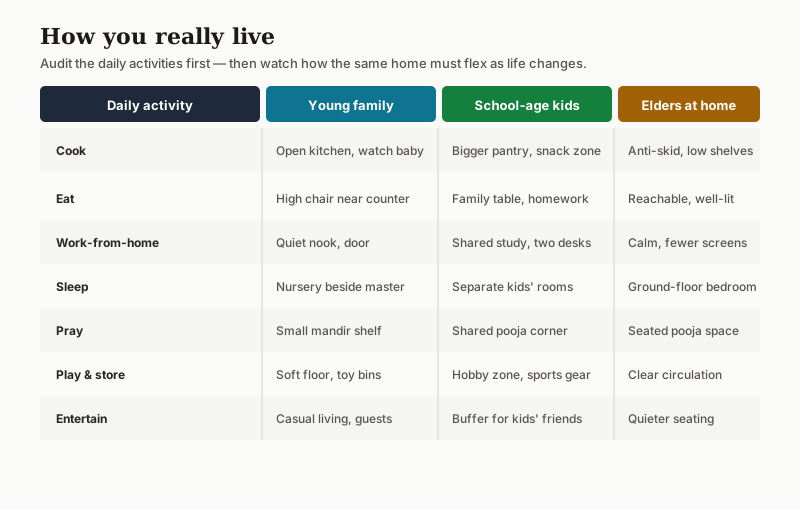
Our Room Programming Worksheet and Priority Ranking Tool turn this audit into a structured brief you can hand to a designer. For the deeper logic of matching rooms to real activities, see Programming Your Home.
Get the Money Right Before Anything Else
No plan survives contact with a budget you never set. Before you select a single tile, you need a clear-eyed number — not a wish, an actual ceiling — and an understanding of where it goes. In India, interior and fit-out costs vary enormously by city tier, finish level, and whether you are fitting out a bare builder-handover flat or renovating an occupied one.
The ranges below are broad planning anchors for interiors and fit-out (excluding the cost of the flat or core civil structure of an independent house). Treat them as starting brackets, not quotes.
| Scope (per sq ft, interiors/fit-out) | Budget tier | Mid tier | Premium tier |
|---|---|---|---|
| Basic flat fit-out (paint, modular kitchen, wardrobes, lights) | ₹800–1,200 | ₹1,200–1,800 | ₹1,800–2,500 |
| Full interiors (above + ceilings, panelling, loose furniture) | ₹1,200–1,800 | ₹1,800–3,000 | ₹3,000–5,000+ |
| Renovation of an occupied home | ₹1,000–1,600 | ₹1,600–2,800 | ₹2,800–5,000+ |
Three money realities catch first-timers off guard. GST on works contracts is typically 18 percent and is real money — confirm whether quotes are inclusive or "plus taxes." A contingency of 10–15 percent is not optional; it is the line item that absorbs the surprises every project has. And payment is staged through milestones (a booking advance, then on material delivery, on carcass completion, on finishing) usually with a retention of 5–10 percent held back until snags are cleared. Build the loan or savings drawdown around those milestones so you are never short on the day a payment falls due. For a full treatment, read Interior Design Budgets in India.
Choosing and Sequencing Your Team
Who you hire, and in what order, shapes the project more than any material choice. The central question is whose interests your lead person serves. In a contractor-led project, the person managing your money also profits from spending it — a conflict you feel most sharply when you ask "is this extra really needed?" A designer or architect you engage independently is your advocate: their job is to get you the best home for your budget, and they negotiate the contractor on your behalf rather than the other way around.
There are three broad engagement models in the Indian market. None is wrong; each suits a different homeowner.
| Model | How it works | Best for | Watch out for |
|---|---|---|---|
| Turnkey (design + build) | One firm designs, executes, hands over keys | Busy owners wanting single accountability | Markup hidden in package; verify material specs and brands |
| Item-rate / contractor-led | You or a designer specify; contractor bills per item | Cost-conscious owners who can supervise | Scope creep; "extras" added casually on site |
| Architect/designer-led | Independent designer designs and supervises a chosen contractor | Owners wanting an advocate and quality control | Two fees (design + execution); needs clear coordination |
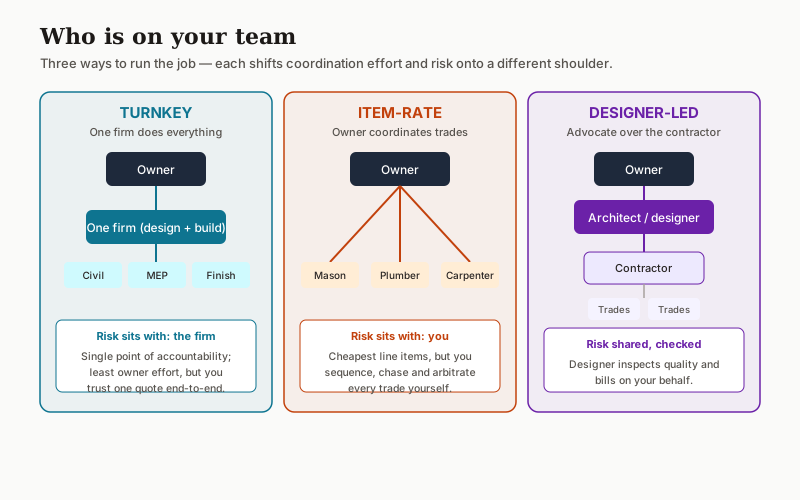
Engage your designer before the contractor, not after. The most expensive mistake is letting a contractor pour the structure and then asking a designer to "make it look nice" within walls already in the wrong place. Bring the thinker in first. If a firm offers both design and execution, insist on seeing the design as a discrete, paid deliverable so you own the plans and can, in principle, take them elsewhere.
Controlling the Process: Stay Proactive, Not Reactive
Once work begins, the project develops a momentum of its own, and a homeowner who has not planned ahead spends the next four months reacting — answering panicked site calls about decisions that should have been made weeks earlier. "Sir, the electrician is here, where do the points go?" is a question that, asked at 9 a.m. on site, produces bad answers. Asked at a calm table during planning, it produces good ones.
The antidote is a decision schedule: a written list of every choice the project needs, in the order the site will need it, with a deadline before that trade arrives. Decide the electrical layout before the wall-chasing. Decide the false-ceiling design and every light position before the ceiling is closed. Decide the bathroom tiles, taps, and the exact height of the wall niche before the tiling starts. Nothing kills a budget and a schedule like a decision that arrives a day late.
| Trade / milestone | Decisions that MUST be locked before it | Lock by |
|---|---|---|
| Blockwork / partitions | Final floor plan, every room size, door positions | Before masons start |
| Electrical chasing | Switchboards, points, AC locations, data/TV | Before walls are chased |
| Plumbing | Fixture positions, geyser, washing machine, RO | Before chasing & waterproofing |
| Waterproofing & tiling | Tile selection, niche heights, floor slopes | Before any bathroom tiling |
| False ceiling | Light layout, fan points, cove design, AC grilles | Before ceiling is boarded |
| Modular kitchen | Layout, appliance sizes, electrical & plumbing points | 6–8 weeks ahead (lead time) |
| Painting | Colour scheme, accent walls, finish type | Before final coat |
A note on lead times: modular kitchens, imported fittings, and custom furniture can take six to ten weeks. If you decide the kitchen the week the carpenter arrives, the whole project waits. Decisions with long lead times must be made early even though the work happens late.
Don't Become the Accidental Site Superintendent
Here is a trap nearly every hands-on Indian homeowner falls into. You visit the site daily — good. You see the carpenter and casually say, "Bhaiya, while you're at it, add a small shelf here, and make this cupboard a foot taller." Friendly, reasonable, and quietly disastrous. Each of those casual instructions is an un-costed, un-recorded change. They add up, they confuse the contractor about who is in charge, and at the end you face a "extras" bill you never agreed to and cannot dispute because there is no paper.
The discipline is simple and it will save you lakhs: route every change through your designer or a single point of contact, and get a written cost and time impact before the work happens. Not after. "What will this cost and how long will it take?" asked before the cut is made keeps you in control. Asked after, it is a negotiation you have already lost.
Every casual instruction on site is a cheque you signed without reading.
This is not about distrust. It is about keeping one clear chain of decisions so the home that gets built is the home you designed — not an accumulation of corridor conversations.
Allowances: Budgeting for What You Haven't Chosen Yet
You will not have selected every tile, tap, and light fitting when the contract is signed — and you should not have to. The professional way to handle this is allowances (provisional sums): a realistic rupee figure set aside per item, against which your actual selection is later reconciled. If you pick something dearer, you pay the difference; cheaper, you save. The danger is a contractor quoting low, unrealistic allowances to make the headline price attractive, then hitting you with "upgrade" costs once you fall in love with something better.
Set your own allowances at honest, real-market figures. Walk a tile showroom and a sanitaryware dealer before signing, so your numbers reflect what you will actually want, not the cheapest line.
| Item (allowance) | Budget range | Mid range | Notes |
|---|---|---|---|
| Floor tiles / sq ft | ₹40–70 | ₹70–150 | Vitrified vs designer/large-format |
| Bathroom wall tiles / sq ft | ₹45–80 | ₹80–200 | Imported/designer pushes higher |
| Sanitaryware (per bath, set) | ₹15,000–30,000 | ₹30,000–80,000 | WC, basin, fittings, health faucet |
| CP fittings / taps (per bath) | ₹8,000–18,000 | ₹18,000–45,000 | Brand-driven |
| Lights (whole home) | ₹40,000–80,000 | ₹80,000–2,00,000 | Profile lights & decorative raise this |
| Hardware (per wardrobe) | ₹3,000–8,000 | ₹8,000–20,000 | Soft-close, channels, brand of fittings |
Realistic allowances are not pessimism; they are honesty. A budget built on fantasy allowances is a budget that will betray you in month three.
Plan for the Future and the Sun
Two final pieces of up-front thinking pay off for decades. The first is the future. Leave room for change: a bedroom that can become a study, a wall that is non-structural so it can come down later, conduits left in for an AC or an EV charger you do not need yet. Build in the basics of ageing-in-place even if everyone is young today — at least one bedroom and bathroom that an older person can reach without stairs, doorways wide enough for a wheelchair to pass, and bathroom walls with backing for grab bars to be added later. These cost almost nothing now and are ruinous to retrofit.
The second is orientation. Decisions about which way rooms face, where windows go, and how air moves through the home are free at the planning stage and impossible to change later. Getting the sun and the breeze right is the cheapest comfort and the cheapest electricity bill you will ever buy — but it must happen before the plan is fixed. This is a deep subject in its own right; we cover it fully in Designing a Naturally Energy-Efficient Home.
The Planning Sequence, Start to Finish
If you do nothing else from this guide, follow the sequence below. It puts thinking before spending and decisions before drawings, in the order an Indian project actually needs them.
| # | Step | Why it comes here |
|---|---|---|
| 1 | Set a real budget ceiling + contingency | Everything downstream depends on it |
| 2 | Analyse the site / flat | Carpet area, RCC constraints, builder snags, light & cross-ventilation |
| 3 | Do the lifestyle audit | Decide what the home must do before how it looks |
| 4 | Select your team & model | Designer first; turnkey vs item-rate vs designer-led |
| 5 | Build the room program | Rooms, sizes, adjacencies, storage counts |
| 6 | Develop the layout | Test options on plan where changes are free |
| 7 | Review in 3D | Catch problems before they are built |
| 8 | Cost it & set allowances | Honest provisional sums for unselected items |
| 9 | Finalise drawings | Electrical, plumbing, ceiling, kitchen — all coordinated |
| 10 | Sign a clear contract | Scope, GST, milestones, retention, change procedure |
| 11 | Align financing to milestones | Loan/savings drawdown matches payment stages |
| 12 | Obtain approvals & society NOC | Municipal sanction for structural work; RWA/society NOC for flats |
| 13 | Build the decision schedule | Lock every choice before its trade arrives |
| 14 | Then — and only then — start work | All the cheap thinking is done |
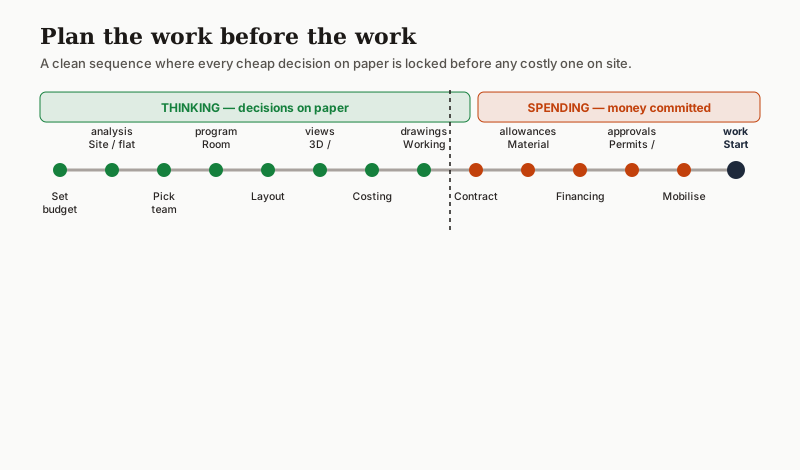
Notice that "start work" is step fourteen, not step one. Most projects begin at step fourteen and back-fill the planning under pressure, on site, while paying for it. Yours can begin with weeks of cheap, calm thinking — and arrive at the site with the answers already in hand.
The home you are about to build will hold your family for decades. The few weeks you spend planning before you spend a rupee are the highest-return weeks of the entire project. Spend them well, and the rupees that follow will know exactly where to go.
References
1. Bureau of Indian Standards. National Building Code of India 2016 (SP 7). Parts on planning, building services, and accessibility.
2. Government of India. Real Estate (Regulation and Development) Act, 2016 (RERA) — carpet area definitions, project disclosures, and buyer protections.
3. Bureau of Indian Standards. IS 1893, IS 456 and related codes for structural design of RCC construction (context for why structural changes are costly).
4. Central Public Works Department (CPWD). Delhi Schedule of Rates (DSR) — reference cost data for building and finishing items.
5. Goods and Services Tax Council / CBIC. GST on works contracts — applicable rate and input-credit guidance for construction and interior services.
6. Bureau of Indian Standards. IS 875 (design loads) and BIS guidance on accessibility and universal design in the built environment.
7. Ministry of Housing and Urban Affairs. Model Building Bye-laws and local municipal sanction/approval procedures for residential alterations.
8. Hirsch, William J. Jr. Designing Your Perfect House: Lessons from an Architect. Dalsimer Press. (A general inspiration for this series' approach to planning a home thoroughly before you build.)
This guide is part of the Studio Matrx "Home Design Foundations" series. Continue with How a Home Feels Right, From Space to Place, Programming Your Home, Interior Design Budgets in India, and Designing a Naturally Energy-Efficient Home. Put this guide to work with the Priority Ranking Tool and the Room Programming Worksheet — then bring your brief to life with Studio Matrx DesignAI.
Export this guide
Related Guides — Deep-dive reading
Design/Build vs. Hiring Separately: What Indian Homeowners Should Know
The procurement-model decision behind every home project — one turnkey firm that designs and builds, or an independent designer and a separately appointed contractor — and how to choose the one that fits your time, budget, and appetite for control.
Planning Your ProjectThe Homeowner's Guide to Interior Design Budgets in India
Where the money really goes in an Indian fit-out — realistic 2026 ranges, cost-per-sqft truths, bang-for-buck upgrades, life-cycle costing and contracts
Home PlanningThe Trade-Offs Every Homeowner Has to Make
No one gets everything — every home is a stack of compromises. This is about the sacrifices: the cost-quality-time triangle, the recurring homeowner trades, and how to make your cuts on purpose instead of having them forced by a blown budget.
Planning Your ProjectRelated Tools — Try Free
Room Programming Worksheet
Add every space, size it to feel right and rank it A/B/C — then generate an architect-ready design brief.
Design ToolBathroom Renovation Cost Calculator
Cost to renovate an existing bathroom with a replace-vs-keep model — demolition, re-waterproofing, tiles, fittings and the money saved by keeping items.
Bathroom CalculatorHome Building & Interior Cost Calculator — 20 Cities
Construction + interior costs for 20 Indian cities across kitchen, wardrobes, flooring, painting, ceiling.
Cost Calculator