

What is a PMC (Project Management Consultant)? A Homeowner's Guide (India) (2026)
A plain-language explainer of the project management consultant role on a home build - what a PMC does, when hiring one is worth it and when it is overkill, how PMCs charge, and how their job overlaps with and differs from an architect's site supervision.
Building a house means running a small project with many moving parts - a designer, a main contractor, a dozen vendors, a budget, a timeline, and a stream of decisions and bills. Most homeowners run that project themselves, leaning on their architect for the technical calls. But some hire a PMC, a project management consultant, to run it for them. If you have heard the term thrown around and were not sure whether you need one, this guide explains exactly what a PMC is, what it does, when the fee earns its keep, and when it just adds a layer you do not need.
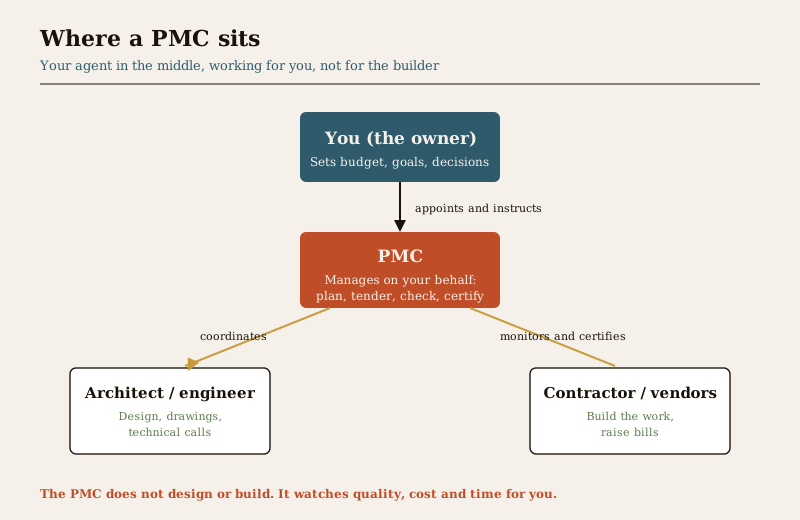
A PMC is an independent professional or firm you appoint to manage the delivery of your project on your behalf. The key word is independent. The PMC does not design the house and does not build it - it watches, measures, checks and coordinates the people who do, and it answers to you, not to the contractor. Think of it as hiring a professional to sit in the owner's chair when you cannot, or do not want to, sit there yourself.
Scope and a plain disclaimer. This is an explainer to help you decide whether a PMC fits your project and to brief one sensibly. It is not legal or financial advice. Every fee, percentage and process note below is INDICATIVE and varies widely by city, project scale, and the individual professional - treat no figure here as a fixed market rate. Get the binding wording of any PMC or construction agreement drafted or reviewed by a lawyer, leave structural and technical calls to your architect or engineer, and get real quotations from local professionals before you commit. The exact scope of any PMC is only ever what your written agreement lists.
Key takeaways
- A PMC is an independent professional you hire to manage your build for you - planning, tendering help, quality checks, measurement and bill certification, coordination and progress or cost or time monitoring.
- A PMC does not design (that is the architect) and does not build (that is the contractor). It represents your interests across both.
- A PMC is usually worth it for a busy owner, a larger or complex build, a remote or NRI owner, or when you have low experience or low trust in the contractor.
- A PMC is often overkill on a small, simple build, for a hands-on owner living near the site, or when a capable architect is already supervising well.
- Fees are indicative and by agreement - commonly a percentage of the project cost or a fixed monthly or lump-sum figure. Confirm scope and fee in writing.
What a PMC actually does
A PMC's job runs across the whole build, not just one stage. On a typical home project the scope covers planning and scheduling the work, helping you tender and pick a fair contractor, checking quality on site, measuring completed work and certifying bills, coordinating everyone involved, and reporting progress, cost and time back to you so you can make decisions with clear information.
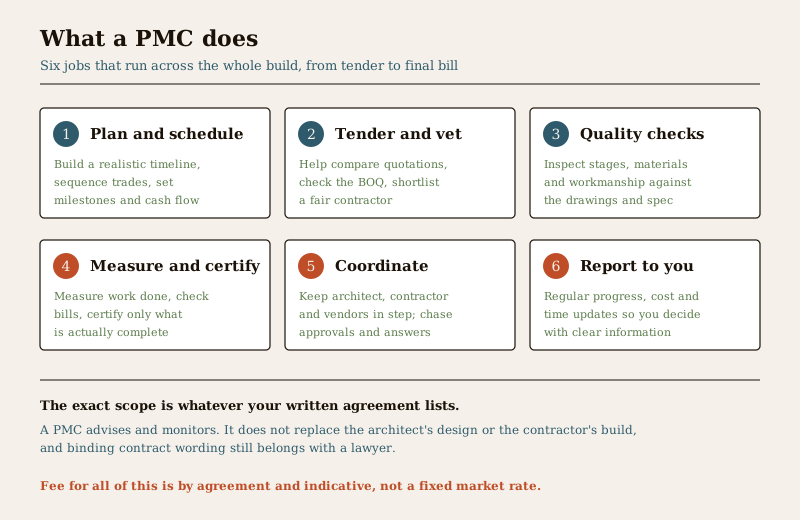
The most valuable of these for a homeowner is usually measurement and bill certification. When a contractor raises a running bill for, say, a stage of masonry or plastering, someone has to check that the quantity claimed was actually done and matches the rates in the agreement before you release money. A PMC does that measurement and certifies only what is genuinely complete, which is the single biggest protection against overpayment. The bill-of-quantities logic behind this is explained in the BOQ explainer for professionals, and reading a quotation before you sign is covered in how to read a construction quotation.
Here is the same scope laid out as service against benefit, so you can see what you are actually paying for.
| What the PMC does | Why it helps you |
|---|---|
| Plans and schedules the work, sets milestones and a cash-flow plan | You get a realistic timeline and know when money will be needed, instead of open-ended delays |
| Helps you tender and compare quotations, checks the BOQ and shortlists a contractor | You appoint on a like-for-like basis and are less likely to be misled by a cheap-looking headline number |
| Inspects quality at each stage against the drawings and specification | Defects are caught early, while they are cheap to fix, not after they are buried |
| Measures completed work and certifies running bills before you pay | You release money only for work genuinely done at the agreed rates - the core protection against overpayment |
| Coordinates architect, contractor and vendors, chases approvals and answers | Fewer stalls and blame-shifting; someone owns keeping the site moving |
| Reports progress, cost and time to you regularly | You stay in control and decide with facts, even if you are far away or busy |
Notice what is not on that list. The PMC does not decide the structure, the design or the materials specification - those are your architect's and engineer's calls. It does not do the physical construction - that is the contractor. And it cannot write your binding contract for you - that wording belongs with a lawyer. A PMC advises, monitors and certifies; it is a watchdog and a coordinator, not a replacement for the design or build team.
When a PMC is worth it, and when it is overkill
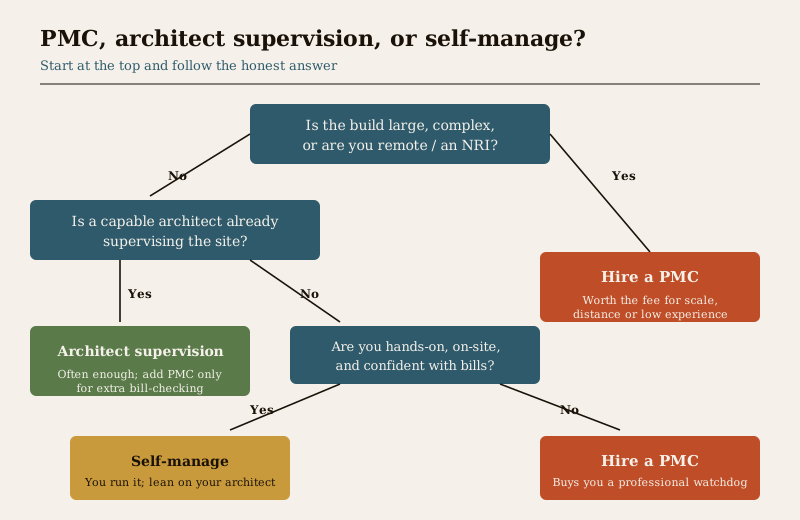
A PMC is a real cost, so the honest question is whether the value it adds is more than its fee on your particular project. For a large or complex build, or where you are not present, the answer is often yes. For a small, simple build that you can watch yourself, the answer is often no.
A PMC tends to be worth it when:
- You are busy or cannot be on site. If work and life mean you cannot make regular visits or study bills, a PMC buys you a professional presence.
- The build is larger or complex. More floors, a bigger budget, tricky site conditions or many specialist trades mean more that can go wrong and more bills to check. The value of professional oversight rises with scale.
- You are a remote or NRI owner. Managing a build from another city or country, on video calls and messages, is exactly the situation a PMC is built for - independent eyes and certified bills matter most when you cannot see the site.
- You have low experience or low trust. First-time builders, or anyone uneasy about a contractor they do not know well, gain the most from an independent professional checking measurements and quality.
A PMC is often overkill when:
- The build is small and simple. A modest home, a straightforward plan and a short timeline may not generate enough complexity or enough bills to justify a separate management fee.
- You are hands-on and near the site. An owner who can visit regularly, understands the drawings, and is comfortable checking measurements can do much of what a PMC does.
- A capable architect is already supervising. If you have engaged your architect for site supervision and they are doing it well, a lot of the coordination and quality-checking is already covered - see the overlap below before you pay twice.
Use the decision map to walk your own situation.
How PMCs charge
There is no fixed tariff for a PMC, and anyone who quotes you a single national rate is guessing. In practice, PMC fees on home projects are structured in one of two common ways, and the numbers below are broad indications only, to give you a feel - not quotes.
- A percentage of project cost. The fee is set as a share of the total construction cost, often in a low-single-digit to mid-single-digit per cent band depending on scope and project size. This scales the fee with the project but can create a mild tension, since the fee grows if the cost grows - a good agreement addresses how that is handled.
- A fixed fee. A lump sum for the whole engagement, or a fixed monthly retainer for the expected duration, agreed up front against a defined scope. This is easier to budget and removes the percentage tension, but you must define the scope and duration carefully so it does not run over.
Whichever model you use, the fee should be tied to a written scope of work - exactly which of the services above are included, how often site visits happen, what reports you get, and what happens if the build runs long. Get real quotations from two or three PMCs on the same scope so you are comparing like with like, and put the final terms in an agreement your lawyer has looked over. You can sanity-check the underlying build cost that any percentage is applied to with the house construction cost calculator and the BOQ calculator.
PMC versus architect supervision versus self-managing
This is where most of the confusion sits, because a PMC's work overlaps with what an architect does during construction. When you engage an architect for site supervision, they visit the site, check that the work follows their drawings and specification, and resolve design queries. That already covers a good part of quality checking and coordination. What an architect's supervision does not always include is detailed, independent measurement and certification of every running bill, or full-time project management of the schedule, vendors and cash flow. That gap is exactly where a dedicated PMC adds most.
So the three are not really rivals - they are points on a scale of how much management you buy, and from whom. The table below sets them side by side.
| Aspect | Self-manage | Architect site supervision | Dedicated PMC |
|---|---|---|---|
| Who runs the project day to day | You | You, with the architect advising | The PMC, reporting to you |
| Design and technical calls | Architect | Architect | Architect (PMC coordinates, does not decide) |
| Quality checks on site | You | Architect, against their drawings | PMC, plus the architect's design checks |
| Measurement and bill certification | You | Sometimes, if in their scope | Yes - a core PMC job |
| Best when | Small, simple build; hands-on owner near site | You trust the design team and can be involved | Larger or complex build, remote or busy owner, low trust or experience |
| Extra cost | None beyond the architect | Part of the architect's fee | A separate fee, by agreement |
A practical middle path is common: keep your architect for design and supervision, and either agree that their scope includes measurement and bill certification, or add a lighter PMC engagement just for the bill-checking and coordination you are missing. You do not have to buy the full package to plug one gap. To place all of this in the wider picture of who does what on a build, read how to hire an architect and the boundaries piece scope of architect, designer and contractor.
How to appoint and brief a PMC
If you decide a PMC is worth it, treat the appointment as carefully as the architect or contractor. Check their track record on projects like yours, ask to speak to past clients, and confirm they will act independently - a PMC recommended and paid through your contractor is not independent and defeats the purpose. Agree the scope, reporting rhythm and fee model in writing before work starts, and because measurement and certification is the heart of the value, be specific about how bills will be measured, certified and disputed.
The day-to-day of watching a site, whether you do it yourself or through a PMC, is covered in managing your contractor and site supervision, and the contract underneath the build is explained in the construction agreement with a contractor. If you have not yet appointed a builder, start from how to hire a building contractor, and to see where the PMC decision fits in the whole journey, return to the planning-your-project hub.
The bottom line
A PMC is a professional owner's representative - independent eyes that plan, check, measure, certify and coordinate your build so you are not doing it alone or trusting a contractor to grade their own homework. On a big, complex or remote project, that oversight and the bill certification behind it can easily save more than the fee. On a small, simple build with a good architect and a present owner, it is a layer you can skip. Decide honestly where your project sits, and if you do appoint a PMC, pin the scope and fee in a written agreement your lawyer has read.
References
- Council of Architecture (CoA) - registration of architects and general scope-of-services framing that a PMC coordinates around: https://www.coa.gov.in
- Real Estate (Regulation and Development) Act and your State RERA - relevant where the project or professionals fall under RERA registration.
- Studio Matrx guides: how to hire an architect, how to hire a building contractor, the construction agreement with a contractor, managing your contractor and site supervision, BOQ explained for professionals.
- Get local, current quotations and a lawyer-reviewed agreement before you appoint anyone - all fees and processes above are indicative and vary by city, scale and professional.
Export this guide
Related Guides — Deep-dive reading
Design/Build vs. Hiring Separately: What Indian Homeowners Should Know
The procurement-model decision behind every home project — one turnkey firm that designs and builds, or an independent designer and a separately appointed contractor — and how to choose the one that fits your time, budget, and appetite for control.
Planning Your ProjectHow to Hire an Architect in India: A Homeowner's Guide (2026)
A plain-language walkthrough for homeowners - whether you even need an architect, what one does across the stages, how to find and shortlist, how architects charge, what the scope and agreement should cover, and how to work well together.
Hiring ProfessionalsThe Complete Guide to Planning Your Home Before You Spend a Rupee
Why the cheapest, most powerful work happens on paper — a planning playbook for Indian homeowners before any money moves
Home PlanningRelated Tools — Try Free
Contract Studio
AI generates professional architecture service agreements with milestones and scope.
ArchitectAIClient Brief Generator
8-section questionnaire that produces a professional design brief PDF with signature lines.
Brief GeneratorArchitect Fee Calculator
Estimate architect fees based on COA guidelines, project scope, and city.
ArchitectAI