

Labour Contract vs Item Rate vs Turnkey: How to Contract House Construction in India (2026)
The three main ways to contract a house build - labour-only, item-rate with material, and turnkey lump-sum - and how each one shifts who buys materials, who bears the risk, and how much control you keep.
Before a single brick is laid, one early decision quietly sets the tone for your whole build: how you contract the work. The same house can be built under a labour-only deal where you buy every bag of cement yourself, an item-rate deal where the contractor quotes and supplies per item of work, or a turnkey deal where one fixed price buys you a finished house. Each model trades control for convenience differently, and each puts the cost and quality risk in a different place.
This guide explains the main contract types so a first-time homeowner can choose the one that fits how hands-on they can realistically be. It does not draft your agreement - the binding wording belongs with a lawyer, and every rate, percentage and payment stage below is INDICATIVE and varies by city, project scale and the individual professional.
Disclaimer: This is an educational overview, not legal or financial advice. Get the actual contract wording drafted or reviewed by a lawyer, take structural and technical calls from your architect or engineer, and treat every figure here as indicative - confirm real numbers against local quotations before you commit.
The four models in one line each
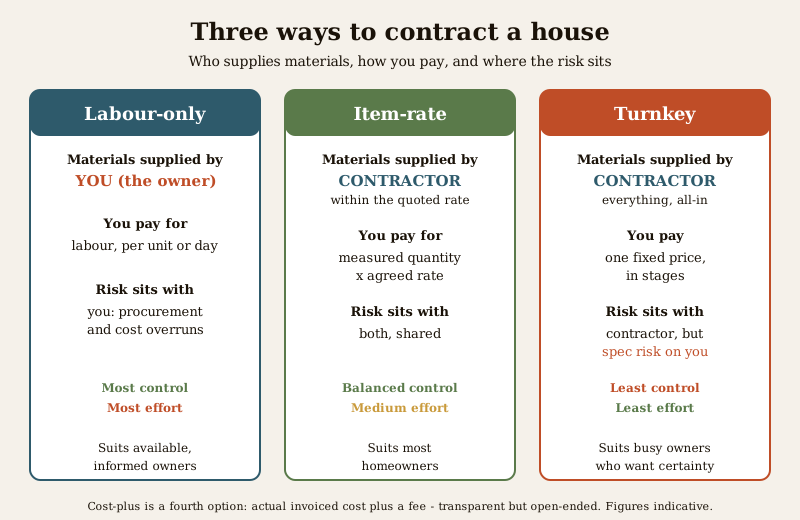
- Labour contract (piece-rate or day-rate): the contractor supplies only labour; you buy and supply all materials. Most control, most effort and risk on you.
- Item-rate (with-material) contract: the contractor quotes a rate per item of work including material, work is measured and paid on actuals. The balanced middle path.
- Turnkey (lump-sum) contract: one fixed all-in price for the finished house to an agreed specification. Least effort, least control, highest spec-and-quality risk if the agreement is loose.
- Cost-plus contract: the contractor bills actual material and labour cost plus an agreed fee or percentage. Transparent, but open-ended on final cost.
Labour contract: you hold the reins
In a labour-only or piece-rate arrangement, the contractor brings the masons, bar-benders and helpers and charges for their work - either per unit (say a rate per square foot of slab, or per brick-work volume) or per day. Every material - cement, steel, sand, aggregate, bricks, fittings - is bought and delivered by you.
The upside is control and, often, cost. You choose the exact brand and grade of every material, you catch substitution before it happens, and you keep the margin a with-material contractor would otherwise add on materials. The downside is that the entire procurement burden, and its risk, is yours: ordering on time so work never stalls, storing and securing material on site, absorbing price swings, and dealing with wastage. If the slab needs more steel than you estimated, that overrun is yours. This model suits an owner who is genuinely available, has some construction literacy or a trusted engineer supervising, and wants maximum grip on quality and spend.
Item-rate (with-material): the balanced middle
An item-rate or with-material contract quotes a rate for each item of work that includes both labour and material - for example a single per-square-foot rate for RCC slab that covers steel, cement, shuttering and labour. The bill of quantities lists each item; work is physically measured as it is done and you pay for the actual quantity executed at the agreed rate. This is the classic measured contract behind most professionally run homes.
It balances the two extremes. You are not chasing cement trucks, yet because every item has a named rate and specification, you can still verify what you are paying for and hold quality to the spec. Risk is shared: the contractor carries material procurement and its price risk within the quoted rate, while you carry the quantity - if the design uses more slab area, you pay for more slab. A clear, itemised quotation and a matching bill of quantities are what make this model safe, which is why learning to read a quotation matters here.
Turnkey (lump-sum): hand over the keys
Under a turnkey or lump-sum contract you agree one fixed all-in price for a finished house built to a defined specification, and the contractor manages everything - design coordination, materials, labour and finishing - and hands you a completed home. It is the lowest-effort route and the one that gives you the most cost certainty up front, because the number is fixed.
The catch is control and specification risk. A lump sum is only as good as the specification it is built against. If the agreement does not pin down brand, grade, thickness and finish for every major element, the contractor is free to meet the price by choosing the cheapest acceptable version of each - and you discover it only at handover. Turnkey suits a busy owner who values certainty and a single point of accountability over hands-on control, but it demands the tightest, most detailed specification and a strong agreement precisely because you are trusting one party with the whole outcome.
Cost-plus: transparent but open-ended
In a cost-plus contract the contractor charges the actual, documented cost of materials and labour, plus an agreed markup - either a percentage or a fixed fee. Because you see real invoices, it removes the incentive to hide margin in inflated rates and works well for bespoke or hard-to-estimate work. The trade-off is that the final cost is not fixed: with the fee riding on top of spend, there is little built-in pressure to economise, so it needs an owner or consultant watching the numbers closely.
Side-by-side comparison
| Factor | Labour contract | Item-rate (with material) | Turnkey (lump-sum) | Cost-plus |
|---|---|---|---|---|
| Who supplies materials | You (owner) | Contractor, within the rate | Contractor | Contractor, billed at cost |
| How you pay | Per unit or per day of labour | Measured quantity x agreed item rate | Fixed all-in price, staged | Actual cost plus fee or per cent |
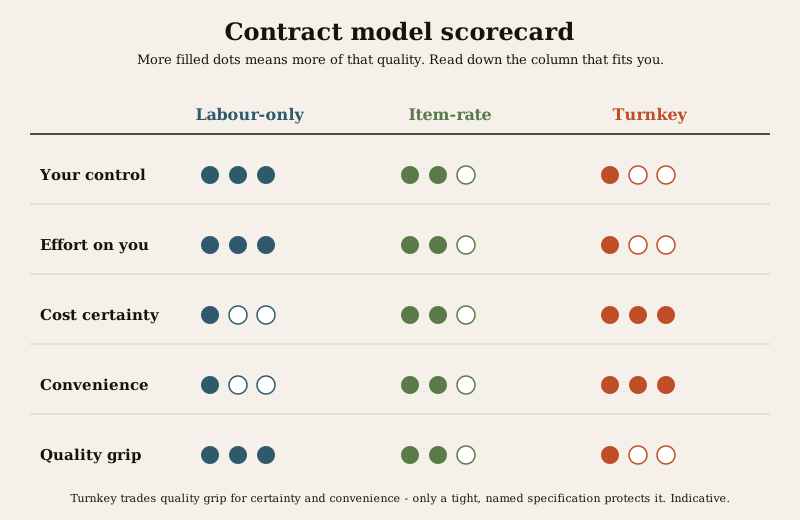
| Cost certainty up front | Low | Medium | High | Low |
| Your control over quality | Highest | High, if spec is clear | Lowest, unless spec is tight | High |
| Effort demanded of you | Highest | Medium | Lowest | Medium to high |
| Where cost-overrun risk sits | Mostly you | Shared | Mostly contractor | Mostly you |
| Main quality risk | Your own procurement errors | Substitution against spec | Hidden downgrading to hit price | Padded invoices |
| Best for | Available, informed owners | Most homeowners with a good quote | Busy owners wanting certainty | Bespoke work with supervision |
Which model fits which owner
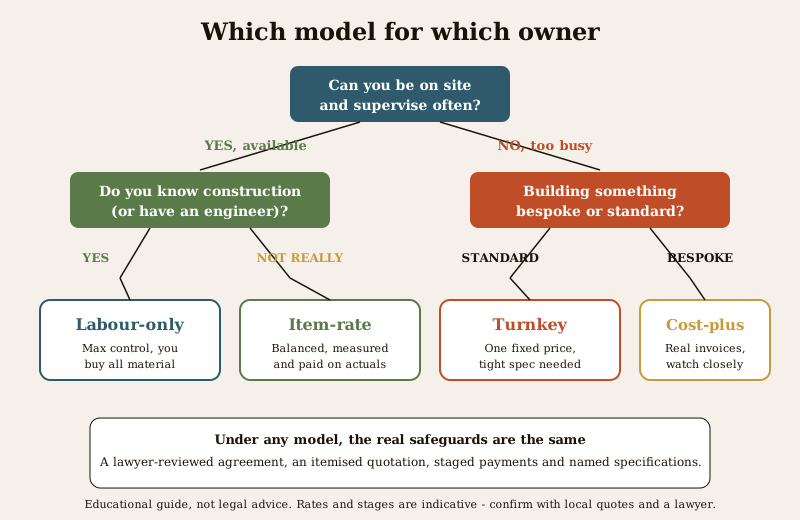
The right choice depends less on which model is theoretically best and more on how much time, knowledge and appetite for oversight you actually have. Be honest about that before you sign.
| If you are... | Time and know-how | Usually the best fit | Because |
|---|---|---|---|
| Hands-on and available | High - can be on site often, some construction sense | Labour contract, or item-rate | You get maximum control and can police quality yourself |
| Busy professional | Low - cannot supervise daily, want certainty | Turnkey, with a very detailed spec | Single accountability and a fixed price beat daily control |
| First-time and cautious | Medium - learning, want fairness and visibility | Item-rate with a clear quotation | Named rates and measured actuals keep it verifiable |
| Building something bespoke | Have an architect or PMC supervising | Cost-plus, closely watched | Real invoices suit unusual, hard-to-price work |
Whatever you pick, the contract type is a starting frame, not the whole safeguard. A tight written agreement, a clear itemised quotation or bill of quantities, defined payment stages tied to completed work, and named specifications are what actually protect you under any of these models.
Key takeaways
- There are three core ways to contract a house: labour-only (you buy materials), item-rate with material (measured and paid on actuals), and turnkey lump-sum (one fixed price for the finished house) - plus cost-plus for bespoke work.
- The models trade control for convenience: labour gives the most control and demands the most effort, turnkey gives the most convenience and the least control, and item-rate sits in the middle.
- Risk moves with the model: procurement and overrun risk sits with you under labour, is shared under item-rate, and sits with the contractor under turnkey - but a loose spec quietly hands quality risk back to you.
- Match the model to yourself, not to a rule of thumb: available and informed owners can run labour or item-rate; busy owners are usually better served by a tightly specified turnkey deal.
- No contract type is a substitute for a proper written agreement, a clear itemised quotation, staged payments and named specifications - get the wording drafted by a lawyer and keep every figure indicative until a local quote confirms it.
Where to go next
- How to hire a building contractor in India - finding, shortlisting and checking the contractor you will sign one of these contracts with.
- The construction agreement with your contractor - what the written agreement must pin down under any model.
- How to read a construction quotation - reading an item-rate quote or bill of quantities so substitution has nowhere to hide.
- How to hire an architect in India - the design side of the same build.
- Design-build vs hiring separately - whether to bundle design and construction under one turnkey party or keep them apart.
- House construction cost calculator - a first indicative estimate to sanity-check any quote you receive.
References
- Council of Architecture (CoA), India - regulator of the architecture profession, on architect scope and engagement. www.coa.gov.in
- Real Estate (Regulation and Development) Act, 2016 (RERA) - relevant where a builder or promoter sells built or under-construction property.
- Central Public Works Department (CPWD) - the item-rate and measured-contract concepts behind most professional building contracts, including the bill of quantities method.
- General building-contract practice in India for labour-rate, item-rate, lump-sum and cost-plus arrangements, as reflected in standard construction agreements and bills of quantities. Confirm all rates and payment terms against local quotations and a lawyer-reviewed agreement.
Export this guide
Related Guides — Deep-dive reading
How to Hire a Building Contractor in India: Find, Shortlist, Compare Quotes and Vet the Right Builder (2026)
A homeowner's guide to choosing the main civil contractor who will build your house - where to find them, how to shortlist and evaluate on experience and finances, how to get comparable quotes on one scope, which contract type suits you, what to verify, and how to set clear expectations - with an evaluation scorecard and a questions-to-ask table.
Hiring ProfessionalsDesign/Build vs. Hiring Separately: What Indian Homeowners Should Know
The procurement-model decision behind every home project — one turnkey firm that designs and builds, or an independent designer and a separately appointed contractor — and how to choose the one that fits your time, budget, and appetite for control.
Planning Your ProjectHow to Read a Construction Quotation in India: Compare Contractor Quotes Without Getting Trapped (2026)
A homeowner's guide to reading and comparing contractor quotations - the parts of a quote, why the cheapest one is often a trap, how to make three quotes truly comparable, and the exclusions and extras that quietly inflate the final bill.
Hiring ProfessionalsRelated Tools — Try Free
Contract Studio
AI generates professional architecture service agreements with milestones and scope.
ArchitectAIArchitect Fee Calculator
Estimate architect fees based on COA guidelines, project scope, and city.
ArchitectAIAI BOQ Generator
AI generates detailed Bill of Quantities with city-specific rates and labour breakdown.
ArchitectAI