

Interior Contractor Warning Signs
How to read a contractor before you hire — the signals that separate professionals from problems
A contractor is the single most consequential hire in any interior project. The right one quietly delivers; the wrong one becomes a story you tell for years. The difference is usually visible during vetting — in how they quote, what they will show you, and how they communicate before any money is involved. People who become problem contractors leave a trail of small signals first.
This guide is a practical framework for reading those signals. It is a deep-dive companion to our 25 interior mistakes homeowners regret and the home renovation red flags guide.
The warning-sign grid
Warning signs vary in severity. Some are deal-breakers on their own; others are yellow flags that warrant more questions.
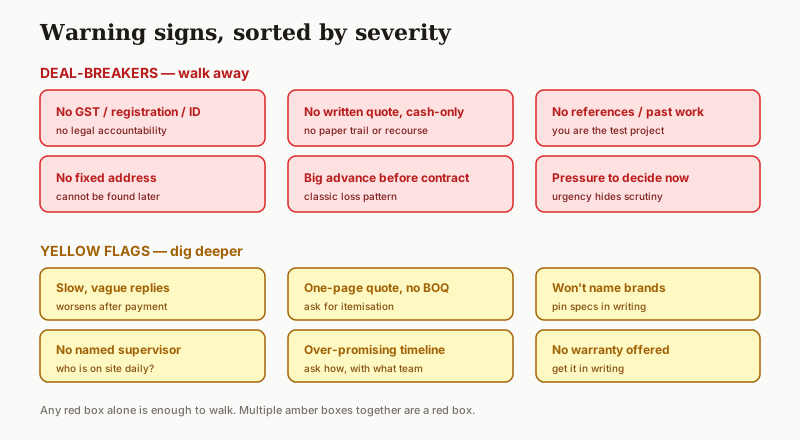
Deal-breakers (walk away)
| Sign | What it means |
|---|---|
| No GST / registration / ID | No legal or tax accountability |
| No written quote, cash-only | No paper trail, no recourse, tax risk |
| No verifiable past work or references | You are the test project |
| No fixed business address | Cannot be found if things go wrong |
| Demands large advance before contract | Classic loss pattern |
Yellow flags (dig deeper)
| Sign | What to ask |
|---|---|
| Slow, vague communication pre-hire | It only gets worse after payment |
| One-page quote, no BOQ | Ask for an itemised breakdown |
| Reluctant to name brands/grades | Pin down specs in writing |
| No named site supervisor | Who is on site daily? |
| Over-promising timelines | Ask how, with what team |
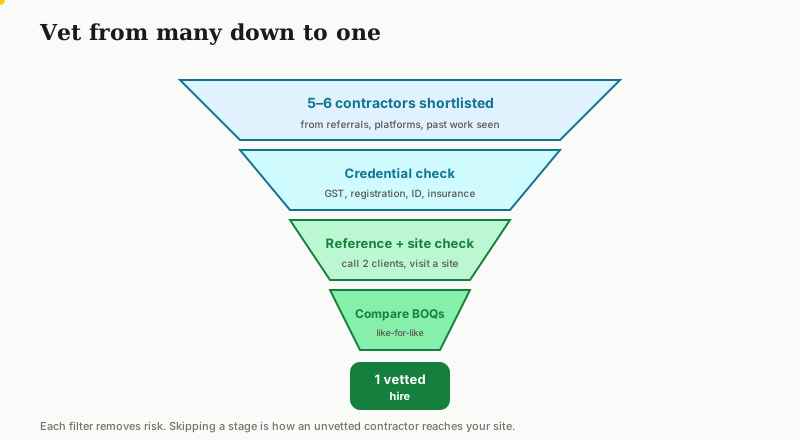
Vetting: from many to one
Good hiring is a funnel. Start with several contractors, filter on credentials and references, compare itemised quotes like-for-like, and narrow to the one who is both capable and accountable.
How professionals behave
The positive signals are as telling as the warnings: they volunteer credentials, offer references unprompted, quote in itemised detail, name brands and grades, put timelines and warranties in writing, and communicate clearly before you have paid a rupee. Accountability before payment predicts accountability after.
Watch how someone behaves while they are still trying to win you. That is the best version of them you will ever see.
The fix, in order
1. Verify credentials — GST, registration, ID, insurance.
2. Check references — call two past clients, visit a live or finished site.
3. Compare itemised quotes like-for-like, not by headline price.
4. Confirm supervision and a named point of contact.
5. Contract first, advance second — never the reverse.
Prevent it: Vet systematically with the Contractor Checklist, screen the proposal with the Red Flag Checklist, structure the decision with the Decision Tree, and read scope boundaries between architect, designer and contractor.
References
- Goods and Services Tax Act, 2017 (India). New Delhi: Government of India.
- Indian Contract Act, 1872 (India). New Delhi: Government of India.
- Consumer Protection Act, 2019 (India). New Delhi: Ministry of Consumer Affairs, Government of India.
- Ramus, J., Birchall, S. and Griffiths, P. (2006) Contract Practice for Surveyors. 4th edn. Oxford: Butterworth-Heinemann.
Part of the Studio Matrx Mistakes & Pitfalls series.
Export this guide
Related Guides — Deep-dive reading
Contractor Red Flags: Warning Signs When Hiring in India (2026)
A homeowner's plain-language guide to the warning signs before you sign and while work is on site - and the practical safeguard for each. Even-handed: most contractors are honest, and these habits protect you against the minority who are not.
Hiring ProfessionalsHome Renovation Red Flags
The warning signs in a quote, contract, or site that predict a renovation gone wrong
Mistakes & PitfallsThe Complete Guide to Planning Your Home Before You Spend a Rupee
Why the cheapest, most powerful work happens on paper — a planning playbook for Indian homeowners before any money moves
Home PlanningRelated Tools — Try Free
Interior Contract Clause Checklist
16 sections and 98 checkboxes covering scope, BOQ, milestones, penalties, warranty, and disputes.
Contract ChecklistInterior Red Flag Checklist — Before Signing
54 red flags across 8 categories with a live risk score and personalised PDF.
Red Flag ChecklistContract Studio
AI generates professional architecture service agreements with milestones and scope.
ArchitectAI