

Contractor Red Flags: Warning Signs When Hiring in India (2026)
A homeowner's plain-language guide to the warning signs before you sign and while work is on site - and the practical safeguard for each. Even-handed: most contractors are honest, and these habits protect you against the minority who are not.
Building or renovating a home in India is one of the largest sums most families will ever spend, and almost all of it passes through the hands of a contractor. The good news, which this guide states plainly at the outset, is that most contractors are honest people doing hard, skilled work on thin margins. The warning signs below are not an accusation against the trade. They are a homeowner's early-warning system for the small minority who cut corners, and, just as usefully, a checklist that keeps an honest working relationship clear and free of misunderstanding.
Red flags come in two waves. The first appears before you sign, when you are still choosing between quotes and people. The second appears once work is on site, in the rhythm of payments, materials and progress. This guide walks through both, and for every red flag it gives you the safeguard - the specific, reasonable thing to ask for or do. It is a companion to the guides on how to hire a building contractor, the construction agreement, reading a construction quotation and managing your contractor on site.
Scope and how to read this. This is a homeowner's guidance article, not legal advice. It explains warning signs and sensible precautions in plain language. The binding wording of any contract, and any dispute or legal recourse, is a matter for a qualified lawyer; structural and technical judgements belong to your architect or engineer. Every rupee figure, percentage, payment stage and timeline here is indicative and varies widely by city, project size, material market and the individual professional - treat them as illustrations, not fixed rules, and always get real local quotes.
Before you sign: the warning signs
The choosing stage is where a little patience saves the most money. You have all the leverage before any payment is made and none after. Slow down here.
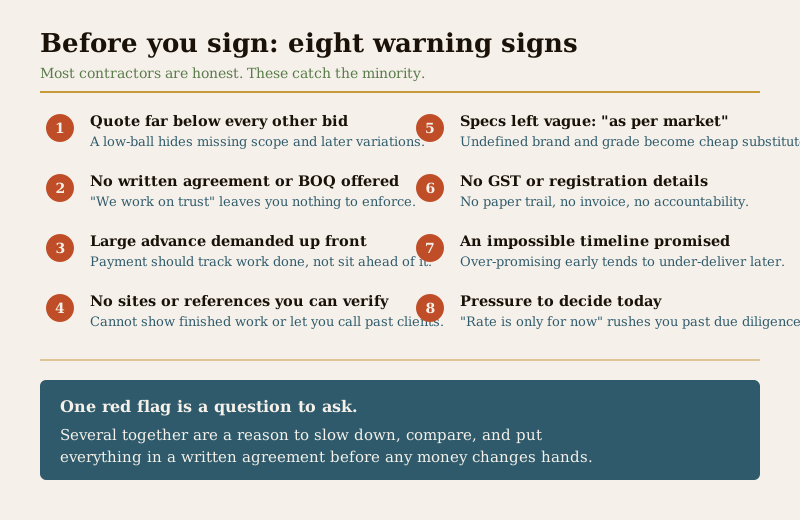
A single red flag on its own is usually just a question to ask, not a verdict. A contractor may quote low because their overheads are genuinely lower, or ask for an advance because they must buy materials before starting. What should make you pause is a cluster of these signs appearing together, or one that the contractor cannot or will not explain when you ask.
A quote far below every other bid. When one price sits well under three or four others for the same work, the difference has to come from somewhere - usually thinner steel, a lower cement grade, unbranded fittings, or scope quietly left out that reappears as a "variation" later. A suspiciously low headline number often becomes the most expensive project by the end.
No written agreement or bill of quantities. "We work on trust, sir" sounds warm and costs you everything. Without a written agreement and an itemised bill of quantities, there is nothing to hold anyone to - not the scope, not the specification, not the price. This is the single most important safeguard on the whole list.
A demand for a large advance. A modest mobilisation advance to buy the first materials is normal. A demand for a big slice of the total before any work is done shifts all the risk onto you and can signal a contractor short of working capital, possibly funding another site with your money.
No sites or references you can verify. An established contractor is proud to show finished work and to let you speak to past clients. Vague answers, only photographs on a phone, or a refusal to share a single contactable reference is a meaningful gap.
Vague specifications - "as per market". When the quote says "flooring as per market rate" or "wiring as per standard" without naming brand and grade, you have handed the contractor the right to choose the cheapest option and pocket the difference. Undefined specs are where quality quietly leaks away.
No GST number or registration. A contractor operating with no GST registration, no letterhead and no proper invoice leaves you without a paper trail, without a tax-compliant record and with little to point to if things go wrong.
An impossible timeline. A contractor who promises to finish in half the time everyone else quotes is either misunderstanding the work or telling you what you want to hear. Over-promising at the start almost always becomes under-delivering later.
Pressure to decide fast. "This rate is only for today" or "I have another client waiting" is a sales tactic designed to push you past your own due diligence. A good contractor wants an informed client, not a rushed one.
Pre-signing red flags and their safeguards
| Red flag before signing | Why it worries | Your safeguard |
|---|---|---|
| Quote far below all others | Hidden cost-cutting or missing scope | Get three itemised quotes; ask the low bidder to explain the gap line by line |
| No written agreement or BOQ | Nothing is enforceable | Insist on a signed agreement and a detailed bill of quantities before any payment |
| Large advance demanded | Risk shifts to you; possible cash-flow trouble | Tie payments to completed stages; keep the advance small |
| No verifiable sites or references | You cannot check track record | Visit two finished sites and phone at least two past clients yourself |
| Vague specs, "as per market" | Cheapest materials substituted freely | Name brand, grade and make for every major item in the quotation |
| No GST or registration | No paper trail or accountability | Ask for GST number and a proper invoice; keep everything in writing |
| Impossible timeline promised | Over-promising foreshadows delay | Agree a realistic, milestone-based schedule and put it in the agreement |
| Pressure to decide today | Rushes you past due diligence | Take your time; a fair rate survives a few days of thought |
While work is on site: the warning signs
Signing well is half the battle. The second wave of red flags appears in the daily life of the project - and because so much of a building is covered up as it goes, the time to catch problems is while they are still visible.
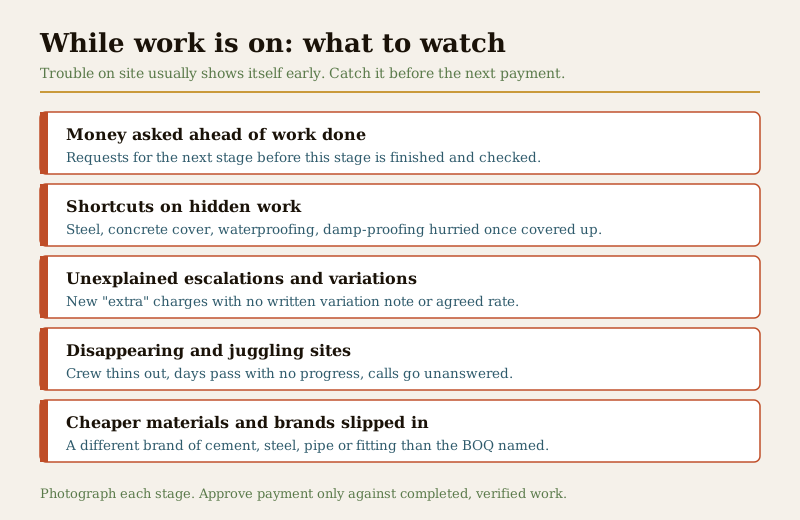
Payments asked ahead of the work done. The healthiest arrangement pays for work already completed and inspected. When requests start arriving for the next stage before this one is finished, the money and the progress have drifted out of step - the clearest early sign of trouble.
Quality shortcuts on hidden work. The most damaging corners are cut where you will never see them once the work is covered: too little steel or wrong spacing in a slab, inadequate concrete cover, skipped or thin waterproofing on a terrace or bathroom, missing damp-proofing. These are the failures that surface as cracks and leaks years later, long after the contractor has gone. This is exactly where your own eyes, photographs, or a supervising engineer earn their keep.
Unexplained escalations and variations. Prices genuinely change and real extras do arise. What is not acceptable is a stream of new charges with no written variation note, no agreed rate and no prior approval. Every extra should be documented and signed off before the work is done, not sprung on you in the next bill.
Disappearing and juggling multiple sites. A crew that thins out, days that pass with no visible progress, and calls that go unanswered often mean your contractor has taken on more sites than they can staff and is shuffling labour between them - frequently funded by advances taken from each client.
Cheaper materials and brands slipped in. A different brand of cement, a lighter grade of steel, an unbranded pipe or a cheaper fitting than the bill of quantities named is a substitution that pockets the difference. Check deliveries against the specification, and keep the labels and delivery challans.
During-work red flags and what to do
| Red flag during work | What it may mean | Your action |
|---|---|---|
| Payment sought ahead of work | Cash-flow trouble; risk to you | Pay only against completed, inspected stages per the agreed plan |
| Shortcuts on hidden work | Steel, cover or waterproofing skimped | Inspect and photograph before concealment; involve your engineer or a PMC |
| Unexplained cost escalation | Undocumented variations | Require a written, signed variation with rate and reason before work proceeds |
| Contractor disappears or juggles sites | Overcommitted labour | Log dates and progress; withhold the next stage payment until work resumes |
| Cheaper materials substituted | Difference pocketed | Match every delivery to the BOQ brand and grade; keep challans and labels |
For the day-to-day discipline that prevents most of these - stage payments, a site diary, photographs and periodic inspection - see the full guide to managing your contractor and supervising the site. If your project is an interior fit-out rather than a build, the parallel list of interior contractor warning signs covers the fit-out specific traps.
Keeping it fair: paper over promises
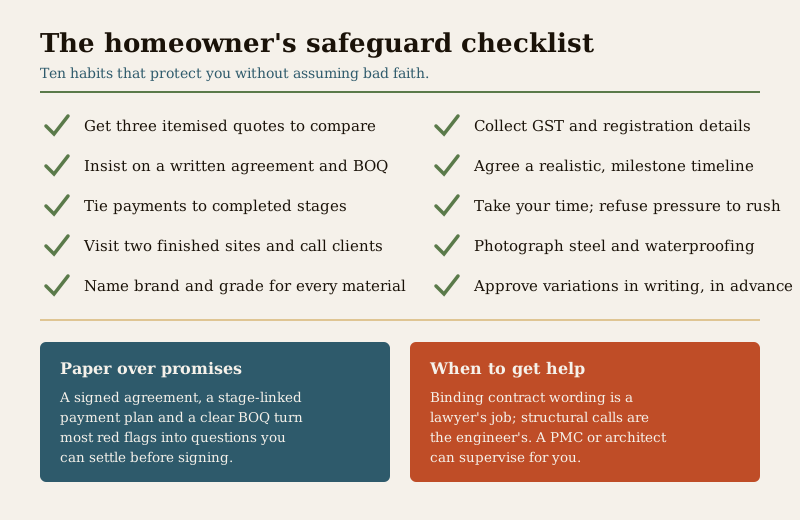
Almost every safeguard on this page reduces to one habit: put things on paper before, not after. A signed agreement, a stage-linked payment plan and a specific bill of quantities turn most red flags into simple questions you can settle before money changes hands. None of this assumes bad faith. Clear documents protect the honest contractor too, by removing the misunderstandings that sour good relationships - which is why a professional will welcome them, not resist them.
Know, too, where your own judgement should stop. The binding wording of the agreement is a lawyer's job, especially for a large build. Structural questions - whether the steel is right, whether the slab is safe - belong to a qualified engineer or architect. If you cannot be on site often, an architect running site supervision or a project management consultant can watch the hidden work for you. And if a dispute has already gone wrong, legal recourse is a matter to take to a lawyer, not to settle from an article.
Key takeaways
- Most contractors are honest; these signs protect you against the minority and keep good relationships clear.
- Before signing, watch for a low-ball quote, no written agreement or BOQ, a large advance, unverifiable references, vague "as per market" specs, no GST, an impossible timeline and pressure to decide fast.
- During work, watch for payments running ahead of progress, shortcuts on hidden work like steel and waterproofing, undocumented escalations, a disappearing contractor and cheaper material substitutions.
- One red flag is a question; several together, or one the contractor will not explain, is a reason to pause.
- Your strongest safeguards are three itemised quotes, a signed agreement and BOQ, stage-linked payments, verified references, named material grades and written variations.
- Photograph hidden work before it is covered, and match every delivery to the specification.
- Defer binding contract wording to a lawyer and structural calls to an engineer; all figures here are indicative - get real local quotes.
References
- Council of Architecture (CoA) - guidance on engaging registered architects and scope of professional services.
- Real Estate (Regulation and Development) Act, 2016 (RERA) - state authority portals for verifying registered projects and promoters, where relevant.
- Goods and Services Tax (GST) portal - verifying a contractor's GST registration number.
- Studio Matrx guides: how to hire a building contractor, construction agreement with a contractor, how to read a construction quotation, managing your contractor and site supervision, and interior contractor warning signs.
Export this guide
Related Guides — Deep-dive reading
Managing Your Contractor and Site Supervision in India (2026)
A homeowner's playbook for overseeing the build once work starts - the rhythm of site visits, what to check at each stage, and how to release payments only against verified, measured work.
Hiring ProfessionalsThe Complete Guide to Planning Your Home Before You Spend a Rupee
Why the cheapest, most powerful work happens on paper — a planning playbook for Indian homeowners before any money moves
Home PlanningHow to Hire a Building Contractor in India: Find, Shortlist, Compare Quotes and Vet the Right Builder (2026)
A homeowner's guide to choosing the main civil contractor who will build your house - where to find them, how to shortlist and evaluate on experience and finances, how to get comparable quotes on one scope, which contract type suits you, what to verify, and how to set clear expectations - with an evaluation scorecard and a questions-to-ask table.
Hiring ProfessionalsRelated Tools — Try Free
Contract Studio
AI generates professional architecture service agreements with milestones and scope.
ArchitectAIInterior Contract Clause Checklist
16 sections and 98 checkboxes covering scope, BOQ, milestones, penalties, warranty, and disputes.
Contract ChecklistInterior Red Flag Checklist — Before Signing
54 red flags across 8 categories with a live risk score and personalised PDF.
Red Flag Checklist