
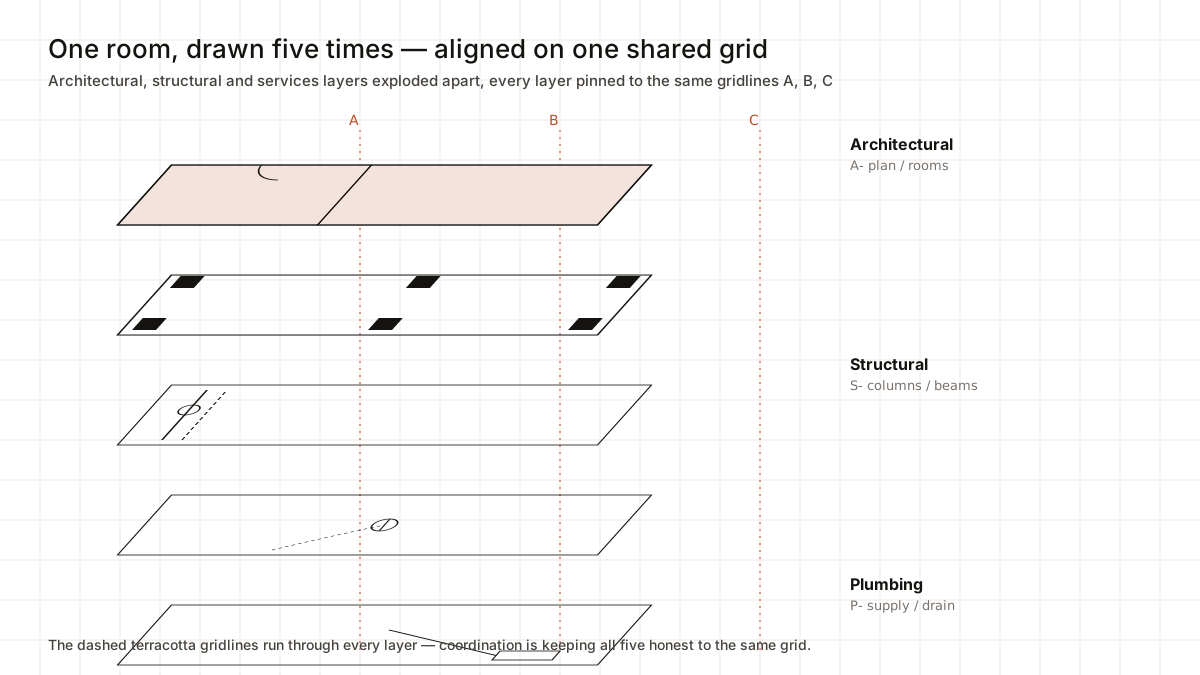
How All Construction Drawings Work Together
From one grid to a finished house — how architectural, structural and MEP sheets coordinate, where clashes hide, the order drawings are issued, and how a small change ripples across the whole set.
Imagine five people building your house from five separate booklets, each in a locked room, none allowed to phone the others. The architect draws the rooms. The structural engineer draws the columns and beams that hold those rooms up. The plumber draws the pipes. The electrician draws the wires. The air-conditioning consultant draws the ducts and indoor units. Each booklet is correct on its own — and yet, when the booklets meet on a real plot of land, a beam can land exactly where a duct needs to pass, a column can rise in the middle of a doorway, and a drain can run straight into a foundation. Nobody drew a mistake. The mistake is that nobody coordinated.
This is the quiet truth of a construction drawing set: no single sheet builds a house, and no single sheet is meant to. The house is built by the agreement between the sheets. Reading the set well is less about reading any one drawing and more about reading the relationships — how the architectural, structural and services drawings are pinned to the same skeleton, where they are most likely to collide, in what order they are issued, and how a single change on one sheet sends ripples across all the others.
If you have read the rest of this cluster as a stack of separate disciplines, this guide is where the stack becomes one building.
Drawing coordination is the discipline of keeping every sheet in the set — architectural, structural and MEP — pinned to one shared grid and one shared level datum, so that the parts described separately actually fit together on site without clashing.
This guide is written for the homeowner who now knows what each sheet is, and wants to understand how they talk to each other — and then, in deeper layers, for the B.Arch or civil student and the junior site engineer who will one day run that coordination. It is the connective tissue of the whole cluster. It assumes you have met the disciplines in the construction drawings masterclass; it leans on the column layout and beam layout guides for the structural grid, on plumbing, electrical and HVAC for the services, and it hands you onward to the construction drawing review checklist to actually catch these problems before a pour.
A drawing set is not five drawings of a house. It is one house, drawn five times, and coordination is the promise that the five agree.
1. One grid, one datum — the backbone everyone shares
Start with the single idea that holds the whole set together. Every discipline draws on top of the same two reference systems: a grid that fixes where things are in plan, and a level datum that fixes how high things are. The architect did not invent her own grid and the plumber his own. They borrow the structural engineer's grid and the surveyor's datum, and everyone pins their work to it. That shared backbone is what lets five people working in five offices describe the same point and mean the same point.
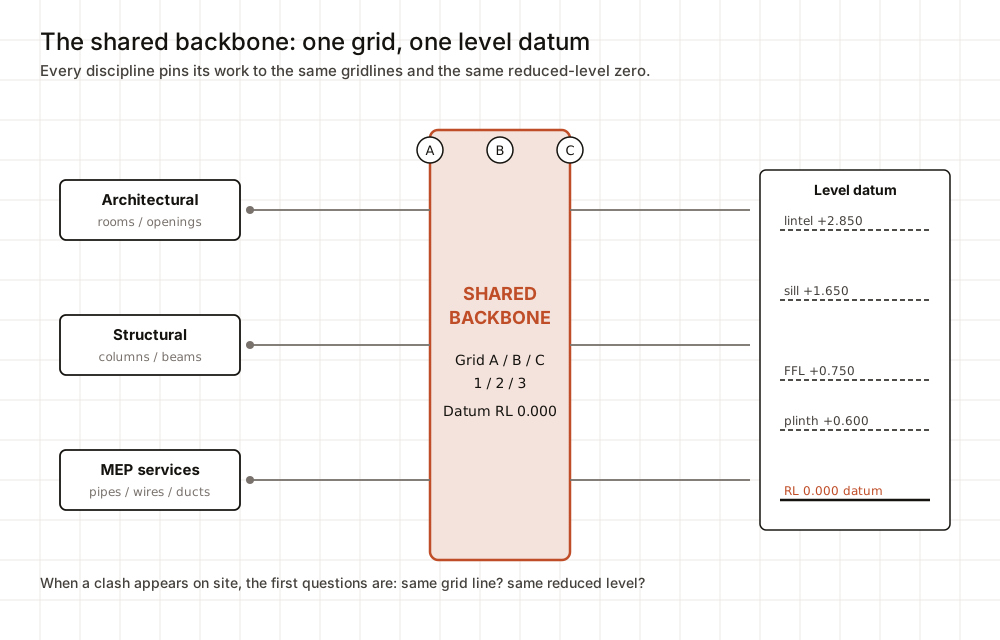
The grid is a set of reference lines, lettered one way (A, B, C across) and numbered the other (1, 2, 3 down), each ending in a circle called a grid bubble. Columns usually sit at the intersections, so the column at grid B3 is the same column on the architectural plan, the structural plan, the plumbing plan and the electrical plan. The level datum works vertically: a fixed zero on site (often the road level or a permanent benchmark) from which every height is measured as a Reduced Level (RL). A note like "FFL +0.450" means the finished floor is 450 mm above that zero — and it means the same 450 mm on every sheet.
| Coordinate system | What it fixes | Written as | Shared by |
|---|---|---|---|
| Grid | Position in plan (where on the floor) | A, B, C / 1, 2, 3 with bubbles | Architectural, structural, all MEP |
| Level datum | Height (how far up) | RL, FFL, plinth, sill, lintel | Architectural, structural, all MEP |
For students & site engineers: coordination is, at heart, the discipline of keeping every sheet on the same grid and the same RL. When a clash surfaces on site, the first two questions are almost always "are we reading the same grid line?" and "are we at the same reduced level?" In a BIM workflow the discipline models are federated onto exactly this shared origin and grid before any clash check is even run — get the origin wrong and every clash report is noise. The grid and datum are agreed and frozen early precisely because everything downstream inherits them.
2. Where the sheets must agree — and where they clash
Because every discipline shares the floor plan but owns a different layer of it, the same physical space gets crowded. Walls, ceilings, shafts and slabs are shared real estate. Coordination is the work of making sure two things do not try to occupy the same cubic centimetre. When they do, it is called a clash.
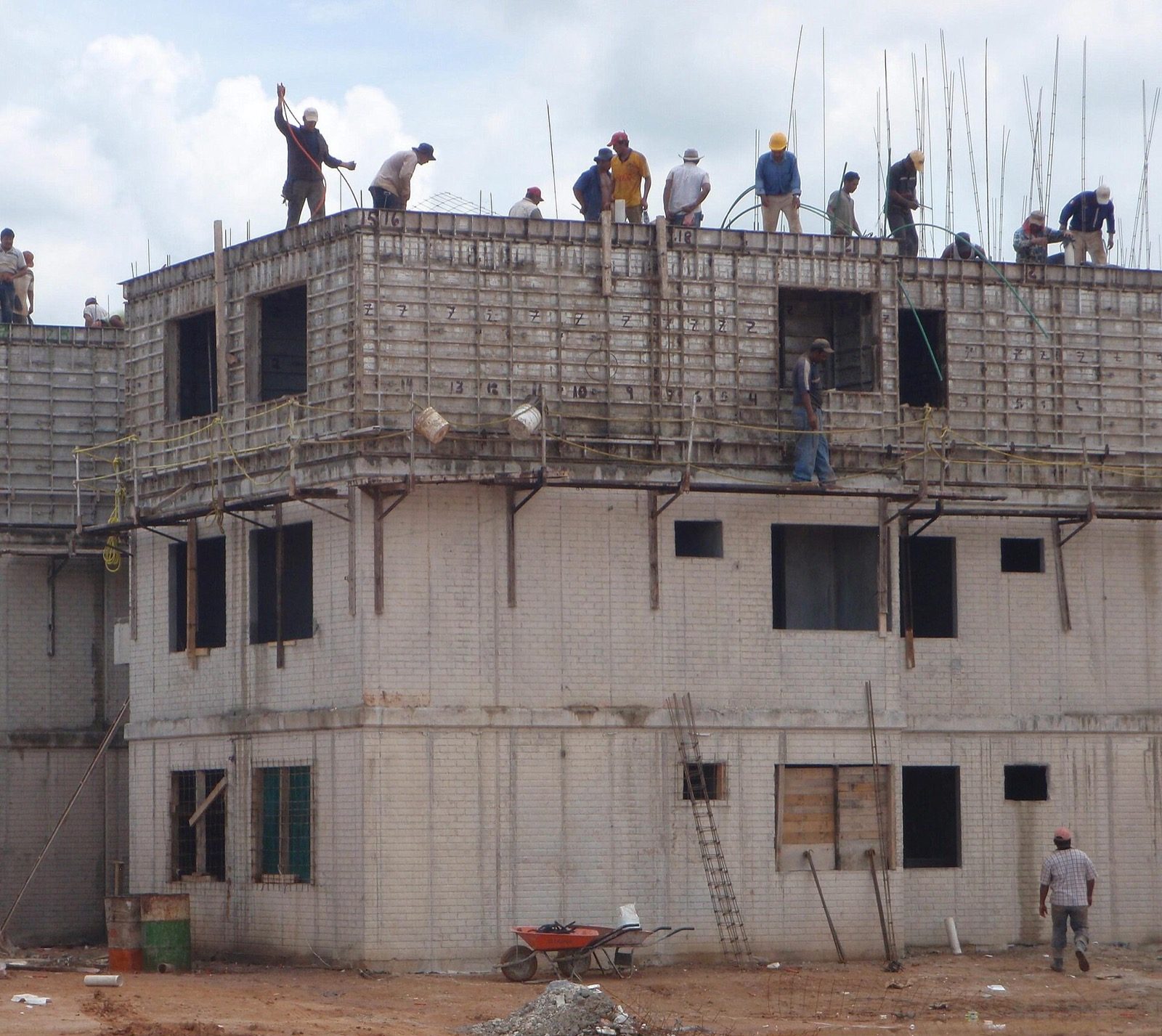
This is the real backbone the drawings describe: a reinforced-concrete frame rising floor by floor, where slabs, columns and beams are cast in sequence and every pipe, wire and duct must later find a clear route through them. It is on a frame exactly like this that an uncoordinated set turns into a chipped ceiling or a re-cut slab.
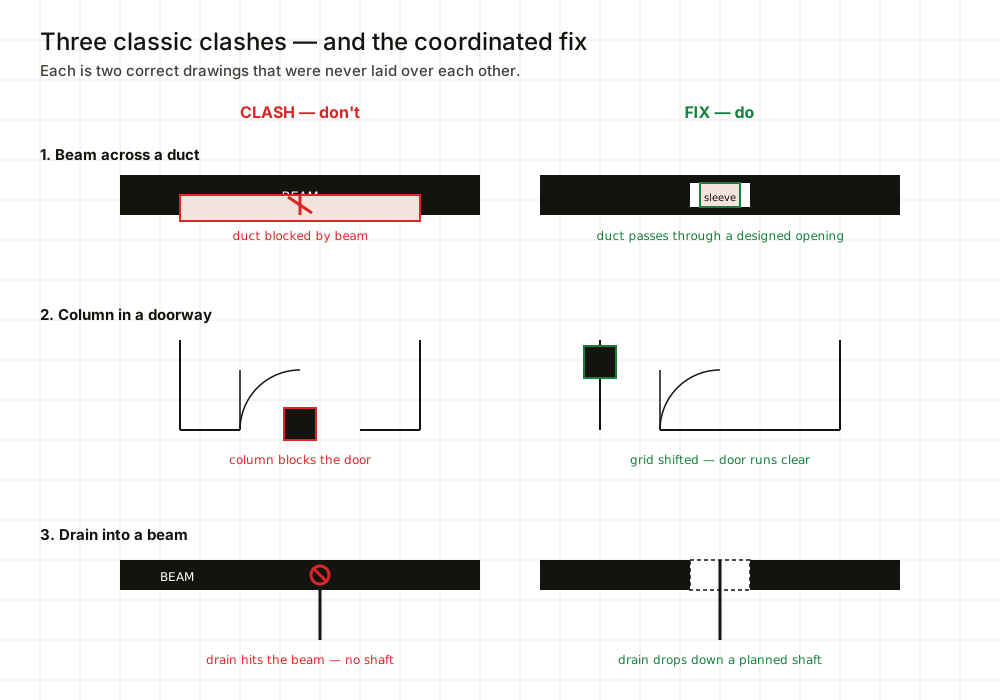
Three clashes show up again and again on Indian house projects, and all three are catchable on paper:
| Clash | What collides | Why it happens | The fix |
|---|---|---|---|
| Beam vs duct | A beam blocks a duct or pipe route | Services routed after structure was frozen, ceiling too shallow | Reroute duct, add a beam opening (sleeve) by design, or drop the ceiling |
| Column in a doorway | An RCC column lands in a door or passage | Grid set without checking circulation | Shift the grid or the door at the GA stage, before structure |
| Pipe vs beam / slab | A drain or stack hits a beam or has no shaft | Wet areas not stacked, no plumbing shaft planned | Align wet areas floor to floor, provide a dedicated shaft |
The pattern is always the same: a clash is two correct drawings that were never laid over each other. The cure is to lay them over each other — physically overlaying the architectural, structural and services plans on the same grid, or, in a modelled project, federating the discipline models and running automated clash detection so the software flags every overlap before anyone reaches site. The earlier a clash is found, the cheaper it is: a clash caught on a screen costs an email; the same clash caught after the slab is poured costs a breaker, a delay and an argument.
Red flag: if the toilet on your plumbing plan does not sit exactly over the toilet on the architectural plan, or a beam on the structural sheet crosses a doorway on the architectural sheet, you have found a coordination error. Do not assume "the site will sort it out." Stacked wet areas, beams that clear openings and ducts that have a route are coordination decisions that belong on paper, before the concrete. The review checklist gives you the exact overlay checks to run.
3. Following one room across the five layers
The most useful habit you can build is to pick one room and trace it across every discipline, watching it transform. It is the same room and the same grid reference each time — only the layer changes.
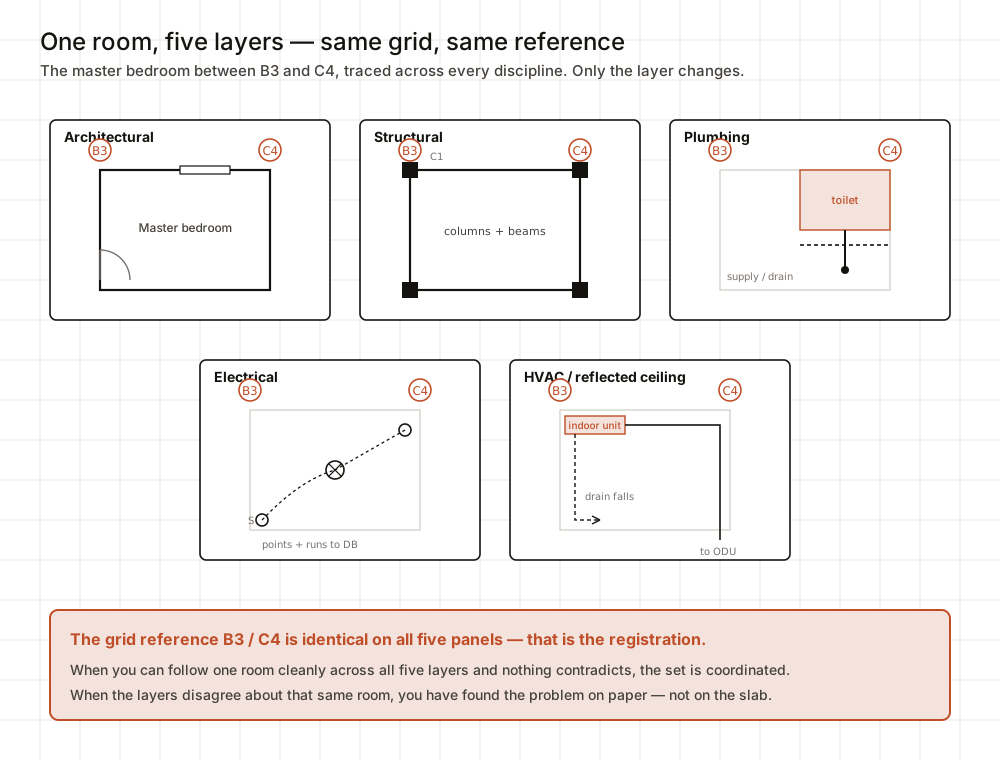
Take a master bedroom sitting between grid lines B3 and C4. On the architectural plan it is a labelled rectangle with a door swing, a window, a wardrobe niche and dimension strings. On the structural plan that same rectangle dissolves into the columns at its corners and the beams spanning between them — you need to know those, because a wardrobe niche cannot eat into a column and a false ceiling has to clear the beam soffit. On the plumbing plan only the attached toilet is busy, with supply and drainage lines. On the electrical plan the room sprouts switches, sockets, a light and a fan point, with dotted wiring runs back to the distribution board. On the HVAC / reflected ceiling plan it shows the AC indoor unit, its condensate drain falling by gravity and its refrigerant route to the outdoor unit.
Same room, same grid reference, five readings — and the arrows are the whole point. A well-coordinated set keeps that grid reference identical across every sheet, so the AC drain on the HVAC plan, the slab slope on the structural plan and the floor trap on the plumbing plan all agree about where the water goes. When you can follow one room cleanly across all five layers and nothing contradicts, that set is coordinated. When the layers disagree, you have found the problem on your dining table instead of on your slab.
4. The issue sequence — why drawings arrive in waves
A drawing set is not produced all at once, and it is not produced in any order. It is issued in deliberate waves, because each discipline needs the one before it to be settled before it can do its own work properly. Understanding this sequence tells you why your architect cannot hand you "the final electrical plan" in week two — the electrical plan depends on decisions that are not frozen yet.
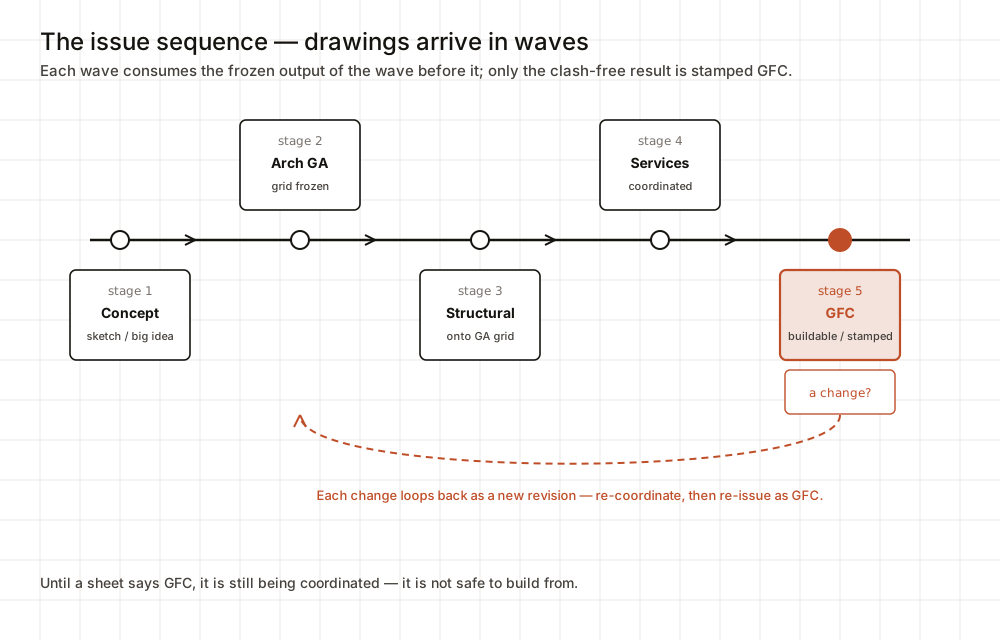
The broad order, used on most Indian house projects, runs like this:
| Stage | What is issued | Depends on | Status |
|---|---|---|---|
| 1. Concept | Sketch plans, the big idea | The brief and the site | For discussion |
| 2. Architectural GA | General Arrangement — floor plans, elevations, sections | Concept frozen | For coordination |
| 3. Structural | Column, beam, foundation, slab, reinforcement | GA grid frozen | For coordination |
| 4. Services (MEP) | Plumbing, electrical, HVAC, coordinated against 2 and 3 | GA and structure | For coordination |
| 5. GFC | The buildable, stamped version of every sheet | All clashes resolved | Good for Construction |
The General Arrangement drawings — the GA — are the overall architectural plans, elevations and sections that fix the layout and the grid. Everything downstream inherits the GA, which is why it is frozen first. Structure is drawn onto the GA grid; services are then drawn onto, and coordinated against, both the architecture and the structure. Only when the clashes between all of them are resolved does a sheet earn the stamp Good for Construction — GFC. A GFC drawing carries a revision number, a date and an approval stamp, and once it is released, site work must follow it strictly. Until a sheet says GFC (or your local equivalent), it is not safe to build from — it is still being coordinated.
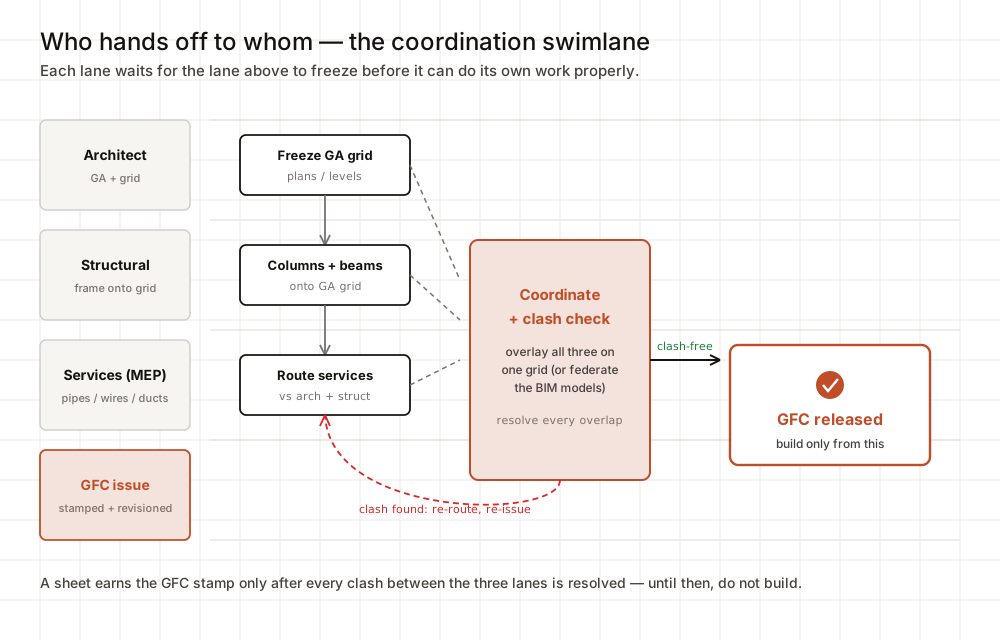
The timeline above shows the waves in sequence; this swimlane shows the handoffs between the people in each wave — who must wait for whom, and where the coordination and clash-checking actually happens before any sheet is stamped.
For students & site engineers: this is also why "design develops in passes." Services that are routed before structure is frozen will clash; structure designed before the GA is frozen will land columns in the wrong places. Each wave consumes the frozen output of the wave before it. Where a project uses BIM, this same sequence becomes a federated-model coordination cycle — architecture and structure are modelled, services are modelled onto them, clash detection is run, conflicts are resolved in coordination meetings, and only the clash-free result is issued as GFC. The waves are the same; the overlay is just digital.
5. Revision control — making sure everyone builds the same house
If drawings arrive in waves and then get corrected, there must be a way to know which version is current. That is revision control, and on a coordinated set it is not bureaucracy — it is the only thing standing between you and two trades building two different houses.
Every sheet carries a revision table, usually in or beside the title block. The first issue is normally Rev 0 (or a dash); each change after that bumps the revision — Rev A, Rev B, or Rev 1, Rev 2 — with a one-line reason and a date. The drawing number stays the same; the revision tells you the version. A coordinated set is only coordinated if every discipline is working from the same revision of every shared sheet.
| Element | What it means | Why it matters |
|---|---|---|
| Drawing number | The unique sheet code (A-101, S-201) | Identifies which sheet — never changes |
| Revision | The version (Rev 0, A, B…) | Identifies which version — changes with each issue |
| Revision date | When this version was issued | Pairs with the revision to fix the version |
| Approval / stamp | Who signed it off, GFC mark | Tells you it is safe to build from |
| Drawing issue register | The master log of what was issued, to whom, when | The single source of truth for "what is current" |
Red flag: if two sheets in the same set carry different revisions for the same drawing, if the revision box is empty, or if your contractor is holding a superseded print while the consultant has issued a newer one, stop. Building from an old revision is one of the most common and most expensive site errors — the plumber follows Rev A, the mason follows Rev C, and the bathroom drain ends up under a wall. The fix is dull and powerful: one drawing issue register that everyone trusts, and a habit of checking the revision before any cut, bend or pour.
6. The change ripple — why one small move is never small
Here is the idea that ties coordination, sequence and revision control into one lesson. Because every discipline is pinned to the same grid and the same room, a change to one element does not stay put. It ripples. The most innocent request — "can we just move this wall half a metre?" — can touch four disciplines and a dozen sheets.
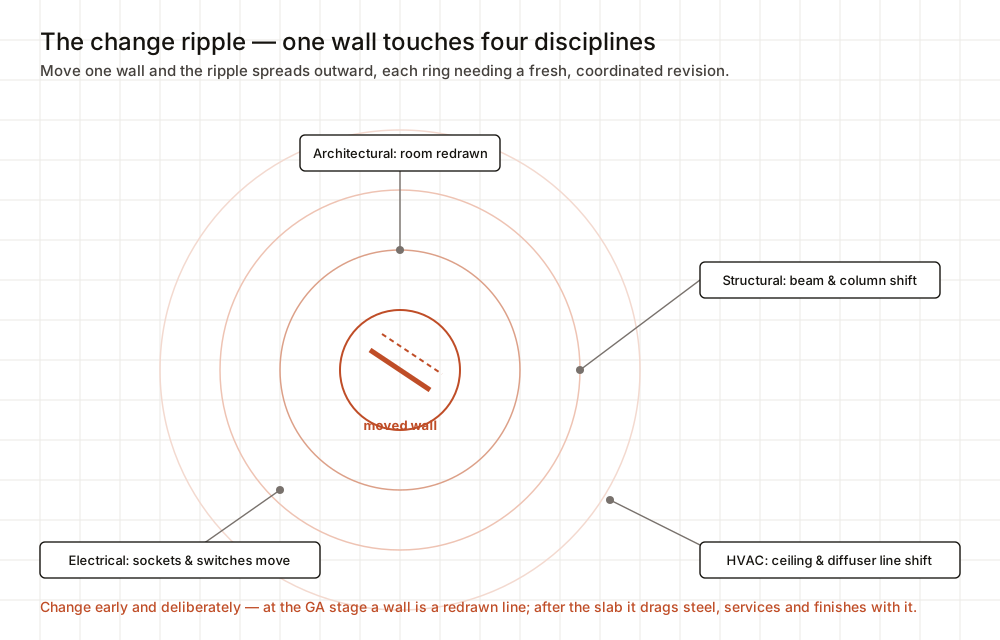
Follow the ripple from a single moved wall. On the architectural plan, the room dimensions change and the door may need to shift. On the structural plan, if a beam sat over that wall, the beam span and the columns supporting it may move — and a moved column is the most expensive change of all, because it cascades down to the foundation. On the electrical plan, the sockets and switches mounted on that wall move with it, and a circuit may need re-routing. On the HVAC and reflected ceiling plan, the false-ceiling line, a diffuser or the AC indoor unit position can all shift. One wall; four disciplines; a new revision on each affected sheet.
This is exactly why your architect resists late changes, and why a late change costs more than an early one. Early — at the GA stage — a moved wall is a redrawn line. Late — after structure is frozen, or after the slab is cast — the same move drags steel, services and finishes with it, each needing a re-issue and a re-check. The lesson for a homeowner is not "never change anything." It is "change early, change deliberately, and expect the ripple." When you do ask for a change, ask the same question your architect asks: what else does this touch? Then make sure every touched sheet gets a fresh, coordinated revision before anyone builds from it.
7. How to use this guide
Coordination is invisible when it works and catastrophic when it does not — which is why, as the homeowner, your job is not to do the coordination but to verify that it was done. You now have the four habits that let you do exactly that:
- Check the backbone. Confirm every discipline is on the same grid and the same levels (Section 1). A column at B3 should be at B3 on every sheet.
- Overlay and hunt for clashes. Lay the architectural, structural and services plans over each other and look for the three classics — a beam through a duct, a column in a doorway, a pipe with no shaft (Section 2).
- Respect the sequence and the stamp. Build only from GFC sheets, and understand why services arrive after structure (Section 4).
- Police the revisions. Make sure every trade holds the same, current revision of every shared sheet (Section 5).
Then take it to the one guide built for the job: the construction drawing review checklist turns all of this into a printable, sheet-by-sheet and room-by-room walkthrough you can do in a single sitting before work starts. To zoom back out to the whole set, return to the construction drawings masterclass; to read the disciplines that clash here in their own right, see plumbing, electrical and HVAC.
If you do not yet have a coordinated set — if you are still shaping the idea — explore layouts visually with DesignAI, browse ready, already-coordinated designs in our house plans library, or find an architect who will produce and coordinate a properly stamped set for your site. Good coordination is one of the things you are actually paying a professional for; see architect fee structures in India for who does this work and what it costs, and building a house in India for where it sits in the whole journey.
Image credits
- Photograph (a multi-storey building under construction showing its reinforced-concrete frame): WTF Formwork http://www.wallties.com — CC BY-SA 3.0, via Wikimedia Commons. Source: https://commons.wikimedia.org/wiki/File:Aluminum_Formwork.JPG
References & Further Reading
Indian standards & manuals
- IS 962 — Code of Practice for Architectural and Building Drawings (sheet sizes, title block, layout, scales, line-work, lettering, graphical symbols and conventional representation — the shared grammar every discipline coordinates within).
- National Building Code of India, NBC 2016 (Bureau of Indian Standards) — Part 2 (Administration, including drawing and approval procedure), Part 8 (Building Services, covering electrical and HVAC) and Part 9 (Plumbing Services, covering water supply, drainage and sanitation), the framework within which services are coordinated.
- IS 456 — Plain & Reinforced Concrete, Code of Practice (the structural layer that fixes columns, beams and slabs the services must clear).
- IS 732 — Code of Practice for Electrical Wiring Installations; relevant CPHEEO manual and IS 1742 / IS 2064 for plumbing & sanitary practice; NBC 2016 Part 8 / ISHRAE references for HVAC & ventilation — the three services layers that must be coordinated against architecture and structure.
Books / references
- Francis D. K. Ching, Architectural Graphics and Building Construction Illustrated — the classics on how the layers of a building are drawn and read together.
- Bureau of Indian Standards, SP 34: Handbook on Concrete Reinforcement and Detailing — the structural detail the services drawings must work around.
- Standard Indian texts on Building Drawing and Building Services used in B.Arch, B.E (Civil) and diploma courses, plus introductory references on BIM coordination and clash detection for the modelled workflow.
Companion Studio Matrx guides
- Construction drawings masterclass — the pillar that introduces the whole set.
- Understanding column layout drawings · Beam layout drawings explained — the structural grid and frame everything coordinates around.
- Plumbing drawings explained · Electrical drawings explained · HVAC drawings explained — the three services layers and their clashes.
- Construction drawing review checklist — the printable coordination and revision checks before a pour.
Author's Note — Amogh N P. The first time I watched a beautifully drawn ceiling get chipped open on site because a duct met a beam, I understood that the real skill of a building is not in any single drawing but in the spaces between them. Coordination is unglamorous — no client ever admired a clash report — and it is the difference between a calm site and a chaotic one. As a homeowner you do not have to do it, but you can ask the one question that flushes it into the open: show me the same room on every sheet, on the same grid, in the same revision. If they line up, you are in good hands. I wrote this guide so you would know to ask.
Disclaimer. This guide is an educational overview to help you understand how a construction drawing set coordinates across disciplines; it is not a substitute for a licensed structural engineer, MEP consultant or registered architect, and it is not itself a coordination service. All grid, level, size, slope and clearance references mentioned anywhere in this cluster are indicative and typical only — act exclusively on the stamped, coordinated, project-specific Good-for-Construction drawings prepared for your site, and consult the relevant professional before making any construction decision.
Export this guide
Related Guides — Deep-dive reading
Bathroom Planning for New Homes in India: Get It Right Before You Build
The bathroom decisions you cannot undo once the slab is cast — location and stacking, sunken vs non-sunken slabs, waterproofing, and the plumbing, electrical and ventilation you must coordinate with the civil work, stage by stage.
BathroomsConstruction Drawings Masterclass: How to Read Your Home's Working Drawings
The complete homeowner's field guide to the drawing set that builds your house — architectural, structural, plumbing, electrical and HVAC sheets, what each one is for, the symbols and scales that decode them, and how to review them before you pour a single footing.
Construction DrawingsPlumbing Drawings Explained
Water in, waste out — how to read supply lines, drainage and vents, the symbols and line types, slopes and traps, shafts and the sunken-slab logic that keeps your bathroom dry.
Construction DrawingsRelated Tools — Try Free
Cross-Ventilation Analyzer
Estimate airflow and air changes per hour (ACH) from room size, window areas, layout, and local wind — with NBC 2016 Part 8 compliance check.
Ventilation CalculatorInterior Layout Planner — Printable Graph Grid
Printable graph grid to sketch room layouts to scale before committing to furniture placement.
Layout ToolWindow Size Calculator
Get the right window size, glazing area and openable area for any room using NBC daylight rules.
Window Tool