

Home Window Maintenance Guide for India: Seasonal Schedule and Checklist
A year-round care calendar, a universal checklist and a repair-versus-replace framework for every window in your Indian home
A window is the only part of your home that has to move, seal out rain, take direct sun and stay clear all at once. In Indian conditions, that is a tall order: lashing monsoon, gritty dust, hard water, salt air on the coasts and termites inland all work against your windows year-round. The good news is that fifteen minutes of care a few times a year prevents almost every expensive failure. This is the umbrella guide for our window-care cluster: a seasonal schedule, a universal checklist and a simple decision framework for any window you own.
Most "broken" windows are not broken. They are blocked, dry, or unsealed, and a cloth, a spray and a tube of caulk fix them.
What this guide is (and is not)
This is the how-to and schedule. If you want to know what regular upkeep will cost you in rupees, read our companion Window Maintenance Cost guide instead. That guide budgets the money. This one tells you what to actually do, when to do it, and when to stop and call a professional.
The universal annual checklist
Every window, regardless of material, needs five things checked. Memorise these and you can service any window in your home.
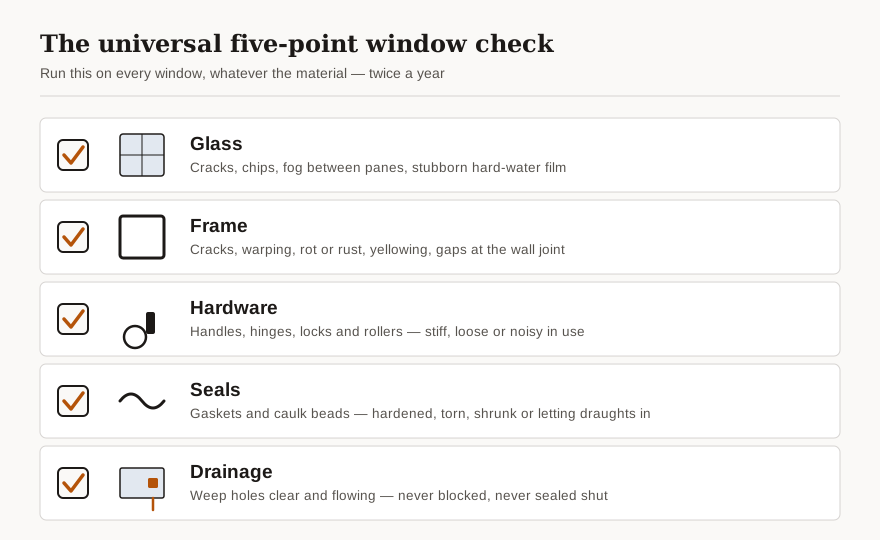
- Glass — clean both faces; look for cracks, chips and fog between panes.
- Frame — wipe down; inspect for rot (wood), corrosion or pitting (aluminium), yellowing or cracks (uPVC).
- Hardware — operate every hinge, stay, handle, lock and roller; clean and lubricate.
- Seals — run a finger along perimeter caulk and weatherstripping; check for gaps, hardening or peeling.
- Drainage — locate the weep holes at the bottom of the frame and make sure they are clear.
Fog or condensation between two panes of a double-glazed window is the one item you cannot fix yourself. It means the insulated glass unit seal has failed and the unit must be replaced. We explain this in the Window Seal Replacement guide.
The seasonal calendar
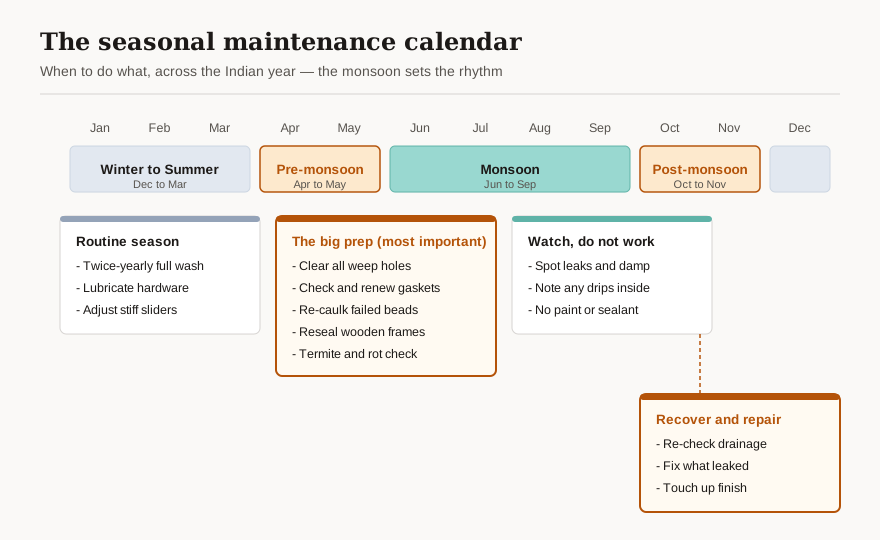
India's climate splits naturally into a pre-monsoon prep window, the wet season itself, and a cool dry stretch ideal for repainting and repairs. Build your routine around the rains.
| Season | Months | Priority tasks |
|---|---|---|
| Pre-monsoon | April to May | Re-caulk gaps, clear weep holes, lubricate hardware, spray-test for leaks, trim vegetation near frames |
| Monsoon | June to September | Watch for leaks and damp patches, wipe condensation, keep drainage clear, do not repaint |
| Post-monsoon | October to November | Deep-clean glass and tracks, inspect wood for rot, repaint or reseal wood if due |
| Winter and summer | December to March | General clean, second hardware service, check for draughts, plan replacements |
The single most valuable habit is pre-monsoon prep in April-May. Fixing a perimeter gap or a blocked weep hole before the rains is a five-minute job; chasing the leak it causes during the rains is a wet, repeated misery. Our Window Waterproofing guide covers the prevention system in detail, and the Window Leak Repair guide covers fixing a leak that has already started.
By material: a quick schedule matrix
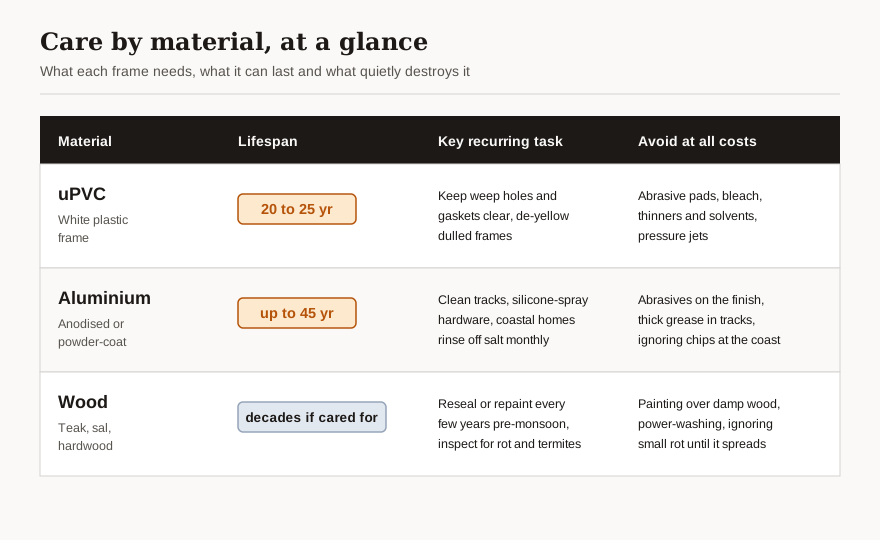
Different frames age differently. The matrix below shows the headline lifespan and the one care rule that matters most for each material. Pick the spoke guide for your frame for the full routine.
| Material | Typical lifespan | Key recurring task | Never do this | Full guide |
|---|---|---|---|---|
| uPVC | 20 to 25 years | Non-abrasive wash; clear drainage channels | Use solvents or scourers (they dull and yellow it) | uPVC care |
| Aluminium | Up to 45 years | Silicone spray on hinges and locks every 6 months | Use abrasives that scratch the finish | Aluminium care |
| Wood | Decades if maintained | Repaint or reseal every 3 years; rot check twice a year | Let paint fail before the rains | Wooden care |
Coastal homes add one rule across all materials: rinse salt off with fresh water every few weeks, because salt accelerates corrosion of aluminium and steel hardware. To understand how these materials behave before you buy, see Window Frame Materials Compared and Types of Home Windows in India.
How to do the core jobs
Cleaning glass and frames
Use a mild detergent in warm water with a soft cloth or microfibre. Never use abrasive pads, scouring powder, or harsh solvents: they scratch aluminium, dull uPVC and can damage Low-E or tinted coatings on glass. For streak-free glass, a squeegee pulled in overlapping strokes beats any spray-and-wipe. Hard-water mineral spots are an India-wide nuisance; tackle them with diluted white vinegar. The full method is in the Glass Cleaning guide.
Lubricating hardware
Operate everything, then apply a thin coat of silicone spray or light machine oil to hinges, friction stays, locks and roller tracks. Do this at least every six months, more often on the coast. Avoid thick grease: it catches dust and turns into grinding paste. Wipe sliding tracks clean before lubricating. The Window Hardware Maintenance guide covers de-rusting and adjustment.
Checking seals and drainage
Run a finger along the perimeter caulk. If it is cracked, peeling or has gaps, scrape it out and re-apply a fresh bead of silicone or polyurethane sealant. Squeezing-soft weatherstripping that no longer springs back should be replaced. Then find the small weep holes along the bottom outer edge of the frame and poke them clear with a thin wire; blocked weep holes are the most common cause of water pooling and overflowing inside.
Inspecting for rot and corrosion
For wooden frames, press a screwdriver into the lower corners and sill: soft, spongy wood is rot. Treat small patches by removing loose wood, applying a wood preservative and filling with epoxy wood filler, then sanding and repainting. This works only up to about 25 to 30 per cent rot. Beyond that, the frame should be replaced.
The repair-versus-replace decision
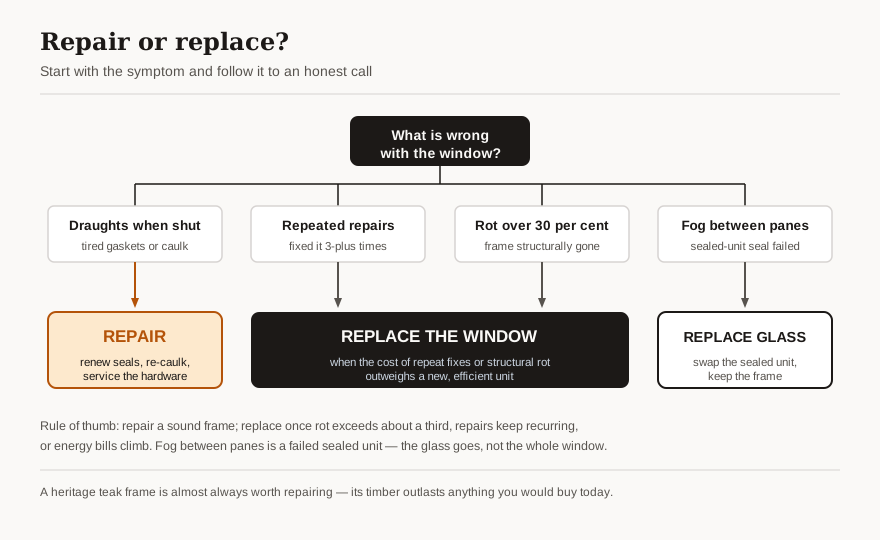
Not everything is worth saving. Use this framework to decide.
| Symptom | First action | Replace if |
|---|---|---|
| Streaks, dirt, hard-water spots | Clean | n/a, cleaning fixes it |
| Stiff or noisy operation | Clean track and lubricate | Mechanism is worn or seized after service |
| Draught when shut | Replace weatherstrip, re-caulk | Frame is warped out of square |
| Perimeter leak | Re-caulk, clear weep holes | Leak persists after sealing |
| Fog between panes | None, seal has failed | Always: replace the glass unit |
| Wood rot | Epoxy repair if small | More than 25 to 30 per cent rotten |
| Repeated repairs, rising bills | Tally the costs | Repairs exceed value of replacement |
When replacement is the answer, the Window Replacement guide walks through the signs, the full-frame versus insert choice and the process.
DIY or call a professional?
Be honest with yourself about the line.
- DIY-friendly: cleaning glass and frames, lubricating hardware, clearing weep holes, re-caulking the perimeter, replacing weatherstripping, small epoxy rot repairs.
- Call a professional: replacing a failed insulated glass unit, re-glazing large or high panes, repairing extensive rot, squaring a warped frame, and any work on upper floors where you cannot stand safely.
If the job is above your head, literally or figuratively, hire it out. A scratched coating or a fall is more expensive than the service call.
Your maintenance routine in one line
Twice a year, clean and lubricate; every April-May, seal and clear drainage before the rains; once a year, inspect for rot, corrosion and fog. Do that and your windows will reach, or beat, the lifespans in the matrix above.
References
- Bureau of Indian Standards, IS 1948 and related window standards: https://www.bis.gov.in
- Energy Star, "Update or Replace Windows": https://www.energystar.gov/saving-center/work-from-home-tips/windows
- US Department of Energy, "Update Your Windows": https://www.energy.gov/energysaver/update-your-windows
- US EPA, condensation and indoor moisture guidance: https://www.epa.gov/mold
Export this guide
Related Guides — Deep-dive reading
Aluminium Window Maintenance
How to clean, lubricate and protect aluminium windows in India — track care, hinge servicing, finish care and the coastal salt rinse
Windows & GlazingDoor Maintenance Guide India: A Seasonal Care Routine to Keep Doors Smooth for Decades
Oil the hinges, tighten the screws, lube the lock, check the seals and re-coat the finish — a simple seasonal calendar that stops Indian doors from binding in the monsoon, sagging, tarnishing on the coast or falling to termites.
Home Doors & EntrancesWindow Hardware Maintenance: Servicing Hinges, Stays, Rollers and Locks in India
Clean, lubricate, adjust and de-rust the moving parts of every window — a 6-monthly servicing routine for Indian conditions
Windows & GlazingRelated Tools — Try Free
Monsoon-Readiness Checklist
Pre-rain home audit across 9 categories — terrace, drains, waterproofing, electrical, HVAC, pest, vehicles, documents.
Seasonal AuditWindow Maintenance Cost Calculator
Estimate annual window upkeep by frame material — yearly, per-window and 5-year cost.
Window CalculatorWindow Material Comparison Tool
Compare uPVC, aluminium, wood, steel and composite windows on cost, life, upkeep and insulation.
Compare