

Wooden Window Maintenance
Reseal, inspect and repair timber windows — and know when to replace a rotten frame
A well-kept wooden window can outlast the house around it — teak frames from the 1950s still swing true in old Bengaluru and Kochi homes. The catch is in those three words: well-kept. Wood is the one frame material that quietly punishes neglect, and India gives it two relentless adversaries — the monsoon and the termite. Let a finish wear thin for a couple of wet seasons and water creeps into the grain; ignore a soft patch near the sill and dry rot, or a termite gallery, can hollow a stile from the inside.
This is the upkeep and restoration guide. If you are still choosing or buying timber windows, read our companion Wooden Windows in India instead — that one covers species, joinery and price. This one is about keeping the ones you already own alive: the care schedule, how to spot and repair small rot yourself, and the honest line where restoration ends and replacement begins.
Wood does not fail suddenly. It fails one missed monsoon at a time. A finish is not decoration — it is the raincoat.
Why wood needs a finish, not just a wash
Aluminium and uPVC are essentially inert; wood is not. Bare or under-finished timber absorbs moisture, swells, then shrinks as it dries, opening the grain and the joints. Each cycle lets in more water, and persistently damp wood is exactly what dry-rot fungus and subterranean termites are looking for. The finish — paint, varnish or oil — is the barrier that keeps the moisture content low enough that neither can take hold.
That is why the single most important habit is repaint or reseal roughly every three years, and sooner on the weather-facing (usually south and west) elevations that take the brunt of driven monsoon rain.
Oil vs varnish vs paint
There is no single "best" finish — it is a trade-off between looks, protection and how much upkeep you are signing up for.
| Finish | Look | Protection | Reseal interval | Best for |
|---|---|---|---|---|
| Penetrating oil (teak/tung) | Natural, matte, shows grain | Moderate; soaks in, no surface film | ~1-2 years | Sheltered teak, interiors, those who like raw timber |
| Varnish / PU clear | Glossy, shows grain | Good, but film cracks and peels in UV | ~2-3 years | Covered verandah windows, decorative joinery |
| Exterior paint (opaque) | Solid colour, hides grain | Best for exposed, rain-hit windows | ~3 years | West and south elevations, older softwood frames |
A practical rule for Indian conditions: oil the sheltered, paint the exposed. Oil is forgiving to reapply but offers the least defence against heavy rain; opaque exterior paint is the toughest raincoat for a window that faces the weather, even if it hides a beautiful grain.
The wood-care schedule
Wood care splits into little-and-often (cleaning, inspection) and occasional-but-essential (resealing). Build it around the monsoon: get the protective work done before the rains, not during them.
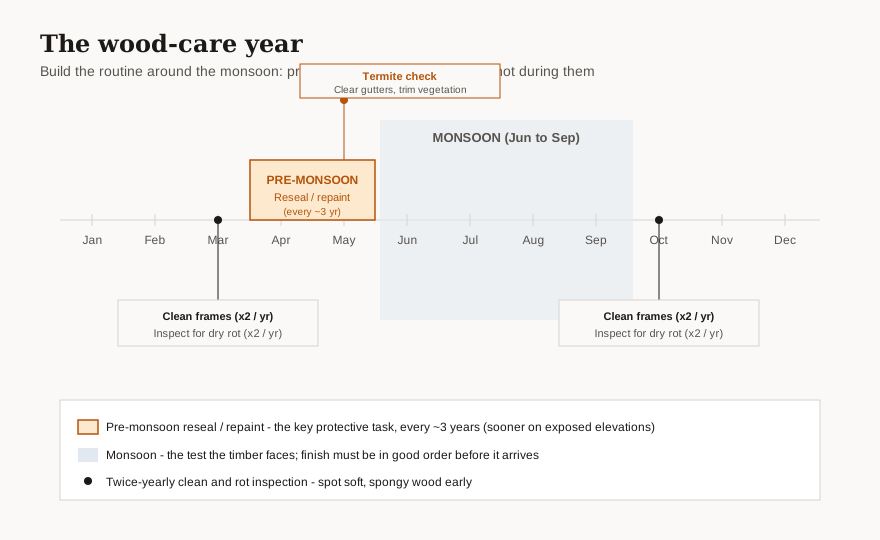
| Task | Frequency | How |
|---|---|---|
| Clean frames | Twice a year | Soft cloth, mild detergent in warm water, wrung damp; wipe dry. No abrasives. |
| Inspect for dry rot | Twice a year | Press suspect areas with a thumb or blunt screwdriver; soft, spongy or flaky wood = rot. |
| Termite check | Twice a year (one pre-monsoon) | Look for mud tubes, hollow tap-sound, fine frass/dust below the frame, blistered paint. |
| Touch up chips and cracks | As needed | Fill and spot-paint promptly so water cannot enter the breach. |
| Repaint / reseal | Every ~3 years (sooner if exposed) | Sand, prime bare patches, re-coat. Do it pre-monsoon. |
| Clear gutters and trim vegetation | Pre-monsoon | Stop overflow and splash-back wetting the frame; keep creepers off the timber. |
Cleaning, properly. Mild detergent and a soft cloth or microfibre — never scouring pads, steel wool, or harsh solvents. Abrasives scratch the finish and open the very grain you are trying to seal; aggressive solvents strip it. Wipe along the grain and dry the wood afterwards; standing water in the joints is the enemy.
Keep the surroundings dry. Blocked gutters that overflow onto a window, or a money-plant creeper climbing the frame, keep the timber permanently damp and feed rot. Clearing gutters and trimming back vegetation is unglamorous but it is half the battle.
Spotting dry rot and termites early
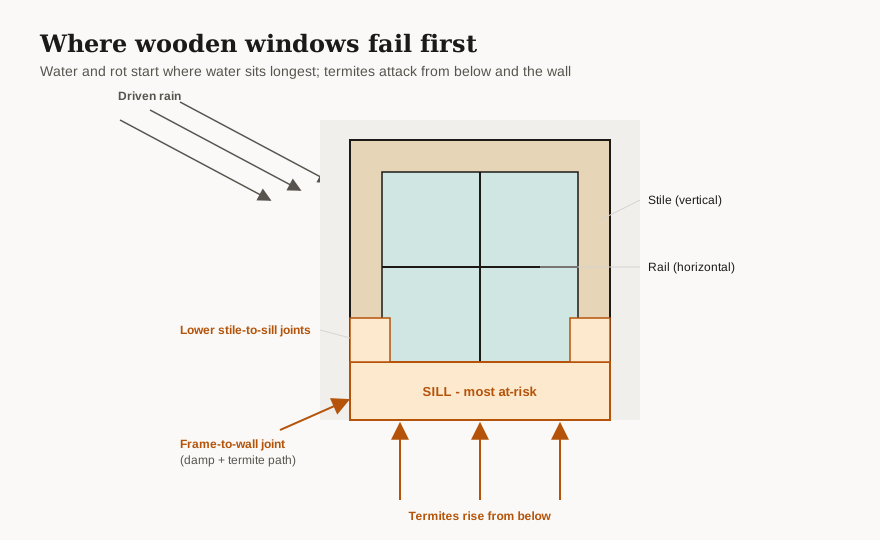
The two threats attack from predictable places. Dry rot and water damage start where water sits longest — the sill (the bottom horizontal member) and the lower corners where the stiles meet the sill. Termites come from below and from the wall, so the joint where the frame meets masonry and the bottom of the frame are prime suspects.
| Symptom | Likely cause | What to do |
|---|---|---|
| Soft, spongy wood; crumbles when pressed | Dry rot / wet rot | Cut back to sound wood, treat, fill (below) |
| Flaking, bubbling paint with damp behind | Water ingress under finish | Strip, dry, treat, reseal |
| Mud tubes, hollow tap, fine dust below frame | Termite infestation | Call pest control; then assess timber damage |
| Dark stains, musty smell | Persistent damp | Find the water source first, then dry and seal |
A soft patch the size of a coin today is a five-minute epoxy repair. The same patch ignored through two monsoons can mean a new sash.
Repairing small rot yourself
If the rot is localised and shallow — a soft patch, not a stile gone hollow end-to-end — this is a genuine DIY job with epoxy wood filler. The sequence matters; skipping the preservative or painting over damp wood just traps the problem.
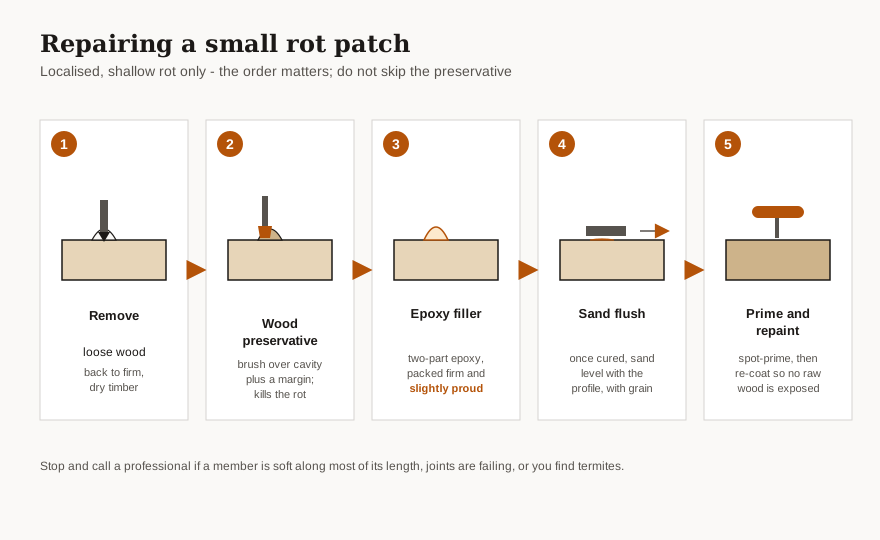
1. Remove the loose wood. Dig out everything soft and crumbling with a chisel or scraper, back to firm, sound timber. Let the area dry fully — pack the repair only into dry wood.
2. Apply a wood preservative / hardener. Brush a wood preservative (and a hardener, if the surrounding wood is punky) over the cavity and a margin around it. This kills any remaining rot spores and stops it spreading under your repair.
3. Fill with epoxy wood filler. Pack two-part epoxy wood filler firmly into the cavity, slightly proud of the surface. Epoxy is used here, not ordinary putty, because it bonds, will not shrink, and takes screws and paint like solid wood.
4. Sand flush. Once fully cured, sand the filler down level with the surrounding profile, following the grain.
5. Prime and repaint. Spot-prime the bare repair, then re-coat with your matching finish so no raw wood or filler is left exposed to rain.
When to stop and call a professional: if a member has gone soft along most of its length, if structural joints are failing, or if you find termites — that is pest-control plus a carpenter, not a DIY filler job.
Do and avoid
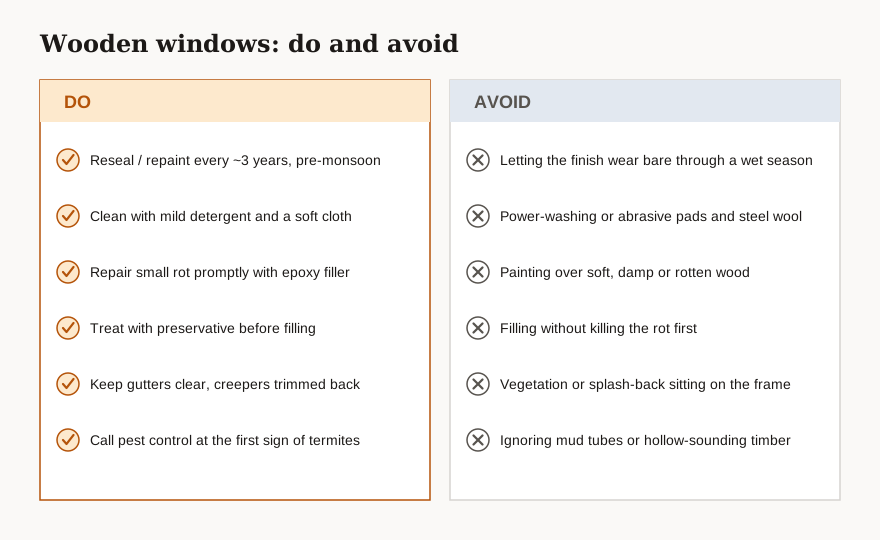
| Do | Avoid |
|---|---|
| Reseal/repaint every ~3 years, pre-monsoon | Letting the finish wear bare through a wet season |
| Clean with mild detergent and a soft cloth | Abrasive pads, steel wool, harsh solvents |
| Inspect and repair small rot promptly with epoxy | Painting over soft, damp or rotten wood |
| Treat with preservative before filling | Filling without killing the rot first |
| Keep gutters clear and creepers trimmed back | Letting water splash or vegetation sit on the frame |
| Call pest control at the first sign of termites | Ignoring mud tubes or hollow-sounding timber |
Restore or replace?
The standard guideline: if more than about 25-30 per cent of the frame is rotten, replace it rather than patch it. Beyond that share, you are filling more than you are saving, the structure is compromised, and repeated repairs cost more than a new frame. Below that threshold — and especially for a single soft patch or a worn sill — restoration is almost always the better-value path, because the rest of the timber is often decades-good.
| Situation | Restore | Replace |
|---|---|---|
| One soft patch, sound elsewhere | Yes — epoxy repair | — |
| Worn finish, no rot | Yes — sand and reseal | — |
| Rot under ~25-30 per cent of frame | Usually — splice/fill | — |
| Rot over ~25-30 per cent | — | Yes |
| Active structural / joint failure or heavy termite damage | — | Yes |
For the full decision logic and what a replacement involves, see our Window Replacement Guide. And because most wood failure begins with water, pair this with Window Waterproofing — the sloped-sill, sealant and drainage work that keeps rain off the timber in the first place.
For the broader, all-materials care routine, return to the pillar: Home Window Maintenance Guide. And if your timber windows are too far gone to save, Window Frame Materials Comparison weighs up wood against uPVC and aluminium for the replacements.
References
- Forest Survey / BIS guidance on timber preservation: https://www.bis.gov.in
- ICFRE / IPIRTI on wood durability and treatment in India: https://icfre.gov.in
- TERI / GRIHA building material maintenance notes: https://www.grihaindia.org
- CPWD specifications for wood and finishes (Vol. 1): https://cpwd.gov.in
Export this guide
Related Guides — Deep-dive reading
Furniture Maintenance Guide: Keep Every Piece Lasting in India (2026)
The start-here routing guide to keeping furniture in good condition through Indian heat, humidity, monsoon, dust, hard water and termites — the one enemy and one habit for each material, a routine schedule you can actually follow, and where upkeep hands off to a professional.
FurnitureHome Window Maintenance Guide for India: Seasonal Schedule and Checklist
A year-round care calendar, a universal checklist and a repair-versus-replace framework for every window in your Indian home
Windows & GlazingDoor Maintenance Guide India: A Seasonal Care Routine to Keep Doors Smooth for Decades
Oil the hinges, tighten the screws, lube the lock, check the seals and re-coat the finish — a simple seasonal calendar that stops Indian doors from binding in the monsoon, sagging, tarnishing on the coast or falling to termites.
Home Doors & EntrancesRelated Tools — Try Free
Window Material Comparison Tool
Compare uPVC, aluminium, wood, steel and composite windows on cost, life, upkeep and insulation.
CompareWindow Maintenance Cost Calculator
Estimate annual window upkeep by frame material — yearly, per-window and 5-year cost.
Window CalculatorMonsoon-Readiness Checklist
Pre-rain home audit across 9 categories — terrace, drains, waterproofing, electrical, HVAC, pest, vehicles, documents.
Seasonal Audit