

Aluminium Window Maintenance
How to clean, lubricate and protect aluminium windows in India — track care, hinge servicing, finish care and the coastal salt rinse
Aluminium windows are the workhorse of Indian homes: light, strong, fire-safe and slim-framed. Looked after, an aluminium frame can last up to 45 years — longer than uPVC or most timber. But "maintenance-free" is a myth the market sells you. Aluminium does not rot and does not warp, yet its hinges seize, its sliding tracks clog with dust, and near the sea it pits and whitens with salt corrosion. The good news: care is genuinely simple, mostly DIY, and takes about an hour twice a year.
This is the upkeep guide. If you are still deciding which window to buy — section sizes, glazing, thermal break — read our Aluminium Windows in India buying guide instead. THIS guide assumes the window is already on your wall and you want to keep it working and looking new.
Aluminium does not rot — so people stop checking it. The frame survives; the hinge, lock and track are what fail. Service the moving parts and the window outlives you.
Why aluminium needs its own routine
Aluminium itself is corrosion-resistant because it grows a thin oxide skin. But two things break that protection:
- Galvanic and salt corrosion. Where aluminium meets steel screws, or where coastal salt settles, you get white powdery pitting. Once the surface pits, the finish is gone for good.
- Surface finishes are thin. The colour you see is either an anodised layer (an electro-chemical oxide, very hard) or a powder coat (a baked polyester paint film, around 60 microns). Abrasive scrubbing, scouring pads or harsh solvents cut straight through both. There is no easy field repair — so the whole game is not scratching them.
The twice-a-year schedule
Aluminium is forgiving, so a light routine is enough. Do a deep clean and service at the start and end of the monsoon. Coastal homes step everything up — see the salt note below.
| When | Task | Time |
|---|---|---|
| Monthly (coastal only) | Fresh-water rinse of frames and sills to wash off salt | 10 min |
| Every 3 months | Vacuum or brush sliding tracks; wipe glass | 15 min |
| Every 6 months | Full wash of frames; lubricate hinges, stays, rollers and locks; check drainage weep holes | 45-60 min |
| Once a year | Inspect for pitting, loose screws, failed gaskets and IGU fog; tighten and re-caulk perimeter as needed | 30 min |
| Pre-monsoon | Clear weep holes, re-seal any gap in perimeter silicone, test sliders run free | 30 min |
Washing the frames — gently
Mix a few drops of mild dish detergent in lukewarm water. Wipe the frames with a soft cloth or microfibre, then rinse with clean water and dry with a second cloth to avoid water spots. That is the whole method.
What you must never use on aluminium:
| Do | Avoid |
|---|---|
| Mild soapy water, soft cloth, microfibre | Scouring pads, steel wool, hard brushes |
| Lukewarm water, dry off after | Abrasive/scouring powders (Vim-type) |
| Silicone-based lubricant on moving parts | Acidic or alkaline cleaners, bleach |
| A soft brush for textured powder coat | Thinner, petrol, acetone, strong solvents |
| Fresh-water rinse near the coast | High-pressure jet washers into the tracks |
Abrasives and solvents dull a powder coat and can etch anodising permanently — and unlike paint on a wall, you cannot simply recoat it at home.
Cleaning sliding-window tracks
The bottom track of a sliding aluminium window is the single biggest maintenance job in India, because dust, grit and monsoon grime pack into it and the rollers grind to a halt. A sticky slider is almost always a dirty track, not a broken window.
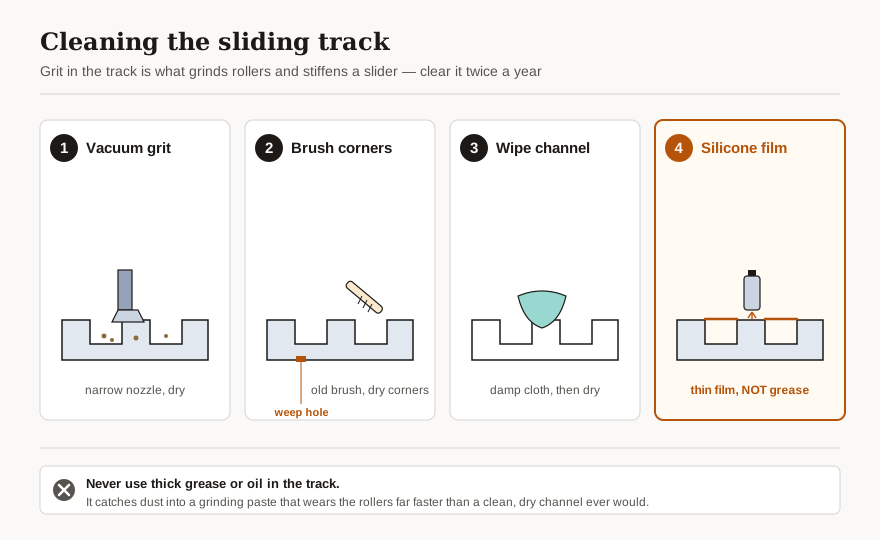
Step by step:
1. Slide the sash to one side and vacuum the loose grit from the exposed track.
2. Use a stiff dry brush or an old toothbrush to lift packed dirt from the corners and the weep holes at the track ends.
3. Wipe the channel with a damp cloth, then dry it.
4. Run a thin film of silicone lubricant along the running surface and the rollers. Wipe off the excess.
Do not pack grease into the track. Grease is sticky and grabs every speck of dust, turning into a black paste that jams the rollers worse than before. Use a dry-ish silicone spray instead.
Lubricating hinges, stays and locks
Every 6 months, give the moving hardware a silicone spray or a drop of light machine oil. This cuts friction and, just as importantly, keeps a protective film over steel pivots so they do not rust and seize. Skip this and a casement stay will stiffen, then snap.
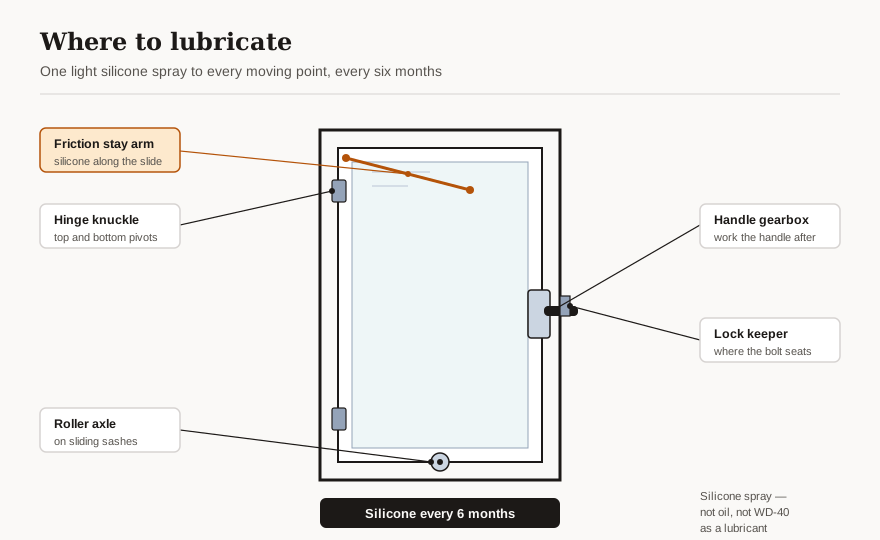
Apply a small amount to:
- Friction stay arms and their pivot points (the metal arms that hold a casement open).
- Hinge knuckles.
- The handle gearbox / espagnolette of multi-point locks — a puff of silicone into the mechanism keeps the latch points moving.
- Roller axles on sliders.
- Lock barrels — use a dry graphite or silicone lock lube, not oil, which gums up the pins.
Then open and close the window a few times to spread it. Wipe off any drips so they do not stain the wall or attract dust. For deeper hardware servicing and de-rusting, see our companion Window Hardware Maintenance guide, which covers handles, rollers and friction stays across all frame types — this section is just the aluminium-specific lube cycle.
Anodised versus powder-coat care
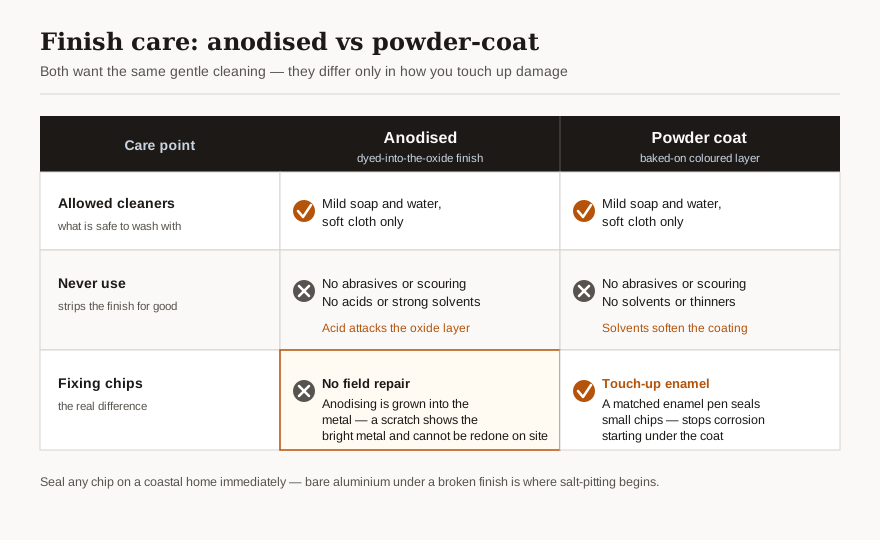
Both finishes want the same gentle wash, but they age differently.
| Finish | What it is | Care notes | If damaged |
|---|---|---|---|
| Anodised | Hardened oxide layer, the colour is in the surface | Very durable; mild soap only; never acidic cleaner | Scratches show as bright metal; no field repair, mask with care |
| Powder coat | Baked polyester film, around 60 microns | Soft brush for textured coats; avoid solvents | Small chips can be touched up with matched air-dry enamel to seal against corrosion |
A chip in a powder coat exposes bare aluminium and is the spot where coastal corrosion starts — dab a matched touch-up enamel over it promptly. Anodised scratches cannot be hidden but the exposed aluminium re-oxidises and rarely corrodes inland.
The coastal salt rinse
If you live in Mumbai, Chennai, Kochi, Goa, Visakhapatnam or any home within a few kilometres of the sea, salt is your enemy. Airborne salt settles on the frames, holds moisture, and drives corrosion under the finish — white pitting, then powdery oxidation, then a frame that looks decades older than it is.
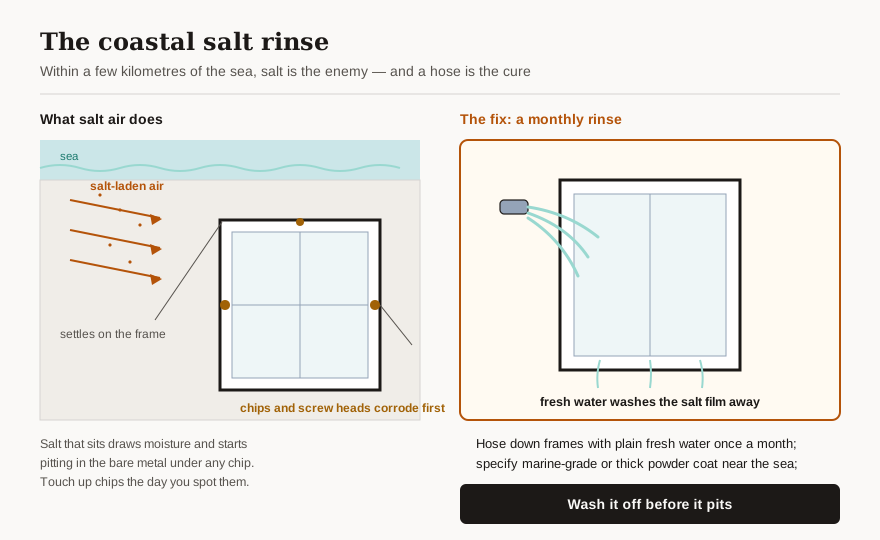
The defence is almost laughably simple: a monthly fresh-water rinse. Hose or wipe down the frames and sills with plain water to wash the salt film off before it can bite. Pay attention to screw heads and any powder-coat chips, where corrosion starts first. Marine-grade homes should also prefer stainless-steel hardware and a thicker (architectural-grade) powder coat at purchase — but for an existing window, the rinse is what saves it.
When cleaning is not enough — repair or replace
| Symptom | Likely cause | Fix |
|---|---|---|
| Slider sticks and grinds | Dirty track, worn rollers | Clean track; replace rollers (DIY-able) |
| Casement stiff to open | Dry/rusted friction stay | Lubricate; replace stay if seized |
| Fog or moisture between two glass panes | Failed IGU edge seal | Replace the sealed glass unit — call a pro |
| White pitting / powdery patches | Salt or galvanic corrosion | Cannot reverse; manage chips, replace if structural |
| Draught when shut | Perished gasket | Replace the EPDM gasket (DIY-able) |
Be honest about the line between DIY and a professional. Cleaning, lubricating, replacing rollers and swapping a gasket are all weekend jobs. But foggy double glazing means the insulated glass unit has failed and must be replaced — the frame stays, the glass goes — and that is a glazier's job, not a reseal. Because aluminium frames last so long, you will almost always replace glass or hardware long before you replace the frame itself.
For the full when-and-how-to-replace decision across every material, and the seasonal routine that ties all of this together, start at the pillar: the Home Window Maintenance Guide. To compare aluminium's upkeep burden against uPVC and timber before your next purchase, see the Window Frame Materials Comparison.
The one-hour habit
Aluminium rewards a tiny, regular habit far more than an occasional heroic deep-clean. Twice a year: wash with mild soapy water and a soft cloth, lubricate every moving part with silicone, clear the tracks and weep holes. Add a monthly fresh-water rinse if you are coastal. Do that, and the frame on your wall will still be sliding smoothly in four decades.
References
- Bureau of Indian Standards (window and aluminium product standards): https://www.bis.gov.in/
- Hindalco Aluminium (architectural aluminium, finish and care information): https://www.hindalco.com/
- Aluminium Association (anodising and powder-coat finish basics): https://www.aluminum.org/
- Family Handyman (cleaning and lubricating window tracks and hardware): https://www.familyhandyman.com/
- ENERGY STAR (window care and when a sealed unit must be replaced): https://www.energystar.gov/products/residential_windows_doors_skylights
Export this guide
Related Guides — Deep-dive reading
Window Hardware Maintenance: Servicing Hinges, Stays, Rollers and Locks in India
Clean, lubricate, adjust and de-rust the moving parts of every window — a 6-monthly servicing routine for Indian conditions
Windows & GlazingSliding Door Track Cleaning: Easy DIY Fix (India 2026)
Why Indian sliding doors get stiff — dust, grime and hard-water scale in the track — and the step-by-step clean-dry-lubricate routine that fixes it.
Home Doors & EntrancesuPVC Window Maintenance: Care, Cleaning and De-Yellowing in India
How to clean uPVC without scratching it, keep gaskets and drainage clear, lubricate the hardware and reach the full 20-25 year lifespan
Windows & GlazingRelated Tools — Try Free
Window Material Comparison Tool
Compare uPVC, aluminium, wood, steel and composite windows on cost, life, upkeep and insulation.
CompareWindow Maintenance Cost Calculator
Estimate annual window upkeep by frame material — yearly, per-window and 5-year cost.
Window CalculatorMonsoon-Readiness Checklist
Pre-rain home audit across 9 categories — terrace, drains, waterproofing, electrical, HVAC, pest, vehicles, documents.
Seasonal Audit