
Window Maintenance Cost in India (2026): The Lifetime Upkeep Bill by Material
What it really costs to keep uPVC, aluminium, wood, steel and smart windows working — annual and 20-year upkeep, compared.
When most families budget for windows, they look only at the day-one price per square foot. But a window is bought once and owned for two to three decades. Across that life, some materials cost almost nothing to keep going, while others quietly demand a tradesman, a tin of sealant and a weekend every few years. This guide is the dedicated deep-dive on that recurring maintenance bill — what you actually pay, year after year, to keep each window material working.
A window is bought once but owned for 20-plus years. The frame that wins on day-one price is rarely the one that wins over a lifetime.
All figures are indicative for June 2026 in rupees and exclude 18 per cent GST, which applies to both materials and any labour you hire. Always confirm against itemised quotes from local fabricators and painters. This guide is the maintenance-cost lens; for how long each frame physically lasts, read the companion guide on window material durability, and for the full day-one purchase numbers see the cost pillar, home window cost in India.
What "maintenance" actually means, by material
Upkeep is not one thing. It is a mix of free homeowner tasks (wiping, lubricating) and paid interventions (recoating, replacing worn parts). The split decides the bill.
| Material | Routine homeowner task | Paid intervention | Frequency of paid work |
|---|---|---|---|
| uPVC | Wipe frame, clean tracks, lubricate hardware | Replace gasket or roller (occasional) | Once every 8-12 years, per window |
| Aluminium | Wipe frame, clean tracks, lubricate hardware | Replace gasket or roller; rare touch-up | Once every 8-12 years, per window |
| Wood | Dust, spot-check for rot or termite | Reseal, polish or repaint (labour + material) | Every 2-4 years, whole house |
| Steel (galvanised) | Wash, inspect coating | Touch-up; rare full repaint | Every 10-15 years (if at all) |
| Smart / switchable | Clean glass, check controller | Replace PDLC film or controller | Once in 10-15 years |
The pattern is clear: the metals and plastic ask for time, not money. Wood asks for money, repeatedly.
uPVC and aluminium: the low-maintenance default
Both uPVC and powder-coated or anodised aluminium are designed to be left alone. They do not rust, rot, swell or need recoating. Routine care is genuinely free if you do it yourself: a wipe-down twice a year, clearing the bottom track and weep holes so monsoon water drains, and a drop of lubricant on rollers, hinges and locks once a year.
The only real spend is wear parts as the window ages. A perished gasket (the rubber weather seal) or a worn sliding roller will eventually need swapping to keep the seal tight and the action smooth.
- Gasket replacement: roughly ₹150-400 per window in material, plus a small call-out if you hire someone.
- Roller or friction-stay replacement: roughly ₹200-800 per window depending on hardware grade.
- A typical uPVC or aluminium window might need one such intervention in 8-12 years.
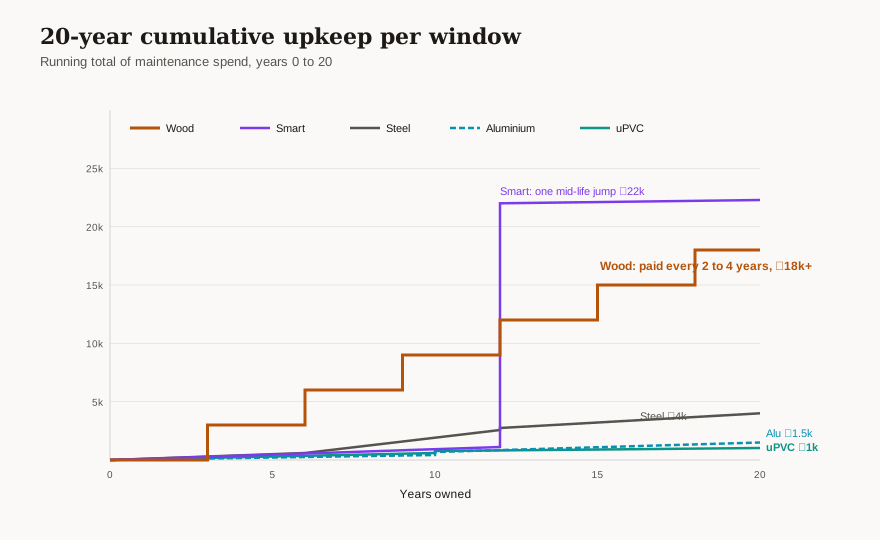
Over 20 years, a uPVC or aluminium window's paid maintenance often totals well under ₹1,000 per window. No recoating line ever appears.
This is the cost case behind the material's popularity. For the full product profile, hardware tiers and brand notes, see the dedicated guides on uPVC windows in India and aluminium windows in India — those are the buying guides; this is the upkeep maths.
Wood: the biggest lifecycle cost
Timber is warm, premium and, if cared for, capable of lasting generations. But it is the one material that needs a scheduled, paid refresh — and that single fact makes it the most expensive frame to own over time. Untreated wood swells in the monsoon, fades and cracks in the sun, and is vulnerable to rot and termites. The defence is reapplying a protective finish every 2-4 years.
A typical recoating cycle on wooden windows includes preparation (sanding, filling), the finish itself (sealant, polish, varnish or exterior paint) and the labour, which is the dominant cost.
| Wood upkeep line item | Indicative rate | Notes |
|---|---|---|
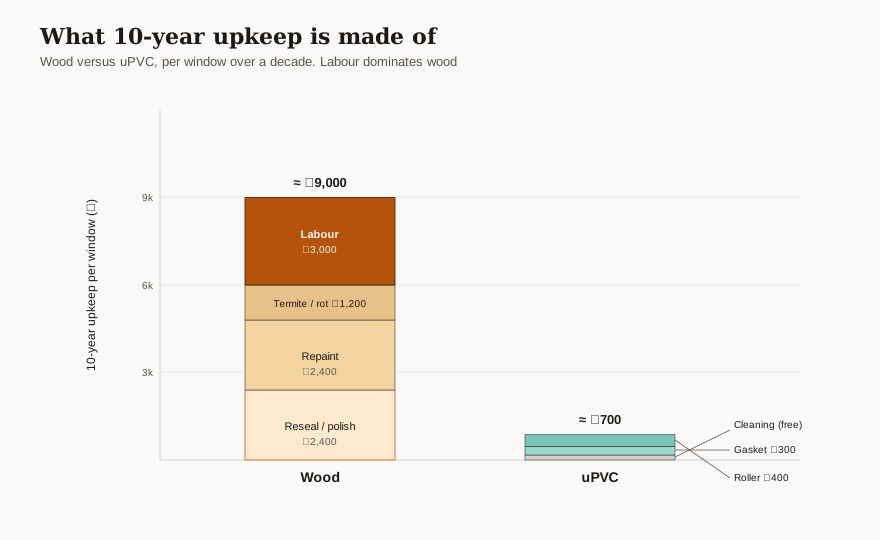
| Reseal / polish (per window) | ₹400-900 | Material plus labour, every 2-4 years |
| Exterior repaint (per window) | ₹600-1,500 | Heavier prep on weathered frames |
| Termite or rot spot-treatment | ₹500-2,000 per event | Irregular; worse if neglected |
| Full frame repair / replacement | ₹3,000-12,000+ | When rot is caught too late |
Take a 1,200 sqft home with around 18-22 window openings. A full reseal-and-repaint round at, say, ₹800 per window is roughly ₹16,000-18,000 every 2-4 years. Across 20 years that is five to ten cycles — commonly ₹80,000 to ₹1.6 lakh in upkeep alone, before any termite or rot repair. This is why the fact base notes wood can run 2.5 to 4 times the 10-year cost of uPVC once maintenance is counted. For the day-one wood numbers and species choices, see wooden window cost in India; this guide narrows specifically to the recurring bill that guide only touches on.
Premium teak can outlast a building — but only if every reseal cycle is paid for. Skip them, and timber fails fastest of all in an Indian monsoon.
Steel: low to medium, if it was coated right
Galvanised and powder-coated steel windows (the slim "Crittall" heritage look) are surprisingly cheap to maintain provided they were hot-dip galvanised and powder-coated at fabrication. The zinc-plus-paint system resists rust for decades, so the routine is just washing and the occasional inspection.
- Routine: wash and inspect the coating annually — effectively free.
- Touch-up: spot-treat any chip or scratch promptly with primer and matching paint, roughly ₹200-600 per event.
- Repaint: a full repaint is rare on a properly galvanised frame — perhaps once in 10-15 years, or never. A repaint round runs similar to wood labour, but the interval is far longer.
The risk case is bare or poorly coated steel, especially near the coast: once rust starts under the paint, it spreads and the upkeep climbs sharply. Specify galvanising plus powder coat up front and steel becomes a low-medium maintenance choice with an exceptional lifespan.
Smart and automated windows: a future replacement risk
Switchable glass — PDLC or electrochromic — and motorised windows carry almost no routine cost: you clean the glass and occasionally check the controller. The hidden item is a finite-life component. PDLC switchable film typically lasts around 10-15 years, after which it can haze or fail and needs replacing. The controller, transformer or motor can also fail.
Because the switchable layer is laminated into the glass, replacement usually means a new glass unit, not just a film. Budget a one-time mid-life event:
- PDLC film or glass-unit replacement: switchable glass runs ₹800-1,800 per sqft (commonly ₹1,000-1,250), so a single 16 sqft pane can be ₹13,000-29,000 to renew.
- Controller or motor replacement: a few thousand rupees per unit, irregular.
For a handful of feature windows this is a manageable once-in-a-decade cost; across a whole house of switchable glass it is significant. Treat smart glazing as a premium feature with a planned replacement, not a fit-and-forget install.
The 20-year upkeep verdict
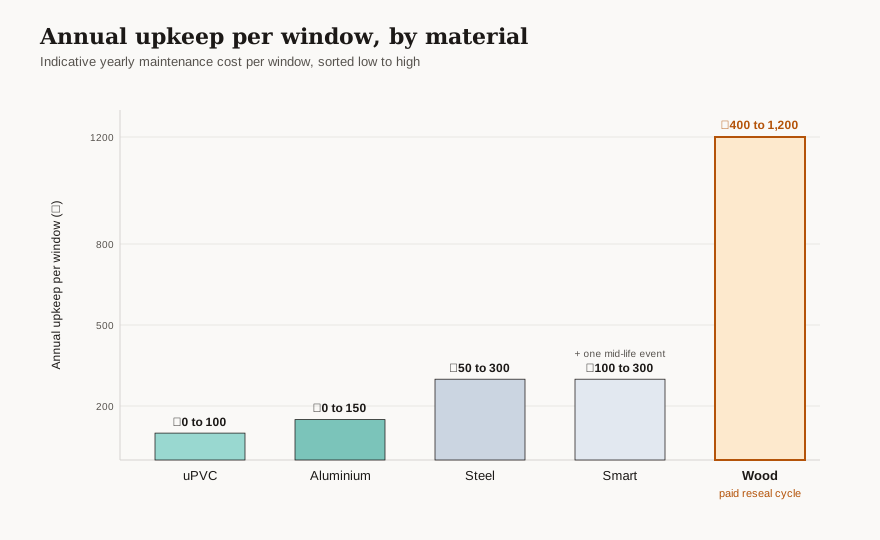
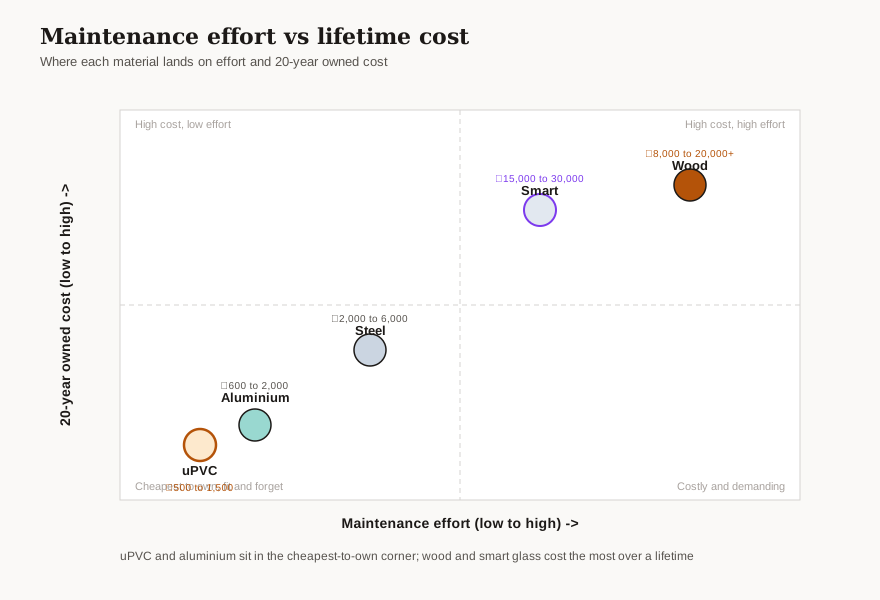
Put the recurring costs side by side for a single representative 4ft x 4ft = 16 sqft window and the ranking inverts the day-one one. Wood, often mid-priced to buy, becomes the most expensive to own. uPVC and aluminium, the value buys, stay cheapest for life.
| Material | Annual upkeep (indicative) | 20-year upkeep, per window | Why |
|---|---|---|---|
| uPVC | ₹0-100 | ₹500-1,500 | Wipe and lubricate; one gasket or roller swap |
| Aluminium | ₹0-150 | ₹600-2,000 | As uPVC; rare touch-up if coastal |
| Steel (galvanised) | ₹50-300 | ₹2,000-6,000 | Wash, occasional touch-up, maybe one repaint |
| Smart / switchable | ₹100-300 + one event | ₹15,000-30,000 | One film or glass-unit replacement mid-life |
| Wood | ₹400-1,200 | ₹8,000-20,000+ | Reseal or repaint every 2-4 years; rot or termite risk |
Scaled to a whole 1,200 sqft home with ~20 windows, the gap is stark: a uPVC or aluminium home might spend ₹10,000-40,000 on window upkeep across 20 years, while a timber home can spend ₹1.6 lakh to ₹4 lakh — enough, in some cases, to have bought a second full set of windows.
Wood and steel can physically outlast uPVC and aluminium. But durability is not the same as cheapness-to-own. Counting the labour, the cheapest window to own over 20 years is almost always uPVC or powder-coated aluminium.
How to keep any window's bill low
The maintenance cost is partly set the day you buy. A few specification choices cut the lifetime bill across every material:
- Specify coatings up front: marine-grade powder coat or anodising on aluminium, hot-dip galvanising on steel, and a high-UV-stabiliser grade of uPVC. Skimping here is what triggers expensive corrosion repairs later.
- Choose the right material for your climate: in coastal and monsoon zones, uPVC and properly coated aluminium avoid the rot, swell and rust that drive upkeep on wood and bare steel. The window frame materials comparison lays out the climate decision.
- Detail for drainage: clear weep holes and good gaskets keep water out, which protects hardware and seals on every frame type.
- Do the free tasks: twice-yearly cleaning and annual lubrication is the single cheapest way to delay every paid intervention.
The bottom line
Day-one price tells you what a window costs to buy. Maintenance tells you what it costs to own. uPVC and aluminium are near-zero on upkeep; steel is low if it was coated correctly; smart glass carries a planned mid-life replacement; and wood — beautiful as it is — is the lifecycle leader because every reseal cycle is paid labour. If lowest total cost of ownership is your goal, the maintenance bill points firmly at uPVC or aluminium. If you choose timber for its warmth, budget the recoating cycles honestly from day one.
All figures are indicative for June 2026 and exclude 18 per cent GST; confirm with itemised quotes from fabricators and painters. See the home window cost pillar for the full day-one picture, and the durability comparison for how long each frame lasts.
References
- uPVC windows price per sq ft 2026 cost guide (Building and Interiors): https://buildingandinteriors.com/upvc-windows-price-per-sq-ft-india-2026-cost-guide/
- Window frame material comparison — wood vs uPVC vs aluminium (PlyPrice): https://www.plyprice.com/blog/window-frame-material-comparison
- Types of wood for windows in India (GreenFortune): https://thegreenfortune.com/types-of-wood-for-windows/
- Aluminium windows price and installation cost (Alcoi): https://alcoi.in/aluminium-windows-price-and-installation-cost/
- Switchable glass price in India (Glasstronn): https://glasstronn.com/switchable-glass-price-in-india/
- IS 1948 — aluminium doors, windows and ventilators (BIS): https://law.resource.org/pub/in/bis/S03/is.1948.1961.pdf
Export this guide
Related Guides — Deep-dive reading
Aluminium Window Maintenance
How to clean, lubricate and protect aluminium windows in India — track care, hinge servicing, finish care and the coastal salt rinse
Windows & GlazingHome Window Maintenance Guide for India: Seasonal Schedule and Checklist
A year-round care calendar, a universal checklist and a repair-versus-replace framework for every window in your Indian home
Windows & GlazingWindow Material Durability Comparison (India): Which Frame Lasts Longest?
Lifespan, maintenance and 20-year total cost of ownership across uPVC, aluminium, wood, steel and composite frames.
Windows & GlazingRelated Tools — Try Free
Window Maintenance Cost Calculator
Estimate annual window upkeep by frame material — yearly, per-window and 5-year cost.
Window CalculatorWindow Cost Calculator
Estimate window price plus installation by type, frame material, size, glass and quantity.
Window CalculatorWindow Material Comparison Tool
Compare uPVC, aluminium, wood, steel and composite windows on cost, life, upkeep and insulation.
Compare