

uPVC Window Maintenance: Care, Cleaning and De-Yellowing in India
How to clean uPVC without scratching it, keep gaskets and drainage clear, lubricate the hardware and reach the full 20-25 year lifespan
uPVC windows are sold on a single seductive promise: "maintenance-free." That is marketing shorthand, not a fact. uPVC does not rot, rust or need repainting, which is genuinely less work than wood or even aluminium. But left entirely alone in Indian conditions, the white frames pick up grime, the surface dulls and yellows under harsh UV, the rubber gaskets harden, and the drainage channels silt up until rain backs into the room. None of that is hard to prevent. This is the upkeep manual: a simple uPVC care routine that keeps the frames white, the seals soft and the drainage clear, so you actually reach the 20-to-25-year lifespan the brochure promised.
This is the care guide. If you are still choosing windows, comparing profiles, glazing and brands, read the product guide uPVC Windows in India first. This page assumes the windows are already installed and you want them to last.
Why uPVC still needs a routine
uPVC (unplasticised polyvinyl chloride) is a rigid plastic with a hard outer skin. That skin resists water and insects, but it is not invincible:
- It dulls and yellows. Strong Indian sun on a south or west elevation slowly oxidises and yellows untreated white profiles, especially cheaper, thinly-stabilised ones. Regular gentle cleaning slows this dramatically.
- It scratches and clouds. Abrasive scrubs, scouring pads or solvents permanently etch the surface. Once the smooth skin is gone, dirt grips harder and the frame looks chalky forever.
- The moving and sealing parts are not "maintenance-free." The EPDM gaskets, the friction hinges, the espagnolette (multipoint) lock and the drainage channels are mechanical and rubber parts that need cleaning and lubrication like any other window.
The frame may be maintenance-free; the window is not. The five minutes you spend on gaskets and drainage are what separate a 12-year window from a 25-year one.
The cleaning rule: gentle, never abrasive
Cleaning uPVC is genuinely easy, which is why people get it wrong by reaching for whatever is under the sink. The whole job is mild detergent, warm water, a soft cloth or microfibre, then dry off.
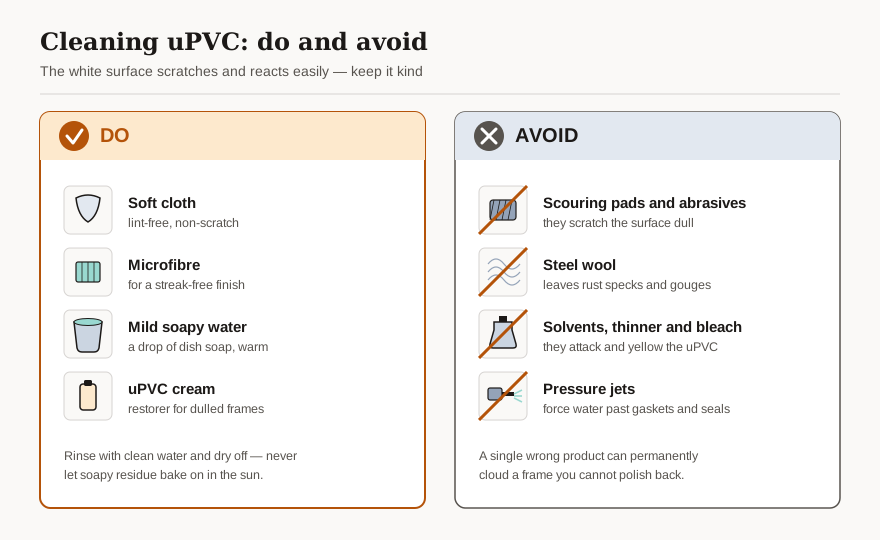
| Do | Avoid | Why |
|---|---|---|
| Mild detergent or dish soap in warm water | Scouring pads, steel wool, hard brushes | Abrasives scratch the skin permanently |
| Soft cloth or microfibre | Cream cleansers, scouring powders | Grit dulls and clouds the surface |
| Plain water rinse, then dry | Thinner, acetone, petrol, nail-polish remover | Solvents dissolve and craze the PVC |
| A dedicated uPVC cleaner or cream for stubborn marks | Bleach or strong acids on the frame | Discolours and weakens the plastic and rubber |
| Cotton bud or soft brush for corners | High-pressure jet washing | Forces water past gaskets and drainage |
For ordinary dust and city grime this twice-a-year wash is plenty. For tougher marks, a purpose-made uPVC cleaning cream restores the sheen without scratching. Never use sandpaper, a magic-eraser sponge or solvent on a visible face.
De-yellowing a frame that has already gone off-white
If a frame has yellowed, first wash it properly, because a lot of "yellowing" is just baked-on grime that lifts with detergent. For genuine surface oxidation, a dedicated uPVC restorer cream gently cuts back the dulled top layer and re-seals it. Test on a hidden edge first. Deep, structural yellowing that goes right through cheap profile cannot be reversed, only masked, which is why buying a well-stabilised profile in the first place matters. Painting uPVC is possible with a specialist primer and exterior paint, but it is a last resort and ends the truly no-paint convenience.
Gaskets and drainage: the parts people forget
These two jobs are what actually decide whether your uPVC window leaks and draughts in monsoon.
Gaskets (the rubber seals). The black or grey EPDM strips around the sash keep wind and water out. Wipe them when you clean the frame, and once or twice a year wipe them with a little silicone-based conditioner so they stay soft and springy. Hardened, cracked or pulled-out gaskets let in draughts and rain. A torn gasket can usually be pulled out and a replacement length pressed back into the groove, an easy DIY fix if you can source the matching profile.
Drainage / weep channels. Every uPVC frame has a chamber at the bottom that collects the water that gets past the outer seal and routes it out through small slots (weep holes) at the front. In India these clog fast with dust, paint flecks and insect debris, and a blocked channel means water pools inside the frame and eventually spills into the room, the classic "my new windows are leaking" complaint that is almost always a blocked weep hole.
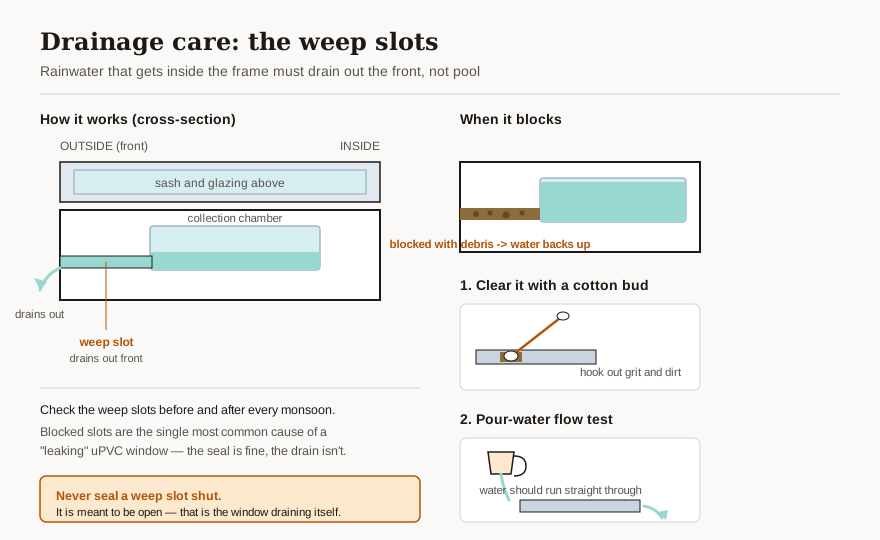
To service the drainage:
- Open the sash and find the small slots along the front of the bottom frame (often hidden behind a clip-on cover).
- Clear them with a cotton bud, a soft brush or a thin wooden skewer. Do not ream them with metal or you may damage the channel.
- Flush by pouring a mug of water into the inside channel; it should run out of the front weep slots within seconds. If it backs up, the channel itself is silted, clean along it.
- Do this before and after monsoon.
Hardware and operation
The friction hinges, handles and the multipoint lock are the bits that "go stiff" or "stop locking." Keep them moving:
- Wipe dust off the hinges and the locking points along the sash edge.
- Apply a silicone spray or a light machine oil to hinges, the lock keeps and the handle gearbox roughly every six months. Avoid thick grease, which catches dust and turns into a grinding paste.
- Check the handles and visible screws are tight; nip up loose ones.
- If the sash drops or rubs, the hinges can usually be adjusted with a screwdriver rather than replaced.
A uPVC maintenance schedule
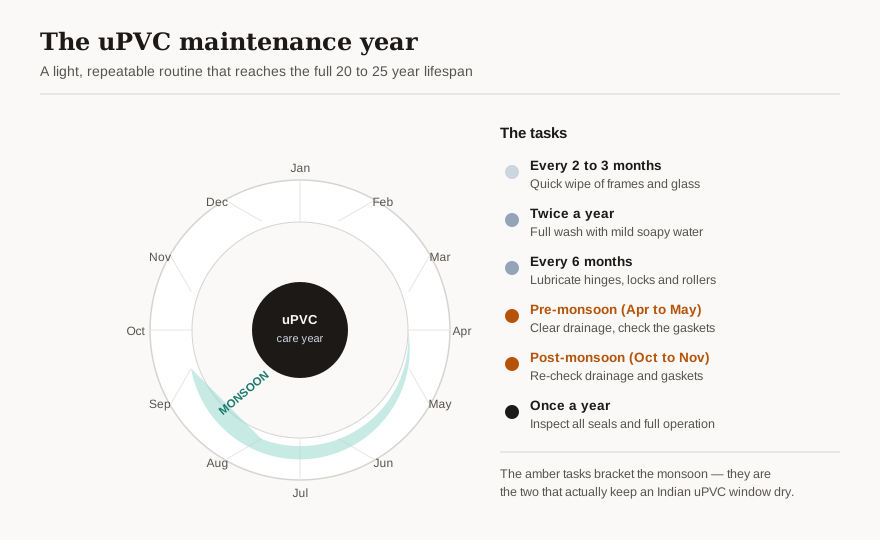
| When | Task | DIY or pro |
|---|---|---|
| Every 2-3 months | Quick wipe of glass and frame faces, especially street-facing windows | DIY |
| Twice a year | Full wash of frames and gaskets with mild detergent and soft cloth | DIY |
| Every 6 months | Silicone-spray hinges, locks and handle gearbox | DIY |
| Before monsoon | Clear weep holes, flush drainage, check gaskets are soft and seated, re-caulk any gaps in perimeter sealant | DIY |
| After monsoon | Re-check drainage, look for any water marks inside the frame, re-clean gaskets | DIY |
| Once a year | Inspect perimeter silicone, check operation and locking, tighten hardware | DIY |
| As needed | Replace torn gaskets, restore yellowed frames, replace a foggy double-glazed unit | DIY gasket / pro for the glass unit |
The single most valuable entry on this list is the pre-monsoon drainage clear. It takes five minutes and prevents the most common uPVC complaint in India.
What to fix yourself and what needs a pro
Most uPVC upkeep is comfortably DIY. The honest exceptions:
| Symptom | Likely cause | Fix | DIY or pro |
|---|---|---|---|
| Frame dull or yellowed | Grime then UV oxidation | Wash, then uPVC restorer cream | DIY |
| Water pooling inside frame | Blocked weep holes / drainage | Clear and flush channels | DIY |
| Draught or rain past the sash | Hardened or torn gasket | Condition or replace gasket length | DIY |
| Stiff or noisy operation | Dry hinges, dust | Clean and silicone-spray | DIY |
| Will not lock or sash dropped | Lock or hinge out of adjustment | Adjust hardware | DIY or pro |
| Fog or moisture between the panes | Failed insulated-glass-unit edge seal | The sealed glass unit must be replaced, it cannot be re-sealed; frame stays | Pro |
That last row is the one people misjudge. Fog inside a double-glazed pane means the IGU edge seal has failed and the inert gas has escaped, and no amount of cleaning or caulking fixes it, you replace the glass unit. The good news is the frame and sash stay, so it is far cheaper than a new window. The detail is covered in the window seal replacement guide.
Extending the 20-25 year life
uPVC's rated life is roughly 20 to 25 years. Cleaning and the drainage routine above are what get you to the top of that range rather than the bottom. Beyond the schedule: keep the windows out of avoidable abuse, never lean ladders against the frames, do not let painters mask them with aggressive tape that pulls the skin, and fix small problems (a torn gasket, a blocked weep) early before water gets into walls and hardware corrodes. When a uPVC window finally fails structurally, sagging sash, distorted profile, repeated faults, it is replacement time, covered in the window replacement guide.
Related reading
- Pillar: Home Window Maintenance Guide (India) — the all-materials seasonal schedule and the umbrella for this cluster.
- Buying counterpart (differentiate): uPVC Windows in India — choosing and specifying uPVC. This page is purely the upkeep of windows you already own.
- Sibling: Aluminium Window Maintenance (India) — the same care logic for metal frames (track and corrosion focus instead of yellowing).
- Material context: Window Frame Materials Comparison (India) — how uPVC stacks up against aluminium and wood on lifespan and upkeep.
References
- Bureau of Energy Efficiency, residential window and glazing guidance — https://beeindia.gov.in/
- The Energy and Resources Institute (TERI), building envelope and windows — https://www.teriin.org/
- BIS Standards (windows and PVC profiles), Bureau of Indian Standards — https://www.bis.gov.in/
Export this guide
Related Guides — Deep-dive reading
Window Hardware Maintenance: Servicing Hinges, Stays, Rollers and Locks in India
Clean, lubricate, adjust and de-rust the moving parts of every window — a 6-monthly servicing routine for Indian conditions
Windows & GlazingAluminium Window Maintenance
How to clean, lubricate and protect aluminium windows in India — track care, hinge servicing, finish care and the coastal salt rinse
Windows & GlazinguPVC Door Maintenance: Hardware-First Care (India 2026)
Keep uPVC doors smooth for decades — the profile barely ages, but the locks, hinges and drainage need regular attention.
Home Doors & EntrancesRelated Tools — Try Free
Window Material Comparison Tool
Compare uPVC, aluminium, wood, steel and composite windows on cost, life, upkeep and insulation.
CompareMonsoon-Readiness Checklist
Pre-rain home audit across 9 categories — terrace, drains, waterproofing, electrical, HVAC, pest, vehicles, documents.
Seasonal AuditWindow Maintenance Cost Calculator
Estimate annual window upkeep by frame material — yearly, per-window and 5-year cost.
Window Calculator