
Glass Cleaning Guide: Streak-Free Windows in India
Tools, DIY solutions, the squeegee technique, removing hard-water and cement spots, and how to clean coated glass without ruining it
Clean glass is the cheapest upgrade your home gets. A streak-free pane lets in more light, makes a room feel larger, and lets you spot problems early. Yet most Indian homes fight a losing battle with white spots, milky films and smears that come straight back the next morning. The culprits are not dirt so much as hard water, sprinkler over-spray, construction dust and cement splatter — and the wrong cleaning method that bakes them in.
This is the practical how-to: the tools, two DIY solutions, the streak-free squeegee technique, how to lift hard-water and mineral stains, what NOT to do to coated and toughened glass, and how to clean high windows without risking your neck. For the full upkeep calendar across frames, hardware and seals, start at the Home Window Maintenance Guide.
Streaks are almost never the glass. They are leftover detergent, a dirty cloth, or cleaning in direct sun so the solution dries before you wipe it.
The tools that actually work
You do not need a branded spray. You need the right wiping kit. Paper towels and old newspaper shed lint and smear; a squeegee plus microfibre is what professionals use.
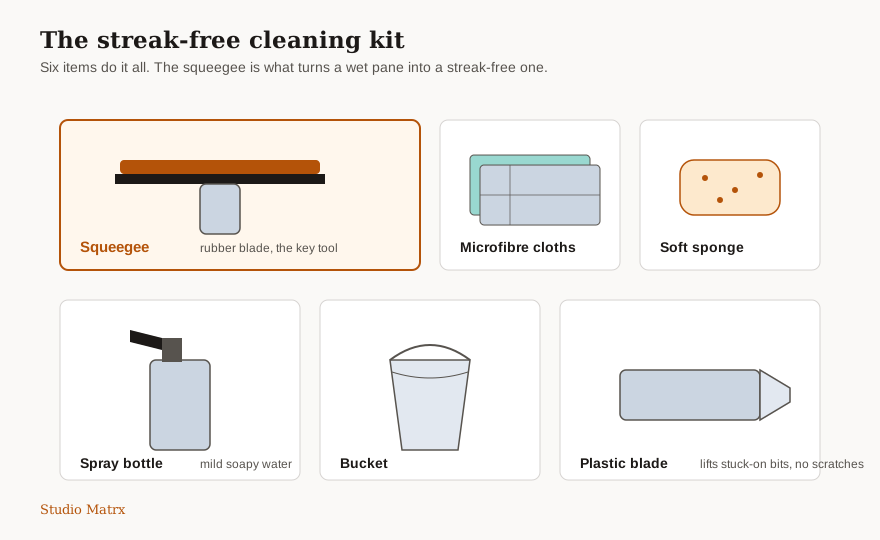
| Tool | Use it for | Notes |
|---|---|---|
| Rubber-bladed squeegee | The main streak-free wipe | Keep the blade nick-free; a damaged blade leaves lines |
| Microfibre cloths (2-3) | Pre-wash, final buff, drying edges | Wash separately, no fabric softener (it leaves a film) |
| Soft non-scratch sponge | Loosening grime and dust | Never a green abrasive scrubber on glass |
| Spray bottle and a small bucket | Holding your solution | Label it; do not reuse a bleach bottle |
| Plastic blade or expired bank card | Lifting dried specks safely | Held flat — see the coatings caution below |
| Squeegee on an extension pole | Reaching high or exterior panes | Safer than a ladder for first-floor glass |
Two DIY solutions you can mix tonight
Glass needs very little. Both of these beat most supermarket sprays and cost almost nothing.
| Solution | Recipe | Best for |
|---|---|---|
| Dish-soap and water | 2-3 drops mild dishwashing liquid in 1 litre water | Everyday dust, oily kitchen film, general cleaning |
| White vinegar and water | 1 part white vinegar to 4 parts water | Light hard-water haze, fingerprints, a squeaky finish |
Use distilled or RO water if your tap water is hard — ordinary borewell water leaves its own spots as it dries, undoing your work. Keep the soap dose tiny: too much detergent is the number-one cause of streaks. Skip ammonia-based and strongly alkaline cleaners near coated or tinted glass.
The streak-free squeegee technique
This is the whole trick. Work top-down, in the shade, and dry the blade between strokes.

1. Dust first. Brush or dry-wipe loose grit off so you are not grinding it across the glass.
2. Wet the pane. Spray or sponge your solution generously over the whole surface and lightly agitate to lift grime.
3. Pull an S-pattern. Start at a top corner and pull the squeegee in a continuous overlapping S down the glass, so each stroke slightly overlaps the last with no dry gaps.
4. Wipe the blade every stroke with a clean dry microfibre. A wet blade re-deposits dirty water — this is where streaks are born.
5. Dry the edges and sill with a separate microfibre; trapped water at the edges runs back and dries as a line.
6. Buff any haze with a dry microfibre in small circles.
Always clean out of direct sunlight. In Indian afternoons the solution flashes dry before you can wipe it, leaving a permanent-looking film. Clean glass early morning or on an overcast day.
Removing hard-water stains, mineral and cement spots
This is the India-specific problem. Those chalky white rings and speckles come from hard water evaporating on the glass — building sprinklers, garden irrigation over-spray, AC drip, and construction-phase dust and cement splatter. They are mineral deposits (calcium and magnesium) bonded to the surface, not loose dirt, so wiping does nothing.
| Stain | Cause (common in India) | How to remove |
|---|---|---|
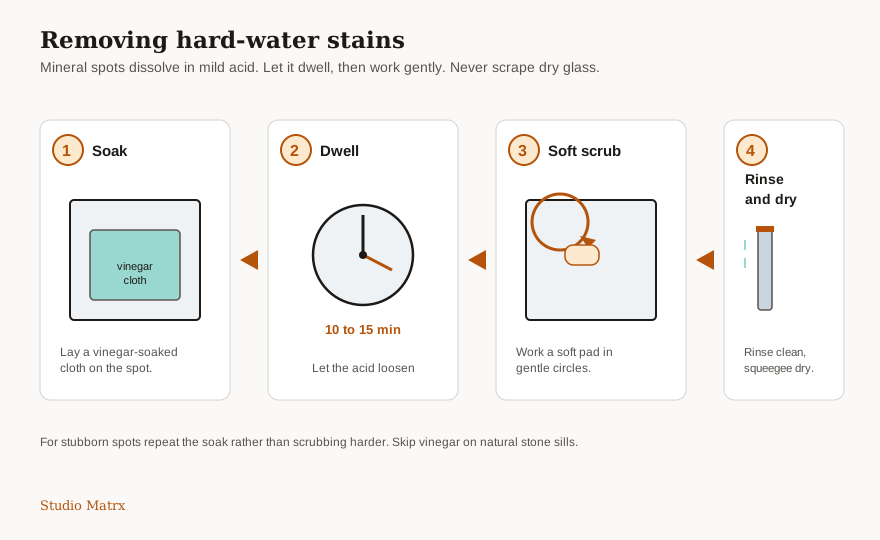
| White rings and speckles | Hard-water and sprinkler over-spray drying on glass | Vinegar-soaked cloth laid on the spot 10-15 min, then soft scrub and rinse |
| Milky overall haze | Long-term mineral scale build-up | Diluted commercial limescale remover for glass, patch-test first |
| Cement and grout splatter | Construction or renovation dust | Soak to soften, lift gently with a plastic blade held flat; never scrape dry |
| Paint flecks | Painting work nearby | Soften with soapy water, ease off with a plastic blade, not a metal one |
Method: soak, dwell, then ease — never grind. Lay a vinegar-soaked cloth flat against the deposit so it stays wet for 10-15 minutes, then work gently with a soft non-scratch pad in small circles, rinse with clean water and squeegee dry. For stubborn cement or heavy scale, a dedicated glass limescale remover works faster — but patch-test a hidden corner first, especially on coated or tinted glass, and keep it off the frame and gaskets. Repeat soaking beats harder scrubbing every time.
The fix for hard-water spots is prevention: aim sprinklers and AC drains away from glass, and squeegee windows dry after rain or washing so minerals never get the chance to settle.
Coatings, film and toughened edges — do NOT scrape
Modern glass is often more than plain glass, and the wrong tool ruins it permanently. Before you reach for a blade or scouring pad, know what you are cleaning. If you are unsure what type of glass you have, see Types of Glass for Windows for the coatings caution and how to identify them.
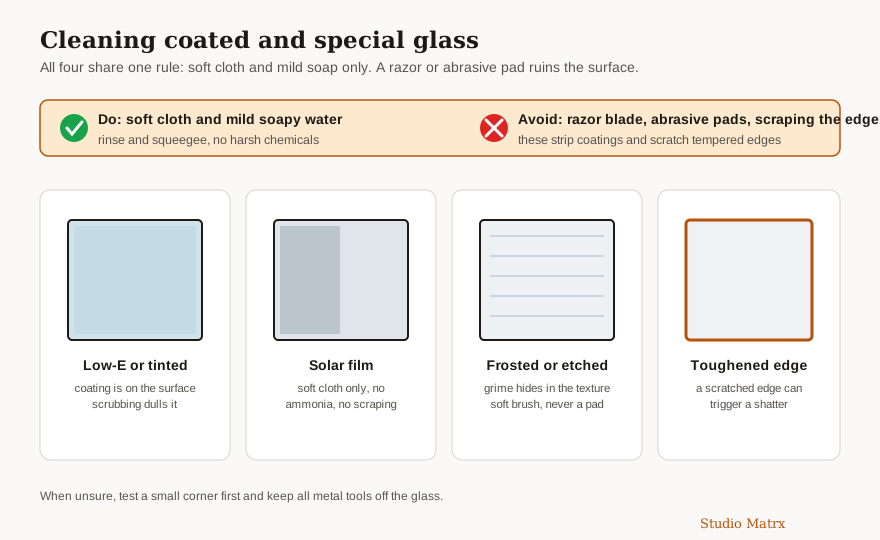
| Glass type | Do | Avoid |
|---|---|---|
| Low-E or tinted (coated) | Mild soap, soft microfibre, gentle wipe | Razor blades, abrasives, ammonia and alkaline cleaners — they etch the coating |
| Solar control film (applied film) | Soft damp cloth, mild soapy water only | Any scraping, abrasive pads, harsh chemicals; never scrub a film edge |
| Frosted or etched glass | Mild soap, soft cloth, let it air-dry | Abrasives and oily cleaners that lodge in the texture and look patchy |
| Toughened or tempered glass | Clean the faces normally with soft tools | Hitting or scraping the EDGES — chips at the edge can shatter the whole pane |
The rules that protect every coated and special glass:
- Never use a razor or metal blade on Low-E, tinted, filmed or frosted glass — coatings sit on the surface and scratch off.
- No abrasive powders, scouring pads or scratchy scrubbers anywhere on glass.
- Be gentle at toughened-glass edges and corners. Tempered panes are strong on the face but vulnerable at the edge; a chip can trigger spontaneous breakage.
- A plastic blade on plain, uncoated glass is fine for the odd dried speck — held flat, on a wet surface, never on coatings.
Scratch care
Fine scratches usually come from grit dragged across the glass or from abrasive pads — which is why dusting first matters. Light haze-scratches can sometimes be polished with a cerium-oxide glass polish and a buffing pad, on plain glass only. Deep scratches you can catch with a fingernail cannot be repaired — the pane has to be replaced. Do not attempt polishing on coated, tinted or filmed glass; you will rub through the coating.
Cleaning high and exterior windows safely
Most home injuries happen reaching for that one high pane. Stay safe:
- Use a squeegee or microfibre on an extension pole for first-floor and stairwell glass instead of leaning out.
- Clean exterior glass from inside wherever the window opens inward, or from a stable platform — never lean out of an upper window.
- If a ladder is unavoidable, have someone foot it, set it on level ground, and keep your hips between the rails.
- For tall facades, big atria, or anything above the first floor, hire a professional with proper access gear. It is genuinely not a DIY job.
How often to clean
| Window location | Frequency | Why |
|---|---|---|
| Kitchen windows | Monthly | Oily cooking film builds fast |
| Street-facing or main road | Monthly to 6-weekly | Traffic dust and grime |
| Living and bedroom (sheltered) | Every 2-3 months | General dust |
| After monsoon and after Diwali | Once, extra | Rain spotting, dust and firecracker residue |
| During or after construction nearby | Promptly | Cement and dust set hard if left |
Wipe spills, sprinkler spots and rain marks as they happen so minerals never bond. Inspect the frame, drainage and seals on the same round — for uPVC frames that yellow and gaskets that perish if neglected, follow the uPVC Window Maintenance Guide, which covers the non-abrasive cleaning your frames need so you are not cleaning glass against a grimy frame.
DIY or call a pro
Glass cleaning is overwhelmingly DIY. Call a professional when glass is high or hard to access, when a coated or filmed pane needs limescale treatment you are unsure about, or when a scratch or chip means the pane must be replaced rather than cleaned.
Sparkling glass is mostly technique and the right cloth, not expensive chemicals. Soft tools, a tiny bit of soap or vinegar, the S-pattern squeegee, soak-don't-scrape on stains, and total respect for coatings and toughened edges will keep every window clear for years.
References
- Bureau of Indian Standards — IS 2553 / IS 14900 safety and architectural glass: https://www.bis.gov.in/
- TERI — daylight, glazing and energy in Indian buildings: https://www.teriin.org/
- Bureau of Energy Efficiency — ECBC glazing and Low-E guidance: https://beeindia.gov.in/
- Saint-Gobain India — glass care and coated-glass cleaning notes: https://www.saint-gobain-glass.co.in/
Export this guide
Related Guides — Deep-dive reading
How to Clean Bathroom Tiles (India): Shine, Hard-Water Film & Soap Scum
A practical, India-first routine for cleaning bathroom tiles and keeping them glossy — the daily squeegee habit, weekly wash, monthly deep clean, and the safe cleaner for each tile type, including the golden rule that natural stone must never meet acid.
BathroomsGlass Door Maintenance Guide: Care & Cleaning (India 2026)
Streak-free cleaning, hard-water spot removal, patch-fitting and track care, plus the safety line where you must call a professional.
Home Doors & EntrancesBathroom Cleaning India: The Complete Cleaning & Upkeep Guide (Daily, Weekly, Monthly)
The pillar guide to keeping an Indian bathroom clean — a daily/weekly/monthly/annual schedule, the right cleaner for every surface (tiles, grout, glass, chrome, sanitaryware, acrylic), safe DIY mixes, what you must never mix, the hard-water routine, and the 5-minute daily wipe that prevents most problems.
BathroomsRelated Tools — Try Free
Window Cleaning Cost Calculator
Estimate professional window cleaning cost per visit and per year by access and frequency.
Window CalculatorWindow Replacement Cost Calculator
Estimate the cost to replace existing windows — material, glass, removal and floor access.
Window CalculatorWindow Maintenance Cost Calculator
Estimate annual window upkeep by frame material — yearly, per-window and 5-year cost.
Window Calculator