

Window Replacement Guide: When and How to Replace Your Windows in India
The signs, the repair-versus-replace decision, and the replacement process — not the price
Replacing a window is one of those jobs people put off for years and then rush in a single panic-stricken monsoon week. Neither extreme serves you. A window is a system, not just glass: frame, sash, seals, hardware and the wall opening around it all age at different rates. Knowing when a window has genuinely reached the end of its life — versus when a half-day repair will buy you another decade — saves real money and avoids unnecessary demolition.
This is the decision-and-process guide: the warning signs, a clear repair-versus-replace framework, the two replacement methods, and what actually happens on installation day. It is deliberately not about money. For rupee figures — per-window rates, frame-material price gaps, labour and scaffolding — read our companion Window Replacement Cost guide. This guide tells you whether and how to replace; that one tells you what it costs.
The signs your window is asking to be replaced
Most windows give plenty of warning. The trick is telling a fatal sign apart from a fixable nuisance. Some symptoms point straight to replacement; others are simply maintenance you have skipped.
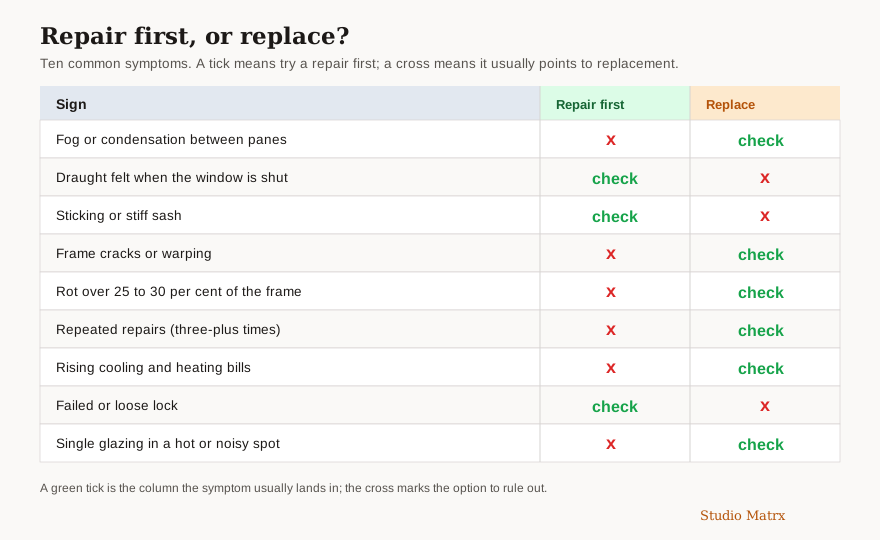
| Sign you notice | What it usually means | Repair or replace |
|---|---|---|
| Fog or mist between the panes | The IGU/DGU edge seal has failed and inert gas has escaped | Replace the glass unit (sometimes whole window) |
| Persistent draught when the window is shut | Worn weatherstripping, warped sash or failed frame | Repair first, replace if frame is warped |
| Sash sticks, jams or will not lock | Swollen wood, bent aluminium, sagging hinges | Repair first; replace if frame is distorted |
| Visible cracks or warping in the frame | Structural fatigue, UV-degraded uPVC, rusted steel | Replace |
| Wood rot over roughly 25-30 per cent of the frame | Beyond reliable epoxy repair | Replace |
| Rising cooling bills with no other cause | Lost seal and single glazing leaking conditioned air | Strong replace candidate |
| Same window repaired three-plus times | Repeated cost has overtaken replacement value | Replace |
Fog between the panes is the one sign people most often misread. You cannot wipe it, and you cannot reseal it — once the IGU edge seal goes, the sealed unit must be replaced. See our Window Seal Replacement guide for why a foggy double-glazed unit is a replace job, while a draughty perimeter gasket is a cheap reseal you can do yourself.
The honest takeaway: foggy IGUs, cracked or warped frames, and rot past a third of the timber are replacement territory. Draughts, sticky sashes and dull hardware are usually maintenance — try those fixes first.
Repair or replace: a simple decision framework
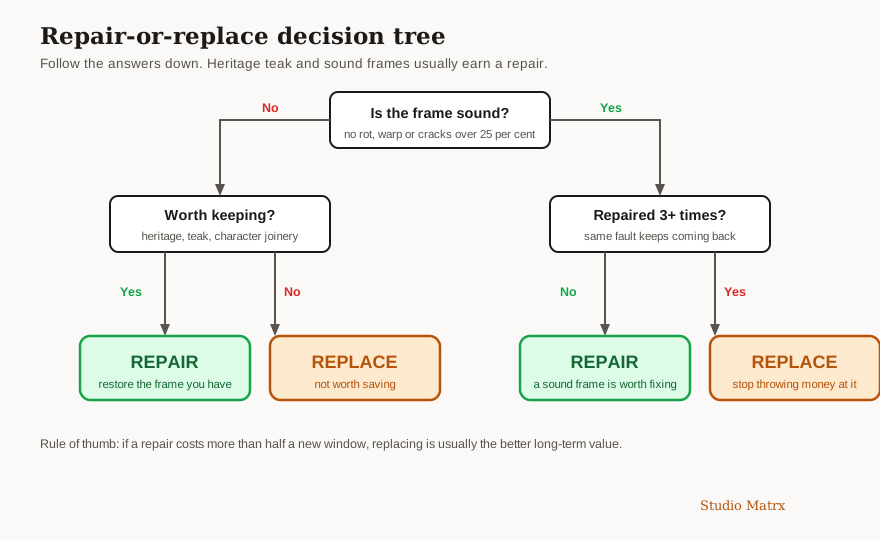
Run a tired window through three questions before you spend anything.
1. Is the frame sound? If the frame itself is cracked, badly warped, rusted through or rotten beyond about a third of its length, repair is a temporary patch — plan to replace. If the frame is solid and only the glass, gasket or hardware is failing, repair almost always wins.
2. What is the window worth keeping? Old Burma teak, carved or heritage frames and unusual sizes are worth restoring even at higher cost. A flimsy builder-grade aluminium unit rarely is.
3. How many times have you fixed it? Track repairs. Once you cross three repairs on the same window, or one repair would cost more than half a new window, replace.
| Situation | Lean repair | Lean replace |
|---|---|---|
| Frame condition | Sound, surface wear only | Cracked, warped, rusted, rotten >25-30 per cent |
| Glass | Single cracked pane | Foggy IGU, repeated breakage |
| Heritage value | High — restore it | Low builder-grade unit |
| Energy performance | Acceptable | Single glazing, high bills |
| Repair history | First or second fix | Three-plus repairs |
If you are still unsure, the cheapest move is a thorough service first — re-caulk, replace gaskets, lubricate hardware. Our Home Window Maintenance pillar guide walks the full annual routine. A window that performs well after a service was never a replacement candidate.
Two ways to replace: full-frame versus insert
Once you have decided to replace, there are two routes, and contractors do not always explain the difference clearly.
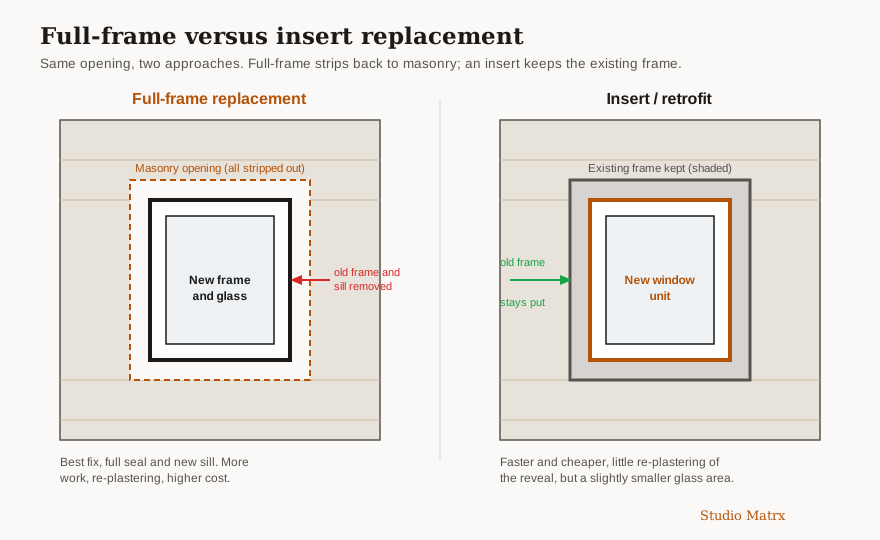
- Full-frame replacement removes everything down to the rough masonry opening — old frame, sill and all. The new window is fitted, packed, sealed and the reveal re-plastered. Choose this when the existing frame is rotten, rusted or out of square, or when you are changing the window material or style.
- Insert (retrofit) replacement keeps the existing structural frame and fits a new window unit inside it. Faster, less mess, no re-plastering. Choose this only when the existing frame is genuinely sound and square — a damaged frame defeats the purpose because you are sealing a new unit into a failing surround.
| Factor | Full-frame | Insert / retrofit |
|---|---|---|
| Existing frame removed | Yes, to the opening | No, kept |
| Best when | Frame is damaged or you change material | Frame is sound and square |
| Disturbance | High — re-plaster, repaint reveal | Low — minimal mess |
| Glass area | Maximised | Slightly reduced |
| Waterproofing reset | Complete | Limited to the inner seal |
In Indian masonry homes, where window frames are often built into the wall, full-frame replacement is the more common honest answer for old, deteriorated units — an insert into a crumbling frame simply hides the problem. For frame and material trade-offs before you buy, see Types of Home Windows in India.
What replacement day actually looks like
A single-window swap is usually a few hours; a whole-house job runs over days. Knowing the sequence helps you spot a contractor cutting corners.
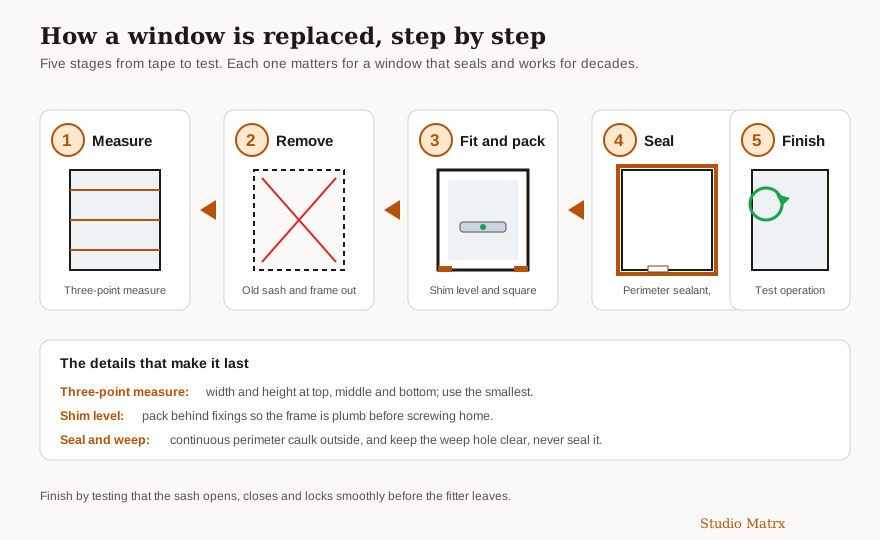
1. Measure. The fitter takes the opening in three places for width and height (walls are rarely square) and confirms the swing or slide direction. A new window is made or ordered to these figures — never to the old window's nominal size.
2. Remove. The old sash comes out, then the frame (full-frame) or just the unit (insert). Expect dust; cover furniture and floors.
3. Fit and pack. The new frame is set into the opening, levelled and plumbed, then packed with shims so it is square — not forced to follow a crooked wall.
4. Seal. Gaps are filled, then a perimeter bead of silicone or PU sealant is run outside, and weep holes are left clear for drainage. This step decides whether the window leaks in the first monsoon, so watch it.
5. Finish. Reveals are re-plastered and painted (full-frame), hardware is adjusted, and operation is tested. Insist the fitter opens, closes and locks every sash before they leave.
Window replacement is a pro job — measuring, lifting glazed units and resetting waterproofing are not weekend DIY. Your role is to inspect: square frame, clean sealant line, smooth operation, clear weep holes.
Choosing the new window
Replacing is also your chance to upgrade. Match the frame material to your climate and upkeep appetite — aluminium lasts up to roughly 45 years and shrugs off coastal weather, uPVC runs about 20-25 years with low maintenance, and good hardwood lasts decades if you repaint every three years or so. Specify double glazing if you are fighting heat or noise, and choose a style that drains rain well in monsoon regions. The detailed material comparison and the price implications live in the Window Replacement Cost guide — decide the what and how here, then size the budget there.
References
Export this guide
Related Guides — Deep-dive reading
Window Seal Replacement Guide
The three window seals — perimeter caulk, weatherstrip gasket and the IGU edge seal — and exactly how to replace each (and which one you must not try to reseal)
Windows & GlazingHome Window Maintenance Guide for India: Seasonal Schedule and Checklist
A year-round care calendar, a universal checklist and a repair-versus-replace framework for every window in your Indian home
Windows & GlazingTypes of Home Windows in India (2026): Complete Comparison and How to Choose
Every window type compared on ventilation, cost and best use, plus a frame, glazing and climate framework to choose right.
Windows & GlazingRelated Tools — Try Free
Window Maintenance Cost Calculator
Estimate annual window upkeep by frame material — yearly, per-window and 5-year cost.
Window CalculatorWindow Material Comparison Tool
Compare uPVC, aluminium, wood, steel and composite windows on cost, life, upkeep and insulation.
CompareDoor Material Comparison Tool
Compare 2–4 door materials on cost, durability, maintenance, security and moisture resistance.
Comparison Tool