

Window Leak Repair Guide
How to find the source of an active window leak and fix it — the top-down spray test, a leak-source map, and the right repair for each zone
A leaking window is one of the most misdiagnosed problems in an Indian home. The water shows up on the wall below the sill, so everyone blames the window. But the leak may be entering a metre higher, running down inside the frame, and only appearing where gravity drops it. The whole job of leak repair is detective work first, repair second. Fix the wrong joint and the stain comes back with the next downpour.
This guide is about a leak that is already happening — water marks, damp plaster, a draught you can feel, a puddle on the sill. It is the troubleshoot-and-repair lens.
If your window is dry today and you want to keep it that way, this is not your guide. Read our prevention-side companion, Window Waterproofing Guide, which covers the proactive sealing system. And if you have already pinned the source to a specific seal — a foggy double-glazed unit or perished weatherstrip — go straight to the Window Seal Replacement Guide.
First, separate water leaks from air leaks
The two feel different and point to different sources.
- A water leak stains, blisters paint, grows mould, or drips after rain. It is almost always a failed joint, a blocked drain, or water arriving from above.
- An air leak (draught) is felt, not seen — cold air, dust streaks on the wall, or curtains that stir when the window is shut. It usually means a worn gasket or weatherstrip, or a sash that no longer closes flush.
Air leaks are nearly all DIY. Water leaks are sometimes DIY and sometimes a flashing or wall problem that needs a professional. Knowing which you have saves a wasted Sunday.
The five places a window leak comes from
Almost every window leak in India traces to one of five sources. The map below shows where to look.
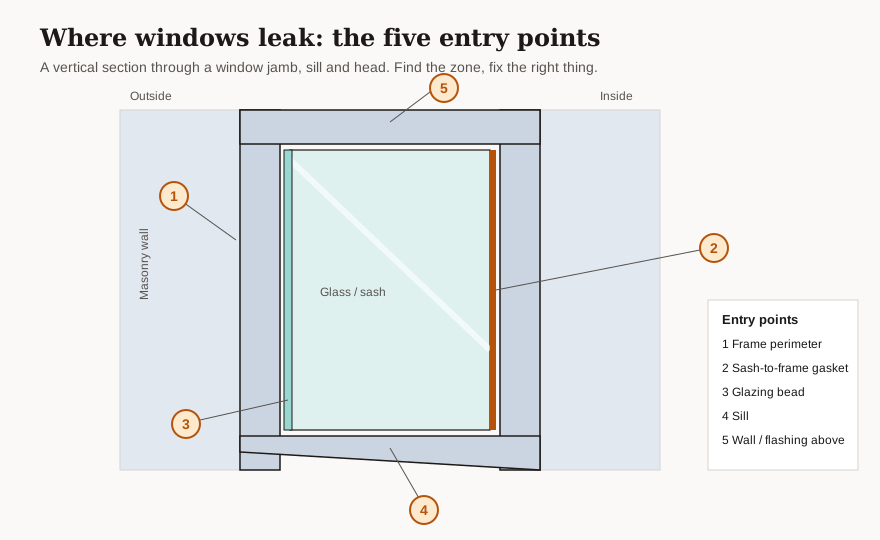
1. Frame perimeter — the silicone joint between the outer frame and the wall has cracked, shrunk or was never continuous.
2. Sash-to-frame gasket — the EPDM rubber that seals the opening leaf has gone hard and flat, so the sash no longer presses tight.
3. Glazing bead / glass edge — the seal that holds the glass into the sash has failed; water runs in at the bottom corners.
4. Sill — the bottom ledge slopes the wrong way (back toward the room) or its weep holes are blocked, so rain ponds and backs up indoors.
5. The wall or flashing above — not the window at all. Water enters higher up and exits at the window head. This is the one most often misdiagnosed.
Find the source: the top-down spray test
This is the single most useful diagnostic and you can do it with a garden hose or a bucket and mug, plus someone watching from inside with a torch.
The rule is work from the bottom up, in sections, slowly — so that when the leak appears, you know exactly which zone let it in.
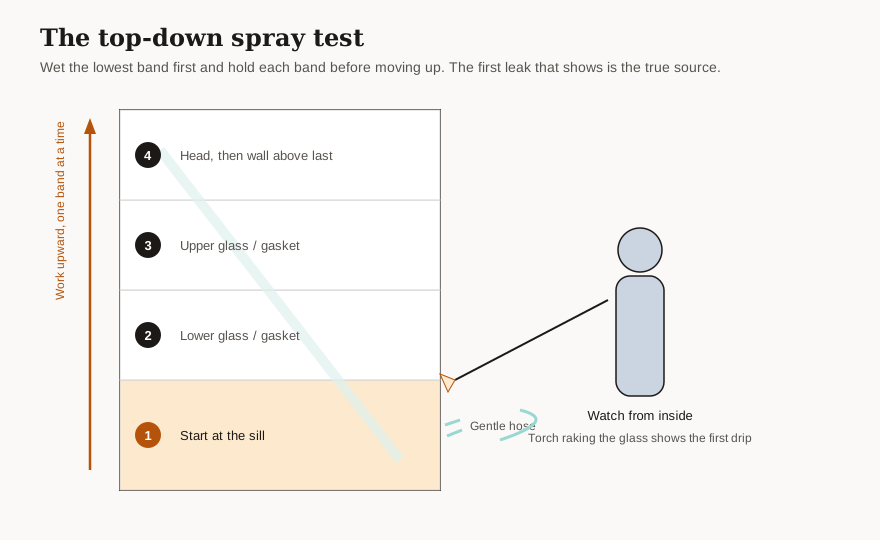
1. Have a helper inside with a torch and a dry cloth, watching the inner sill and reveals.
2. Wet only the sill and bottom of the frame for two to three minutes. Wait. If water shows inside, the source is the sill, the bottom gasket or the bottom glazing — you have found it. Stop.
3. If it stays dry, move up to the bottom corners and sides. Wait again.
4. Then the glass and the sash join. Then the head (top) of the frame.
5. Only after the whole window stays dry under direct water do you wet the wall above the window. If the leak appears now, the window is innocent — it is a wall, render-crack or flashing problem.
Doing this in order is what makes it work. Spraying the whole window at once tells you the window leaks but not where, which is no help at all.
Symptom, source and fix
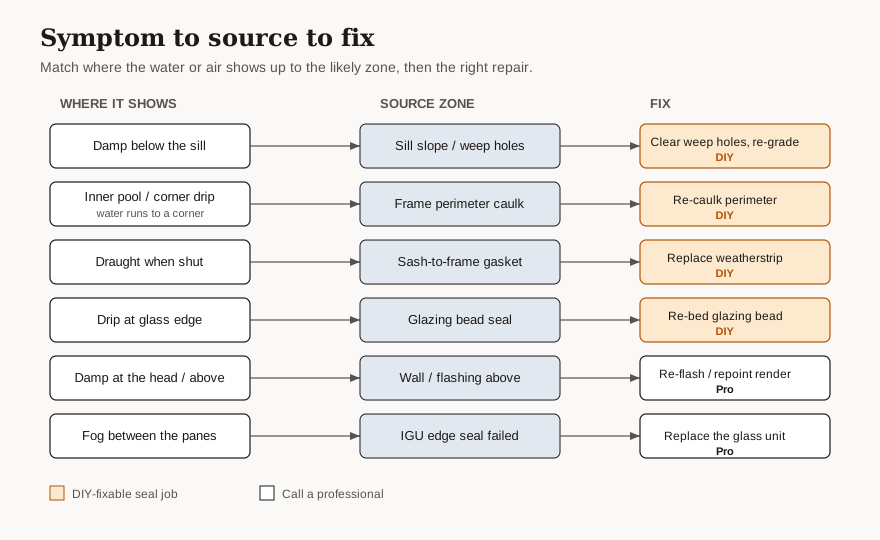
Once you have located the zone, match it to the fix.
| Symptom | Likely source | Fix | DIY or pro |
|---|---|---|---|
| Stain on wall below the sill after rain | Failed perimeter sealant or blocked weep holes | Re-caulk perimeter; clear weep holes | DIY |
| Water pools on the inner sill | Sill slopes inward, or weep holes blocked | Clear weeps; correct sill slope | DIY to pro |
| Draught felt when window is shut | Perished sash gasket or weatherstrip | Replace gasket / weatherstrip | DIY |
| Drip at the bottom corners of the glass | Failed glazing bead seal | Re-bed glazing with fresh sealant | DIY (careful) |
| Damp at the window head (top) only | Water from wall or flashing above | Trace and seal the wall source | Pro |
| Fog or moisture between two panes | Failed insulated-glass edge seal | Replace the sealed unit, not reseal | Pro |
The decision tree below condenses the same logic into a path you can follow at the window.
The fixes, one by one
Re-caulk the frame perimeter
The most common and most satisfying fix. Cut out the old, cracked silicone with a sharp knife, clean the joint, let it dry fully (critical in the monsoon — trapped damp ruins the bond), then run a continuous bead of neutral-cure silicone or polyurethane sealant and tool it smooth. For gaps wider than about 6 mm, push in a foam backer rod first so the sealant is not asked to bridge a void. This is squarely DIY.
Replace a tired sash gasket
If the spray test points to the join between the opening sash and the frame, and you feel a draught, the EPDM gasket has gone hard. Peel it out of its channel, take a sample to the dealer to match the profile, and press the new length in. No tools, no glue. This overlaps the dedicated seal replacement job — go there for gasket and weatherstrip detail.
Clear blocked weep holes
Sliding aluminium and uPVC frames have small slots along the bottom outer edge — weep holes — that drain rain out of the bottom track. In Indian conditions they clog with dust, paint and insect debris within a year or two, the track fills, and water backs up over the inner lip onto your sill. It looks like a serious leak and is usually a two-minute clean.
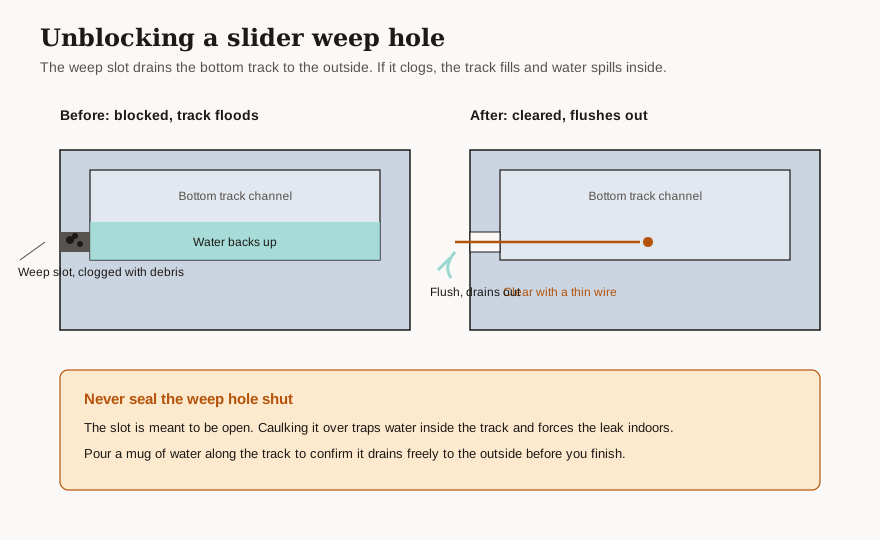
Find the slots on the outside face of the bottom track. Clear each with a thin wire or a soft brush, then flush with water and watch it run out the outside. Never seal a weep hole shut — it is meant to be open. This is the cheapest fix in the whole guide and fixes a large share of "leaking" sliders.
Re-bed failed glazing
If water drips in at the bottom corners of the pane, the bead seal holding the glass has failed. Rake out the old sealant along the bottom edge, clean, and run fresh glazing sealant. Be gentle and do not lever against the glass edge — a chipped toughened pane can shatter later. DIY-able with patience; if the glass is large or high, call a glazier.
Correct a sill that slopes the wrong way
A sill should fall away from the room by a few degrees so rain runs outward. Builders sometimes set it flat or back-pitched. A mild case can be helped by building up the outer-edge sealant or adding a drip profile. A genuinely back-pitched concrete or stone sill needs masonry work — that is a pro job, and worth doing properly because it will leak every monsoon otherwise.
When it is the wall above
If the spray test only leaks when you wet the wall, stop touching the window. Look for render cracks, a missing or reversed flashing over the head, or a failed chajja (sun-shade) joint funnelling water down. Sealing the window will achieve nothing. Get a mason or waterproofing contractor to trace and treat the wall source.
Repair now, or replace?
| Situation | Verdict |
|---|---|
| Cracked perimeter sealant, blocked weeps, tired gasket | Repair — cheap and lasting |
| One failed glazing seal | Repair / re-bed |
| Foggy double-glazed unit | Replace the unit (frame stays) |
| Frame rotted or corroded beyond a third of its length, repeated leaks every season | Replace the window |
If you are crossing into replacement territory, our Home Window Maintenance Guide pillar links the full repair-versus-replace decision and the seasonal schedule that stops leaks recurring. To choose what goes back in, see Types of Home Windows in India.
A leak fixed at the wrong joint is a leak deferred, not cured. Always confirm the source with a spray test before you reach for the sealant gun.
References
Export this guide
Related Guides — Deep-dive reading
Window Seal Replacement Guide
The three window seals — perimeter caulk, weatherstrip gasket and the IGU edge seal — and exactly how to replace each (and which one you must not try to reseal)
Windows & GlazingWindow Waterproofing Guide for Indian Homes
The keep-water-out system for the windows you already have: perimeter sealant, gaskets, sloped sills, weep holes and a pre-monsoon re-caulking routine.
Windows & GlazingBathroom Leak Repair in India: Find & Fix Common Leaks (2026)
A practical, India-first guide to finding and fixing the everyday bathroom leaks — dripping taps, weeping traps and angle valves, a running cistern, failed silicone seals — plus how to tell a simple fixture leak from a waterproofing failure that needs a professional.
BathroomsRelated Tools — Try Free
Monsoon-Readiness Checklist
Pre-rain home audit across 9 categories — terrace, drains, waterproofing, electrical, HVAC, pest, vehicles, documents.
Seasonal AuditBefore & After Studio
Generate AI before-and-after renders to preview how your redesign could look.
DesignAIWindow Cost Calculator
Estimate window price plus installation by type, frame material, size, glass and quantity.
Window Calculator