

Window Waterproofing Guide for Indian Homes
The keep-water-out system for the windows you already have: perimeter sealant, gaskets, sloped sills, weep holes and a pre-monsoon re-caulking routine.
Every Indian monsoon runs the same test on your windows: a few days of wind-driven rain hammering the same wall, hour after hour, looking for the one gap your sealant has lost. Waterproofing is how you pass that test before the water finds the gap, not after. This guide is about the keep-water-out system on the windows you already own — the perimeter sealant, gaskets, sloped sills, weep holes and drip details that, kept in good order, stop a leak from ever starting.
Waterproofing is the cheapest repair you will ever do, because it is the one you do before anything is wet.
Where this guide fits (and where it does not)
It is easy to confuse three jobs that all involve water and windows. Keep them separate:
| You are dealing with... | The right guide |
|---|---|
| A window that is dry now — you want to keep it that way | This guide (prevention and sealing) |
| A window that is leaking now — find the source and stop it | Window leak repair |
| Choosing rain-resistant windows when buying | Monsoon-friendly window designs |
This guide is proactive. You are sealing, re-caulking and clearing drainage on sound windows so the monsoon never gets a foothold. If water is already coming in, start with the leak repair guide first, then come back here to harden everything else. And if you are still at the buying stage, the monsoon-friendly designs guide covers chajjas, drip grooves and sash overlaps that build water-resistance in from day one. For the full care routine this sits inside, see the Home Window Maintenance Guide.
The five layers that keep a window dry
A window is not waterproofed by one product. It is a system of layers, and water exploits whichever one you neglect.
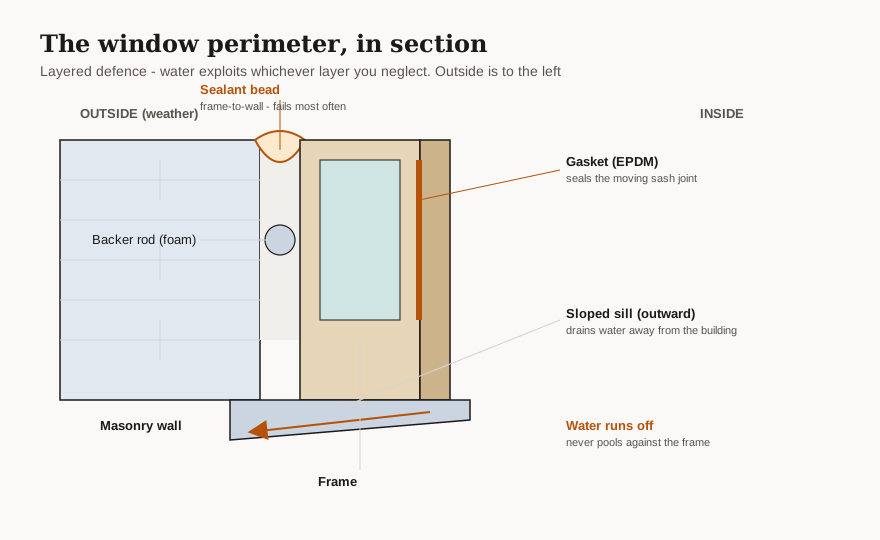
- Perimeter sealant — the silicone or polyurethane (PU) bead where the frame meets the wall. This is the joint that fails most often in India because UV and heat cycling crack old caulk.
- Gaskets — the EPDM rubber strips between sash and frame that seal the moving joint when the window is shut.
- Sloped sill — the bottom ledge must tilt outward so water runs away from the building, never pools against the frame.
- Weep holes and drainage channels — small slots in the bottom of the frame that let any water that does get in drain back out.
- Flashing and drip detail — the overhang or drip groove above and at the sill edge that throws water clear of the wall face.
| Layer | What it does | Keep it healthy by |
|---|---|---|
| Perimeter sealant | Seals frame-to-wall gap | Re-caulk when cracked, usually every 3-5 years |
| Gaskets | Seals sash-to-frame | Clean, check for hardening, replace when brittle |
| Sloped sill | Drains water outward | Keep slope, repair cracks, do not block with tiles |
| Weep holes | Drain trapped water | Clear of dust, silicone and insect nests |
| Drip detail | Throws water off the face | Keep the groove clean, do not paint it solid |
Re-caulking: the core DIY skill
Most window waterproofing is re-caulking the perimeter. Done well, it is the single highest-value hour you will spend before the monsoon.
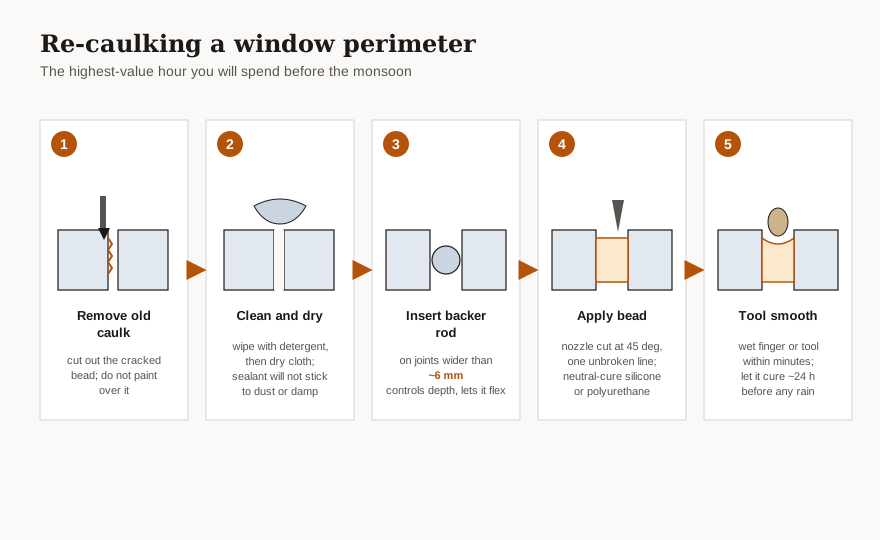
Step by step:
1. Remove the old caulk. Cut it out with a caulk-removal tool or a blunt knife. Painting fresh caulk over cracked caulk just traps the gap underneath.
2. Clean and dry the joint. Wipe with a mild detergent, then a dry cloth. Sealant will not stick to dust, oil or damp masonry. Let it dry fully — do not seal on a humid morning if you can help it.
3. Fit a backer rod on wide joints. For any gap wider than about 6 mm, press in a foam backer rod first. It controls depth, saves sealant and lets the bead flex instead of tearing. Narrow joints do not need it.
4. Apply a continuous bead. Cut the nozzle at 45 degrees, hold the gun steady and lay one unbroken line. Choose neutral-cure silicone for glass-to-frame and most perimeters, or polyurethane where the joint also needs paint or sits on raw masonry.
5. Tool the bead smooth. Run a wet finger or a tool along it within a few minutes to press it into both faces and shed water. Let it cure fully — usually 24 hours — before the rain or a wash hits it.
| Tool / material | Use |
|---|---|
| Caulk gun + neutral-cure silicone | Perimeter and glass-to-frame seals |
| Polyurethane sealant | Paintable joints, raw masonry, sills |
| Foam backer rod | Joints wider than ~6 mm |
| Caulk-removal tool, putty knife | Cutting out old, failed caulk |
| Masking tape | Crisp edges on visible joints |
A bead of silicone costs less than a samosa per running metre. A water-stained wall costs a repaint. Re-caulk early.
Sills, weep holes and drainage
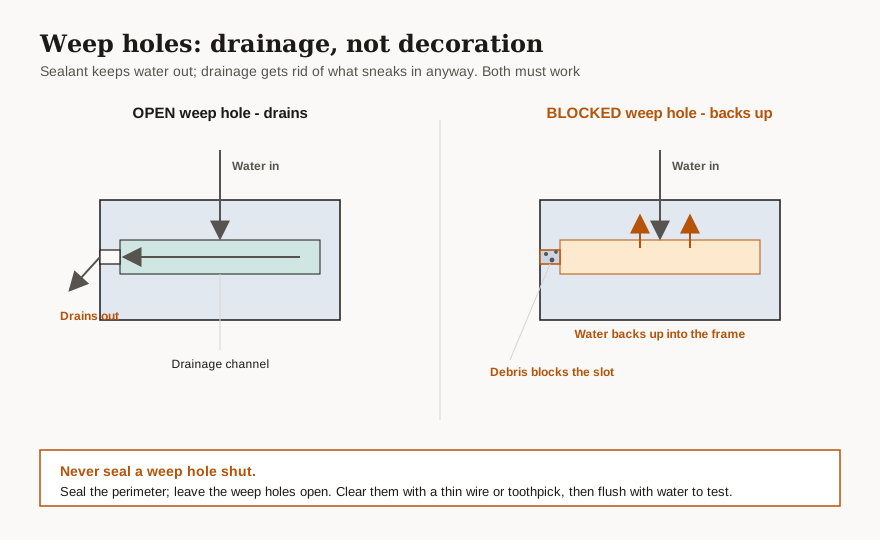
Sealant keeps water out; drainage gets rid of the water that sneaks in anyway. Both must work.
- Check the sill slope. Pour a cup of water on the sill. It should run outward and off within seconds. If it pools or runs inward, that is a leak waiting to happen — the fix is a leak-repair job, so see the leak repair guide.
- Clear the weep holes. Aluminium and uPVC sliders and casements have small slots at the bottom of the outer frame. Dust, paint, old silicone and even insect nests block them. Clear them with a thin wire or a toothpick, then flush with water and watch it drain.
- Never seal a weep hole shut. A common DIY mistake is to caulk over every gap on the frame, including the weep holes — which then traps water inside the frame. Seal the perimeter; leave the weep holes open.
- Keep the drip groove clean. The thin groove on the underside of a sill or chajja makes water drop off instead of tracking back to the wall. Painting it solid defeats it.
A pre-monsoon waterproofing routine
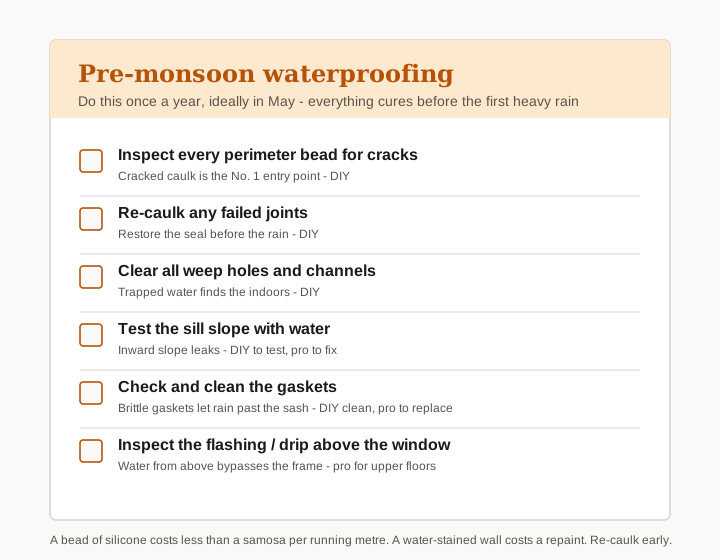
Do this once a year, ideally in May, so everything cures before the first heavy rain.
| Task | Why | DIY or pro |
|---|---|---|
| Inspect every perimeter bead for cracks | Cracked caulk is the No. 1 entry point | DIY |
| Re-caulk any failed joints | Restore the seal before rain | DIY |
| Clear all weep holes and channels | Trapped water finds the indoors | DIY |
| Test sill slope with water | Inward slope leaks | DIY to test, pro to fix |
| Check and clean gaskets | Brittle gaskets let rain past the sash | DIY clean, pro to replace if perished |
| Inspect flashing/drip above the window | Water from above bypasses the frame | Pro for upper floors and rendered walls |
Honest DIY versus pro
| Job | Verdict |
|---|---|
| Re-caulking a ground-floor perimeter | DIY — the core skill of this guide |
| Clearing weep holes, cleaning gaskets | DIY — simple and high value |
| Backer rod plus caulk on wide joints | DIY with care |
| Replacing perished gaskets | DIY-able on simple frames; pro for geared casements |
| Re-sloping or rebuilding a leaking sill | Pro — it is masonry, not caulk |
| Flashing repairs and any upper-floor work | Pro — height, safety and wall build-up |
The rule: anything you can reach safely and seal with a caulk gun is yours. Anything that involves masonry, flashing, height or a window that is already leaking belongs to a professional or to the leak repair guide.
What waterproofing cannot fix
Sealant is not a cure for a wrong window. If a frame is rotten, warped, or the glazing itself is failing, no bead will hold. Material matters too — the right frame in the right place is half the battle, which is why it pays to read Types of home windows in India before you replace anything. Waterproofing keeps a sound window sound. For a window past saving, sealing only buys you one more wet season.
References
- Bureau of Indian Standards, IS 16231 (uPVC windows and doors): https://www.bis.gov.in/
- Central Public Works Department (CPWD) Specifications: https://cpwd.gov.in/
- National Building Code of India 2016 (BIS): https://www.bis.gov.in/standards/technical-department/national-building-code/
Export this guide
Related Guides — Deep-dive reading
Monsoon-Friendly Window Designs: Keeping Wind-Driven Rain Out
Drainage channels, baffled weep holes, outward-sloped sills, EPDM seals and the right window type for an Indian monsoon
Windows & GlazingWindow Leak Repair Guide
How to find the source of an active window leak and fix it — the top-down spray test, a leak-source map, and the right repair for each zone
Windows & GlazingHome Window Maintenance Guide for India: Seasonal Schedule and Checklist
A year-round care calendar, a universal checklist and a repair-versus-replace framework for every window in your Indian home
Windows & GlazingRelated Tools — Try Free
Monsoon-Readiness Checklist
Pre-rain home audit across 9 categories — terrace, drains, waterproofing, electrical, HVAC, pest, vehicles, documents.
Seasonal AuditWindow Cleaning Cost Calculator
Estimate professional window cleaning cost per visit and per year by access and frequency.
Window CalculatorWindow Maintenance Cost Calculator
Estimate annual window upkeep by frame material — yearly, per-window and 5-year cost.
Window Calculator