
Glass Wool Insulation in India: Properties, Uses & How to Specify It (2026)
The most common building insulation in India, decoded - what glass wool is, its thermal and acoustic strengths, the rolls and batts you can buy, where it belongs (false ceilings, AC ducts, PEB roofs, drywall) and how it compares with rock wool and foam.
If you have ever pushed up a false-ceiling tile or peered into an air-conditioning duct in India, you have almost certainly met glass wool - the soft, yellow, fibrous blanket tucked out of sight to keep heat and noise where they belong. It is the workhorse of Indian building insulation: the cheapest mainstream option, the most widely stocked, and the default that architects and HVAC contractors reach for first. This guide helps you understand what it is, where it earns its place and how to specify and select it well.
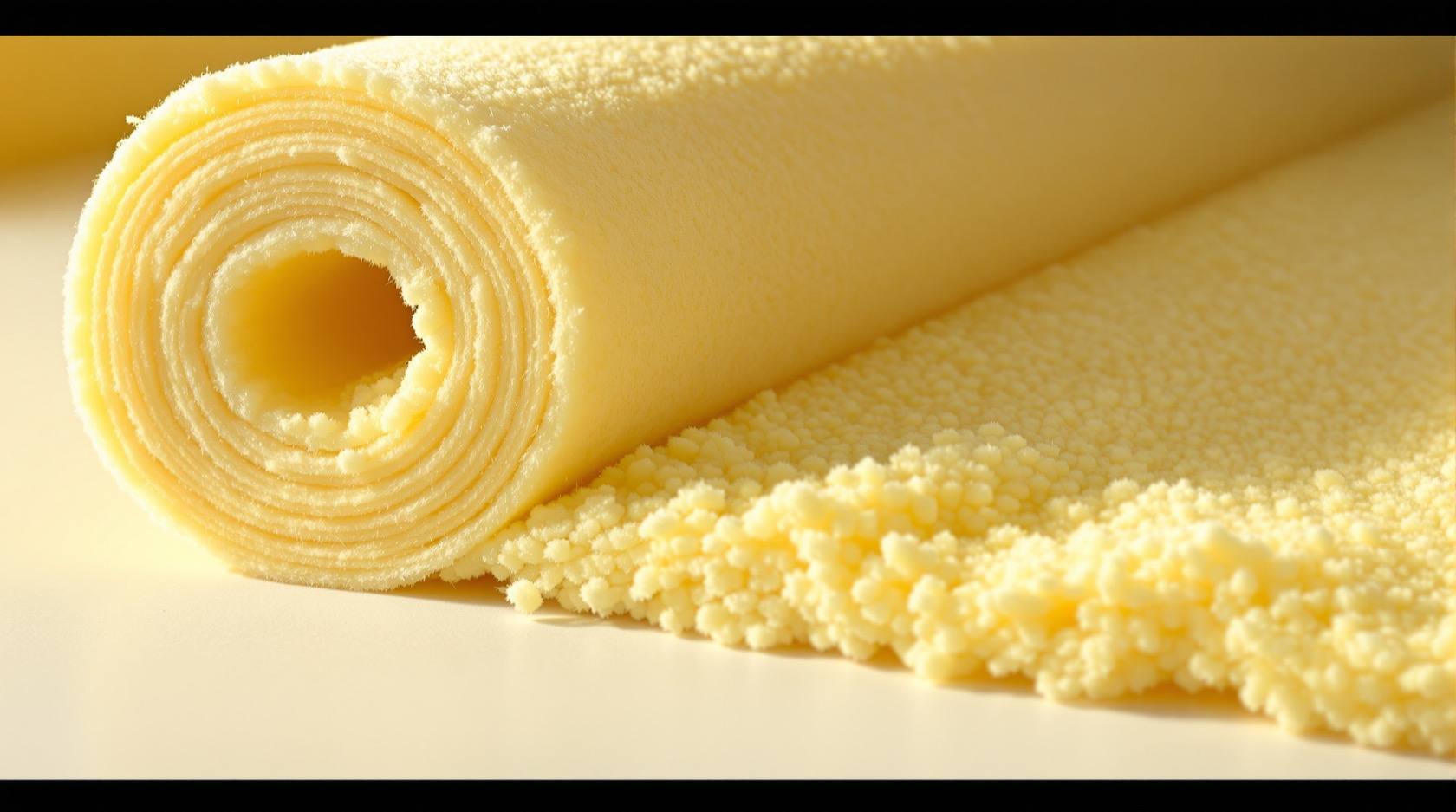
Glass wool is made by spinning molten glass - often a large share of recycled glass cullet - into extremely fine fibres, then bonding them into a light, springy mat full of trapped air. That trapped, still air is the whole point: air is a poor conductor of heat, and holding millions of tiny pockets of it in place is exactly what an insulation blanket does. Because glass is inorganic, the finished product does not burn, rot or feed mould, which is a large part of why it is so widely trusted.
Scope and safety: This is a selection guide. Densities, R-values and prices here are indicative only - they vary by brand, thickness, facing and region, so always get local quotes and read the manufacturer's data sheet. Sizing insulation for a specific roof, duct or wall, and the actual installation, are jobs for a qualified HVAC contractor, insulation applicator or architect. Glass fibres irritate skin, eyes and airways, so handling belongs to trained workers with the right PPE. Nothing here replaces the IS codes or a licensed professional.
What glass wool actually is
Glass wool sits in the family of "mineral wool" insulations, alongside its heavier cousin rock wool. Both are inorganic fibre blankets, but they start from different raw materials: glass wool from glass (sand plus recycled cullet), rock wool from basalt-type rock and steel-industry slag. The manufacturing gives glass wool its signature character - very light, very soft, pale yellow, and springy - so it compresses into a small package and lofts back out when unrolled.
The insulating performance comes almost entirely from the still air held between the fibres, not from the glass itself. That is why density and thickness matter more than brand: a thicker, appropriately dense blanket traps more air across the heat path and insulates better. Glass wool is also an excellent sound absorber - the open, fibrous structure soaks up airborne noise, which is why it turns up inside drywall partitions, home theatres and machine enclosures as much as in roofs.
Why it is so widely used - the strengths
- Good thermal insulation. Glass wool has a low thermal conductivity (roughly 0.03 to 0.04 W/mK depending on density), so a modest thickness meaningfully slows heat flow through a roof, duct or wall.
- Excellent acoustic insulation. Its open fibrous structure absorbs airborne sound extremely well, making it the standard infill for acoustic drywall, false ceilings and duct liners.
- Non-combustible and fire-safe. Being inorganic glass, it does not burn and does not contribute fuel to a fire - a critical advantage over most plastic foams. Facings and binders can affect the rating, so always check the product's fire classification.
- Very light. It is far lighter than rock wool, so it is easy to lift onto a false ceiling grid, adds negligible load, and is quick to handle.
- Economical. It is typically the cheapest mainstream insulation per unit of thermal performance in India - a big reason it dominates the market.
- Widely available. Every serious insulation supplier stocks it in a range of thicknesses and facings, so lead times are short and choice is wide.
- Recycled content and inert. A large share of recycled glass, plus an inert, rot-proof, mould-resistant material that will not attract pests.
The forms you can buy
Glass wool is sold mainly as rolls (long flexible blankets, ideal for laying over large flat areas like false ceilings and PEB roofs) and batts or slabs (pre-cut rigid-ish pieces that fit between studs or joists). Both come plain or faced - a factory-bonded layer on one side that changes how the product behaves:
- Foil / aluminium facing acts as a vapour barrier and adds a reflective, radiant-heat surface - the usual choice for ducts and humid or condensation-prone locations.
- Tissue or glass-cloth facing gives a neat, snag-free surface and a little reinforcement - common for exposed duct liners and acoustic applications.
- Plain (unfaced) is used where a separate vapour barrier is added, or where facing is not needed.
The two numbers to specify are density (commonly around 16 to 48 kg/cu m for building work; higher density gives better acoustic and slightly better thermal performance and more rigidity) and thickness (25, 50 and higher mm; more thickness means more R-value).
Density, thickness and R-value
R-value measures resistance to heat flow - higher is better - and for a given material it rises with thickness. Glass wool's R-value per unit thickness is competitive with other fibrous insulations. The indicative ranges below are a starting point for a conversation with your supplier, not a substitute for the product data sheet.
| Typical density | Common use | Character | Indicative R-value |
|---|---|---|---|
| 12 to 16 kg/cu m | False-ceiling / loft blankets | Softest, lightest, cheapest | About R-0.6 to R-0.7 per 25 mm |
| 24 kg/cu m | General roof and duct wrap | Balanced, most common | About R-0.65 to R-0.7 per 25 mm |
| 32 to 48 kg/cu m | Acoustic panels, duct liner, PEB | Firmer, better sound and shape | Similar per 25 mm, more rigid |
| 50 to 100 mm thickness | Roofs and hot climates | Stacks R-value | Roughly R-1.3 to R-2.7 total |
To turn a target R-value into a real thickness for your climate zone and assembly, run the numbers through our insulation R-value calculator, and read the whole-building picture in the building insulation materials guide.
Where glass wool belongs
Glass wool shines wherever a light, cheap, fire-safe blanket can be tucked into a cavity or laid over a surface - and it is used across most of a typical Indian building's hidden spaces.
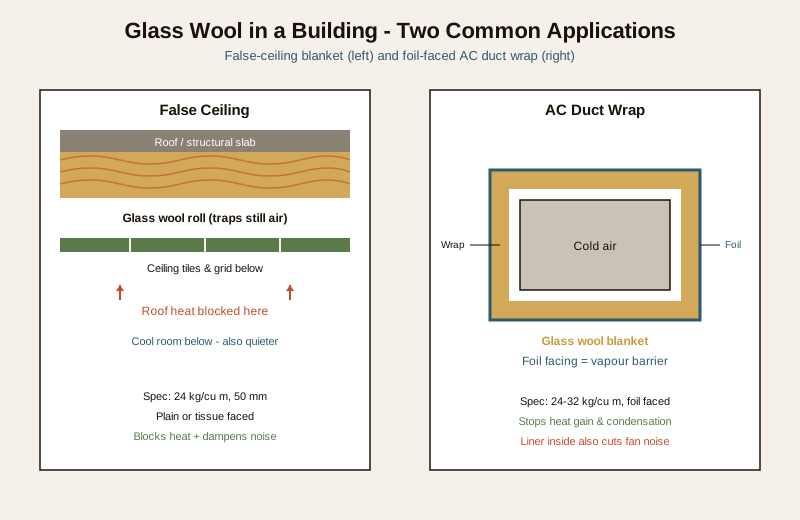
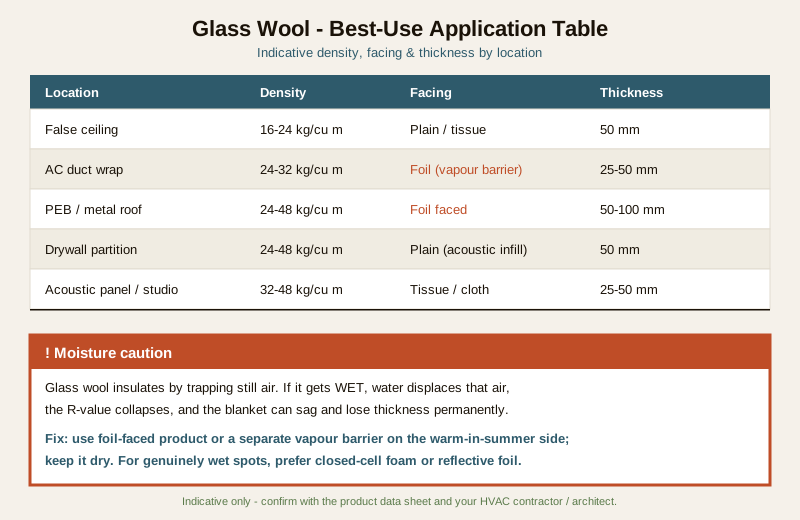
- False ceilings - a roll laid over the ceiling grid blocks radiant roof heat and dampens noise between floors. The single most common application in Indian homes and offices.
- AC ducts (duct wrap and duct liner) - foil-faced wrap on the outside stops heat gain and condensation; acoustic liner inside the duct kills fan and airflow noise. This is HVAC's core use of glass wool - see the HVAC hub.
- Metal and PEB (pre-engineered building) roofs - laid under metal sheeting, it tames the fierce heat gain and drumming rain-noise of bare metal roofs. For the roof-level decisions see the roofing hub and roof insulation guide.
- Drywall / gypsum partitions - stuffed into the cavity as acoustic infill to raise the sound rating of a wall between rooms.
- Machine and equipment enclosures, home theatres, studios - as an acoustic absorber.
The moisture caution
Glass wool's one real weakness is water. The insulation works by trapping still air; when the fibres get wet, water displaces that air, thermal conductivity climbs and the R-value can collapse. Worse, a soggy blanket takes a long time to dry and can slump or sag, losing thickness permanently.
This is why facing and detailing matter. In humid or condensation-prone spots - duct exteriors, roofs, walls against damp - specify a foil-faced product or a separate vapour barrier on the warm-in-summer side, and ensure the assembly is detailed so condensation cannot soak the blanket. Where a location is genuinely wet or exposed, a closed-cell foam or reflective foil may suit better than glass wool. For humid coastal and monsoon contexts, read the moisture logic in the building insulation materials guide and pair glass wool with reflective foil insulation where a radiant plus vapour layer helps.
Handling and PPE
Glass wool fibres are fine and can irritate skin, eyes and the respiratory tract during cutting and fitting. This is a handling nuisance, not a reason to avoid the product - but it is exactly why installation belongs to trained workers using the right protection: long sleeves and gloves, safety glasses, a dust mask or respirator, and good ventilation. Once installed behind a ceiling, duct facing or drywall, it is fully enclosed and poses no everyday exposure. Leave cutting, fitting and sealing to a professional applicator or HVAC contractor.
Glass wool vs rock wool vs foam
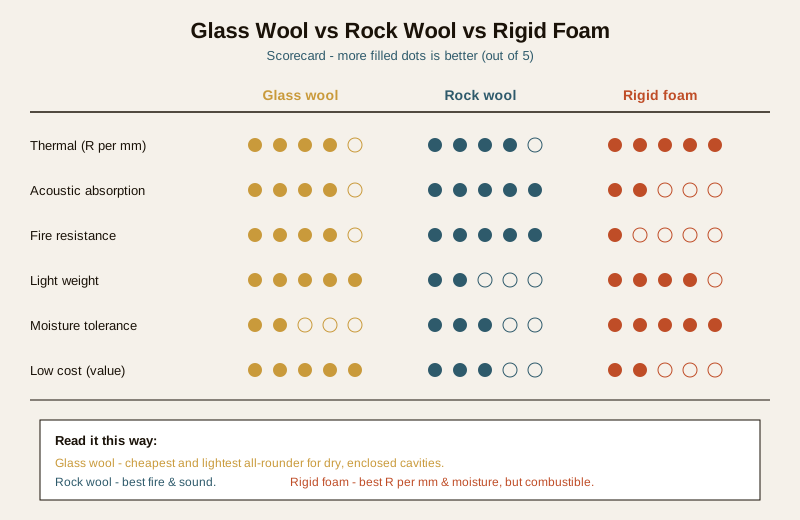
The three big insulation choices in India trade off against each other. Glass wool is the light, cheap all-rounder; rock wool is the heavier, tougher fire-and-sound specialist; rigid foams win on moisture and R-value per mm.
| Property | Glass wool | Rock wool | Rigid foam (XPS / EPS / PU) |
|---|---|---|---|
| Base material | Spun glass fibres | Basalt / slag fibres | Plastic (polystyrene / polyurethane) |
| Thermal conductivity | Low (0.03 to 0.04) | Low (0.034 to 0.04) | Lowest (0.022 to 0.035) |
| R-value per mm | Good | Good | Best |
| Acoustic absorption | Very good | Best (denser fibre) | Poor to fair |
| Fire behaviour | Non-combustible, high melt-safe | Non-combustible, very high melting point | Combustible (needs fire rating / cover) |
| Weight | Lightest | Heavier | Light |
| Moisture tolerance | Poor (needs vapour barrier) | Fair to good | Good to excellent (XPS/PU) |
| Relative cost | Cheapest | Moderate | Highest |
| Best for | False ceilings, ducts, PEB roofs, drywall | Fire barriers, high-acoustic walls, hot flues | Wet, exposed or high-R roofs and floors |
The short version: choose glass wool when you want economical thermal-plus-acoustic performance in a dry, enclosed cavity; step up to rock wool when fire performance or heavy sound control is the priority, or when the location runs hot; and reach for rigid foam (see the XPS, EPS and PU/PIR guides) where moisture, exposure or maximum R-value per millimetre rule. For a naturally-derived option, see natural insulation materials.
Standards and buying well
Bonded mineral-wool insulation in India is broadly covered by BIS standards for mineral wool for thermal insulation (named generally here - check the current edition and the manufacturer's data sheet), and building-wide provisions sit within the National Building Code (SP 7:2026). When you buy, specify and check:
| What to specify / check | Why it matters |
|---|---|
| Density (kg/cu m) | Drives acoustic and rigidity performance |
| Thickness (mm) | Drives total R-value |
| Facing (foil / tissue / plain) | Vapour barrier and surface finish |
| Fire classification | Confirms the non-combustible claim for that product |
| Thermal conductivity on the data sheet | The real, comparable performance number |
| Intact, dry, factory-sealed packaging | Wet or crushed stock has lost loft and R-value |
Buy from a reputable brand, keep the rolls dry and compressed until fitting, and hand the sizing and installation to your HVAC contractor or architect. For quantities and layering across the wider material picture, the complete building materials guide puts insulation in context alongside the structure it protects.
Key takeaways
- Glass wool is India's most common building insulation - fine spun glass fibres (often recycled), light, springy and pale yellow - that insulate by trapping still air.
- Its strengths are good thermal and excellent acoustic insulation, non-combustible fire safety, very light weight, low cost and wide availability.
- Buy it as rolls or batts, plain or foil/tissue faced; specify density and thickness, and use foil facing as a vapour barrier where moisture is a risk.
- It belongs in false ceilings, AC ducts, PEB/metal roofs and drywall partitions - dry, enclosed cavities where cheap thermal-plus-acoustic performance wins.
- Its weakness is water: wet glass wool loses R-value, so detail a vapour barrier. Choose rock wool for fire/acoustic priority and foam for moisture or maximum R-value.
- Handling irritates skin and airways - leave cutting, fitting and sealing to a professional with proper PPE.
References
- Bureau of Indian Standards - IS standards for bonded mineral wool / glass wool for thermal insulation; consult the current editions for density grades, thermal conductivity and marking.
- National Building Code of India (SP 7:2026) - building services, thermal comfort and materials provisions.
- Manufacturer technical data sheets - the authoritative source for thermal conductivity, density, R-value, facing and fire classification of a specific product.
- Studio Matrx guides: the building insulation materials guide, rock wool insulation, reflective foil insulation, the roof insulation guide, the HVAC hub and the complete building materials guide.
Export this guide
Related Guides — Deep-dive reading
Rock Wool Insulation in India: Fire-Rated Thermal & Acoustic Insulation Guide (2026)
What rock wool (stone mineral wool) is, why it beats most insulants on fire and sound, the forms and densities it comes in, where it wins over glass wool and foams, indicative cost and safe fibre handling - a specify-and-select guide.
Building MaterialsBuilding Insulation Materials Guide (India): Types, R-Value & How to Choose (2026)
The complete anchor guide to building insulation in Indian homes - why it matters, the physics in plain terms, where insulation goes, and a side-by-side comparison of every material family with clear guidance on how to choose the right one.
Building MaterialsFire-Resistant Building Materials in India: A Specify-and-Select Guide (2026)
The difference between how a material reacts to fire and how long a rated assembly resists it, then the materials that deliver passive fire protection - non-combustible structure, mineral wool, fire-rated boards, intumescent coatings, spray fireproofing and fire-stopping - with a material-to-role selection table.
Building MaterialsRelated Tools — Try Free
Acoustic Privacy (STC) Visualizer
Indian healthcare acoustic visualizer — compare wall assemblies and noise sources, see received SPL after STC attenuation, and check FGI 2018 / IS 1950 / NABH speech-privacy compliance with live dual-canvas waveform.
Acoustic ToolCross-Ventilation Analyzer
Estimate airflow and air changes per hour (ACH) from room size, window areas, layout, and local wind — with NBC 2016 Part 8 compliance check.
Ventilation CalculatorFalse Ceiling Cost Estimator
Live ₹/sqft across 8 ceiling types — POP, gypsum, designer, metal, PVC, wooden — with cove and spot lighting for 20 Indian cities.
Cost Calculator