
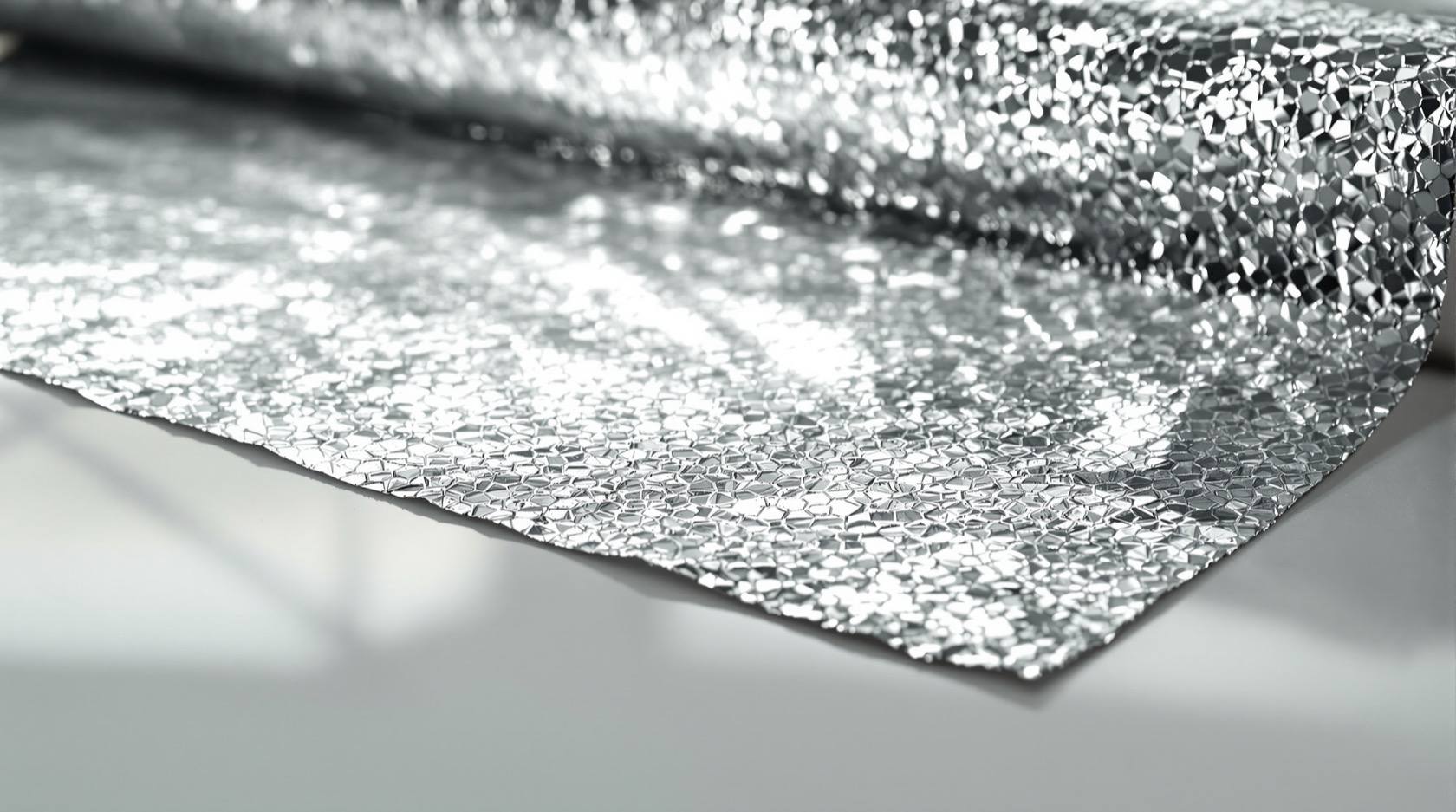
Reflective Foil Insulation (Radiant Barrier) in India: How It Works, Where It Helps (2026)
A plain-English guide to reflective foil insulation - the low-emissivity aluminium radiant barrier - for Indian homes: how it reflects roof heat instead of resisting conduction, why it needs an air gap, where it earns its place, and the marketing claims to ignore.
Stand under a metal or a concrete roof at 3 pm in an Indian summer and you can feel the ceiling radiating heat down at you like a low grill. Much of that heat arrives not by touch but by radiation - infrared energy beamed off a hot roof surface. Ordinary bulk insulation slows heat that travels by conduction; a reflective foil insulation, or radiant barrier, tackles the radiant part instead, by simply refusing to absorb or re-emit it. Understood correctly, it is a clever, cheap, thin ally. Sold to you the way it often is - as a magic "R-value" blanket that replaces everything else - it disappoints. This guide separates the physics from the sales pitch.
Our aim here is to help you choose and specify foil correctly: what it is, how it works, where it earns its keep in Indian homes, and where it does not. It sits inside our wider building insulation materials guide, which maps the whole family.
Scope and safety: This is a selection guide. Costs, temperatures and performance figures are indicative only - roof design, product grade and site conditions swing them widely, so get local quotes and product datasheets. Fixing foil to a live roof, working at height, and combining it with waterproofing or electrical runs are jobs for a qualified roofer or contractor. Nothing here replaces the IS codes, NBC (SP 7:2026) provisions, or a licensed professional.
The one idea: reflect, don't resist
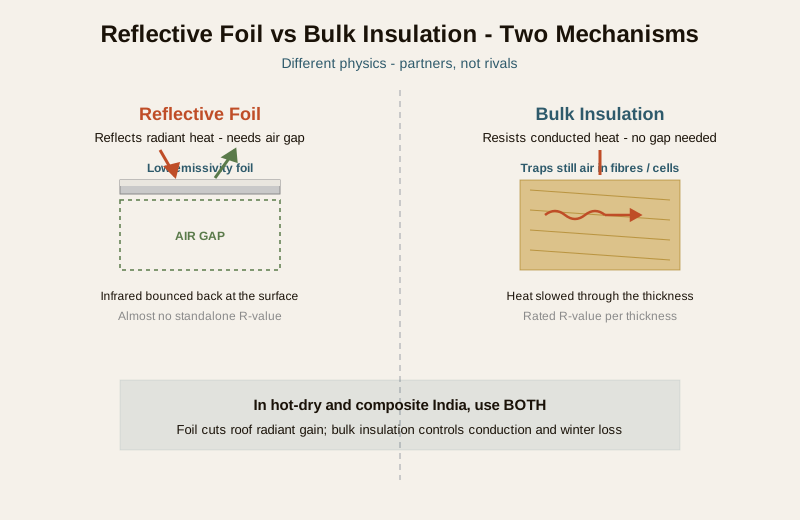
Heat moves three ways - conduction (through solid contact), convection (via moving air) and radiation (infrared energy across a gap, needing no material at all). A hot roof under the Indian sun becomes a giant radiator, beaming infrared down into the space below. Bulk insulation such as glass wool or PU and PIR foam fights conduction by trapping still air in fibres or cells; its thickness and density give it an R-value.
A radiant barrier works on a completely different principle. A polished aluminium surface has very low emissivity - it barely radiates heat - and correspondingly high reflectivity, bouncing back most of the infrared that strikes it. So when the hot underside of a roof tries to radiate its heat downward, a foil facing an air gap reflects roughly 90 to 97 percent of that radiant energy back up, and re-emits almost nothing of its own. It is not resisting heat flow through its thickness; it is turning the radiation away at the surface.
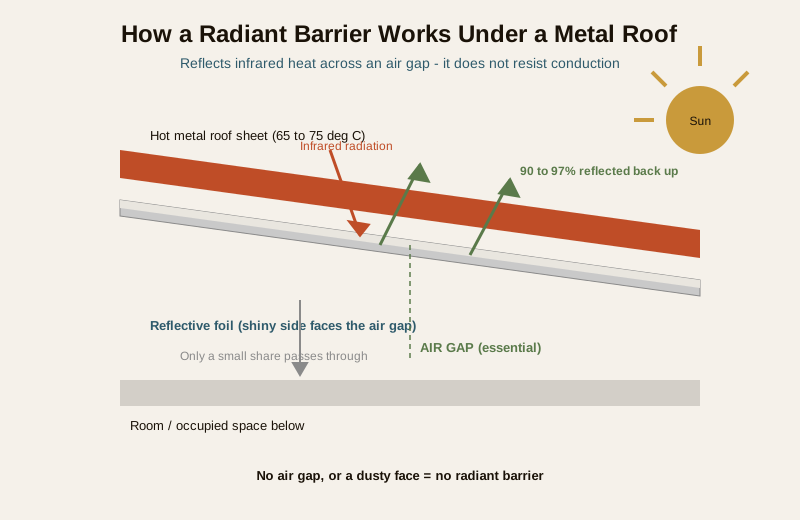
Two consequences follow, and they are the whole story:
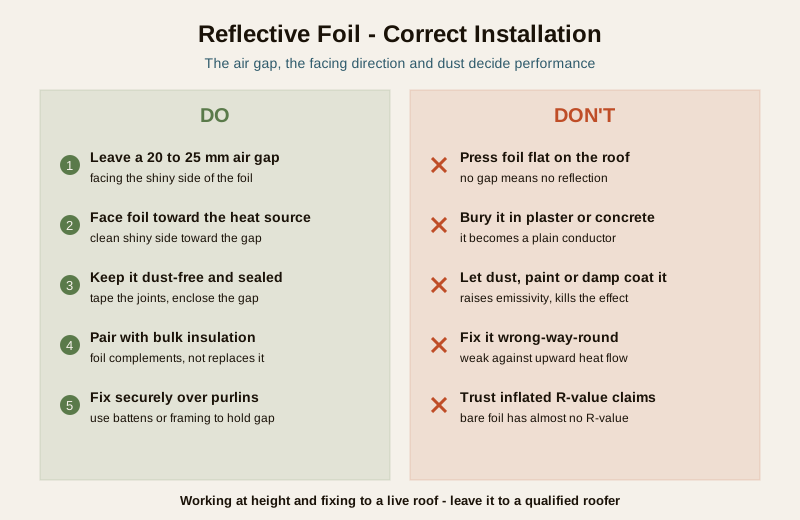
- It must face an air gap. A reflective surface only reflects radiation if there is a gap for radiation to cross. Press foil flat against the roof or bury it inside plaster and it stops working - conduction takes over and it becomes a thin sheet of metal, which conducts heat well. No air gap, no radiant barrier.
- The clean, shiny side must face the gap and stay clean. Emissivity is a surface property. Dust, paint or grime on the foil raises its emissivity and destroys the effect. A dusty radiant barrier a few years in can lose much of its benefit.
Radiant barrier vs bulk insulation - different tools
Because the two work by different mechanisms, they are not rivals to be ranked but partners to be combined. The table makes the split clear.
| Aspect | Reflective foil (radiant barrier) | Bulk insulation (glass wool, foam, wool) |
|---|---|---|
| Fights which heat path | Radiation (infrared across a gap) | Conduction (through the material) |
| How it works | Low emissivity, high reflectivity surface | Traps still air in fibres or cells |
| Needs an air gap | Yes - essential, faces the gap | No - works pressed in place |
| Thickness | Very thin (foil or foil-bubble, a few mm) | Substantial (25 to 100 mm typical) |
| Meaningful standalone R-value | No - almost none on its own | Yes - rated R-value per thickness |
| Best against | Summer roof radiant heat gain | Both directions, whole-envelope loss and gain |
| Dust / ageing sensitivity | High - must stay clean, gap must stay | Low - performance stable if dry |
| Typical India role | Reflect roof heat; complement, not replace | Core thermal resistance of the envelope |
The honest reading: in a hot-dry or composite climate, a foil under a metal roof cuts the fierce summer radiant load, but the building still needs bulk insulation to control conducted heat and any winter loss. Foil complements bulk insulation; it does not replace it. For the deeper trade-offs on roofs specifically, read our roof insulation guide.
The products you will actually be offered
"Reflective insulation" covers a small family. Knowing which is which stops you overpaying for a laminate you do not need.
- Single-sided aluminium foil - foil bonded to a kraft-paper or scrim backing. Cheapest; the reflective face goes toward the air gap. Good as plain sarking under tiles or sheets.
- Double-sided foil - shiny on both faces, useful where there is an air gap on both sides (for example a foil hung inside a cavity). More flexible in placement.
- Foil-bubble-foil - two foil skins sandwiching a layer of air bubbles. The bubbles add a little bulk resistance and stiffness and act as a spacer, but the headline effect is still the reflective faces plus the gaps. This is the most heavily marketed product - and the one whose "R-value" claims are most inflated.
- Woven or reinforced foil (heavy-duty sarking) - foil laminated to a woven mesh for tear strength, made to be laid across purlins under roof sheets or tiles.
- Foil-faced bulk boards - XPS, EPS or glass wool with a factory foil facing. Here you get both mechanisms in one product: the board gives real R-value, the foil face adds a radiant barrier if it faces a gap. Often the smartest single-product choice for roofs.
Treat the multi-layer "10-in-1" foil laminates with a cool head: extra plastic films between two foils add cost and a whisper of bulk resistance, not a new law of physics.
Where reflective foil shines in India
The radiant barrier logic pays off wherever a surface gets very hot and faces an occupied space across a gap. In Indian construction that means:
- Under metal or PEB roof sheets. The classic use. A sheet roof can hit 65 to 75 deg C; a foil sarking stapled to the purlins, facing the air gap below the sheet, reflects most of that radiant heat before it reaches the shed or room. Nearly universal on warehouses, factories and metal-roofed homes.
- Under-tile sarking. Laid over the rafters or battens beneath clay or concrete tiles, foil reflects radiant heat and also sheds any wind-driven rain that sneaks past the tiles.
- Over false ceilings / above the last slab. Foil laid shiny-side-up on top of a false ceiling, facing the hot air gap below the roof slab, cuts the downward radiant load into rooms.
- Behind west and south-west walls. The evening sun cooks west walls. A foil in a wall cavity or behind cladding, facing an air gap, trims radiant gain - though a shaded or insulated wall does more.
- Reflecting the roof radiant load generally. Any assembly where you can create and keep a clean air gap between a sun-baked surface and the inside is a candidate.
It pairs naturally with a cool roof strategy: a reflective roof coating keeps the surface cooler from the top, and foil intercepts the radiant heat that still gets through - two complementary defences. For the whole roofing picture, see the roofing hub.
The honest limits - and the marketing to ignore
Reflective foil is genuinely useful, which is exactly why it is oversold. Keep these caveats in view:
- The "R-value" is mostly marketing. A bare foil has almost no inherent R-value. Sellers quote big "effective R" numbers that secretly bundle in the air gap and specific test conditions. Those numbers do not add up the way a bulk material's rated R-value does, and they collapse if the gap or orientation changes. When you see an "R-value" on a foil, ask what air gap and orientation it assumes. Compare like-for-like with our insulation R-value calculator.
- It does little for conducted heat and winter loss. In a composite or cold-winter zone you still need bulk insulation for the conduction path and for keeping warmth in.
- Orientation and gap decide everything. A radiant barrier is strongest reflecting downward heat gain (roof to room) and weakest against upward heat flow. Fix it wrong-way-round, or with no gap, and it barely works.
- Dust is the silent killer. In dusty Indian conditions the shiny face grimes over. Enclose it, keep the gap sealed against dust, and do not use it where it will collect grime.
- It is not a vapour or waterproof layer by default. Some foils double as a sarking that sheds water, but do not assume it replaces proper waterproofing - that is a separate, professional job.
The fair verdict: specify foil as a radiant barrier, not as your only insulation. In hot-dry and composite India it is a high-value, low-cost complement to bulk insulation on the roof; on its own it is a half-measure.
Indicative cost
Reflective foil is one of the cheapest interventions per square metre - part of its appeal. Treat these as rough, get local quotes.
| Product | Indicative material rate | Notes |
|---|---|---|
| Single-sided foil sarking | Rs 25 to 60 per sq ft | Basic under-sheet or under-tile layer |
| Double-sided foil | Rs 35 to 80 per sq ft | For twin air-gap positions |
| Foil-bubble-foil | Rs 45 to 110 per sq ft | Most-marketed; check gap assumptions in claims |
| Woven / heavy-duty sarking | Rs 40 to 90 per sq ft | Tear-resistant, for laying over purlins |
| Foil-faced bulk board | Priced as the board plus a small premium | Both mechanisms in one; often best value on roofs |
Labour, battens or spacers to hold the air gap, and taping of joints are extra. The cost of the air gap done properly - the battens or the framing that hold it open - is part of the real cost of making foil work, and it is where cheap jobs cut corners.
Key takeaways
- Reflective foil insulation is a radiant barrier: it works by low emissivity and high reflectivity, turning infrared away at the surface, not by resisting conduction through its thickness.
- It needs an adjacent air gap and correct orientation, with the clean shiny face toward the gap and the heat source. No gap, or a dusty face, and it stops working.
- It fights radiant heat; bulk insulation fights conduction. They are partners - foil complements, it does not replace bulk insulation in hot-dry and composite zones.
- In India it shines under metal or PEB roof sheets, as under-tile sarking, above false ceilings and behind west walls - reflecting the intense roof radiant load.
- Ignore inflated "R-value" claims: a bare foil has almost none, and quoted "effective R" hides the air gap and test conditions. Specify it honestly, and leave fixing to a professional.
References
- Bureau of Indian Standards - relevant standards for aluminium foil, reflective insulation and thermal performance of buildings; consult the current editions for emissivity, reflectivity and test requirements.
- National Building Code of India (SP 7:2026) - Part on building services and thermal performance provisions.
- Green rating references - GRIHA and IGBC criteria on roof heat gain and reflective / cool-roof measures.
- Studio Matrx guides: building insulation materials guide, roof insulation guide, cool roof guide, glass wool insulation, PU and PIR foam insulation, the roofing hub and the complete building materials guide.
Export this guide
Related Guides — Deep-dive reading
Building Insulation Materials Guide (India): Types, R-Value & How to Choose (2026)
The complete anchor guide to building insulation in Indian homes - why it matters, the physics in plain terms, where insulation goes, and a side-by-side comparison of every material family with clear guidance on how to choose the right one.
Building MaterialsFire-Resistant Building Materials in India: A Specify-and-Select Guide (2026)
The difference between how a material reacts to fire and how long a rated assembly resists it, then the materials that deliver passive fire protection - non-combustible structure, mineral wool, fire-rated boards, intumescent coatings, spray fireproofing and fire-stopping - with a material-to-role selection table.
Building MaterialsDesigning a Naturally Energy-Efficient Indian Home
Comfort first, gadgets last — passive design, orientation, insulation, ventilation and the climate wisdom that cuts Indian energy bills
SustainabilityRelated Tools — Try Free
Cross-Ventilation Analyzer
Estimate airflow and air changes per hour (ACH) from room size, window areas, layout, and local wind — with NBC 2016 Part 8 compliance check.
Ventilation CalculatorInsulation R-Value Calculator
The R-value and U-value of an insulation layer by material and thickness, and the thickness for a target R.
Material CalculatorAcoustic Privacy (STC) Visualizer
Indian healthcare acoustic visualizer — compare wall assemblies and noise sources, see received SPL after STC attenuation, and check FGI 2018 / IS 1950 / NABH speech-privacy compliance with live dual-canvas waveform.
Acoustic Tool