
Interactive Simulator · 2026
Construction Timeline
From Design to Move-in
Plot size, floors, city → realistic month-by-month construction timeline across 13 phases, with task lists and monsoon warnings.
Your Project
Plan approval: ~6 weeks
Construction Timeline — Week 0 of 63
Building: Design & Planning
Gantt Overview
Phase positioning across weeksLongest Phase
Superstructure (RCC)
0 weeks · 16% of timeline
Structural Window
Foundation → Superstructure
0 weeks — the critical-path window where monsoon delays bite hardest.
Move-in Target
Dec 27
Plan furniture orders, school admissions, and home shifting from this date — minus a 4-week handover buffer.
Timeline — 15 months
63 weeks totalPhase Summary
| # | Phase | Duration | Start | End |
|---|---|---|---|---|
| 1 | Design & Planning | 8 weeks | Sep 26 | Oct 26 |
| 2 | Plan Approval & Permits | 6 weeks | Oct 26 | Dec 26 |
| 3 | Soil Testing | 2 weeks | Dec 26 | Dec 26 |
| 4 | Foundation & Plinth | 5 weeks | Dec 26 | Jan 27 |
| 5 | Superstructure (RCC) | 10 weeks | Jan 27 | Apr 27 |
| 6 | Brickwork & Masonry | 4 weeks | Apr 27 | May 27 |
| 7 | Plumbing & Electrical Rough-in | 4 weeks | May 27 | Jun 27 |
| 8 | Waterproofing | 2 weeks | Jun 27 | Jun 27 |
| 9 | Plastering | 4 weeks | Jun 27 | Jul 27 |
| 10 | Flooring, Tiling & Painting | 5 weeks | Jul 27 | Aug 27 |
| 11 | Interior Work | 6 weeks | Aug 27 | Sep 27 |
| 12 | External Development | 3 weeks | Sep 27 | Oct 27 |
| 13 | Inspection, OC & Move-in | 4 weeks | Oct 27 | Nov 27 |
| TOTAL | 0 weeks (~0 months) | Sep 26 | Dec 27 |
Download Construction Timeline PDF
Landscape PDF with all phases, durations, tasks, and monsoon warnings.
Planning to build? Read our complete guide.
Step-by-step guide from land purchase to move-in — costs, approvals, materials, and more.
Construction phases · Indian sites
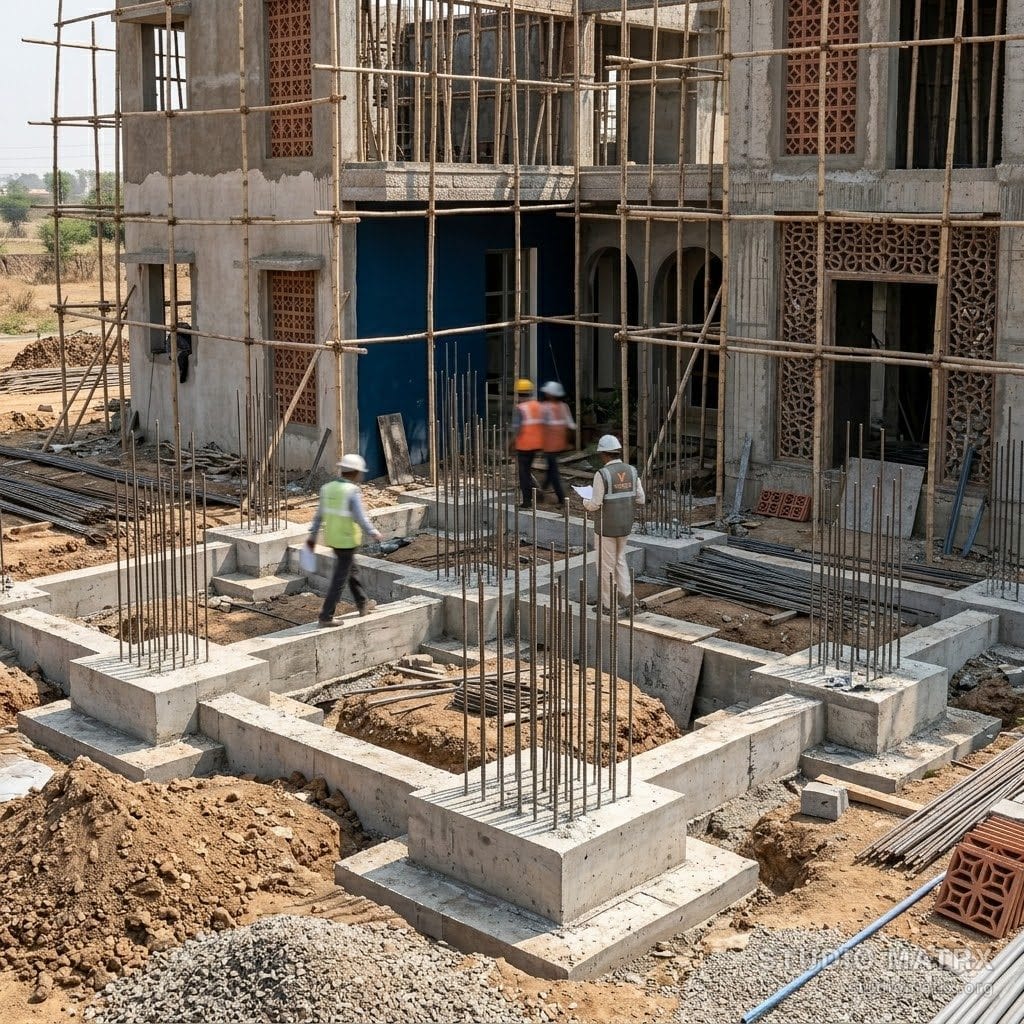
Foundation
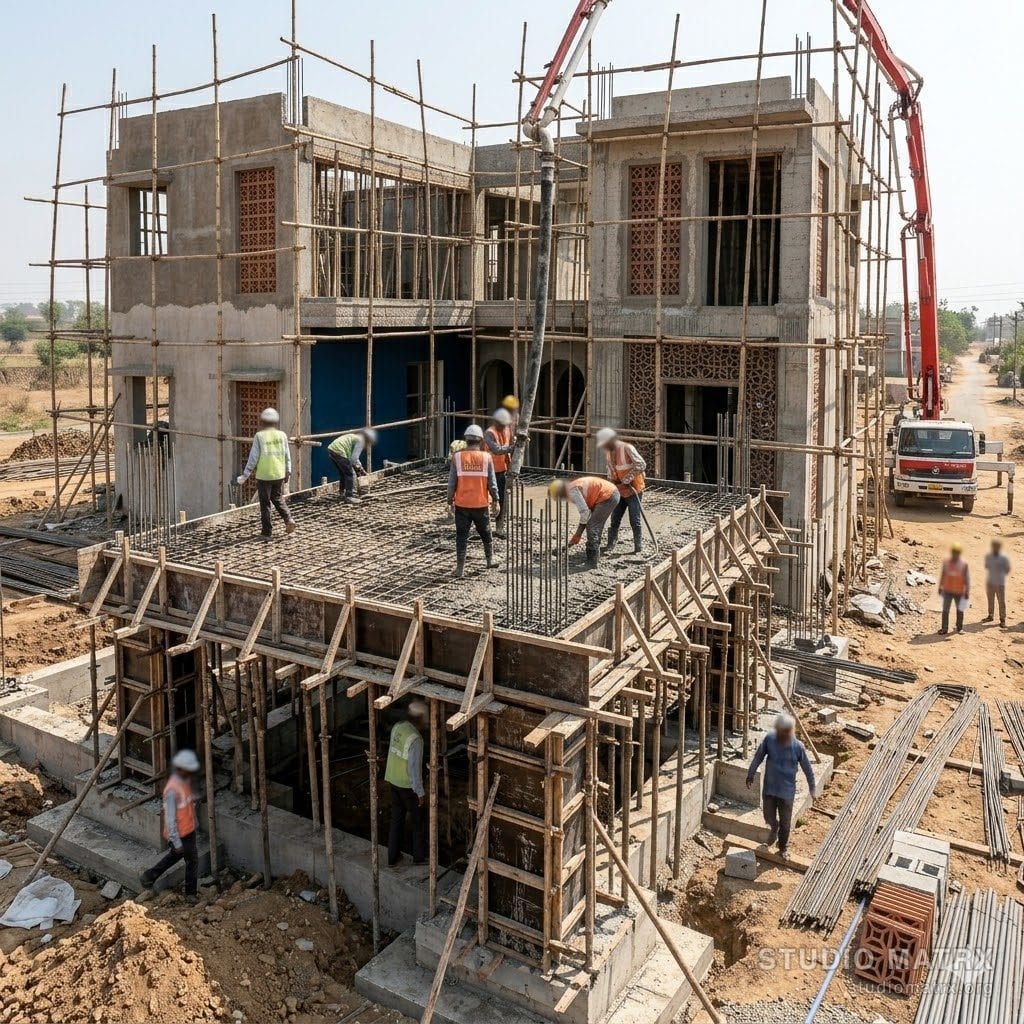
Structure
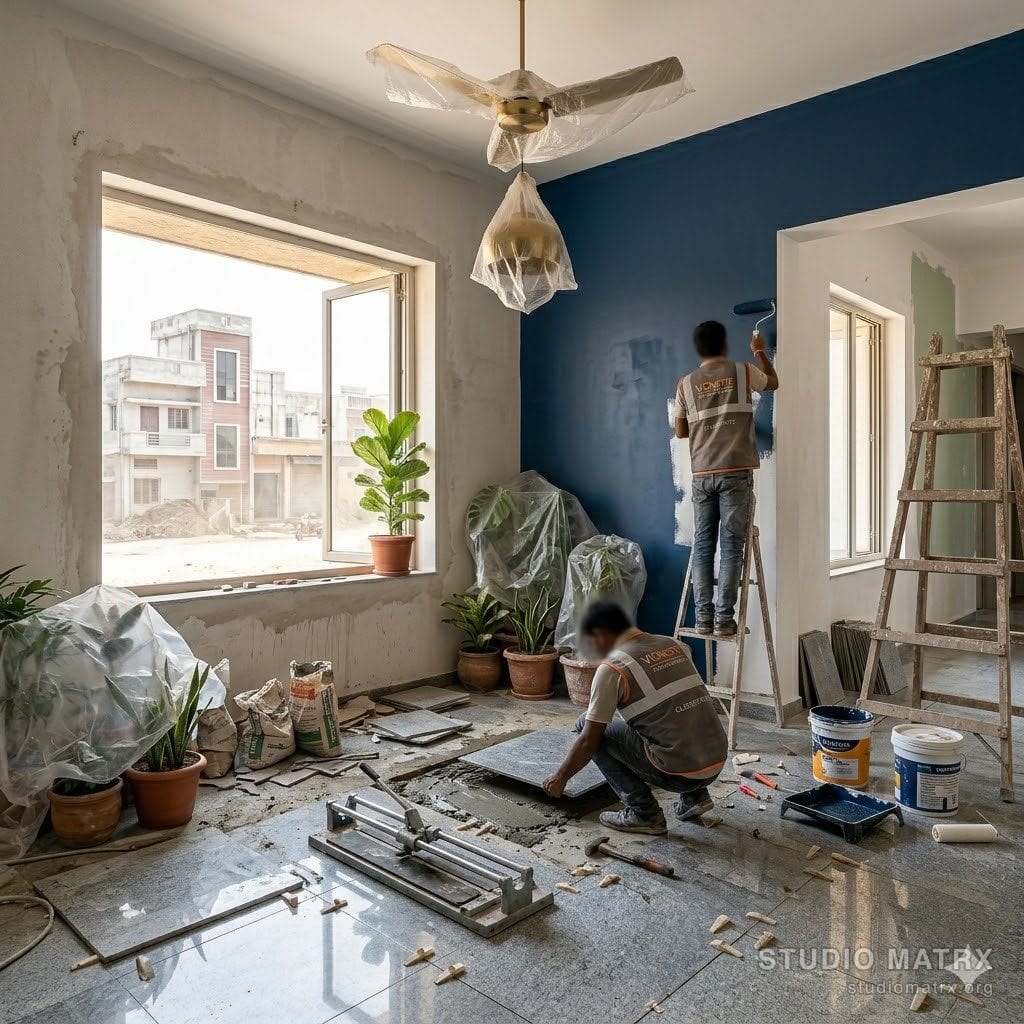
Finishing
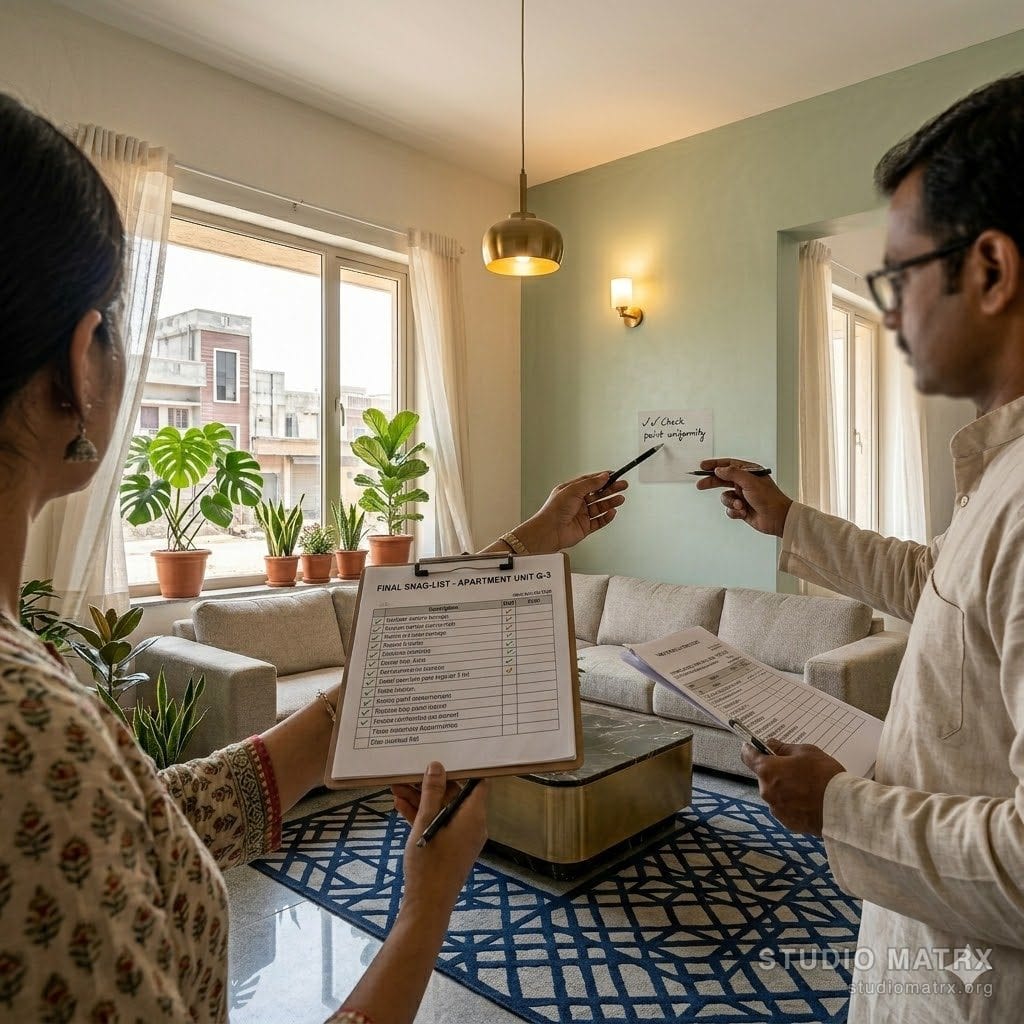
Handover
Lock the timeline + brief DesignAI
DesignAI aligns interior fit-out with your construction phase plan.
Indian Construction Schedule — A Working Reference
Construction schedules in India are a combination of physics (concrete cures in 28 days no matter how much you wish otherwise), labour reality (migrant workers go home for harvest and Diwali), and weather (the monsoon dictates which months you can do which work). The simulator above scales a baseline schedule by plot size, floors, and city; this reference covers the structural sequence, the four irreversible transitions, and the India-specific calendar logic.
The 12-Month Baseline
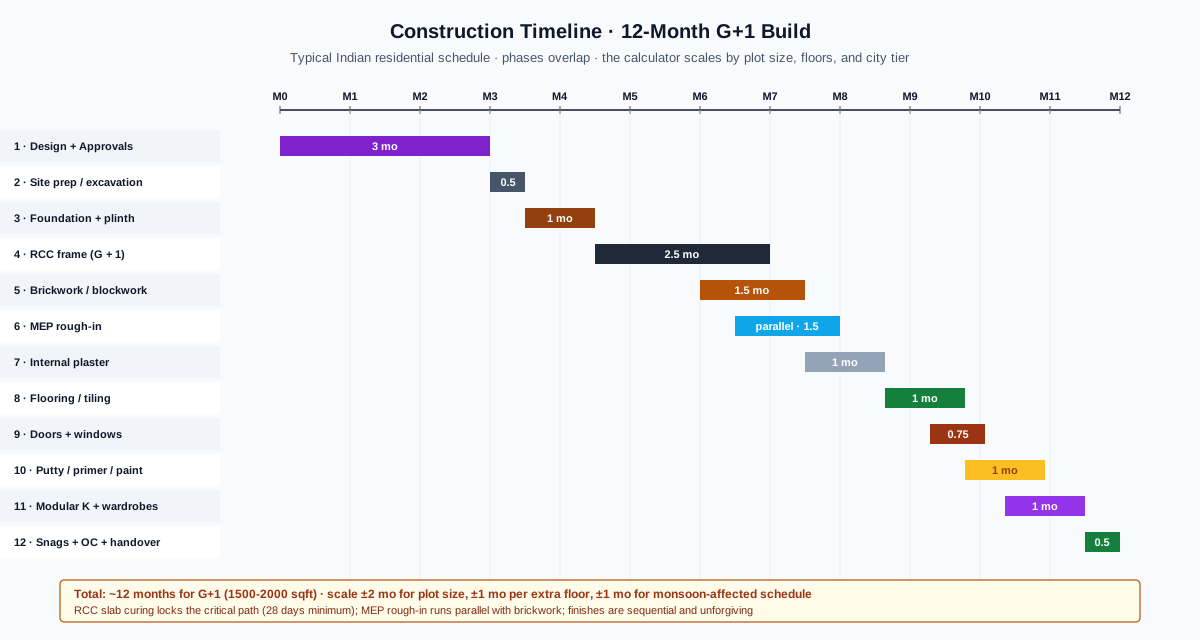
A typical G+1 on a 1500-2000 sqft plot takes about 12 months from approved drawings to OC handover, with the design + approval phase adding ~3 months upfront. The Gantt below maps the 12 phases against the calendar — phases overlap (MEP rough-in runs parallel with brickwork; finishes are sequential).
Critical Path & The Four Irreversible Transitions
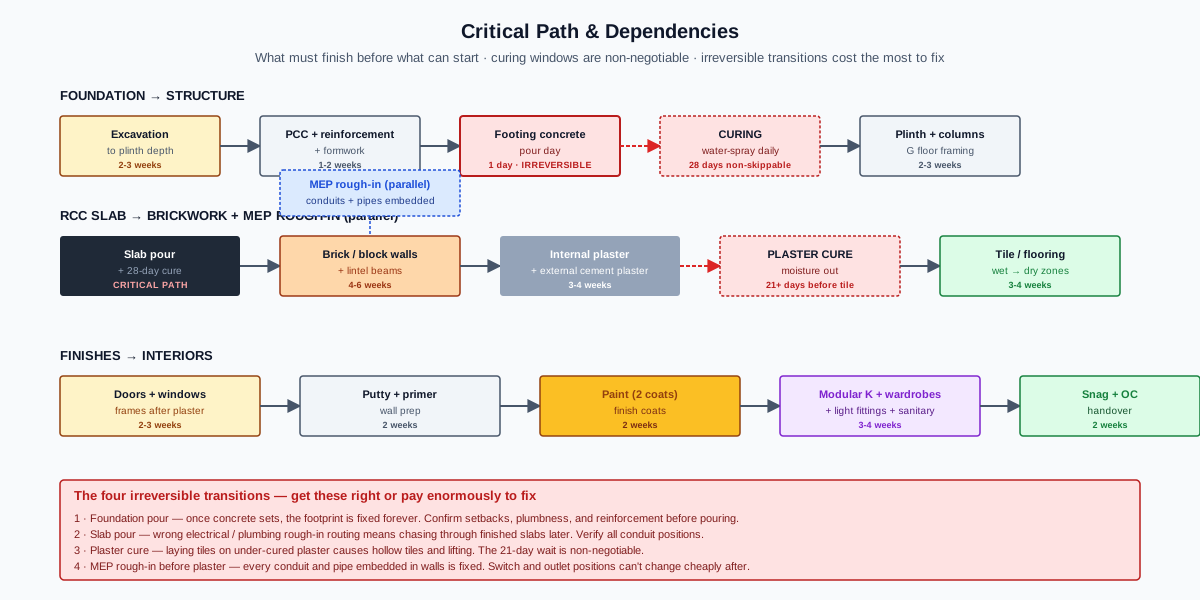
The structural sequence is the critical path. Every floor of RCC needs a 28-day cure before the next can be poured. Plaster needs 21 days before tile-laying. The four transitions where mistakes cost the most: foundation pour (footprint locks in), slab pour (MEP routing locks in), plaster cure (rushed = hollow tiles later), and MEP rough-in before plaster (every conduit position is permanent).
India-Specific Calendar — Monsoon, Heat, Festivals
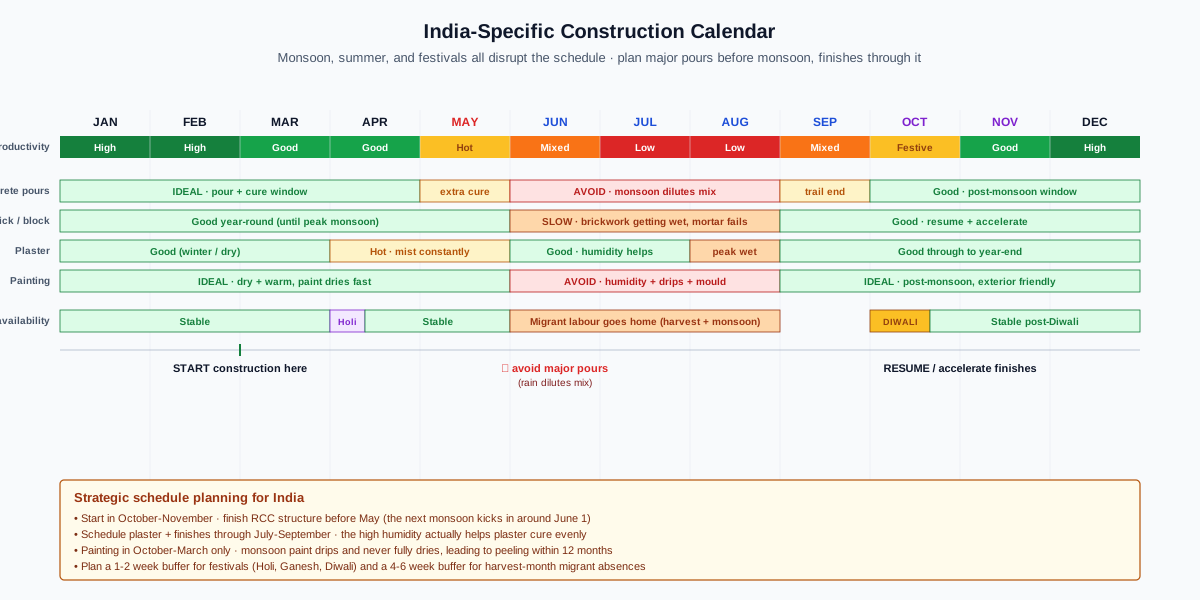
The same 12-month schedule looks very different starting in October vs. starting in April. The October start gets the structural work done in the dry season, plaster through the (helpfully humid) monsoon, and finishes through October-March. The April start hits June-September monsoon during structural pours — concrete strength compromised, brick mortar washing out. Plan around the calendar.
Five Things That Actually Speed Construction
- Approve drawings before excavation. Mid-build design changes cost 1-3 weeks each. The architectural drawing set should be 95% locked before the JCB shows up.
- Book a competent contractor 6-12 months out. Good site supervisors are scheduled far in advance; settling for whoever is available next month tends to slip the schedule by 25-50%.
- Pay against milestones, not time. Tie payments to verifiable deliverables (slab cured, brickwork complete, plaster done, etc.) — keeps the contractor financially urgent.
- Order long-lead items at the structural stage. Modular kitchen, premium doors, imported flooring, custom-painted tiles — all have 6-12 week lead times. Order them when you start RCC, not when you finish plaster.
- Visit weekly, ideally with the architect. Site presence catches errors when they're cheap to fix (right column position, accurate setbacks, MEP rough-in routing). Absentee owners are ~20% slower and ~15% more expensive.
Cross-References
- Approval Roadmap — the pre-construction part of the timeline
- Construction Approval Checklist — what to confirm before each phase
- Contractor Checklist — vet the contractor early
- Handover Punch List — final-phase checklist
- Monsoon Readiness Checklist — protect mid-build construction
Disclaimer: Timeline estimates are based on typical Indian residential builds with competent contractors and approved drawings. Site-specific factors (soil conditions, neighbouring construction, regulatory delays, labour disputes, supply-chain issues) routinely add 15-30% to baseline estimates. Use this as a planning tool; your actual project will vary.
Related Guides — Deep-dive reading
Bathroom Construction Timeline Template (India): A Week-by-Week Schedule with Dependencies & Curing Waits
A copy-and-use programme for building or renovating one bathroom in India — phase durations, what each task depends on, and the curing and flood-test waits you must not compress. Lift the tables straight into your site schedule.
BathroomsCivil Construction of STPs: What Goes Into Building One
Before a single blower runs, an STP is a piece of civil engineering — excavation, watertight RCC tanks, baffle walls, a plant room and drainage, built in a sequence that decides whether the plant ever works. Here is what that construction actually involves.
Sewage Treatment PlantsHospital Helipad Design in India
An Architect's Working Reference — AAI & DGCA Approval · ICAO Annex 14 Vol II · FATO & TLOF Sizing · Light / Medium / Heavy Helicopter Classification · Rooftop vs Ground-Level · Structural Loading · Approach Paths · Lighting & Marking · Time-Critical Patient Transfer to ED
Healthcare ArchitectureRelated Tools — You may also find these useful
Interior Project Timeline Planner
Build a week-by-week project timeline across demo, civil, joinery, finishes, and handover.
Project PlannerLift Installation Timeline Calculator
Phase-wise timeline in weeks for installing a home lift — new build or retrofit.
Lift CalculatorInterior Risk Index
Score project risks across scope, budget, vendor, timeline, and quality dimensions.
Risk Assessment