
Gate Materials in India: MS, Wrought Iron, Steel, Aluminium and Wood (2026)
A plain, India-grounded guide to choosing what your compound gate is made of — mild steel, wrought iron, stainless steel, aluminium and wood or WPC compared on cost band, strength and security, weight, corrosion resistance, look and maintenance, so you pick the material that fits your budget, your coast and your fabricator.
Every compound gate is a choice of material before it is anything else, and that one decision quietly sets your budget, how heavy the leaf is, how it ages by the coast, and how it looks from the road for the next twenty years. The five that matter in India are mild steel (MS) — the welded workhorse — wrought iron for ornament, stainless steel (SS) for corrosion resistance and a modern face, aluminium for light rust-free leaves, and wood or WPC for warmth. There is no single "best" — there is the one that fits your plot, your coast and your wallet.
This is the material-selection guide for the Compound Walls and Gates hub. It sits alongside the compound gate design guide, which covers how to compose and detail the gate, and it deliberately does not re-teach the underlying metals from scratch — for the steel behind MS and reinforcement, follow the TMT and structural steel guide; for the surface that keeps a metal gate alive, the gate finishes and rust prevention guide. Here the job is narrower and more useful: compare these five as a gate and help you pick.
Scope & how to read this. Every cost band, weight and dimension here is typical and indicative to help you plan and compare — confirm the exact specification with your fabricator against the relevant IS codes (IS 2062 for structural steel, IS 1161 for steel tubes) and your local municipal bye-laws, and get local quotes. This guide is about the gate as a designed, sized, finished object — how to choose its material, weight and look. It is not about securing or automating it: locks, anti-lift and access control live in the gate security guide and access control guide, and motors, sensors and safety edges in the motorised gate automation guide — automation and security are covered there, not here. Structure is engineer-led where it matters: a heavy gate needs stronger pillars and footings, and a large or tall leaf catches wind like a sail, so a big-span or heavy gate is engineered and fabricated by a competent fabricator.
The five gate materials at a glance
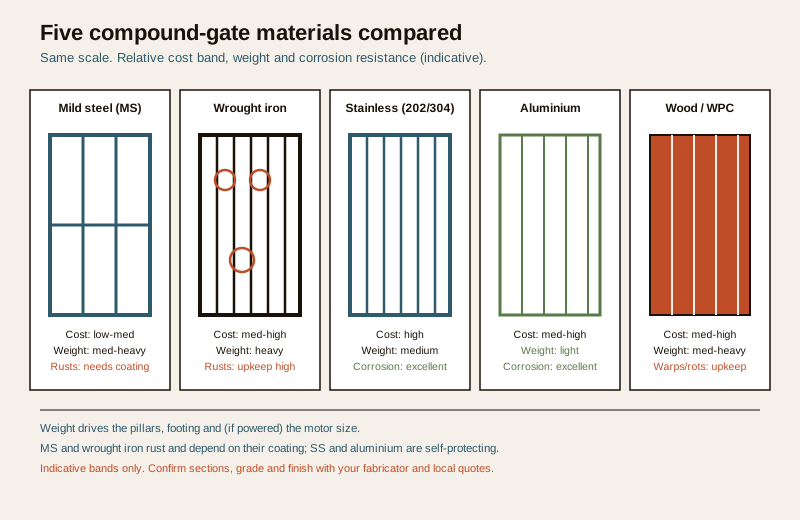
Before the detail, the shape of the decision. Read cost as a relative band, not a price — actual rates swing with city, section size, the day's steel rate and how ornamental the design is, so always get local quotes.
| Material | Relative cost band | Strength & security | Weight | Corrosion resistance | Maintenance | Best for |
|---|---|---|---|---|---|---|
| Mild steel (MS) | Low to medium | High; weldable, easy to make a strong frame | Medium to heavy | Poor bare — rusts; relies wholly on paint/galvanising | Repaint every few years; touch up rust early | The everyday default; most homes wanting strength on a budget |
| Wrought iron | Medium to high | High and solid but ornamental; hand-forged | Heavy | Poor — rusts like MS; needs constant protection | Highest; ornate scrollwork traps water, repaint often | Decorative, heritage and estate gates where the look leads |
| Stainless steel (SS 202 / 304) | High | High; strong and secure, clean welds | Medium | Excellent (304 coastal-grade; 202 milder, inland) | Low; wipe down, occasional polish | Modern, low-maintenance and coastal gates; a premium face |
| Aluminium | Medium to high | Moderate; light, less rigid, easier to force | Light | Excellent — will not rust; powder-coated | Low; occasional clean, recoat if chipped | Light, rust-free, modern powder-coated gates on the coast |
| Wood / timber & WPC | Medium to high | Moderate; timber can warp, WPC is stable | Medium to heavy | N/A (rots/warps); WPC resists water better | High for timber (reseal, treat); low for WPC | Warm, natural-look gates; WPC where timber warmth without the upkeep |
Each row is a starting point, not a verdict. The rest of this guide unpacks the "best for" column so you can match a material to your plot rather than a generic one. Two cross-cutting truths sit under all five: a heavier gate needs stronger pillars and footings (a big leaf can rip a weak post out — see the compound wall foundation guide), and a heavier gate needs a bigger automation motor if you ever power it, so weight is not a cosmetic number.
The steel family: MS, wrought iron and stainless
Three of the five are steel-based, and they behave very differently. Understanding where they diverge — on rust, on weight, on cost and on look — settles most gate decisions in India.
Mild steel (MS) — the workhorse
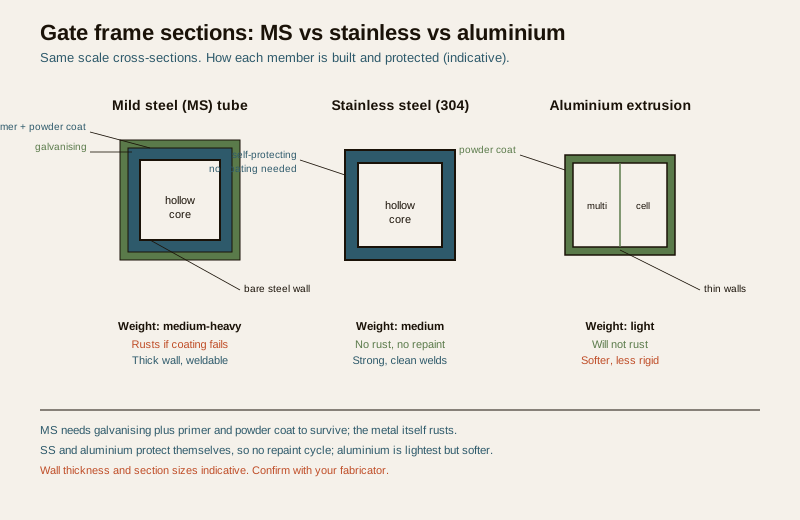
MS is the default Indian gate: mild-steel flats, angles, square tubes (IS 1161 hollow sections) and sheet, cut and welded into a strong, repairable frame by any fabricator in the country. It is cheap, understood, and easy to build into a genuinely secure gate. Its one real weakness is rust — bare MS corrodes, so an MS gate lives or dies by its coating. A galvanised or thoroughly primed and powder-coated MS gate lasts decades; a badly painted one bleeds rust in a season. That coating decision is a whole subject on its own, covered in the gate finishes and rust prevention guide. For most homes wanting strength on a budget, MS is the material to beat.
Wrought iron — the ornamental one
True wrought iron (and today, mostly mild-steel bar worked to look like it) is the material of scrollwork, spears and forged panels — the heavy, decorative estate gate. It is strong and solid, but two things follow from its nature: it is heavy (which loads the pillars and any motor hard), and it rusts exactly like MS while offering far more surface and crevices for water to sit in. That makes its maintenance the highest of the five: ornate work has to be repainted often and carefully. Where the look genuinely leads — heritage bungalows, farm estates, formal entrances — wrought iron earns its keep; where it is chosen only for decoration, remember you are also choosing a lifetime of upkeep.
Stainless steel (SS 202 / 304) — the corrosion-resistant face
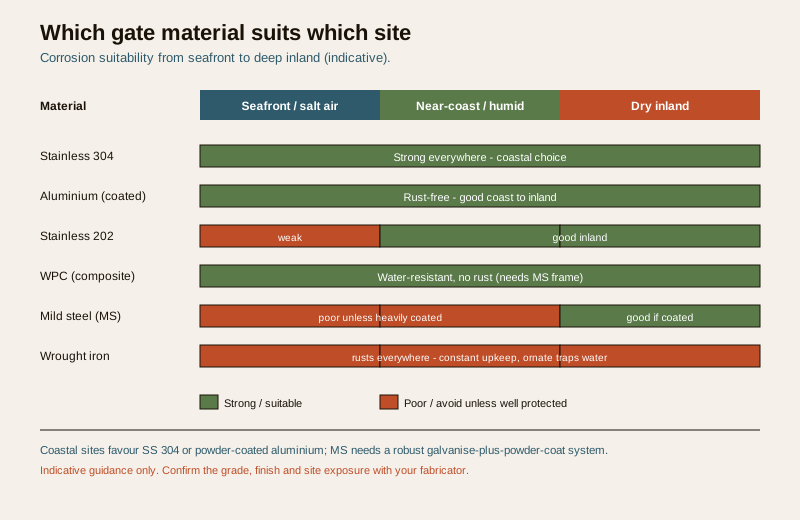
Stainless steel buys you corrosion resistance and a modern look in one move, at a higher price. The grade matters: SS 202 is the cheaper, milder-resistance grade fine for inland, dry sites; SS 304 is the coastal-grade choice that shrugs off salt air and stays bright for years. SS gates are strong and secure, weld cleanly, and need almost no maintenance beyond a wipe-down — no repainting cycle at all. The trade-off is cost: SS sits at the premium end, and 304 more so. For a coastal home, a low-maintenance modern entrance, or anywhere the repaint cycle of MS is unwelcome, SS is often worth the money — and it pairs naturally with steel doors for a consistent metal palette.
The lightweights and the warm ones: aluminium and wood
The last two materials trade some strength for either weightlessness or warmth — and both change how the gate is hung and how it ages.
Aluminium — light, rust-free, modern
Aluminium extrusions make a light, rust-free gate that is factory powder-coated in any colour and never needs repainting for rust. Because it is so light, it is easy on the pillars and needs only a small automation motor — a real advantage for a powered gate. Its cost sits in the medium-to-high band. The honest trade-off is strength and security: aluminium is softer and less rigid than steel, so a large aluminium leaf flexes more and is easier to force than an equivalent MS or SS one. For a coastal site that wants a clean modern look with zero rust and easy automation — and where the gate is one layer of security rather than the whole defence — aluminium is a strong pick. Where the gate itself must be the hard point, steel is the safer choice.
Wood, timber and WPC — the warm look
A timber gate brings warmth and character no metal can match, which is why it suits farmhouses, heritage homes and soft, natural entrances. But wood is the most weather- and maintenance-heavy of the five: it swells, warps and greys, and needs regular sealing and treatment to survive Indian sun and monsoon. WPC (wood-plastic composite) answers exactly this — it keeps a wood-like face while resisting water, warping and termites, with far less upkeep. Both are medium-to-heavy and only moderately strong, so a timber or WPC gate is often built on a hidden MS frame that carries the load while the timber or WPC provides the face. If you want the look of wood, WPC or a timber-clad steel frame usually ages better than solid timber in the open.
How to choose your gate material
Material selection is really a short series of questions about your plot and priorities. Work down this checklist and the field narrows fast — then confirm the shortlist with your fabricator and local quotes.
| Question about your gate | If yes / this applies | Lean towards |
|---|---|---|
| Is the budget tight and strength the priority? | Everyday residential gate | Mild steel (MS), well-coated |
| Is it a coastal or high-humidity site? | Near the sea, salt air | Stainless steel 304, or powder-coated aluminium |
| Do you want zero repainting and a modern look? | Low-maintenance premium entrance | Stainless steel, or aluminium |
| Is the gate ornamental / heritage the priority? | Estate, bungalow, formal entrance | Wrought iron (accept the upkeep) |
| Must the gate be light for easy automation? | Powered gate, small motor wanted | Aluminium (lightest), or a light MS frame |
| Must the gate itself be the hard security point? | Gate is the main defence | Mild steel or stainless steel (not aluminium) |
| Do you want a warm, natural look? | Farmhouse, soft entrance | WPC, or timber on a hidden MS frame |
| Is the leaf large or tall (a wind "sail")? | Wide / tall single leaf | Engineered MS/SS frame; confirm pillars and footing |
A few cross-cutting notes that decide more gates than people expect:
- Weight drives the pillars and the motor. A heavy gate (wrought iron, solid timber, big MS) needs stronger pillars and a deeper footing — a big leaf can lever a weak post loose over time; see the compound wall foundation guide. The same weight decides your motor size if you automate — heavier leaf, bigger motor.
- Coast changes the answer. Salt air destroys bare MS and wrought iron fast and even attacks poorly coated aluminium. Coastal sites favour SS 304 or powder-coated aluminium, or an MS gate with a genuinely robust galvanised-plus-powder-coat system from the finishes guide.
- Coating is a separate decision from the metal. MS and wrought iron are only as durable as their finish; SS and aluminium are self-protecting. Choose the body first, then the surface — the gate finishes and rust prevention guide covers galvanising, powder coat and paint.
- Security and automation are elsewhere. How to make the gate a strong point, fit anti-lift and locks, and add motors, sensors and access control is covered in the gate security guide, access control guide and motorised gate automation guide — this guide stops at the material.
Estimating weight and cost
Once you have a material and a rough size, you can get an early sense of steel weight and spend before you ever call a fabricator:
- The gate width calculator turns your opening and vehicle into a sensible leaf width and split (single vs double), so you can size the gate before choosing its material.
- The steel quantity calculator gives an indicative steel weight for an MS or SS frame from its members and sections — useful for comparing a heavy design against a light one, and for sanity-checking a fabricator's quote.
- The compound wall cost calculator puts an indicative cost band on the boundary and gate together — a planning figure to compare options, not a quote.
Treat all three as planning aids. The real number comes from local quotes against a drawing your fabricator has confirmed, because section sizes, ornamentation, finish and the day's steel rate move the total far more than any online estimate can.
How it connects
- Sits under the Compound Walls and Gates hub and pairs with the compound gate design guide (composition, sizing, detailing) and the gate size and width guide.
- For the type of gate before the material, see swing vs sliding vs cantilever gates and folding and telescopic gates; for the surface that keeps a metal gate alive, gate finishes and rust prevention.
- The metal behind MS and reinforcement is in the TMT and structural steel guide; for a matching metal entrance, steel doors.
- Weight decides the structure and the motor: heavier gates need stronger pillars and footings and a bigger automation motor. Security, locks and access control live in the Security library — the gate security guide and access control guide.
- Estimate with the gate width calculator, the steel quantity calculator and the compound wall cost calculator.
Key takeaways
- There is no single best gate material — MS, wrought iron, stainless steel, aluminium and wood/WPC each win on a different plot; match the material to your budget, coast, weight, look and upkeep.
- Mild steel is the strong, cheap, weldable default but rusts — it lives or dies by its coating; wrought iron is decorative but heavy and the highest-maintenance.
- Stainless steel (304 for the coast, 202 inland) buys corrosion resistance and a modern face with almost no upkeep, at a premium; aluminium is light and rust-free but softer and less secure.
- Wood brings warmth but heavy upkeep; WPC or timber on a hidden MS frame usually ages better in the open.
- Weight is not cosmetic — a heavier gate needs stronger pillars and footings and a bigger automation motor; confirm both when you pick.
- Security and automation are cross-links, not this guide — locks, anti-lift, motors and access control live in the Security and automation guides; every dimension here is indicative, so confirm with your fabricator, IS 2062 / IS 1161 and local bye-laws.
References
- IS 2062, Bureau of Indian Standards — hot-rolled medium and high-tensile structural steel (mild-steel gate frames and members; named generally).
- IS 1161, Bureau of Indian Standards — steel tubes for structural purposes (square and round hollow sections used in gate frames; named generally).
- National Building Code of India, NBC (SP 7:2026), Bureau of Indian Standards — general building and structural-safety provisions relevant to boundary structures.
- Fabricator and manufacturer data — stainless-steel grade (202 vs 304), aluminium extrusion, WPC and powder-coat specifications for your chosen material and finish.
- Local municipal bye-laws and development-control regulations — gate, boundary and setback requirements (city-specific; these govern approval).
- Local fabricator and supplier quotations — current steel, section, finish and labour rates for your specific gate and site.
All cost bands, weights and material comparisons here are indicative planning aids only; confirm the governing specification with your fabricator against the relevant IS codes (IS 2062, IS 1161) and your local municipal bye-laws, have a heavy or large-span gate engineered and fabricated by a competent professional, and note that gate security, locks and automation are covered in the Security and automation guides, not here.
Export this guide
Related Guides — Deep-dive reading
Compound Gate Design in India: Types, Materials and Sizing (2026)
The start-here guide to the gate as the moving part of your boundary wall — how it opens (swing, sliding, cantilever, folding, telescopic), what it is made of (MS, wrought iron, stainless, aluminium, wood), how wide it needs to be for your vehicle, how it is finished against rust, and the posts and footing that carry it. Decisions in order, with automation and security cross-linked, not rebuilt.
Compound WallsGate Finishes and Rust Prevention in India: Paint, Powder Coat and Galvanising (2026)
A plain, India-grounded guide to keeping a steel gate looking good and not rusting — the protection system in layers (surface prep, primer, topcoat), site enamel and PU paint vs factory powder coating vs hot-dip galvanising compared on durability, cost and best-fit, where gates rust first, coastal and monsoon care, and the maintenance cycle that makes any finish last.
Compound WallsCompound Wall Design in India: The Complete Planning Guide (2026)
The start-here field guide to planning a compound wall for an Indian home, farmhouse or plot — what a boundary wall is really for, the questions to settle before you build, the decision sequence from survey to gate to finish, an honest wall-type comparison, and where structure and security hand off to the experts.
Compound WallsRelated Tools — Try Free
Door Material Comparison Tool
Compare 2–4 door materials on cost, durability, maintenance, security and moisture resistance.
Comparison ToolWindow Maintenance Cost Calculator
Estimate annual window upkeep by frame material — yearly, per-window and 5-year cost.
Window CalculatorWindow Material Comparison Tool
Compare uPVC, aluminium, wood, steel and composite windows on cost, life, upkeep and insulation.
Compare