
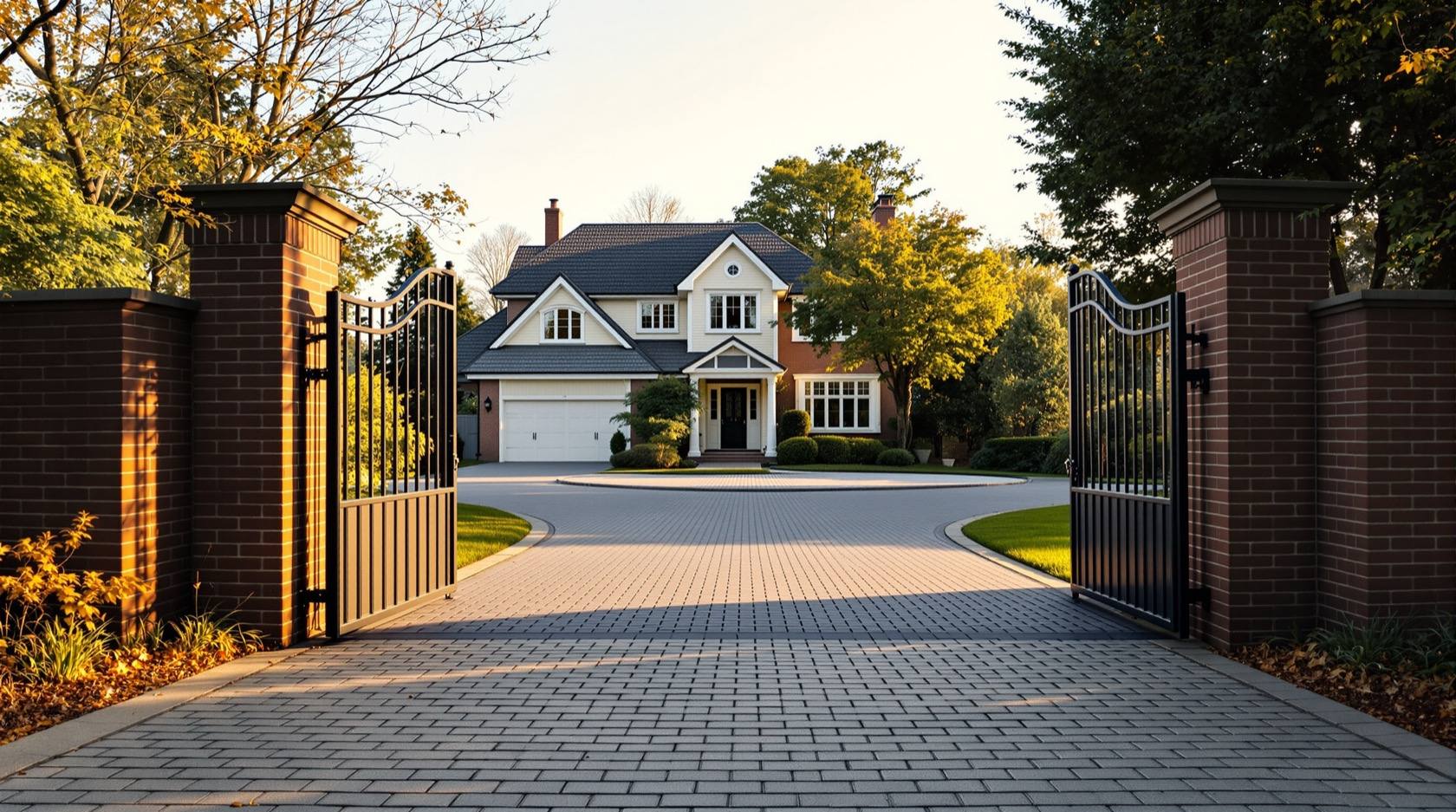
Gate Size and Width in India: Sizing the Opening for Your Vehicle (2026)
How wide and how tall your compound gate opening really needs to be — the clear opening width a car, SUV, tempo or two-wheeler actually needs, the difference between structural and clear opening, single-leaf versus double-leaf, gate height against your wall, the pedestrian wicket, and the reality of turning in off a tight road.
Almost every complaint about a compound gate is really a complaint about its size. The gate that scrapes the wing mirror, the one you can only enter in a three-point shuffle, the leaf so heavy it sags on its hinges within a year, the pedestrian door you have to duck through — each is a sizing decision that went wrong before the fabricator ever cut a tube. Getting the gate size and width right is the cheapest thing you can do for a gate that works every day for twenty years, and it costs nothing but a tape measure and a little thought.
This is the sizing guide in the Compound Walls and Gates hub. It sits with the compound gate design guide, which frames the whole gate decision, and the gate materials guide. Here the job is narrow and practical: work out how wide the opening must be for your vehicle, how tall the gate should be against your wall, and how to split that width between leaves. Push the numbers to the gate width calculator and the swing space to the gate swing clearance calculator.
Scope & how to read this. Every width and height here is typical and indicative — a starting point to plan and compare, not a rule. Confirm the real numbers against your vehicle's dimensions, your fabricator's advice and your local municipal bye-laws, which often set the maximum gate width and how far it may project. This guide is about sizing and fit: making the gate the right shape for the opening. Making the gate the strong point, and adding a motor, sensors or a keypad, is gate automation and gate security, covered there, not here. And the posts that carry the gate are engineer-led — a wide, heavy or tall gate loads its posts hard, so their footings are designed properly (see compound wall foundation), never guessed.
Start with the clear opening your vehicle needs
The single most important number is the clear opening width — the actual gap the vehicle drives through when the gate is fully open, measured between the posts (or between the open leaves, whichever is tighter). Not the gate's nominal size, not the distance the mason marked: the real, unobstructed gap.
A typical Indian car is around 1.7 to 1.9 m wide across the body, and closer to 2.0 m across the mirrors. Driving straight through a gap that is only as wide as the car is nerve-wracking and eventually expensive, so you add turning and comfort room on top. The table below gives indicative clear openings by what you drive and how you enter. Treat them as planning bands and confirm your own vehicle — an SUV, a pickup or a small commercial tempo is wider and longer than a hatchback and needs more room, especially to turn.
| Vehicle / use | Indicative clear opening width | Notes |
|---|---|---|
| Pedestrian only (wicket gate) | ~0.9 to 1.1 m | One person plus a cycle or grocery bags; the separate small gate beside the main one |
| Two-wheeler only | ~1.2 to 1.5 m | Scooter or motorcycle; a narrow single-leaf gate is fine |
| One small car (hatchback/sedan), straight-in | ~3.0 to 3.3 m | Comfortable for a car entering roughly square-on from a wide road |
| One car with turning room / SUV | ~3.3 to 3.6 m | The common residential default; room to arc in and for mirrors |
| Turning in off a narrow road, or SUV/MUV | ~3.6 to 4.2 m | A tight road forces the car to swing in at an angle — it needs a wider mouth |
| Tempo / small truck / farm vehicle | ~4.0 to 4.5 m+ | Wider bodies and long wheelbases; see farm and industrial gates |
| Two cars side by side (rare, wide plots) | ~5.0 to 5.5 m+ | Usually better as two gates or one very wide sliding/telescopic gate |
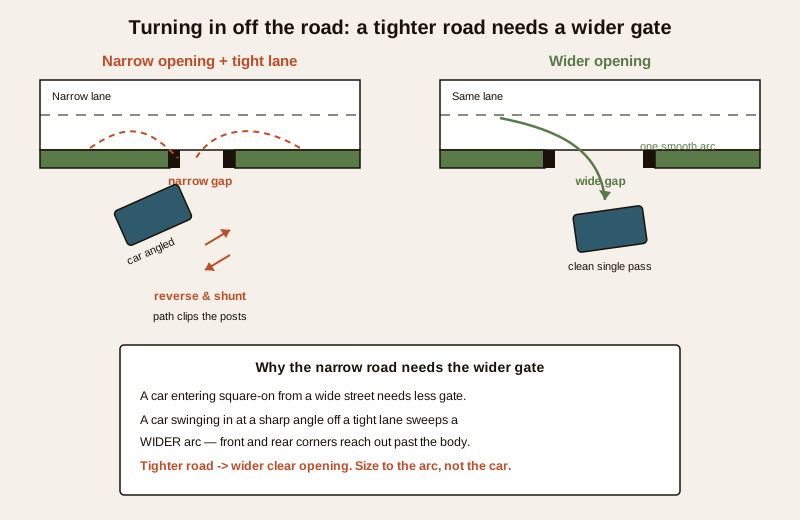
The most-missed line in that table is the turning-in-off-a-narrow-road case. If your gate opens onto a wide street, a car can line up square and a 3.0 m gap feels generous. If it opens onto a narrow lane where the car has to swing in at a sharp angle, the front and rear of the car sweep a wider arc, and the same 3.0 m gap becomes a scraping, shunting nightmare. The narrower the road, the wider the gate needs to be — this is the counter-intuitive rule that catches people out, and it is exactly what the gate width calculator is for.
Clear opening is not the structural opening
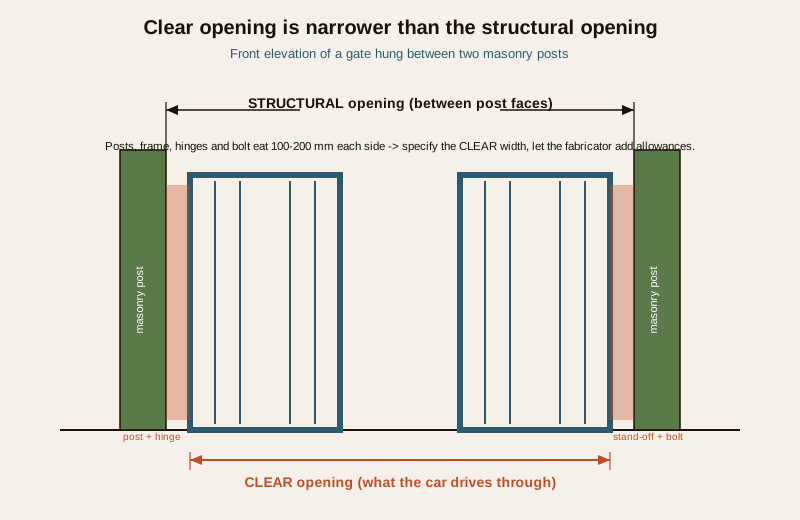
Here is the mistake that quietly steals half a metre. When a mason builds the wall, the gap he leaves between the gate posts is the structural opening. But the posts have width, the gate frame has thickness, the hinges stand the leaf off the post, and a barrel bolt or drop rod eats a little more. By the time the gate is hung, the clear opening — what actually passes through — is narrower than the structural opening, often by 100 to 200 mm on each side.
So the rule is simple and worth repeating: specify and measure the clear opening, then let the fabricator work back to the structural opening. If your car needs a 3.3 m clear gap, the masonry gap between finished post faces has to be 3.3 m plus the frame, hinge and bolt allowances — tell the fabricator the clear width you want and let them add their hardware. If instead you tell the mason "leave 3.3 m" and then hang a gate in it, you will end up with something closer to 3.0 m clear, and you have lost the very turning room you were trying to buy.
Single leaf or double leaf: splitting the width
Once you know the opening width, the next decision is how many leaves the swing gate is split into. A single-leaf gate is one panel that swings from one post; a double-leaf gate is two panels meeting in the middle, each swinging from its own post.
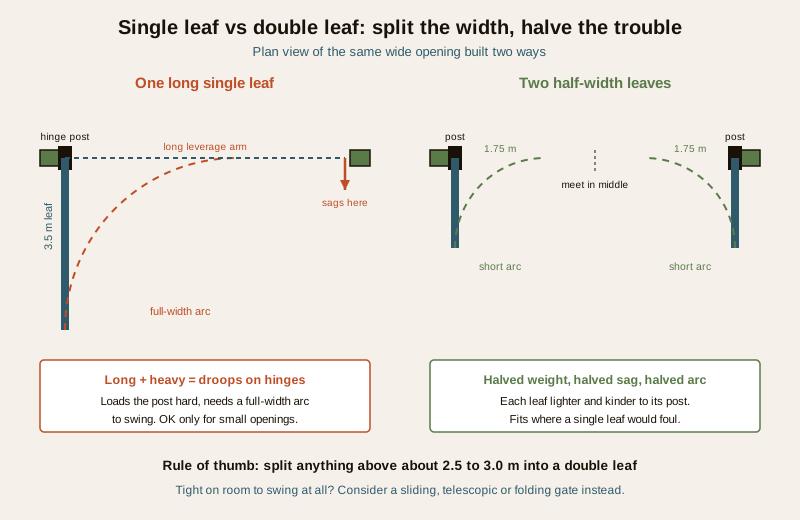
For anything above roughly 2.5 to 3.0 m, a double leaf is usually the right answer, and the reason is physics. A single leaf spanning a 3.5 m opening is long, heavy and wants to droop on its hinges — the further the far edge is from the hinge, the more leverage it has to sag, and the more brutally it loads the hinge post. Splitting the opening into two leaves halves each leaf's width, weight and sag, so each is roughly half as long, far lighter to move by hand, and much kinder to its post and hinges. Two 1.75 m leaves behave far better than one 3.5 m leaf.
The other reason to split is swing space. A single 3.5 m leaf needs a 3.5 m clear arc to swing through; two 1.75 m leaves each need only a 1.75 m arc, so a double gate fits where a single one would foul a parked car or the wall return. If you are tight on room to swing at all, that is the moment to consider not swinging — a sliding, telescopic or folding gate runs sideways instead, and the swing-versus-sliding-versus-cantilever comparison walks through when each wins. Whatever you choose, check the room it needs to open with the gate swing clearance calculator before you commit.
Gate height: match the wall, mind the wind
Width gets all the attention, but height is a real decision too, and it mostly answers to one thing: the wall it sits in. A gate that is much shorter than the flanking compound wall leaves an obvious weak, low gap in an otherwise solid boundary and undoes the privacy the wall was built for. As a rule of thumb the gate top is set to match or come close to the adjoining wall height so the boundary reads as one continuous line. Where privacy is the point, the compound wall height and privacy guide covers how tall the boundary should be and what local rules allow — and the gate simply follows it.
Typical residential gate heights run around 1.5 to 2.1 m, tracking wall height and how much you want to screen. But height carries a warning that width does not: a tall, solid gate leaf is a wind sail. The bigger and more solid the panel, the more force a gust puts on it and on its hinges and posts — a large solid gate can slam, strain a motor, or lever its post if the footing is weak. This is why big gates are often made with gaps, grilles or perforations to let wind through rather than catch it, and why a genuinely large or tall gate is fabricated and its posts designed by a competent fabricator or engineer, with footings sized for the load (see compound wall foundation). Height for privacy is fine; height as an unbroken solid sail on weak posts is not.
The pedestrian gate is a separate width
One opening rarely does both jobs well. A gate wide enough for a car is heavy and slow to open just to let a person in, so most Indian boundaries add a separate pedestrian gate — a wicket — beside the main vehicle gate. Its width is a human dimension, not a vehicle one: around 0.9 to 1.1 m clear is comfortable for a person carrying bags, wheeling a cycle or moving a gas cylinder, and about 0.75 to 0.9 m is the practical minimum.
A separate pedestrian gate also saves wear: the big gate stays shut and settled while daily foot traffic uses the small one, so the heavy leaves and their hinges are not cycled dozens of times a day. On tight plots the wicket is sometimes built into one leaf of the main gate as a gate-within-a-gate, but a standalone pedestrian gate beside the main opening is simpler, sturdier and easier to secure — how you actually lock and control it is gate access control, covered in the security hub.
A gate sizing checklist
Work down this before you brief the fabricator. It turns "make me a gate" into a specification that fits your vehicle, your opening and your wall.
| What to settle | Get it right by | Watch out for |
|---|---|---|
| Clear opening width | Measure your vehicle across the mirrors, add turning room, use the vehicle table above | Sizing to the car's body, not the mirrors and turning arc |
| Turning-in reality | Wider opening if the road is narrow or you enter at an angle | A "generous" 3.0 m gate that fails off a tight lane |
| Clear vs structural | Specify the clear opening; let the fabricator add frame, hinge and bolt allowance to the masonry gap | Telling the mason a width and losing 100 to 200 mm per side to hardware |
| Single vs double leaf | Split anything above ~2.5 to 3.0 m into two leaves | One long single leaf that sags, strains its post and needs a huge swing arc |
| Swing / run-back space | Check the arc or run-back with the gate swing clearance calculator | A leaf that fouls a parked car, the wall return or the slope |
| Gate height | Match or approach the adjoining wall height for a continuous boundary | A low gate that leaves a weak gap; a tall solid sail on weak posts |
| Wind on tall gates | Grilles, gaps or perforations on large panels; engineer-designed posts and footings | A big solid leaf that catches wind and levers a weak post |
| Pedestrian wicket | A separate ~0.9 to 1.1 m gate beside the main one | Making people squeeze through, or cycling the heavy gate all day |
| Local bye-laws | Confirm maximum gate width and permitted projection with your municipality | A gate that opens over the footpath or exceeds the allowed width |
How it connects
- Sits under the Compound Walls and Gates hub and follows the compound gate design guide, which frames type, material and size together, plus the gate materials guide.
- Size drives the motion: whether to swing, slide or cantilever is in swing vs sliding vs cantilever gates, and space-saving options in folding and telescopic gates; wide vehicle openings for estates are in farm and industrial gates.
- Height follows the wall — see compound wall height and privacy — and the compound wall foundation carries the gate-post loads a wide or tall gate imposes.
- Making the sized gate the strong point and adding a motor or keypad is separate: gate automation, gate security and gate access control in the Security library.
- Size it with the gate width calculator and check the room it needs to open with the gate swing clearance calculator.
Key takeaways
- The number that matters is the clear opening width — the real gap the vehicle drives through — sized to your vehicle across the mirrors, plus turning and comfort room, not just its body width.
- Indicative clear openings: ~3.0 to 3.6 m for a car with turning room, ~4.0 to 4.5 m+ for an SUV, tempo or turning in off a narrow road, and ~0.9 to 1.1 m for a pedestrian wicket.
- A narrower road needs a wider gate: a car swinging in at a sharp angle sweeps a wider arc than one entering square-on.
- Clear opening is narrower than the structural opening — posts, frame, hinges and bolts eat 100 to 200 mm per side, so specify the clear width and let the fabricator add allowances.
- Split anything above ~2.5 to 3.0 m into a double leaf: two half-width leaves halve each panel's weight, sag and swing space and are far kinder to the posts.
- Set gate height to match the wall for a continuous boundary, but keep large panels open (grilles/gaps) so a tall solid leaf does not act as a wind sail, and add a separate pedestrian gate.
- Every figure here is indicative — confirm against your vehicle, your fabricator and local bye-laws, and use the gate width and swing clearance calculators.
References
- IS 2062, Bureau of Indian Standards — hot-rolled medium and high-tensile structural steel (gate frames and posts; named generally).
- IS 1161, Bureau of Indian Standards — steel tubes for structural purposes (gate framing tubes and posts; named generally).
- National Building Code of India, NBC (SP 7:2026), Bureau of Indian Standards — general building, means of access, and structural-safety provisions relevant to openings and wind loading.
- Vehicle manufacturer specifications — kerb width, width across mirrors, length and turning circle for your specific car, SUV or commercial vehicle (confirm the actual model).
- Gate and fabricator shop data — standard leaf sizes, frame and hinge allowances, and recommended post sizes for a given gate width and weight (get from your fabricator).
- Local municipal bye-laws and development-control regulations — maximum gate width, permitted projection over the footpath and setback requirements (city-specific; these govern approval).
All widths, heights and sizing bands here are indicative planning aids only; confirm the clear opening against your actual vehicle dimensions, your fabricator's advice and your local municipal bye-laws, and have a competent fabricator or engineer design and size the posts, footings and any wide, heavy or tall gate. Gate automation and security are covered in the Security hub, not here.
Export this guide
Related Guides — Deep-dive reading
Compound Gate Design in India: Types, Materials and Sizing (2026)
The start-here guide to the gate as the moving part of your boundary wall — how it opens (swing, sliding, cantilever, folding, telescopic), what it is made of (MS, wrought iron, stainless, aluminium, wood), how wide it needs to be for your vehicle, how it is finished against rust, and the posts and footing that carry it. Decisions in order, with automation and security cross-linked, not rebuilt.
Compound WallsSwing vs Sliding vs Cantilever Gates in India: Which to Choose (2026)
The how-it-opens selection guide for your compound gate — swing on hinges, sliding on a ground track, or cantilever carried on a counterbalance tail with no track — compared on the one thing that actually decides it: the space each one needs beside or in front of your opening, plus slope, width, budget and fit.
Compound WallsGate Security in India (2026): Making the Main Entrance the Strongest Point, Not the Weakest
The main gate is the one gap in every boundary and the number-one weak point of any perimeter — here is how to make the leaf, the access decision and the discipline around it as strong as the wall it sits in.
SecurityRelated Tools — Try Free
Structural Modification Approval Checklist
41 items across structural assessment, society approval, municipal compliance, and safety.
Approval ChecklistWindow Grill Design Selector
Pick a window grille style and material by priority — security, looks, budget, view — and estimate cost.
Window ToolWindow Hardware Cost Calculator
Estimate window hardware cost — hinges, handles, locks, rollers and multipoint gears.
Window Calculator