
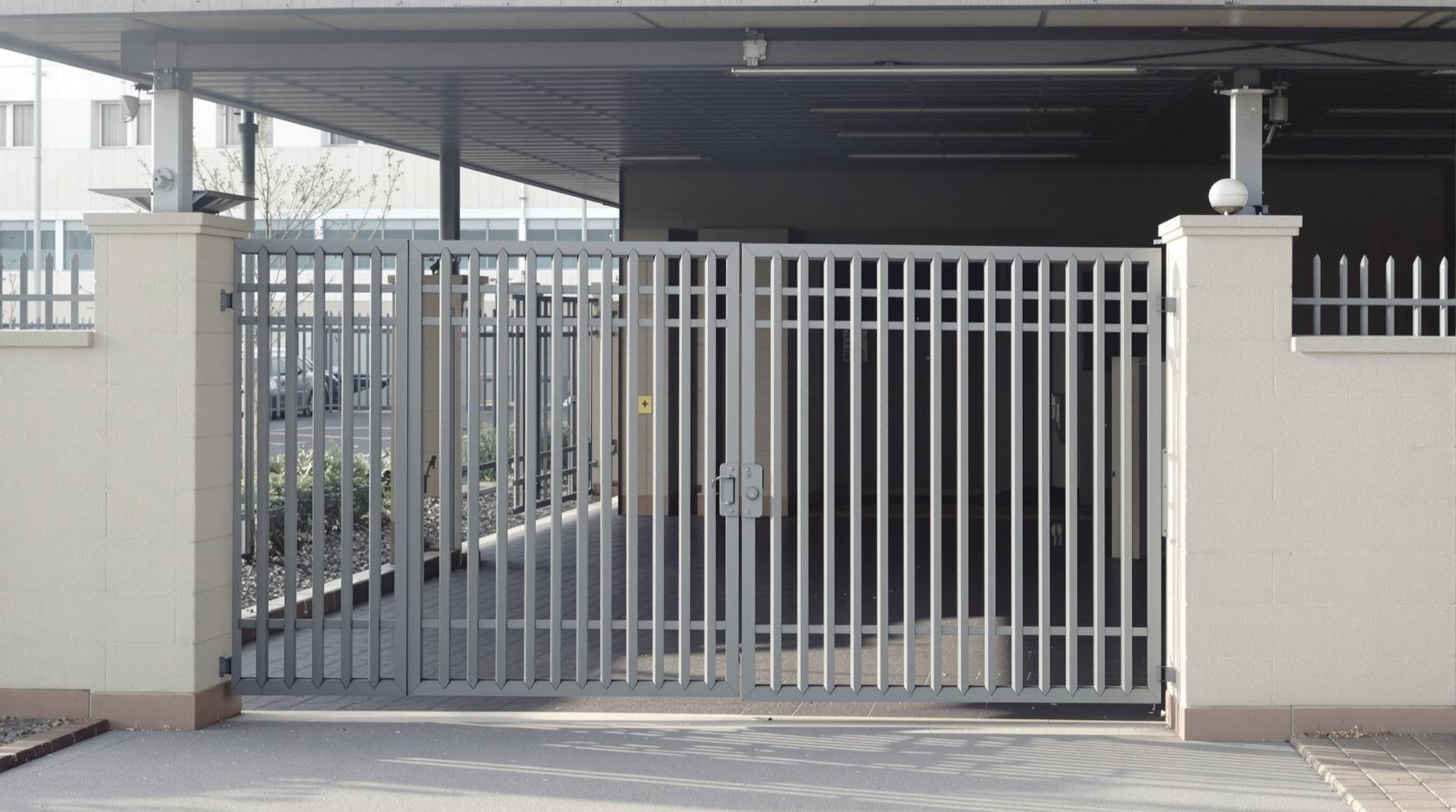
Folding and Telescopic Gates in India: Space-Saving and Wide-Span (2026)
The space-saving and wide-span specialist gates explained for Indian plots — bi-fold and multi-fold gates that stack concertina-style into a shallow fold, telescopic sliding gates whose nesting panels need only a fraction of the opening as runback, and where each beats a plain swing or sliding gate on space, span, cost and complexity.
Most driveways are closed by a plain swing or sliding gate, and for most plots that is exactly right. But two situations break the ordinary gate: a tight entrance with little space either in front of it or beside it, and a very wide opening where a single sliding leaf would need an equally wide wall to slide behind. Folding and telescopic gates are the specialist answers to those two problems — the space-saving gate and the wide-span gate.
This is the space-saving and wide-span guide for the Compound Walls and Gates hub. It builds directly on the swing vs sliding vs cantilever comparison, which sets out the ordinary choices, and on gate size and width, which fixes how wide your opening actually needs to be. Here we cover the two clever mechanisms — bi-fold / multi-fold gates and telescopic sliding gates — plus a note on the collapsible channel gate covered fully in collapsible gate doors. These gates are more mechanically complex than a plain gate, so material and finish still matter — see gate materials — and they are usually automated, which is covered in motorised gate automation, not here.
Scope & how to read this. This guide is about choosing and sizing a space-saving or wide-span gate — its mechanism, footprint and where it fits — not about securing or automating it. Locks, anti-lift and the strong-point detailing live in the gate security guide; motors, sensors and safety edges live in motorised gate automation and the wider Security library. Every clear width, panel count and runback figure here is typical and indicative — confirm your vehicle, your fabricator's drawing and your local bye-laws. Structure is engineer-led where it matters: folding and telescopic gates put concentrated loads on their posts and tracks, and a heavy or tall multi-panel gate is a fabricated, engineered assembly — the posts need proper footings, and a large leaf catches wind like a sail. Get a competent fabricator to design and build anything large.
Why the ordinary gate runs out of room
A gate has to get out of the way of the car, and the two ordinary ways of doing that each demand space you may not have.
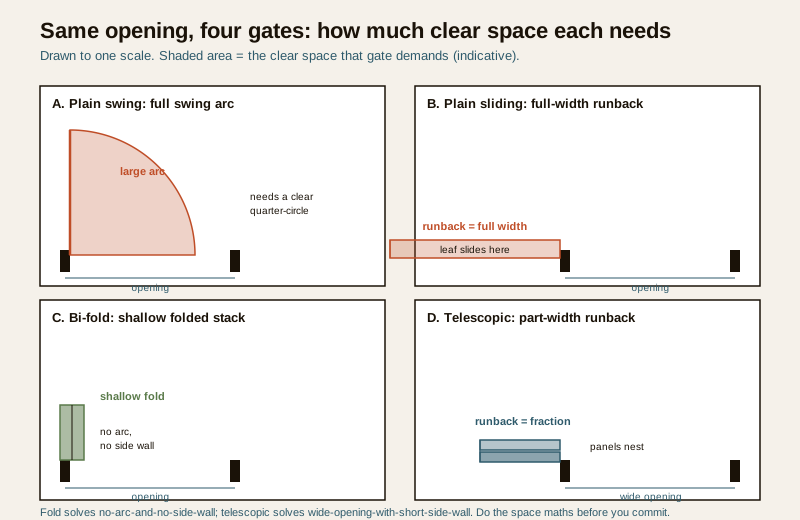
A swing gate sweeps an arc. A two-metre leaf needs a clear two-metre quarter-circle in front of (or behind) it — no parked scooter, no slope, no wall in the arc. On a plot that opens straight onto a busy road or a steep ramp, that arc simply is not there. Use the gate swing clearance calculator to see the arc your opening would actually need; it is often a surprise.
A plain sliding gate trades the arc for runback: the whole leaf slides sideways behind the wall, so it needs a clear stretch of wall as long as the opening to disappear into. Widen the opening to four or five metres for a double car or a truck and you now need four or five clear metres of side wall — which many compact urban plots and many wide industrial gates do not have.
Folding and telescopic gates attack exactly these two shortfalls. A folding gate removes the swing arc by hinging the leaf into short panels that fold back into a shallow stack. A telescopic gate removes the full runback by splitting the leaf into panels that overlap as they slide, so the side space needed drops to a fraction of the opening. Both are more mechanical than a plain gate — more hinges, more tracks, more to maintain — which is the price of the space they save.
Bi-fold and multi-fold gates: the space-saver
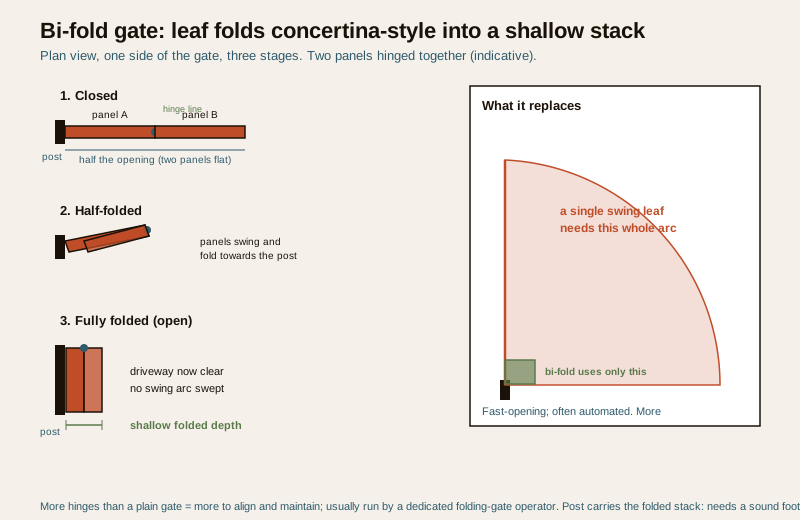
A folding gate is made of leaves hinged to each other so they fold back concertina-style, like a folding screen. A bi-fold has each side made of two panels hinged together; a multi-fold uses three or more. When the gate opens, the panels fold flat against one another and swing back as a short, thick stack beside the post rather than sweeping out as one long leaf.
What it buys you
The win is the swing arc. A plain swing leaf of two metres needs two metres of clear arc; fold that leaf into two one-metre panels and the arc shrinks to roughly the panel length. So a folding gate opens where a swing gate cannot — a tight entrance with little front space and little side runback. It is also fast to open, which is why it is common in automated form on urban driveways and small commercial frontages where the car should not wait. Because the folded stack is shallow, it suits plots that have neither a swing arc nor a long slide wall.
What to watch
Folding means more hinges and pivots, and every one is a moving joint that must stay aligned and lubricated — a folding gate has more to maintain and adjust than a plain swing gate, and it is usually run by a dedicated folding-gate operator (automation is covered in motorised gate automation). The panels must be light and rigid — a floppy or over-heavy leaf strains the hinges and sags — so material and fabrication quality matter more than on a simple gate; see gate materials. And the hinge post carries the whole folded stack as a cantilever when open, so its footing must be sound.
Telescopic sliding gates: the wide-span answer
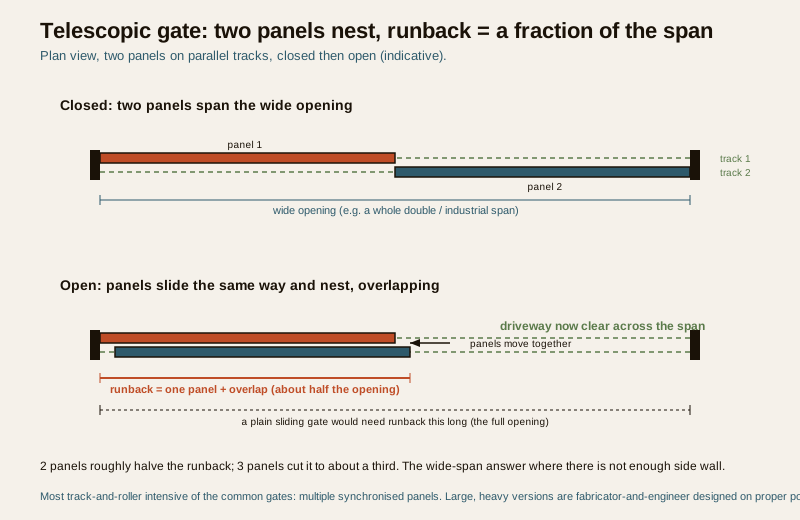
A telescopic gate is a sliding gate split into two or more panels that run on parallel tracks and overlap as they open, nesting one behind another like the sections of a telescope or a sliding wardrobe. Instead of one long leaf that needs full-width runback, the panels stack over each other to one side, so the clear side space needed drops to a fraction of the opening — typically the length of the longest single panel plus a little overlap.
What it buys you
The win is span with limited side space. This is the gate for a wide opening where there is not enough wall to slide a single leaf behind — a double or triple driveway, a farm or estate entrance, and above all the wide industrial and factory gate, where a five-, six- or eight-metre opening is common and full runback is impossible. A two-panel telescopic gate roughly halves the runback; a three-panel gate cuts it to about a third. It closes a genuinely wide gap that no plain sliding gate could span without a runback wall as long as the gate itself.
What to watch
Telescopic gates are the most track-and-roller intensive of the common types: multiple panels, multiple tracks (or a nested rail system), synchronised so the panels open and close together. That is more mechanism to align, maintain and automate, and it is fabricator-and-engineer territory for anything large — a wide, heavy, multi-panel gate is a serious fabricated assembly on engineered posts and tracks. Ground-tracked versions need a clean, drained, debris-free channel; cantilever-style telescopic gates avoid a floor track but load the posts harder still. As always, automation and its safety edges are covered in motorised gate automation.
The collapsible channel gate: shopfronts and parking
There is a third space-saver worth naming so you do not confuse it with the two above. The collapsible or "expandable" channel gate is the folding steel-channel lattice you see pulled across shopfronts, basement parking mouths and inner grilles — a criss-cross of flat or channel steel that concertinas into a very shallow bundle to one side. It saves space like a folding gate but is a grille, not a solid boundary leaf, and it is chosen for a different job (a see-through, quick-pull barrier for shops and parking), not for a compound entrance. It has its own full treatment in collapsible gate doors — go there for the channel-gate detail. Mentioned here only so the family is complete.
Folding vs telescopic vs plain sliding: the comparison
Set side by side, the trade-off is clear: you spend mechanical complexity to buy space. Read cost as a relative band, not a price — a folding or telescopic gate costs more than a plain gate of the same width because there is more steel-work, more hardware and usually an operator. Always get local quotes.
| Gate type | Space it needs | Span it suits | Relative cost | Complexity / maintenance | Best for |
|---|---|---|---|---|---|
| Plain swing | Full swing arc in front or behind | Narrow to medium | Lowest | Low; few moving parts | Plots with a clear arc and normal width |
| Plain sliding | Runback as long as the opening | Narrow to wide (needs the wall) | Low to medium | Low-medium; one track and rollers | Plots with a long clear side wall |
| Bi-fold / multi-fold | Only a shallow folded stack | Narrow to medium | Medium to high | Higher; many hinges, usually automated | Tight entrances: little front AND little side space |
| Telescopic sliding | A fraction of the opening (one panel plus overlap) | Wide to very wide | High | Highest; multiple tracks and panels | Wide openings with limited side space; industrial |
The pattern to hold onto: folding solves "no room in front and no room to the side"; telescopic solves "very wide opening, not enough wall to slide behind". If you have a clear arc, a plain swing gate is simpler and cheaper; if you have a long side wall, a plain sliding gate is. Fold and telescope are what you reach for when the ordinary gate has run out of room — compare all four in the swing vs sliding vs cantilever guide.
When to choose folding or telescopic: a checklist
Work down this checklist against your own entrance; the answer usually declares itself. Then confirm the shortlist and the exact panel count with your fabricator against your vehicle and opening.
| Question about your entrance | If yes | Lean towards |
|---|---|---|
| Is there a clear swing arc and normal width? | Ordinary plot | Plain swing gate (simpler, cheaper) |
| Is there a long clear side wall to slide behind? | Wall as long as the opening | Plain sliding gate |
| Is there little space BOTH in front and to the side? | Tight urban entrance | Bi-fold / multi-fold gate |
| Is the opening wide (roughly 4 m or more) with limited side space? | Double drive, farm, factory | Telescopic sliding gate (2 or more panels) |
| Is the opening very wide and side space very short? | Industrial / warehouse mouth | Telescopic with 3+ panels |
| Do you want a see-through, quick-pull barrier for a shop or parking mouth? | Shopfront / basement | Collapsible channel gate (details here) |
| Is the gate heavy, tall or catching wind? | Any large multi-panel gate | Engineer-and-fabricator designed on proper footings |
| Do you need it automated? | Fast, no-wait opening | Type-matched operator — see automation |
Two rules cut across the whole table. First, more mechanism means more to maintain — every extra hinge, track and roller is a joint to keep aligned, clean and lubricated, so a folding or telescopic gate asks for more upkeep than a plain gate. Second, do the space maths before you commit: measure the arc a swing gate would sweep and the runback a slide would need with the gate swing clearance calculator, and fix the clear opening width with gate size and width, before deciding a specialist gate is really necessary.
How it connects
- Sits under the Compound Walls and Gates hub and extends the swing vs sliding vs cantilever comparison with the two space-saving specialists; size the opening first with gate size and width.
- The collapsible channel gate for shopfronts and parking is covered in full in collapsible gate doors; material and finish choices are in gate materials.
- These gates are usually automated: motors, sensors and safety edges live in motorised gate automation, and the strong-point, lock and anti-lift detailing in the gate security guide and the wider Security library — not here.
- Structure: multi-panel gates load their posts hard, so the posts need engineer-designed footings.
- Do the space maths with the gate swing clearance calculator and check the width with the gate width calculator.
Key takeaways
- Folding and telescopic gates are specialists — reach for them only when a plain swing or sliding gate has run out of room; most plots are still better served by an ordinary gate.
- A bi-fold / multi-fold gate hinges its leaf into panels that fold into a shallow concertina stack, removing the swing arc — the answer for a tight entrance with little front and little side space; fast-opening and common in automated form.
- A telescopic sliding gate splits the leaf into panels that nest as they slide, so the runback needed is only a fraction of the opening — the answer for a wide opening with limited side space, common on industrial and factory entrances.
- The collapsible channel gate (shopfronts, parking) is a related space-saver but a grille, not a boundary leaf — covered in collapsible gate doors.
- You spend mechanical complexity to buy space: these gates have more hinges, tracks and rollers, so they cost more, need more maintenance and are almost always automated — and a large one is an engineered, fabricated assembly on proper post footings.
- Every width, panel count and runback figure here is indicative — do the space maths with the clearance calculator, and confirm your vehicle, fabricator's drawing and local bye-laws.
References
- IS 2062, Bureau of Indian Standards — hot-rolled medium and high-tensile structural steel (gate frames and posts; named generally).
- IS 1161, Bureau of Indian Standards — steel tubes for structural purposes (gate leaves, hollow-section posts and tracks; named generally).
- National Building Code of India, NBC (SP 7:2026), Bureau of Indian Standards — general provisions on gates, access, wind loading and structural safety of appurtenant structures.
- Gate-automation and fabricator manufacturer data — operator selection, panel weight limits, track and roller specifications for folding and telescopic systems (product-specific; confirm against the maker's data).
- Local municipal bye-laws and development-control regulations — gate setback, opening onto the road, and access requirements (city-specific; these govern approval).
- Local fabricator and supplier quotations — current steel, hardware, operator and labour rates for your specific opening and panel count.
All clear widths, panel counts, runback figures and cost bands here are indicative planning aids only; confirm the mechanism and sizing with a competent gate fabricator against your vehicle and opening and against your local municipal bye-laws. Gate automation, locks and security are covered in the Security hub, not here; any heavy, tall or wide multi-panel gate must be designed and built by a competent fabricator or engineer on properly designed post footings.
Export this guide
Related Guides — Deep-dive reading
Compound Gate Design in India: Types, Materials and Sizing (2026)
The start-here guide to the gate as the moving part of your boundary wall — how it opens (swing, sliding, cantilever, folding, telescopic), what it is made of (MS, wrought iron, stainless, aluminium, wood), how wide it needs to be for your vehicle, how it is finished against rust, and the posts and footing that carry it. Decisions in order, with automation and security cross-linked, not rebuilt.
Compound WallsSwing vs Sliding vs Cantilever Gates in India: Which to Choose (2026)
The how-it-opens selection guide for your compound gate — swing on hinges, sliding on a ground track, or cantilever carried on a counterbalance tail with no track — compared on the one thing that actually decides it: the space each one needs beside or in front of your opening, plus slope, width, budget and fit.
Compound WallsThe Homeowner's Guide to Compound Walls and Gates in India (2026)
A plain-language, start-to-finish walkthrough of building a boundary wall and gate in India — plan and permit first, then material and height, foundation and structure, building and supervision, the gate, finishes, lighting and greenery, budget and long-term upkeep — with a stage-by-stage roadmap, a full planning checklist and answers to the questions every homeowner asks.
Compound WallsRelated Tools — Try Free
Window Hardware Cost Calculator
Estimate window hardware cost — hinges, handles, locks, rollers and multipoint gears.
Window CalculatorStructural Modification Approval Checklist
41 items across structural assessment, society approval, municipal compliance, and safety.
Approval ChecklistWindow Grill Design Selector
Pick a window grille style and material by priority — security, looks, budget, view — and estimate cost.
Window Tool