
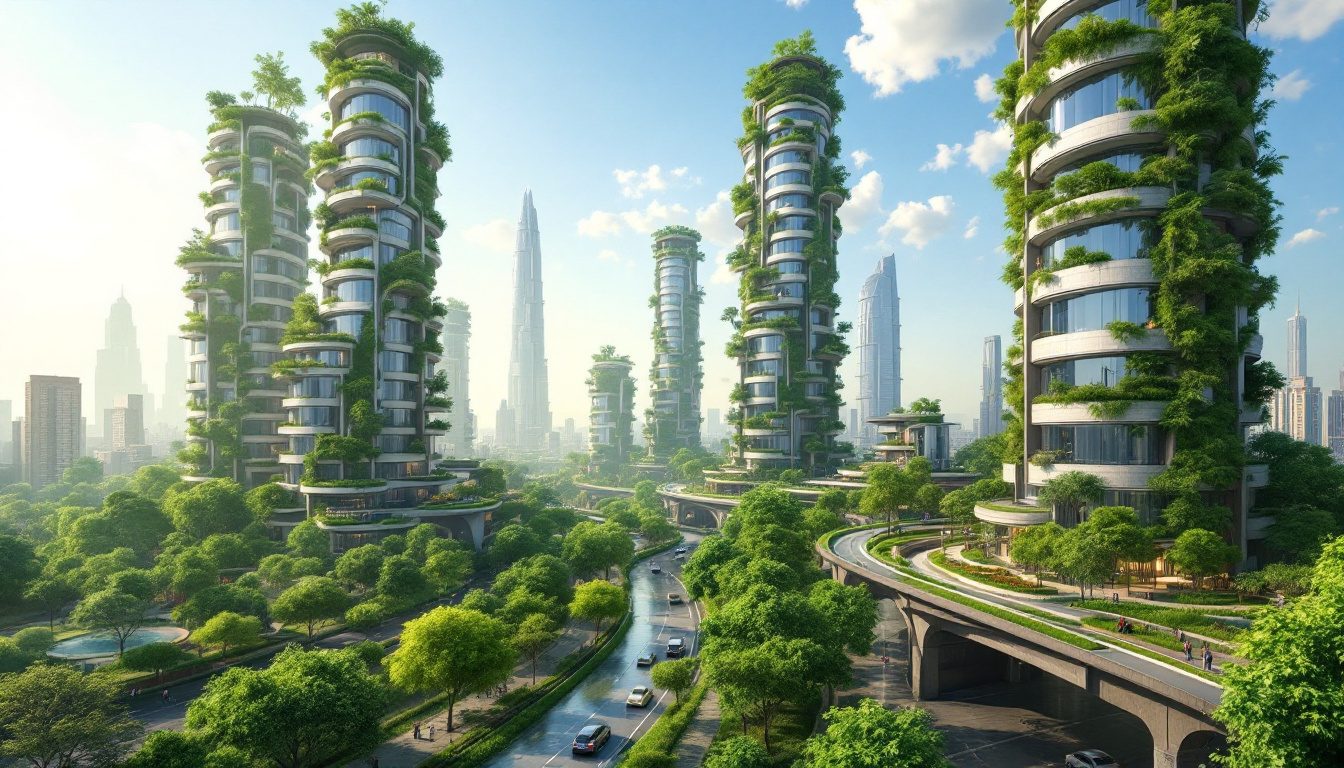
The Future of Landscape Architecture in India (2026–2035)
Climate adaptation, sponge cities, native rewilding and a new technology stack are turning landscape from decoration into infrastructure — and into a homeowner's smartest investment.
In 2015 a "landscape" line item on an Indian home or housing-society budget was usually the last thing decided and the first thing cut — a lawn, a boundary hedge, a few palms by the gate. In 2026 that picture is breaking apart. Bengaluru floods one week and runs dry the next. Delhi's summer crosses 49 °C and the asphalt holds the heat into the night. Chennai's lakes vanish under concrete and then reappear, uninvited, in living rooms. Quietly, in the middle of all this, a small profession is moving from the decorative edge of building to the structural centre of how Indian cities and homes will survive the next decade.
That is the story of where landscape architecture in India is going. It is not, mainly, a story about prettier gardens. It is a story about water, heat, soil and biodiversity becoming design problems that nobody else is fully trained to solve — and about a generation of tools, policies and practitioners arriving more or less at the same time to solve them.
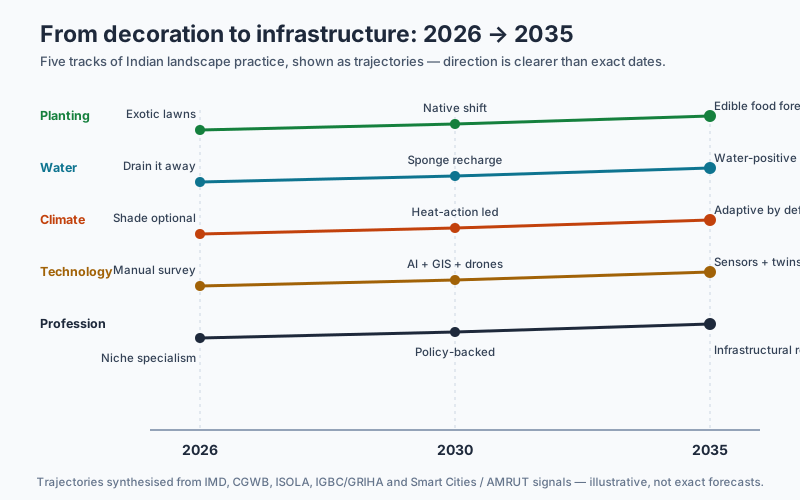
The central claim of this guide is simple: between 2026 and 2035, landscape architecture in India shifts from cosmetic to infrastructural. The driver is climate adaptation — heat, floods and water stress — and the response is a cluster of converging movements (sponge cities and blue-green infrastructure, rewilding and native-led design, edible and regenerative landscapes, and a fast-maturing technology stack of AI, sensors, GIS and drones). For homeowners this means the outdoor part of your home stops being an afterthought and becomes one of the highest-return, most future-proof investments you can make. This is a forward look, so treat every trend below as a trajectory, not a guarantee — but the direction is now hard to mistake.
Climate adaptation: the engine under everything
If you want to understand where the field is heading, start with the thermometer and the rain gauge. The India Meteorological Department and the Ministry of Earth Sciences have both documented rising heat-wave days, more erratic monsoons, and the urban heat-island effect that can make a paved city core several degrees hotter than its vegetated outskirts. The 2015 Chennai floods, the recurring Bengaluru deluges, and the chronic groundwater decline flagged by the Central Ground Water Board are no longer freak events — they are the operating conditions.
This matters because every one of these problems is, at root, a landscape problem. Heat is moderated by shade trees, green roofs and reduced hard paving. Flooding is a question of where rainwater goes when it lands — whether it is absorbed, slowed and stored, or rushed into an overwhelmed drain. Water stress is answered by capturing and reusing what falls. None of these are achieved by the building alone; they are achieved by the ground around and between buildings — which is exactly the landscape architect's material.
The result is a re-framing the profession itself is leaning into: from amenity to adaptation. Our deeper treatment of this shift lives in the guide on climate-responsive landscape design, but the headline is that the brief is changing. A client in 2020 asked for a beautiful garden. A client in 2030 will increasingly ask for a garden that also cools the house, holds the monsoon, and survives a dry April on harvested water.
| Trend / movement | Primary driver | What it looks like by ~2030 | Signal to watch |
|---|---|---|---|
| Climate-adaptive design as default | Heat-waves, erratic monsoon, UHI | Shade, permeable paving and water-holding designed in from day one | IMD heat-action plans referencing green cover |
| Sponge cities & blue-green infrastructure | Urban flooding, drainage failure | Rain gardens, bioswales, restored lakes in master plans | AMRUT 2.0, Smart Cities water projects |
| Native & biodiversity-led planting | Water cost, pollinator loss, maintenance | Native species lists replacing thirsty exotics and lawns | IGBC/GRIHA native-planting credits |
| Edible & productive landscapes | Food awareness, terrace economics | Kitchen gardens, food forests, community plots normalised | Urban-farming startups, FPO tie-ups |
| Regenerative & water-positive sites | Groundwater decline (CGWB) | Sites that recharge more water than they use | "Net water positive" corporate pledges |
| Tech-enabled practice | Cost, precision, talent leverage | AI concepts, IoT irrigation, GIS, drone survey routine | Practices advertising digital-twin sites |
| Rising professional standing | Demand, policy, education | More B.LArch seats, clearer fee norms, statutory roles | ISOLA membership, COA recognition debates |
Sponge cities and blue-green infrastructure
The single most important idea entering Indian landscape practice this decade comes, fittingly, from a landscape architect: Kongjian Yu, founder of Turenscape and Peking University's college of landscape architecture, whose "sponge city" concept argues that cities should absorb, slow and store rainwater rather than channel it away in concrete pipes. You can read more about Yu and his peers among the landscape masters. China's national sponge-city programme made the term mainstream; India is now adapting the logic through AMRUT 2.0, the Smart Cities Mission, and lake-rejuvenation drives in Hyderabad, Bengaluru and Chennai.
Blue-green infrastructure is the working vocabulary of this idea — the deliberate integration of water systems ("blue") and vegetation ("green") to perform the functions a city's grey pipes do, but better and cheaper. A bioswale beside a road slows and filters runoff. A rain garden in a courtyard turns a flooding nuisance into groundwater. A restored urban lake becomes both flood buffer and microclimate cooler. These are not exotic imports; they are how the traditional tank-and-temple landscapes of South India worked for centuries before they were paved over.
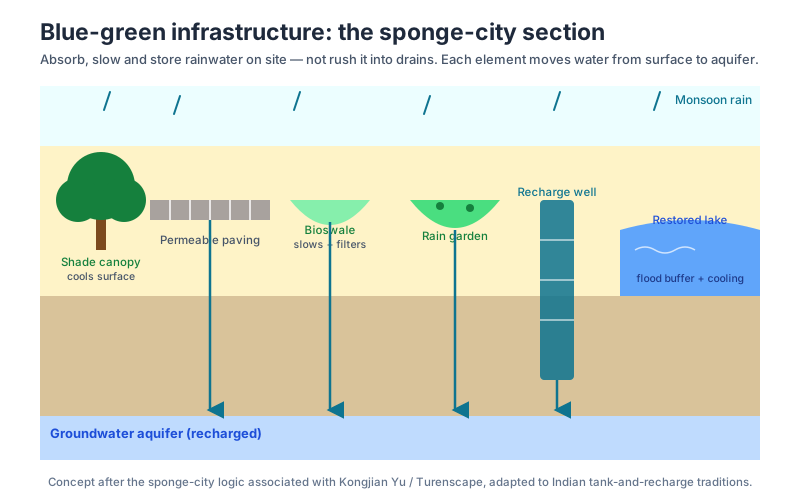
For the homeowner, the household-scale version of this is the most underrated upgrade available: rainwater harvesting plus a rain garden plus permeable paving can keep your plot's monsoon water on your plot. Our companion guide on sustainable water management in landscape walks through the household kit in detail; here the point is directional — what is a niche choice in 2026 becomes, through municipal by-laws and bitter experience, the expected standard by 2035.
Rewilding and native, biodiversity-led design
For decades the aspirational Indian garden was a clipped lawn ringed by imported ornamentals — a colonial inheritance that is expensive to water, hostile to pollinators, and ill-suited to a country of monsoon-and-drought rhythms. The clearest design trajectory of the next decade is the reversal of this: a move toward native species, layered planting, and a degree of managed wildness that supports birds, butterflies and soil life.
This is partly ecological conviction and partly economics. A native-led garden, once established, drinks a fraction of the water, needs far less chemical input, and largely maintains itself. Green-rating systems are pushing the same way: both IGBC (Indian Green Building Council) and GRIHA (Green Rating for Integrated Habitat Assessment) award credits for native and naturalised planting and for preserving existing trees. Researchers and practitioners associated with ecological restoration — and bodies like ISOLA — increasingly frame the garden as habitat first, scenery second.
| Old default | Emerging default 2026–2035 | Why it wins |
|---|---|---|
| Manicured exotic lawn | Native groundcover, meadow patches, mulch beds | 60–80% less irrigation; lower mowing/labour |
| Imported ornamental shrubs | Indigenous flowering species for pollinators | Supports bees, butterflies, birds; hardy to local climate |
| Single-layer planting | Layered canopy–understorey–ground "food web" | Resilience, biodiversity, year-round interest |
| Chemical fertiliser & pesticide | Compost, mulch, integrated pest management | Healthier soil; safer for children and pets |
| "Clean" cleared site | Retain mature trees; design around them | A mature tree's cooling/value takes decades to replace |
If you want to choose well for an Indian home, our guides on the best trees for Indian homes and biophilic landscape design are the practical starting points. The design philosophy underneath them — why a layered, living garden simply feels better — is explored in why some gardens feel peaceful.
Edible, productive and food-forest landscapes
A second cultural shift is turning ornamental ground into productive ground. The pandemic accelerated a quiet boom in terrace kitchen gardens; urban-farming startups, balcony hydroponics, and community plots in housing societies have followed. The next stage, already visible in early projects, is the food forest — a deliberately layered, low-maintenance planting of fruit trees, shrubs, herbs and ground crops that mimics a natural forest while feeding people.
For India this is less a fashion than a homecoming. The traditional homestead garden of Kerala (the kavu and the mixed home-plot) and the temple groves across the south were food forests by another name — multi-storey, perennial, and largely self-sustaining. Designers are now formalising that intelligence into urban and suburban plots. The economics are modest but real: a well-planned terrace can offset a meaningful share of a household's greens and herbs, and the carbon and food-miles story is increasingly part of a green building's narrative.
The trajectory here is integration rather than novelty: by 2030, expect the productive layer to be a normal sub-section of a residential landscape brief, sitting comfortably beside the ornamental and the recreational — the same way a study nook became a normal part of the home after remote work.
Regenerative and water-positive design
Sustainability asks a site to do less harm. Regenerative design asks it to leave the place healthier than it found it — more soil carbon, more biodiversity, more water in the ground than the site consumes. The flagship metric here is "water positive": a site that, through harvesting, recharge and reuse, returns more water to the aquifer than it draws over a year. Several Indian corporate campuses and IGBC-rated developments now pledge net-water-positive status, and the Central Ground Water Board's alarming aquifer-decline data is making the idea move from marketing to mandate in water-stressed zones.
For landscape architects this elevates the discipline's status, because regeneration is largely a landscape act — it happens in soil, planting, swales, wetlands and recharge structures, not in the building's steel and glass. The honest caveat: "regenerative" and "water positive" are easy to claim and hard to verify, and the field will need credible measurement (helped by the sensor and data tools below) to keep the labels meaningful. Treat the trend as genuine but watch for greenwash.
The technology stack entering the field
The romance of landscape is living things; the revolution of the next decade is the data layer wrapping around them. Four technologies are maturing together and changing how Indian practices work.
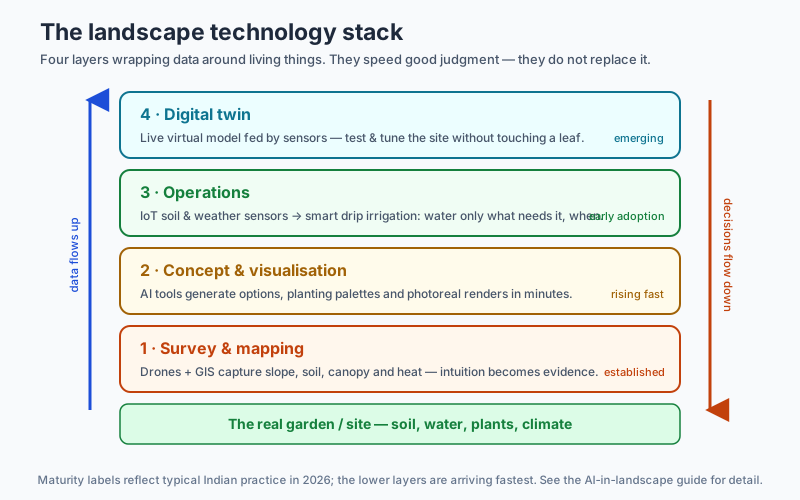
AI design tools now generate concept options, planting palettes and rendered visualisations in minutes, compressing the early ideation that once took weeks. Used well, they widen access — a homeowner can explore credible options before ever hiring a professional. Used badly, they produce confident, climate-blind nonsense. Our dedicated guide on AI in landscape design in India covers the strengths and the traps in depth; Studio Matrx itself sits in this space.
GIS and remote sensing let designers map slope, soil, drainage, tree canopy and heat at site and city scale, turning intuition into evidence. Drones make survey, volumetric earthwork calculation and construction monitoring fast and cheap on large sites. IoT sensors and smart irrigation measure soil moisture, weather and plant stress, then water only what needs watering when it needs it — directly serving the water-stress agenda. And the digital twin — a live virtual model of a real landscape, fed by these sensors — lets a designer or facility manager test and tune a site without touching a leaf.
| Technology | What it does in landscape practice | Where it helps homeowners | Maturity in India (2026) |
|---|---|---|---|
| AI design & rendering | Generates concepts, palettes, photoreal visuals fast | Explore options early; communicate intent | Rising fast; quality varies |
| GIS & remote sensing | Maps slope, soil, canopy, heat, drainage | Better siting of trees, water, shade | Established in larger firms |
| Drone survey & monitoring | Topographic survey, earthwork, build tracking | Mostly large plots; accurate base data | Common on big projects |
| IoT sensors + smart irrigation | Soil/weather data → water only as needed | Cuts water bills; keeps plants alive on travel | Early adoption, prices falling |
| Digital twins | Live virtual model for testing & maintenance | Long-term care of larger gardens | Emerging, mostly institutional |
The realistic read: AI, GIS and drones are arriving fastest; smart irrigation is becoming affordable for ambitious homes; full digital twins remain an institutional-scale tool for now. None of these replace design judgment — they make good judgment faster and bad judgment more expensive.
The rise of the profession: demand, education and policy
A field becomes infrastructural only when society organises around it — through demand, training, bodies and law. All three are stirring. Demand is the clearest signal: climate pressure, green-building targets, riverfront and lake projects, and a wealthier homeowner class are all pulling for landscape expertise. ISOLA (the Indian Society of Landscape Architects, founded 1989) continues to grow its membership and advocacy; education is expanding beyond the historic anchors of CEPT University, SPA Delhi and SPA Bhopal toward more B.LArch and M.LA seats nationally.
Policy is the lever that could change everything fastest. The Smart Cities Mission and AMRUT / AMRUT 2.0 have already funded large amounts of public-realm and water-sensitive work; green-rating systems IGBC and GRIHA embed landscape criteria into mainstream development; and the National Building Code (NBC 2016) plus CPWD norms increasingly reference open space, planting and water. The open question for the decade is statutory recognition and clearer fee norms — debates that touch the Council of Architecture (COA) and ISOLA, and that will determine whether landscape architecture is a respected specialism or a fully empowered profession. If you are weighing it as a career, the guide on studying landscape architecture in India maps the schools and the path.
| Pillar of the profession | State in 2026 | Plausible 2030–2035 trajectory |
|---|---|---|
| Demand | Rising, climate- and policy-led | Strong, possibly outpacing supply of trained LAs |
| Education (B.LArch / M.LA) | Concentrated in a few top schools | Wider, more institutions, more seats |
| Professional body (ISOLA) | Active advocacy, growing membership | Greater influence on codes and fees |
| Policy hooks (AMRUT, Smart Cities) | Funding many projects | Embedded as default in urban water/green plans |
| Green ratings (IGBC, GRIHA) | Voluntary but influential | Closer to expected; some mandatory zones |
| Statutory recognition / fees | Ambiguous, project-by-project | Likely clearer norms; debated COA/ISOLA role |
What it all means for your home
Strip away the city-scale ambition and a homeowner is left with a practical question: what should I do differently now, knowing where this is going? The honest answer is that the climate-smart landscape choices are also, conveniently, the money-smart ones. They lower running costs, raise resale appeal, and age into more value rather than less.
| If you are planning now | The future-proof move | Why it pays off |
|---|---|---|
| Choosing a lawn | Reduce or replace with native groundcover/meadow | Cuts water and labour; resilient to dry spells |
| Hard-paving the plot | Use permeable paving + a rain garden | Stops flooding; recharges groundwater |
| Picking plants | Prioritise native, layered, pollinator-friendly species | Low maintenance; biodiversity; climate-hardy |
| Watering by habit | Install drip / soil-moisture smart irrigation | Lower bills; plants survive travel and dry months |
| Ignoring rainwater | Harvest + recharge well aiming toward water-positive | Insurance against water stress; possible by-law fit |
| Clearing the site | Keep mature trees; design around them | Instant shade and cooling; high replacement cost |
| Ornamental only | Add an edible / kitchen-garden layer | Food, herbs, lower food-miles, family engagement |
| Hiring on instinct | Use AI tools to explore, then a pro to deliver | Better brief, fewer regrets, value for fee |
For the bones of these decisions — what they cost and how to brief a designer — pair this with the landscape cost guide, and browse the wider landscape design hub for the specific techniques. The single most important mindset shift is this: stop treating the garden as the budget's shock absorber. In a hotter, wetter-then-drier India, it is the part of your home that quietly does the most work.
A grounded forecast
It would be dishonest to promise that every trend here arrives on schedule. Adoption in India is uneven; budgets are tight; greenwash is real; and a beautiful policy can die in implementation. But the direction is no longer speculative. The climate is forcing the question, the technology is lowering the cost of answering it, and a small profession is stepping into a role much larger than the one it was given. By 2035 the most valuable square metres of an Indian home may well be the ones with soil under them — designed not to impress a visitor on opening day, but to keep the place cool, dry, fed and alive across the decades that follow.
References
- International Society of Landscape Architects (ISOLA) — professional body, founded 1989; membership and advocacy materials.
- India Meteorological Department (IMD) and Ministry of Earth Sciences — heat-wave frequency and monsoon variability reports.
- Central Ground Water Board (CGWB) — national groundwater resource assessments documenting aquifer decline.
- Kongjian Yu / Turenscape — "sponge city" concept and writings; Peking University college of landscape architecture.
- Ministry of Housing and Urban Affairs — Smart Cities Mission and AMRUT / AMRUT 2.0 programme documents.
- Indian Green Building Council (IGBC) and GRIHA Council — green-rating criteria including native planting and water credits.
- Bureau of Indian Standards — National Building Code of India (NBC 2016) provisions on open space and planting.
- Council of Architecture (COA) and CPWD — scope-of-work and professional norms referenced by landscape commissions.
Export this guide
Related Guides — Deep-dive reading
How Buildings Can Give Back: Biodiversity and Environmental Health
How an Indian home and its plot can actively improve the ecology and environment around it, not just reduce harm
SustainabilityWhy Landscape Architecture Matters More Than the Building
How the green around, above and beyond your home out-cools, out-drains and out-appreciates the structure itself — at every scale from balcony to city.
LandscapeThe Sponge City: How Kongjian Yu Taught China's Cities to Drink the Rain
Landscape architect Kongjian Yu and his firm Turenscape reframed the flood-prone city as a living sponge — a national programme, launched in 2013–14 across dozens of Chinese cities, that swaps concrete pipes for wetlands, rain gardens and terraces. A study of its ecological logic, its flagship parks, and the hard question of what a sponge can and cannot hold.
The Future of ArchitectureRelated Tools — Try Free
Rainwater Tank Sizer
How big should your rainwater tank be? Computes annual harvest, recommended tank capacity in litres, water-bill savings, and payback — for 10 Indian cities.
RWH CalculatorCross-Ventilation Analyzer
Estimate airflow and air changes per hour (ACH) from room size, window areas, layout, and local wind — with NBC 2016 Part 8 compliance check.
Ventilation CalculatorGarden Planning Toolkit
Get a tailored garden plan — planting layers, Indian species, features and a checklist — from your climate, space, sun and goals.
Planner