
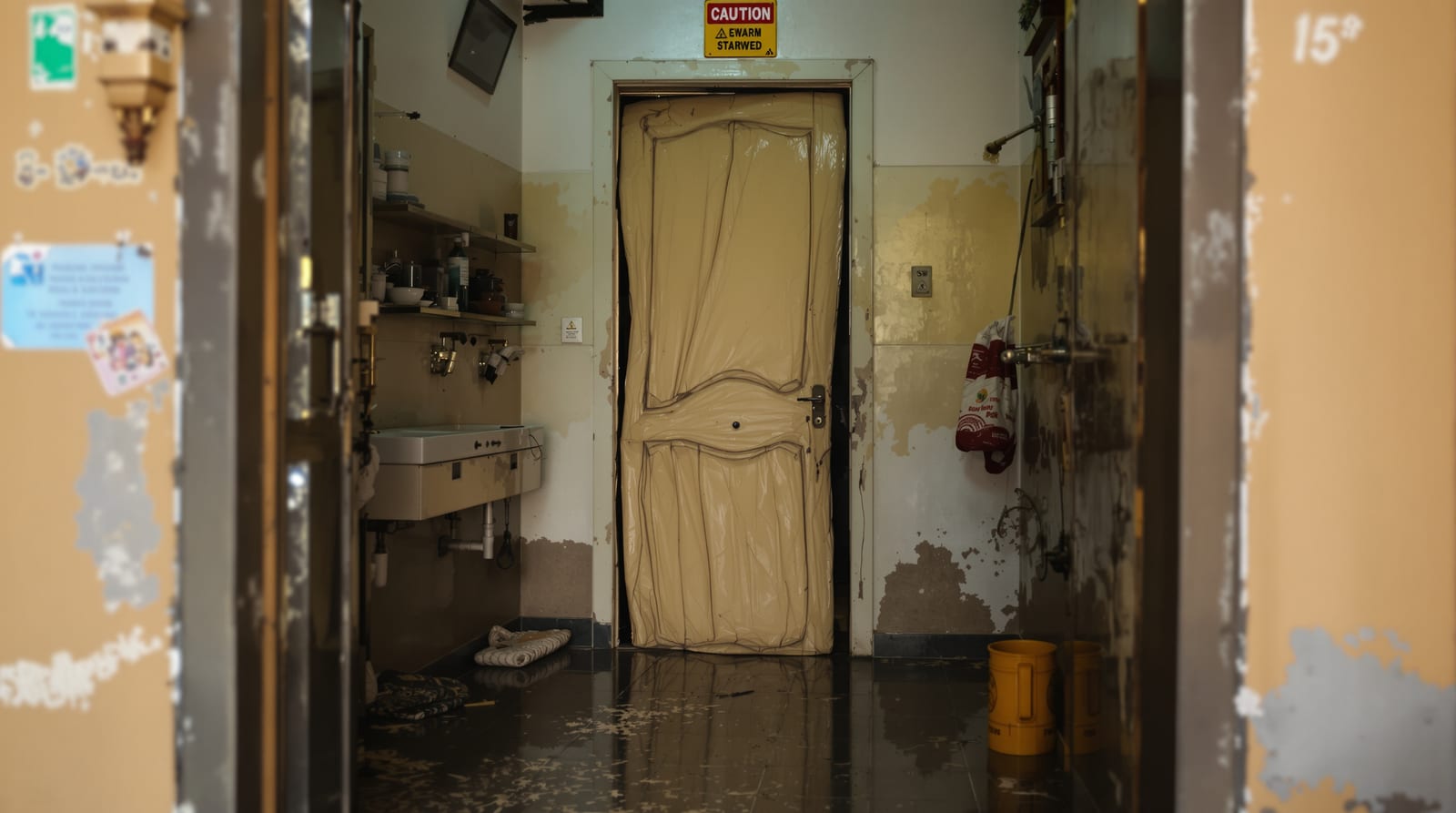
9 Door-Buying Mistakes to Avoid in India 2026
The costly errors Indian homeowners make buying doors — and the simple, money-saving fix for each one.
Most people buy doors once a decade, so it is no surprise that the same door-buying mistakes repeat in home after home across India — a swollen bathroom door, a main door that warps in the first monsoon, a lock that rattles loose in a year, or a missing invoice that quietly voids the warranty. Doors are not the most expensive line item in a build, but they are touched, slammed and judged every single day, and fixing a bad one means tearing out a fitted frame. This guide walks through the nine errors we see most often, what each one actually costs you, and the simple fix — so you spend your ₹1.2L–₹4L+ door budget once and well. For the underlying numbers, keep the 2026 door cost guide open alongside this.
The nine door-buying mistakes at a glance
Doors fail for predictable reasons. Here is the quick map — mistake, what it tends to cost, and the one-line fix. The rest of the guide expands each row.
| # | Door-buying mistake | What it costs you | The fix |
|---|---|---|---|
| 1 | Buying on price alone | Hollow door warps/sags in 1–2 years | Match grade to the room, not the lowest quote |
| 2 | Wrong material for wet/coastal rooms | Swelling, delamination, rot | WPC/PVC for wet; treated/marine for coast |
| 3 | Ignoring frame quality | Door sags, gaps, won't close | Pay for a seasoned/WPC frame, not green wood |
| 4 | No GST invoice | Warranty void, no recourse | Insist on a tax invoice with HSN + 18% GST |
| 5 | Wrong size or clearance | Door scrapes, jams, or gaps badly | Measure properly; allow floor clearance |
| 6 | Cheap hardware on a good door | Hinges sag, lock fails first | Spend ~10–15% of door cost on hardware |
| 7 | Skipping termite treatment | Hidden infestation, frame eaten | Treat frame/wall junction before fitting |
| 8 | No after-sales check | Stuck when something fails | Confirm who services and how, in writing |
| 9 | Copying the neighbour | Wrong spec for your conditions | Buy for your climate, use and budget |
Mistake 1 — buying on price alone
The cheapest flush door in the shop is almost always a hollow-core commercial door (₹1,800–₹3,000 supply) built for offices, not homes. On a high-traffic room the thin veneer dents, the lock area crushes and it sags within a year or two. The fix is not the most expensive door — it is matching grade to room: use solid-core BWR flush (₹3,000–₹5,500) where doors get real use, and save the budget for the main door and wet areas where failure hurts most. Our how to choose doors walks through grade-by-room, and the door cost calculator lets you price a room-by-room mix instead of one blanket choice.
Mistake 2 — wrong material for wet or coastal rooms
This is the single most expensive mistake in Indian homes. A normal wooden or hollow flush door in a bathroom soaks up splash water at the bottom edge, swells, and delaminates — usually within two monsoons. On the coast, salt air attacks ordinary timber and mild-steel hardware alike. The fix is material discipline: use WPC doors or PVC for bathrooms and utility areas (waterproof, termite-proof, ₹1,800–₹7,500 supply), and on the coast lean to WPC, uPVC or genuinely treated/marine-grade timber with stainless hardware. See the coastal region door buying guide for the salt-air detail, and best door material for the full match-up.
Mistake 3 — ignoring frame quality
Buyers obsess over the leaf and forget the frame, yet a good door on a bad frame fails. Green (unseasoned) sal shrinks as it dries, opening gaps, throwing the door out of square and loosening hinge screws. A seasoned sal frame runs ₹2,000–₹3,500 per door; a WPC frame costs a little more but never warps, swells or feeds termites. The fix: ask what the frame is made of and whether the timber is seasoned, and budget it as a real line item. The door frame cost guide explains the trade-offs.
Mistake 4 — no GST invoice (warranty void)
The cash discount is a trap. Doors and frames carry 18% GST (wooden/flush under HSN 4418, uPVC/PVC under HSN 3925). A bill made out "without GST" is not a real saving — it usually means no manufacturer warranty registration, no proof of purchase if the door delaminates, and no recourse on the lock or hinges. The fix: insist on a proper tax invoice showing the HSN code, the 18% GST line and the dealer's GSTIN, and keep the warranty card stapled to it. Always compare quotes as price-plus-GST, not the headline number. The door GST & HSN guide covers the codes, and the door GST calculator shows the all-in figure before you commit.
| Item | HSN | GST | Why the invoice matters |
|---|---|---|---|
| Flush / wooden door | 4418 | 18% | Manufacturer warranty needs proof of purchase |
| uPVC / PVC door | 3925 | 18% | Profile + hardware warranty registration |
| Locks / hardware | varies | 18% | Separate brand warranty on lock body |
| Installation labour | service | 18% | Workmanship claims need a record |
Mistake 5 — wrong size or clearance
Readymade doors come in standard sizes (door size standards), but Indian openings rarely match exactly, and the common error is forcing a near-fit. Too tight and the door scrapes the floor or jams in humid weather; too loose and you get drafty gaps and a poor lock engagement. Remember floor clearance — typically 10–12 mm at the bottom, more over a rug or tile threshold — and confirm the swing direction and handing before ordering. The fix is to measure the actual opening properly (width, height and the wall thickness for the frame), as in how to measure a door, and decide early between custom vs readymade.
Mistake 6 — cheap hardware on a good door
A ₹5,000 door hung on a ₹150 hinge set is a false economy: the hinges sag, the alignment drifts, and the lock — the part you use most — is the first thing to fail. As a rule of thumb, budget roughly 10–15% of the door's cost for hardware. Real, serviceable brands exist at every level — Godrej, Yale, Dorset, Europa, Hettich and Hafele for locks and fittings — so there is no need to gamble on unbranded mortise sets. The fix is to spec hinges, mortise lock and handle to match the door's life, not to scrape the last hundred rupees. See the door hardware guide and, for entry doors, smart door locks.
Mistake 7 — skipping termite treatment
In most of India termites are not a maybe, they are a when. A beautiful teak panel door is no defence if the frame-to-wall junction and the surrounding masonry are untreated — termites travel through the wall and hollow the frame from inside. The fix is cheap insurance: anti-termite treatment of the opening and frame junction before fitting, plus choosing WPC frames for ground-floor and damp walls where risk is highest. This is part of why WPC doors have taken over wet and low-level openings, and the door maintenance guide covers ongoing protection.
Mistake 8 — no after-sales check
Doors do occasionally fail — a panel delaminates, a frame twists, a lock seizes. The mistake is discovering only then that the "warranty" is a printed card with no one behind it. Before you pay, ask: who services a complaint, how long do they take, is labour covered, and does the brand reach your city? Get the answers in writing on the invoice. The door warranty guide and door after-sales service guide explain what good support actually looks like.
Mistake 9 — copying the neighbour
The neighbour's grand carved teak main door may be wrong for you — wrong budget, wrong climate exposure, wrong maintenance appetite. Copying a spec without the conditions behind it is how people end up with an unsuitable door. Buy for your own situation: your room mix, your city's price level (a solid-core flush averaging ₹4,000 nationally runs nearer ₹4,800 in Mumbai before GST), your exposure and your tolerance for upkeep. Use the door cost by city pillar and the city door price comparison tool, then negotiate from there — see negotiating door prices.
A quick pre-purchase checklist
Before you hand over money, run this list. Catching even two saves more than any discount.
| Check | Why |
|---|---|
| Grade matches the room | Avoids early warp/sag |
| Wet/coastal areas in WPC/PVC/uPVC | Avoids swelling and rot |
| Frame is seasoned timber or WPC | Avoids gaps and stuck doors |
| Tax invoice with HSN + 18% GST | Keeps warranty valid |
| Opening measured, clearance allowed | Avoids scrape/jam |
| Branded hardware specified | Lock and hinges last |
| Termite treatment booked | Protects the investment |
| After-sales terms in writing | Recourse if it fails |
Frequently asked questions
What is the single most expensive door-buying mistake?
Using the wrong material in wet or coastal rooms. An ordinary wooden or hollow flush door in a bathroom typically swells and delaminates within two monsoons, forcing a full replacement of a fitted door. WPC, PVC or uPVC for those openings avoids it for a small extra cost — see best door material.
Does a missing GST invoice really void the warranty?
In practice, yes. Manufacturer warranties on doors, profiles and locks are tied to proof of purchase. A cash bill "without GST" usually means no warranty registration and no recourse if something fails. Always take a tax invoice with the HSN code and 18% GST line; the door GST & HSN guide explains it.
How much should I spend on door hardware?
As a rule of thumb, budget around 10–15% of the door's cost for hardware — a basic branded set is ₹1,200–₹2,500. Cheap hinges and locks fail first and pull a good door out of alignment. The door hardware guide covers what to look for.
Is it worth paying more for the frame?
Yes. A green (unseasoned) timber frame shrinks and twists, opening gaps and loosening hinges. A seasoned sal frame (₹2,000–₹3,500) or a WPC frame for wet areas keeps the door square for years. The door frame cost guide has the detail.
How do I avoid overpaying versus my city's rate?
Start from the national price table, apply your city's cost index, and quote everything as price-plus-18%-GST so showrooms compete on the same basis. The door cost by city pillar and the door cost by city calculator give you the benchmark before you negotiate.
Should I treat for termites even with a WPC or teak door?
Treat the opening regardless. Termites travel through the wall and attack the frame junction and any timber nearby; WPC resists them but adjacent woodwork and frames may not. Anti-termite treatment of the frame-to-wall junction before fitting is cheap insurance, as covered in the door maintenance guide.
Export this guide
Related Guides — Deep-dive reading
Door GST HSN India 2026: Codes, Rates, Invoice & Tax Guide
GST on doors is 18% across wood, uPVC and metal — here is the HSN code for every door type and why you must insist on a proper tax invoice.
Home Doors & EntrancesBest Door Material in India (2026): The Right Choice for Every Room & Climate
A situation-by-situation verdict on the best door material for Indian homes - teak or steel for the main entrance, WPC or uPVC for bathrooms and coasts, engineered flush for bedrooms - with a by-location decision table and budget-vs-premium picks.
Home Doors & EntrancesCoastal Region Door Buying in India 2026: Salt-Air Guide
Why cheap flush and MDF doors fail near the sea, and which water-resistant materials and corrosion-proof hardware actually last.
Home Doors & EntrancesRelated Tools — Try Free
Door Cost Calculator
Estimate the all-in cost of a door — leaf, frame, hardware, fitting and GST — by type, material and size.
Door CalculatorDoor Material Comparison Tool
Compare 2–4 door materials on cost, durability, maintenance, security and moisture resistance.
Comparison ToolWindow Maintenance Cost Calculator
Estimate annual window upkeep by frame material — yearly, per-window and 5-year cost.
Window Calculator