
Ultimate Guide to Wall Finishes for Indian Homes
Paint, wallpaper, panels, stone, plaster, microcement and more — the whole family of wall finishes, a five-question way to choose, and the real cost, climate and maintenance trade-offs.
Walls are the single largest surface in any home — far bigger than the floor, the ceiling or the furniture — and the finish you put on them quietly decides four things at once: how the room looks, what it costs, how much upkeep it demands, and how many years it lasts before you have to do it all again. Most homeowners default to "just paint it," and paint is a fine answer for most rooms. But the world of wall finishes is far larger and more interesting than a colour card, and choosing well — the right finish in the right place — is one of the highest-leverage decisions in a home's interior.
This is the master guide to that whole world. It maps every family of wall finish available in India, gives you a simple framework to narrow the field to a handful of good options, and lays out the honest trade-offs of cost, climate and maintenance so you can decide with your eyes open. From here, deeper guides go into each material; this page is the map you start from.
The whole family of wall finishes
Before you choose, it helps to see the full menu. Wall finishes sort into a manageable number of families, each with its own character, price band and best use.
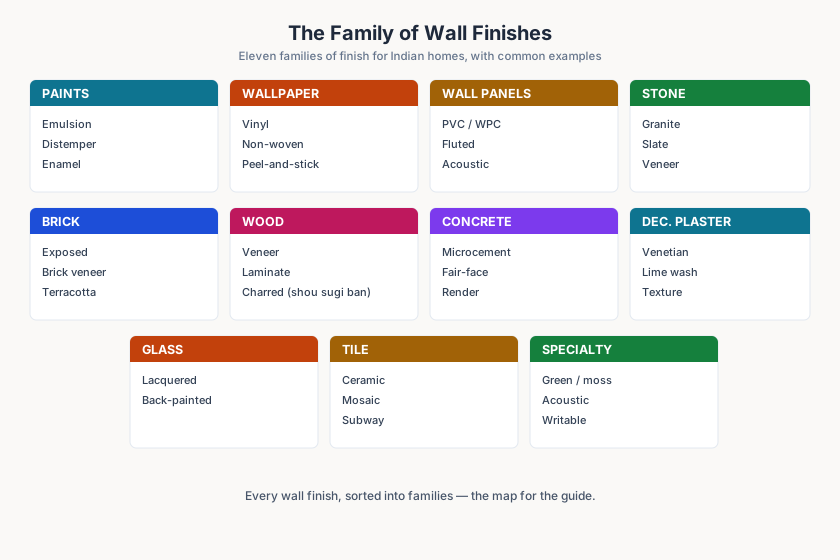
The families, in rough order from everyday to statement:
- Paints — interior and exterior emulsions, budget distemper, and enamel for trim. The default, the cheapest, the easiest to change.
- Wallpaper — vinyl, non-woven and peel-and-stick papers that bring pattern and texture no paint can.
- Wall panels — PVC/WPC, fluted wood, MDF, gypsum, acoustic and stone-veneer panels that clad a wall fast and dry.
- Stone — granite, marble, slate, sandstone, Kota and lightweight stone veneer, for weight and permanence.
- Brick — exposed brick, brick veneer and terracotta, for warmth and texture.
- Wood — veneer, laminate, HPL and charred (shou sugi ban) panelling.
- Concrete & microcement — fair-face concrete, cement render and seamless microcement for an industrial-calm look.
- Decorative plasters — Venetian plaster, lime wash, tadelakt and texture finishes.
- Glass — lacquered and back-painted glass for kitchens and baths.
- Tile — ceramic, porcelain, subway and mosaic, mainly for wet areas.
- Specialty — green/moss walls, acoustic walls, writable and magnetic walls.
You will not use most of these in most rooms — but knowing they exist is how you find the right one for a feature wall or a problem area, instead of reflexively reaching for another coat of emulsion.
A five-question way to choose
The fastest way to cut this menu down to size is to answer five questions about the wall in front of you. Each one eliminates whole families and points to a shortlist.
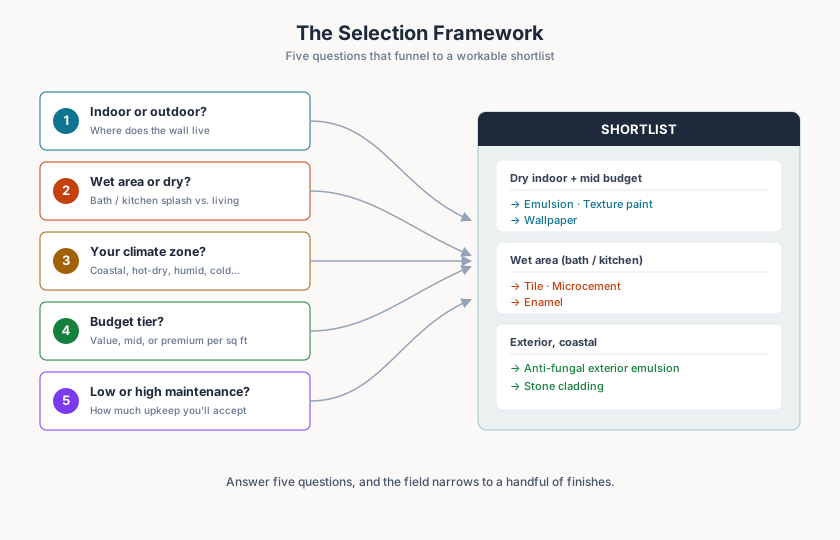
1. Indoor or outdoor? This is the biggest fork. An outdoor wall faces sun, rain and heat that will destroy most interior finishes in a season (see below).
2. Wet area or dry? A bathroom or kitchen splash-zone rules out ordinary emulsion and wallpaper, and points to tile, microcement, back-painted glass or anti-fungal enamel.
3. Which climate? Coastal salt, hot-dry glare and cold-hill damp each demand different properties from an outdoor finish.
4. What budget? Finishes span from about ₹15 a square foot (distemper) to ₹700-plus (stone cladding, Venetian plaster). Budget alone removes half the options.
5. How much maintenance can you live with? A cheap finish you redo every three years can cost more over a decade than a premium one you never touch.
Answer those, and a bewildering menu becomes a shortlist of two or three finishes you can compare properly.
Indoor versus outdoor — and India's climates
The indoor/outdoor split deserves its own look, because it is where most expensive mistakes happen — an interior-grade finish used outside, or a non-washable one in a wet room.
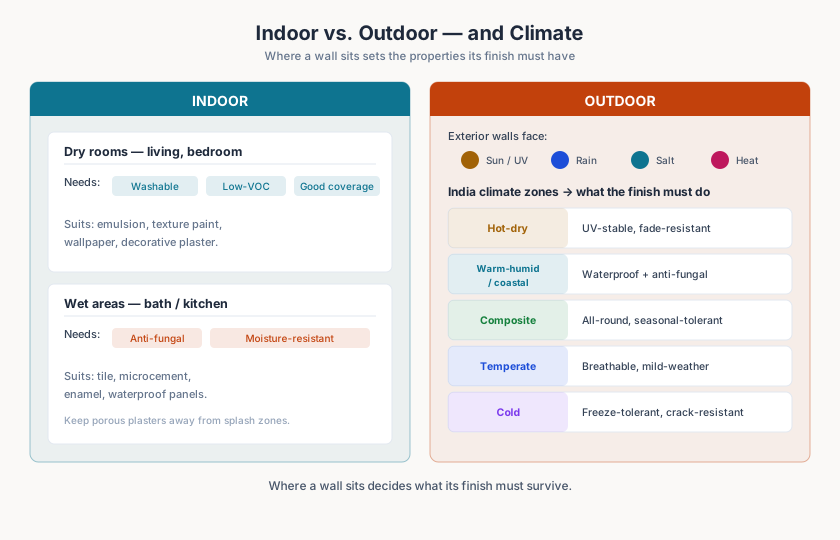
Indoor, dry rooms are the easy case: almost any finish works, so choose on look, budget and washability. Indoor wet areas — bathrooms, kitchen backsplashes, utility — need moisture-resistant, anti-fungal surfaces; this is tile, microcement, glass or specialised paint territory, and the reason gypsum plaster must never go behind a shower.
Outdoor walls are unforgiving, and the right choice depends on your climate:
- Hot-dry (Delhi, Rajasthan, much of the interior) — needs UV-stable, chalk-resistant exterior emulsion; heat-reflective paints earn their keep.
- Warm-humid / coastal (Mumbai, Chennai, Kochi, Goa) — the hardest test: needs waterproof + anti-fungal coatings that shrug off salt and mould.
- Composite (most of central India) — an all-round weather-resistant exterior emulsion.
- Temperate (Bengaluru, Pune hills) — gentler; breathable finishes do well.
- Cold (Himalayan belt) — needs freeze-thaw-tolerant renders and stone.
Get the location and climate right first, and you will never waste money on a finish that peels, blooms with fungus or chalks off within a year.
What it costs — and how often you'll redo it
Cost is where the real decision usually lands, but the sticker price per square foot is only half the story. The other half is how often you pay it again.
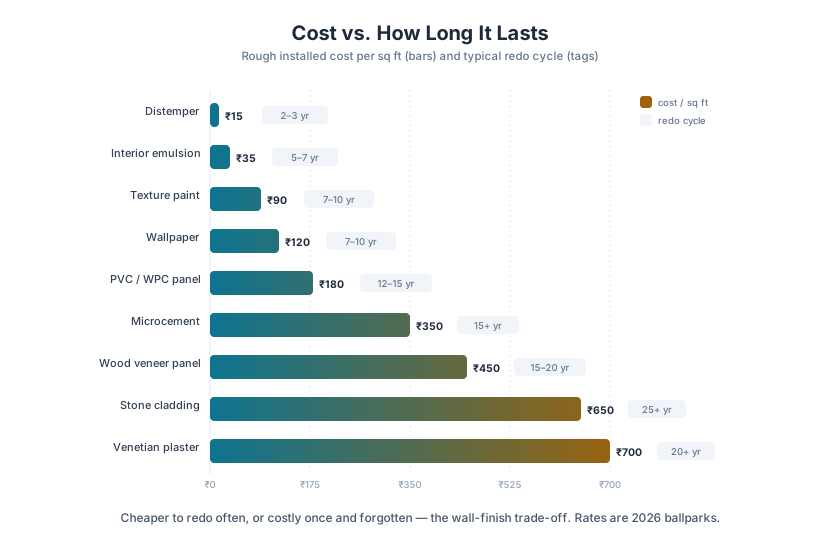
As a 2026 ballpark, installed: distemper runs around ₹15/sq ft but needs redoing every 2-3 years; interior emulsion about ₹35 and lasts 5-7; texture paint and wallpaper sit around ₹90-120 and last 7-10; PVC/WPC and wood-veneer panels are ₹180-450 and last 12-15 years; microcement is ₹300-400 and lasts 15-plus; and stone cladding or Venetian plaster, at ₹650-700, effectively last the life of the building. The pattern is clear: cheap finishes are cheap to install and expensive to keep; premium finishes are the reverse.
For the finish most people actually reach for — paint — you can get a real number for your own room right now. The interactive estimator on this page works out how many litres and packs you need and the all-in cost (paint, putty, primer and labour) for your wall type, brand tier and city; for a full multi-room estimate use the paint calculator, and to preview colours the paint visualiser.
The maintenance reality
Every finish has an upkeep personality, and it is worth knowing before you commit:
- Paint — easy to clean if it is washable emulsion; easy to touch up and repaint; the most forgiving.
- Wallpaper — wipeable (vinyl) to delicate (fabric, grasscloth); a torn seam is a visible repair.
- Panels & cladding — near zero routine maintenance, but a damaged panel means replacing a whole board.
- Microcement & plaster — sealed and largely wipe-clean, but a deep chip needs a specialist.
- Stone & brick — essentially permanent, though some stone wants periodic sealing.
Match the finish to how the room is used: a child's room or a hallway wants washable, touch-up-friendly paint; a formal living-room feature wall can afford a more precious finish that never takes abuse.
How to actually choose
Put it together and the method is simple. Start with where the wall is (indoor/outdoor, wet/dry) — that is non-negotiable and eliminates the most options. Layer on your climate for anything outdoors. Then let budget and maintenance appetite decide between the survivors, remembering that the cheapest option per square foot is rarely the cheapest over ten years. Finally, choose the look — because by this point you are choosing between finishes that will all actually work, which is the whole point of the framework.
From here, follow the deeper guides for the finish you have shortlisted — plaster and texture, exterior cladding, gypsum versus cement plaster under it all, boundary and compound walls, or art and gallery walls to dress a finished one. Choose the wall's job first, and the finish almost chooses itself.
Interactive · Wall paint quantity + cost
7.1 L paint · ₹14,558 all-in
Estimated all-in cost
₹0
427 sq ft painted · 1×4L + 3×1L + 1×0.5L to buy
Cost breakdown
Export this guide
Related Guides — Deep-dive reading
Compound Wall Finishes in India: Plaster, Texture, Cladding and Paint (2026)
A plain, India-grounded guide to choosing the exterior finish for a compound wall — plaster and exterior paint, textured coatings, stone, tile, laminate and HPL cladding, exposed brick, concrete and rubble stone, and decorative faces — compared on look, weather durability, maintenance and cost band, with the front wall treated as your street facade.
Compound WallsHow to Choose Flooring for Indian Weather
Climate-first flooring decisions for hot-dry, humid-coastal, composite, monsoon-wet and cold Indian homes
Materials & FinishesComplete Home Flooring Guide for Indian Homes (2026)
The authoritative overview of every flooring family — tiles, stone, wood, vinyl and seamless — with India ₹/sq ft costs, room-by-room logic and laying basics.
Flooring & SurfacesRelated Tools — Try Free
Door Paint Calculator
Estimate paint and primer litres and cost to paint your doors by size, number of doors, coats and paint type.
Door CalculatorHome Building & Interior Cost Calculator — 20 Cities
Construction + interior costs for 20 Indian cities across kitchen, wardrobes, flooring, painting, ceiling.
Cost CalculatorFlooring Cost Calculator
Estimate the all-in cost of a floor — material, laying, wastage, skirting and GST — by area and material.
Flooring Calculator