
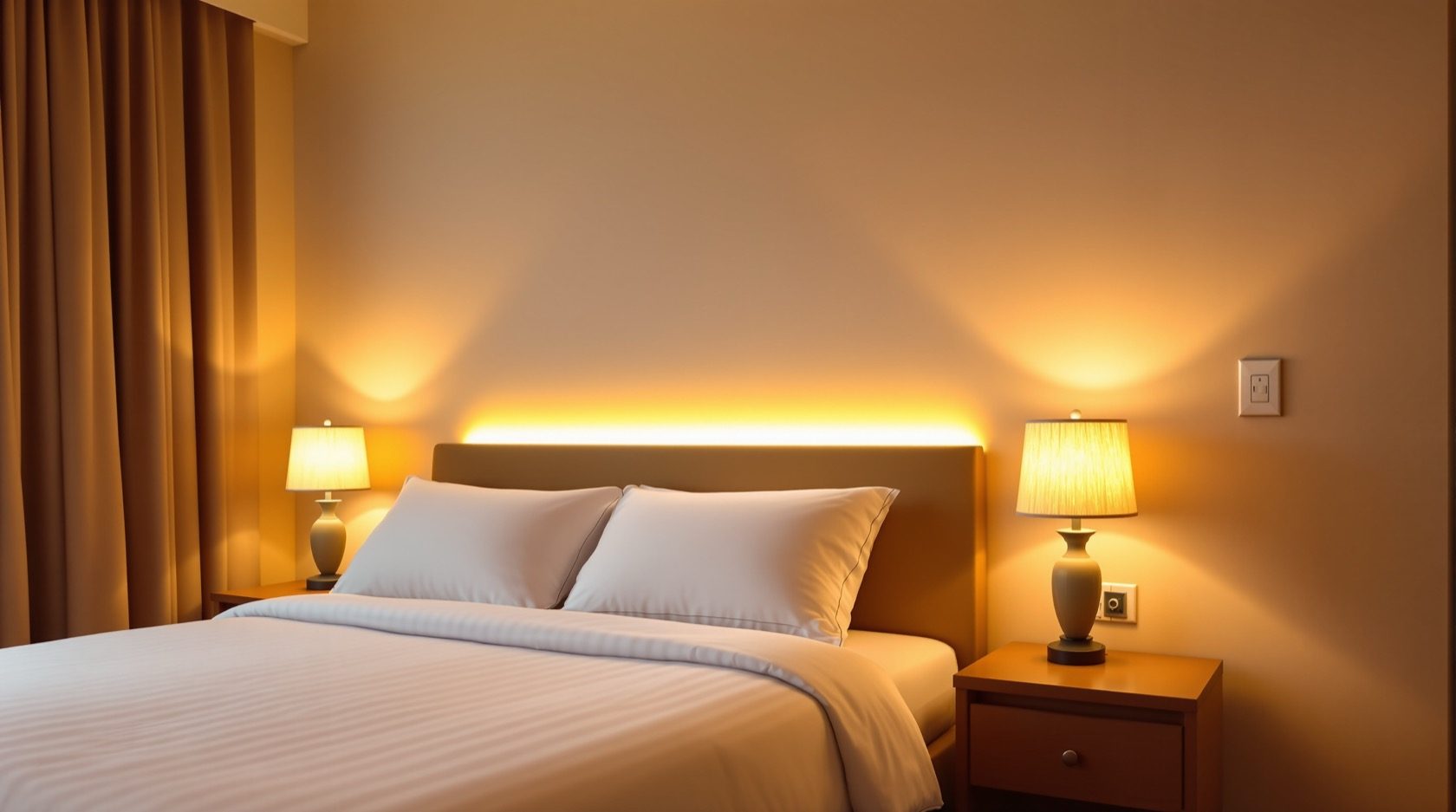
Bedroom Electrical Planning: Points, Switches & Lighting for a Restful Room
The room built around comfort and control — how to plan a bedroom's electrics: bedside points and two-way switches so you can control lights from bed, the right lighting layers, an AC point, and enough sockets for a modern nightstand, all placed before the furniture arrives.
A bedroom's electrics are all about comfort and control — being able to dim the lights, switch them off from bed, charge a phone on the nightstand and run the AC without a tangle of extension leads. None of that is expensive; it just has to be planned around the bed and furniture before the walls close. This guide is how to plan an Indian bedroom's electrical points, switches and lighting so the room feels effortless and restful.
It is the bedroom guide of the room-by-room set in the Electrical Knowledge Hub, applying the planning and lighting design guides.
The safety line. This guide helps you specify the points, switches and lighting to brief your electrician and interior designer. The wiring is installed by a licensed electrician.
Plan around the bed
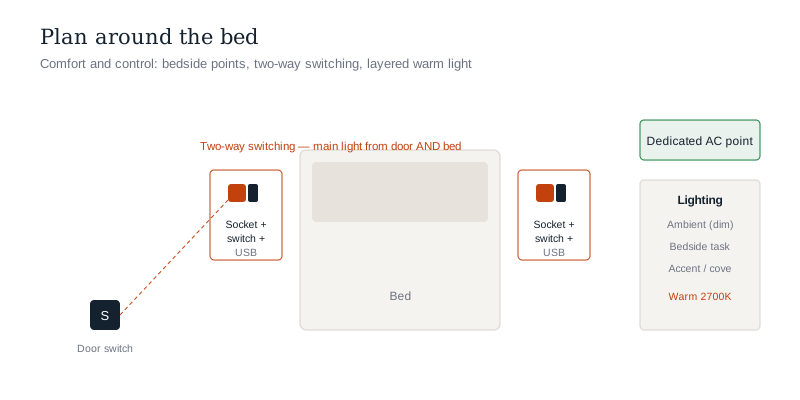
The single most useful bedroom idea: plan the points around where the bed and furniture will go. Mark the bed position on the plan, then provide:
- Bedside points on both sides — a socket (or two) and a switch at each side of the bed, at nightstand height, for lamps, phone chargers and a fan/AC remote dock. Sockets with USB charging are a genuinely useful touch here.
- Symmetry — matching points on both sides so the room works whoever sleeps where.
- Coordinated heights — bedside points at nightstand level, not hidden behind a headboard.
Getting the bedside provision right is what separates a restful bedroom from one with a charger cable stretched across the floor.
Two-way switching: control from bed
The defining bedroom convenience is two-way switching — controlling the main light from both the door and the bed. You walk in and switch on at the door; you get into bed and switch off without getting up. Provide two-way switches for the main light (and ideally the room's key lighting), a small wiring detail that transforms the room's comfort. Your electrician wires this with two-way switches at the door and bedside.
Lighting in layers
A bedroom needs layers, not one bright central light (see lighting design):
- Ambient — soft general light, ideally dimmable for a restful mood.
- Task — bedside reading lights (wall lights or lamp points) on each side.
- Accent — optional cove or wardrobe lighting.
- Warm colour temperature — a warmer light (2700–3000K) suits rest better than cool white; keep the bedroom on the warm end.
- Consider smart or dimmable control for scenes (bright to dress, dim to wind down).
The other essentials
- An AC point — a dedicated, correctly-rated point for the air-conditioner, positioned for the indoor unit, on a suitable circuit (see load).
- A few general sockets — for a TV, air purifier, vacuum, or a study nook; think where you'll actually plug things in.
- Wardrobe lighting — a point inside or above a large wardrobe is a small luxury.
- A fan point, and enough switch capacity on the board for the room.
- Use the room points calculator to size the provision.
A bedroom electrical checklist
- Bedside socket + switch points on both sides, at nightstand height (USB sockets a plus).
- Two-way switching for the main light (door + bed).
- Layered, dimmable, warm lighting — ambient, bedside task, optional accent.
- A dedicated AC point and a fan point.
- A few general sockets for TV and sundries.
- Points planned around the bed and furniture layout.
The one-line answer
A bedroom's electrics are about comfort and control, so plan them around the bed: bedside socket and switch points on both sides at nightstand height (USB sockets a bonus), two-way switching so the main light works from both the door and the bed, and layered, dimmable, warm-toned lighting — ambient plus bedside reading lights — for rest. Add a dedicated AC point, a fan point and a few general sockets, place every point around where the bed and furniture will actually go, and have a licensed electrician wire it. It's inexpensive; it just has to be planned before the walls close.
Where to go next
- The lighting layers in depth: Home Lighting Design Guide.
- The other rooms: Kitchen Electrical · Living Room Electrical · Home Office Electrical.
- Warm vs cool light: Colour Temperature & CRI Guide.
- Size the room: Room Electrical Points Calculator.
References
- IS 1293 : 2019, Plugs and Socket-Outlets for Household and Similar Purposes (up to 250 V, 16 A), Bureau of Indian Standards.
- IS 732 : 2019, Code of Practice for Electrical Wiring Installations, BIS.
- IS 3854 : 2023, Switches for Domestic and Similar Purposes (two-way switches), BIS: https://www.bis.gov.in/
Layouts and appliance loads vary; all wiring must be installed by a licensed electrician to the current standards. Verify any standard's status via the BIS catalogue before relying on it.
Export this guide
Related Guides — Deep-dive reading
Lighting Controls & Dimming Design: Zones, Scenes & Switches (2026)
How to plan lighting control so an Indian home's light is flexible — split each room's layers onto separate switches, choose dimmers that actually work with LEDs, add two-way switching where you need it, and layer scenes on top. The design decisions you must settle before the electrician wires.
LightingApartment Lighting Planning Guide
How to light a deep, dark apartment floor plate in layers — before the wiring is chased into the walls
Apartment LivingComplete Guide to Home Electrical Planning in India
The homeowner's planning workflow for a home's electrics — how to estimate the load, plan circuits and the distribution board, decide switch and socket positions room by room, future-proof for solar, EV charging and smart controls, and hand a clean brief to a licensed electrician.
Electrical & WiringRelated Tools — Try Free
Electrical Safety & Load Audit
Home electrical audit — 10 categories, 65+ checkpoints across earthing, RCCB, MCB, wiring, switchboards, appliance circuits, DG/inverter backup.
Safety AuditApartment Interior Planning Checklist
51-item checklist across structural, ceiling, lighting, furniture, storage, electrical, kitchen, bathroom.
ChecklistFull-Room BOQ — Living, Bedroom, Kitchen, Bath
Room-wise BOQ across living, bedrooms, kitchen, utility, and bathrooms with line-item pricing.
Full-Room BOQ