
Courtyard Haveli — 30 × 40 ft Hot-Dry Home
1200 sq ft plot · G+1 · 3 BHK · Jaisalmer · Jodhpur · Bhuj · Ahmedabad inland
Plot
40 × 30 ft
1200 sqft
Built-up
1400 sqft
G+1
Config
3 BHK
2 bath
Facing
E
Vastu: excellent
Strategy
Courtyard-led
Predominantly natural/local
Cost
₹25–37 L
₹1,800–2,600/sqft
Suits: Jaisalmer · Jodhpur · Bikaner · Bhuj · Ahmedabad · Hisar
Climate zone — Hot-Dry: Long summers above 40 °C, low humidity, large diurnal swings, dust storms. Thermal mass, jaalis, courtyards and minimal west glazing.
Interactive Floor Plan · 40 × 30 ft · 1200 sq.ft plot
Courtyard Haveli — 30 × 40 ft Hot-Dry Home
Ground floor · 720 sq ft built-up · 240 sq ft courtyard
A 1200 sq ft plot in the hot-dry zone has one inescapable design fact: for seven months of the year, the outdoor temperature exceeds skin comfort temperature. From late March to October, Jaisalmer routinely sees 42 °C+ days and 14 °C+ diurnal swings. Any home built here that ignores that fact ends up running an air-conditioner from 11 AM to midnight — financially exhausting for the owner and environmentally indefensible.
The Indian hot-dry vernacular — the haveli, the bhunga, the Jaisalmer townhouse — solved this problem 500 years before mechanical cooling existed. This design ports those moves into a contemporary, code-compliant, 30 × 40 ft Indian plot with a 3 BHK G+1 programme.
Site & Orientation
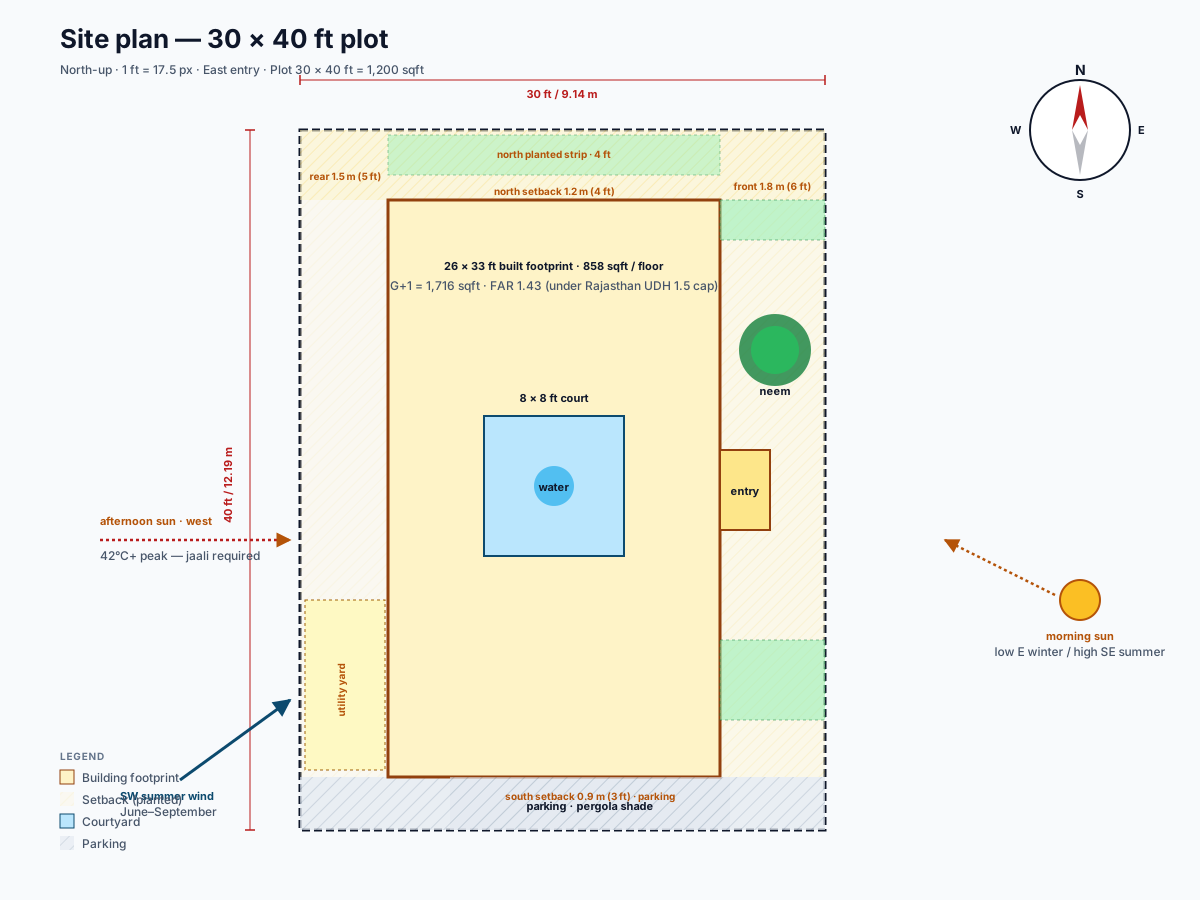
The plot is 30 ft wide × 40 ft deep, with the 40 ft dimension running east-west so the long facade faces north (the cool side). Entry is on the east — gentle morning sun, Vastu-aligned, and the prevailing south-west summer wind hits the rear (west) wall rather than the entry.
Setbacks (per Rajasthan UDH Bye-laws and Jodhpur Master Plan for plots ≤ 200 sqm in non-A1 zones):
| Setback | Required | This Design |
|---|---|---|
| Front (east) | 1.5 m | 1.8 m (porch + entry court) |
| Rear (west) | 1.0 m | 1.5 m (utility yard + drying) |
| Side (north) | 0.9 m | 1.2 m (planted strip + ventilator) |
| Side (south) | 0.9 m | 0.9 m (parking access) |
This gives a buildable envelope of 23 × 29 ft = 667 sqft per floor, totalling 1,334 sqft over G+1 (~1,400 sqft including the parapet stair head). That sits comfortably under the Rajasthan FAR of 1.5 for residential plots in this size band (FAR consumed ≈ 1.11). Note: setbacks shown are calibrated for the Gujarat GUDM (Kutch) post-2001 bye-laws for plots ≤ 110 sqm, which match historic Jaisalmer urban grain. Rajasthan UDH 2020 zones currently require a 3 m front setback — for Rajasthan use, the entry porch and parking re-plan to a deeper front buffer, which trims usable depth by 4 ft.
Ground Floor Plan
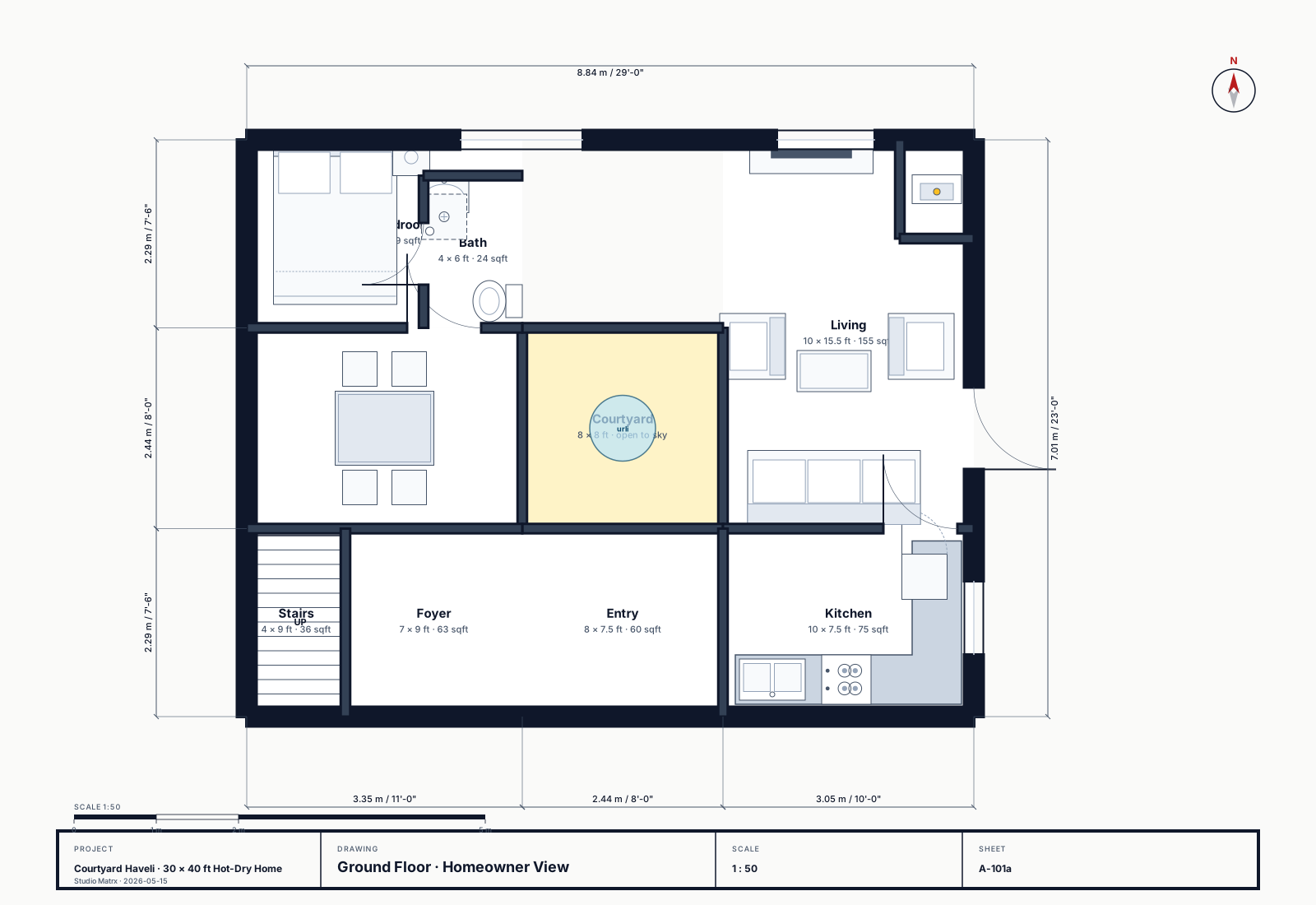
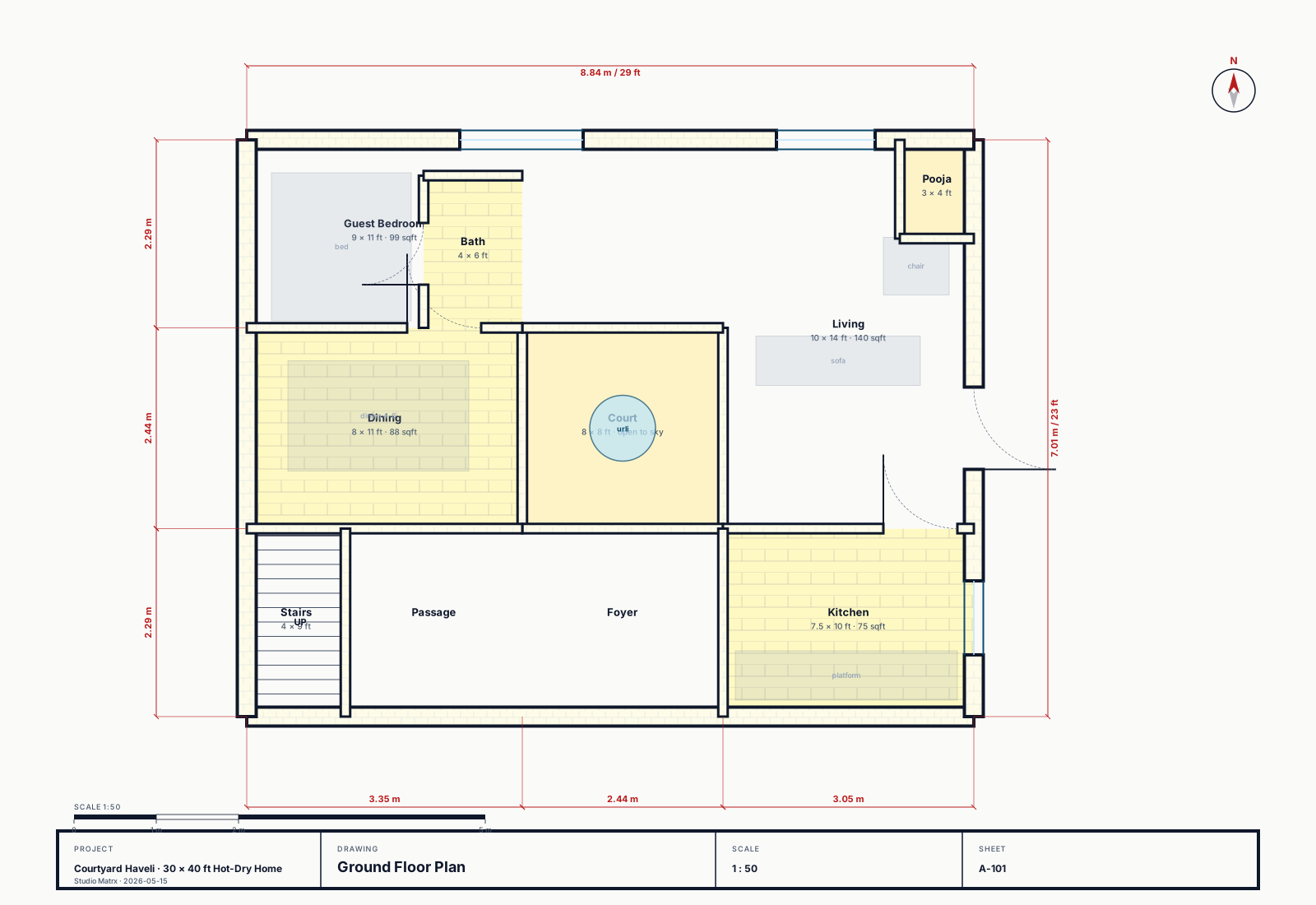
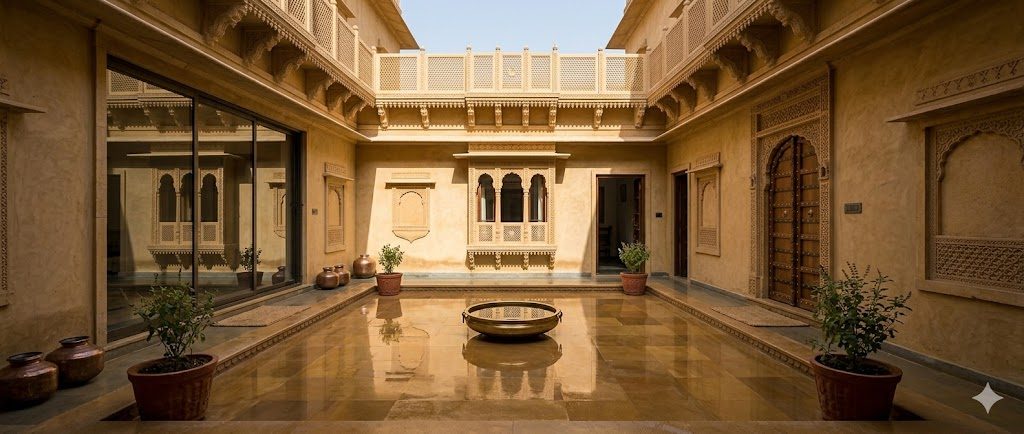
The plan organises around a central 8 × 8 ft courtyard — the single most powerful climate move available at this plot size. The court does five jobs simultaneously:
1. Stack ventilation — hot air rises out of the court; cool air drawn in through low openings in the surrounding rooms.
2. Daylight — every room except the rear bath gets direct daylight from the court.
3. Evaporative cooling — a small water bowl in the court drops the courtyard air temperature 2–4 °C in summer.
4. Vastu Brahmasthan — the centre of the home stays open and light, the auspicious zone.
5. Social heart — morning chai, evening conversation, festival lighting.
Room Schedule (Ground Floor)
| Space | Size | Notes |
|---|---|---|
| Entry porch (in setback) | 5 × 6 ft | Shoe storage, jali screen, foyer mat |
| Living | 10 × 14 ft | East-facing; courtyard sliding on west |
| Dining | 8 × 11 ft | South of courtyard, opens onto it |
| Kitchen | 7.5 × 10 ft | South-east (Vastu), platform on east wall, exhaust above |
| Pooja niche | 3 × 4 ft | North-east corner — see Pooja Room Design guide |
| Guest bedroom | 9 × 11 ft | North-west corner, deep window on north |
| Guest bath (attached) | 4 × 6 ft | Compact wet shower |
| Courtyard | 8 × 8 ft | Open to sky, kota stone floor, water bowl |
| Stairs | 4 × 9 ft | South-west, against thermal-mass spine |
| Utility yard (in setback) | 5 × 8 ft | Rear west — washing + drying, screened |
| Parking (in setback) | 8 × 16 ft | South setback, pergola shaded |
First Floor Plan
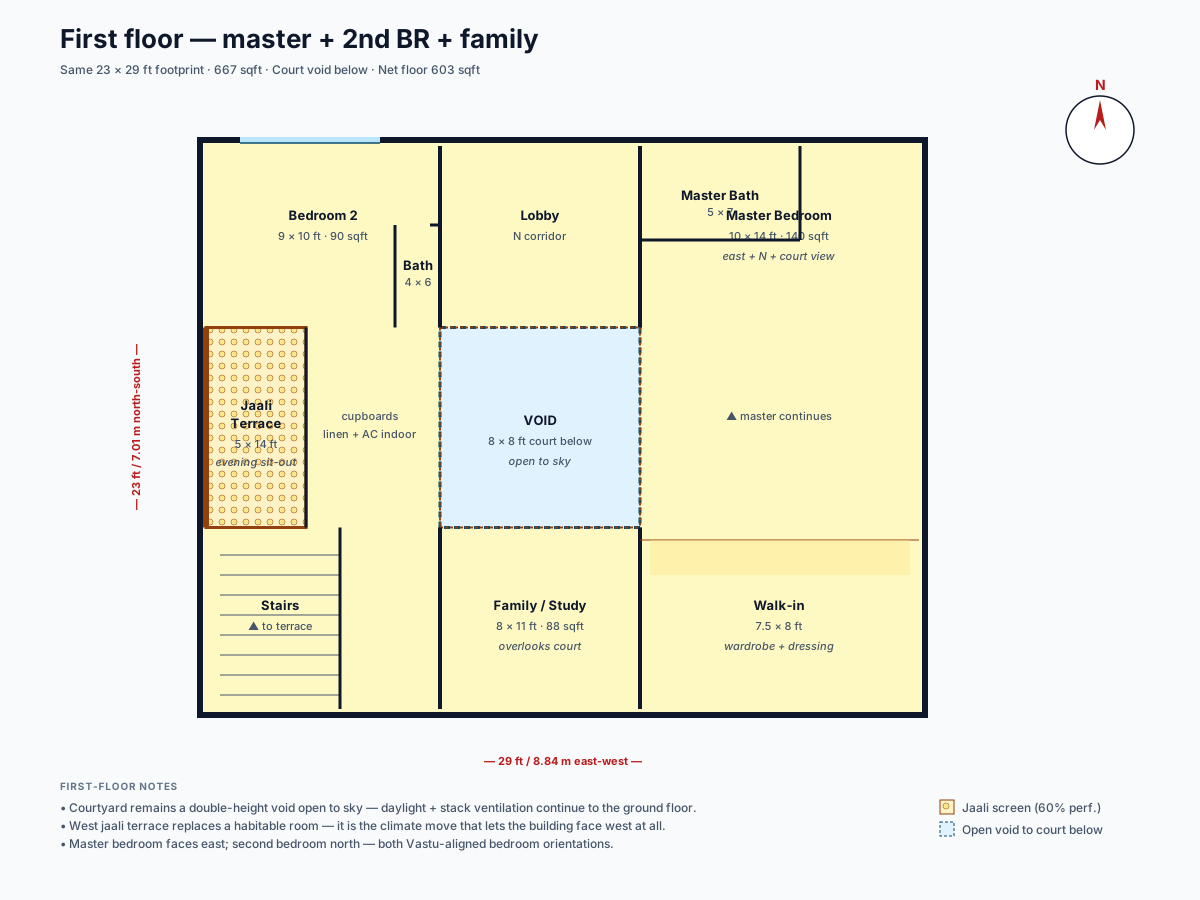
The first floor maintains the courtyard as a double-height void — central to both the climatic and the spatial experience.
Room Schedule (First Floor)
| Space | Size | Notes |
|---|---|---|
| Master bedroom | 10 × 14 ft | Above living, east + courtyard windows |
| Master bath (attached) | 5 × 7 ft | Includes shower + WC |
| Second bedroom | 9 × 10 ft | North-west, north window |
| Shared bath | 4 × 6 ft | Off corridor |
| Family / study | 8 × 11 ft | Above dining; opens onto courtyard void with railing |
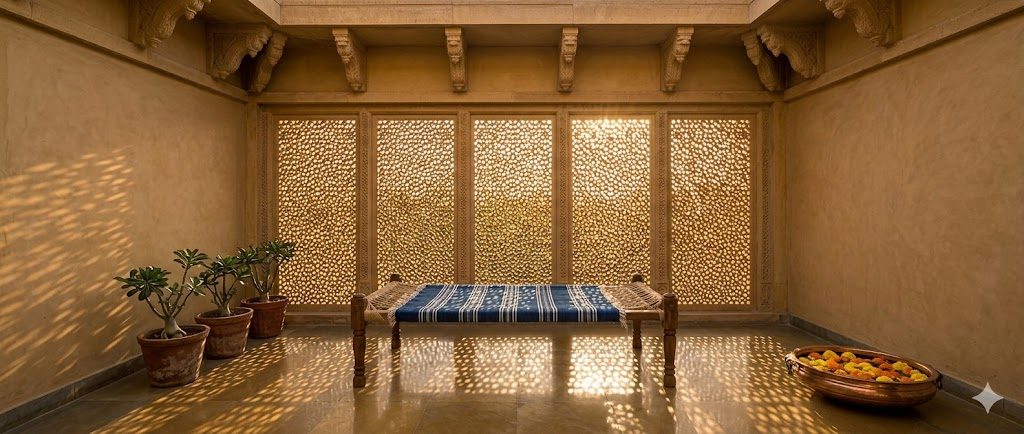
| West jaali terrace | 5 × 14 ft | Charpoy / evening sit-out, fully jaali-screened |
| Stairs continuing to terrace | 4 × 9 ft | South-west spine |
The west jaali terrace is the key biophilic + climatic element. The carved sandstone or pre-cast cement jaali (60–70% perforation) blocks ~85% of direct west sun while allowing breeze through. Behind it, the room temperature stays 4–6 °C below an equivalent west-glazed room.
Facade — Street View
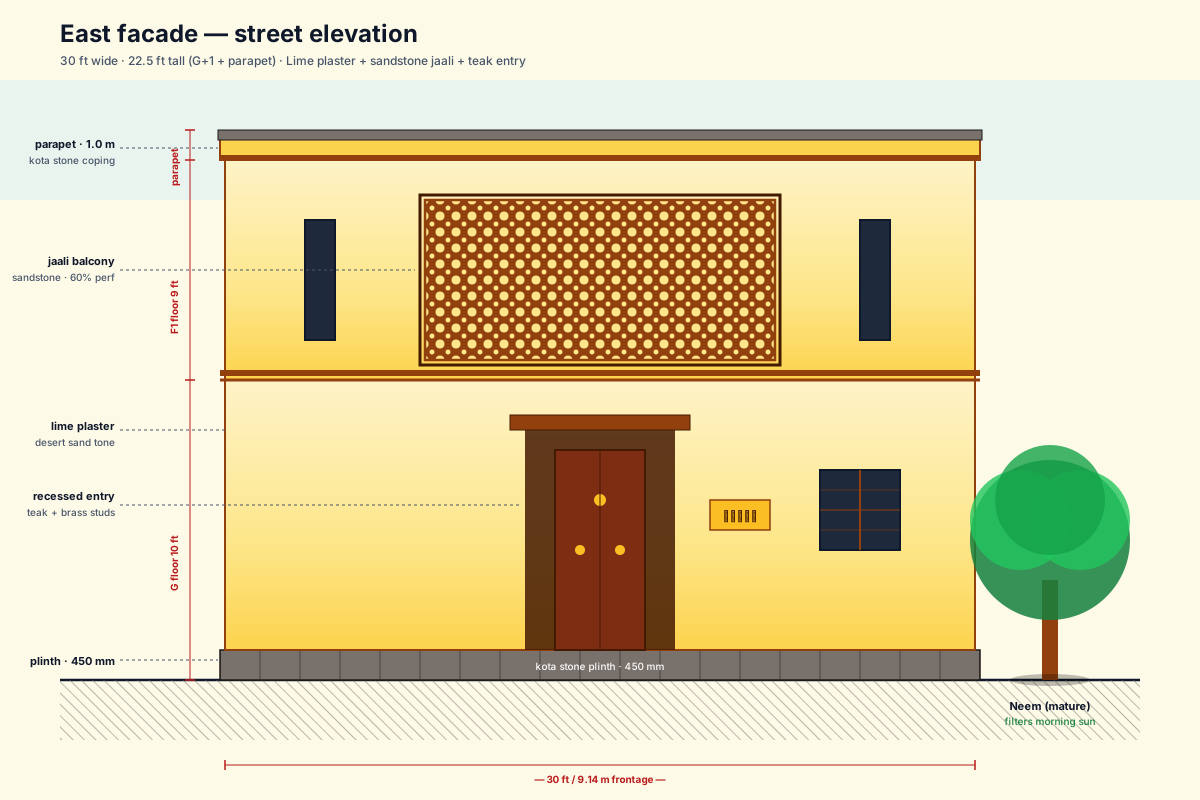
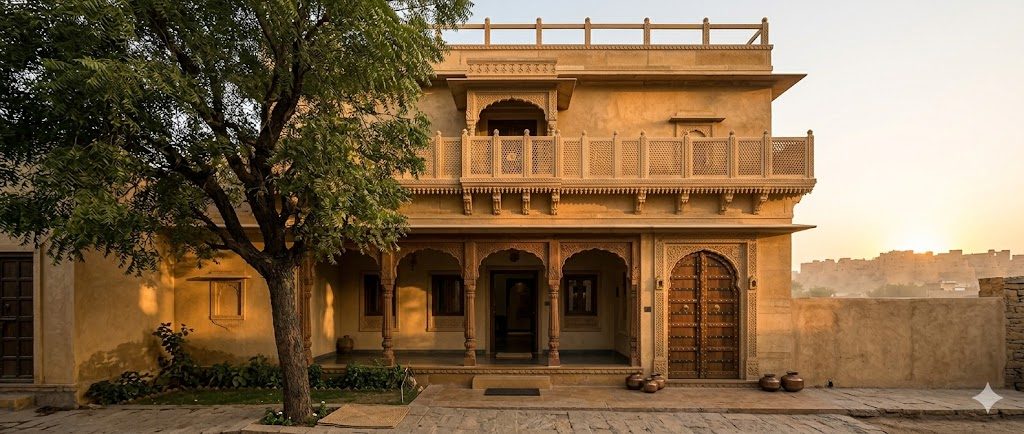
The east facade is deliberately restrained — a single recessed entry, a first-floor jaali balcony, lime-plastered walls in warm desert sand tones, and a parapet hiding the active roof. The composition reads as contemporary but the elements are vernacular.
Materials palette (facade):
- Walls — 230 mm AAC block + 25 mm lime plaster (thermal mass 0.42 W/mK · U-value 0.61)
- Jaali panel — pre-cast cement or local sandstone, 50 mm thick, 60% perforation, IS 1077 compliant
- Door — solid teak, 50 mm, brass studs, IS 1003 compliant
- Parapet — 1 m high, capped with kota stone coping
Section — Climate Logic
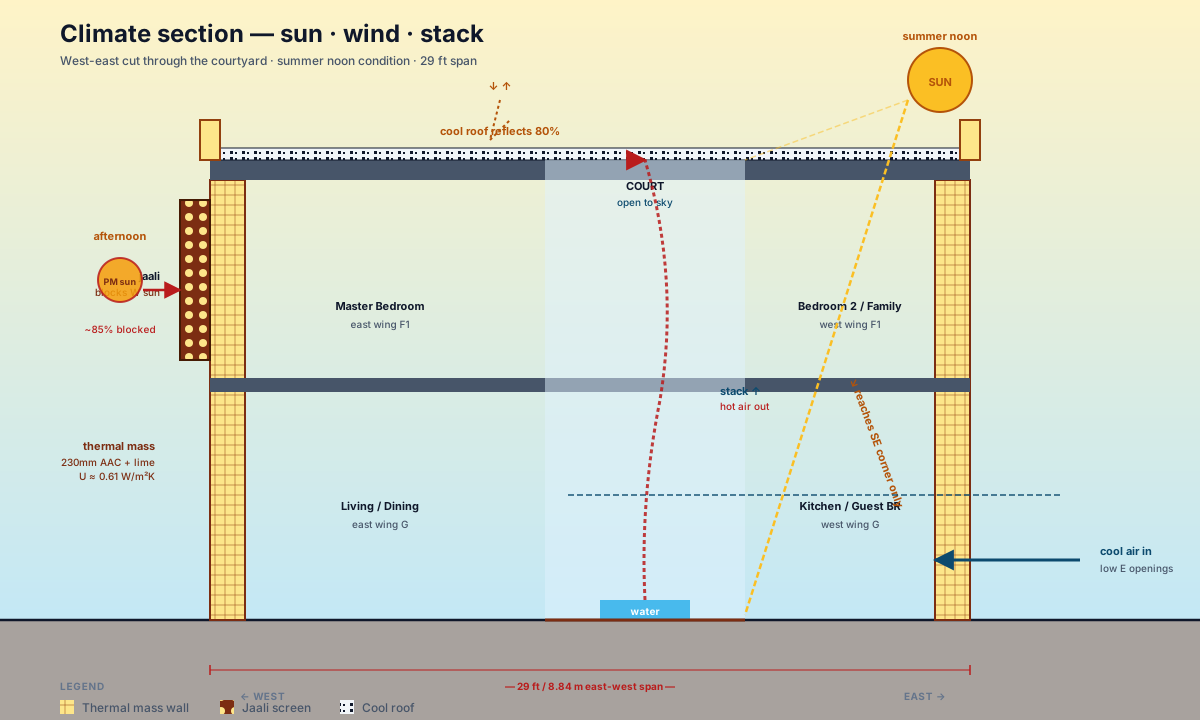
The section makes the passive strategy legible.
Summer (April–September)
| Time | Sun Position | Court Behaviour | Indoor Strategy |
|---|---|---|---|
| 06:00–09:00 | Low east | Direct sun hits court floor briefly | Cool air pulled in via east windows |
| 09:00–11:30 | Climbing | Court self-shades from west wall | Stack ventilation active |
| 11:30–14:00 | Near zenith | Direct sun on 30% of court floor | Water bowl evaporative cooling peak |
| 14:00–17:00 | High west | West jaali blocks 85% | Thermal mass dampens swing |
| 17:00–19:00 | Setting west | Jaali back-lit, evening glow | Open all windows for night flush |
| 19:00–06:00 | Night | Court radiates to clear sky | Night flush cooling stores in mass |
Winter (November–February)
In Jaisalmer, January lows can drop to 6 °C. The same thermal mass that keeps heat out in summer keeps it in during winter. The east morning sun penetrates deeper (low angle) and warms the courtyard floor + south rooms. The west jaali is partially closed with timber shutters that retain seasonally.
Biophilic Score — 82 / Exemplary
This design scores 82 / 100 on the 16-criterion biophilic framework (see Biophilic Score Calculator).
| Dimension | Score | Highlights |
|---|---|---|
| Nature in the Space | 38 / 40 | Courtyard daylight, stack ventilation, indoor planting, water bowl, passive thermal — all 9-weighted criteria score 4–5 |
| Natural Analogues | 25 / 30 | Lime plaster, kota stone, sandstone jaali, terracotta, teak; missed only on synthetic-fibre rug (lowered NAA02 from 5 to 3) |
| Nature of the Space | 19 / 30 | Strong courtyard (NOS05 = 5), strong threshold via porch + verandah; lower scores on prospect (compact plan) and mystery (one straight-line entry) |
Strategy classification: Courtyard-led · Predominantly natural/local. This is the prototype Indian biophilic typology — the courtyard does most of the work and the materials reinforce it.
FAR / Setback Compliance Snapshot
The plan complies with the following representative jurisdictions:
| City | FAR Used | FAR Allowed | Notes |
|---|---|---|---|
| Jodhpur (UDH Rajasthan) | 1.50 | 1.50 (≤ 200 sqm) | Front setback 1.5 m + rear 1.0 m + sides 0.9 m, OK |
| Jaisalmer | 1.50 | 1.50 | Heritage zone may require sandstone facade — already specified |
| Bhuj (GUDM Bye-laws) | 1.55 | 1.80 (≤ 250 sqm) | 0.25 FAR headroom for future utility room or AC platform |
| Ahmedabad (CGDCR 2017) | 1.55 | 1.80 (R-1) | Front 3 m required → re-plan front setback for Ahmedabad use |
Always verify the latest local building bye-law before submitting drawings — see our Setbacks Across India guide and FSI / FAR Computation guide.
Cost — Indicative
For 1,400 sqft built-up at hot-dry zone 2026 prices:
| Tier | Per sqft (₹) | Total (₹ L) | Includes |
|---|---|---|---|
| Basic | 1,800 | 25.2 | Standard finishes, ceramic flooring, AAC + lime, no jaali |
| Recommended | 2,200 | 30.8 | Kota + sandstone, teak doors, hand-carved jaali, lime, cool roof |
| Premium | 2,600 | 36.4 | Kota inlay, brass detailing, finer jaali, solar PV 3 kWp, polished IPS |
Headroom items not in cost:
- Furniture and soft furnishings
- Compound wall + gate
- Internal landscaping (₹50,000–₹1.5 L for the courtyard treatment + outdoor planting)
- Solar PV beyond 3 kWp
Materials Schedule
| Element | Specification | Reason |
|---|---|---|
| External walls | 230 mm AAC block + 25 mm lime plaster | Thermal mass + low embodied carbon; lime breathes |
| Internal walls | 115 mm AAC + 12 mm POP | Light, fast |
| Roof | RCC slab + 75 mm EPS insulation + 50 mm broken china mosaic cool roof | Reflects > 80% solar |
| Flooring (ground) | 18 mm kota stone, polished | Cool underfoot, regional, ages well |
| Flooring (first) | 18 mm Indian green marble | Cooler than tile; sourced from Rajasthan |
| Bathroom walls + floor | 12 mm ceramic + 12 mm Indian granite | Durable, water-resistant |
| Doors | 50 mm solid teak + brass | IS 1003 compliant, long-life |
| Windows | UPVC casement + low-E DGU on east, single on north + jaali on west | Climate-tuned by orientation |
| Jaali | Pre-cast cement or hand-carved sandstone, 60% perforation | Vernacular, shade + breeze |
| Courtyard floor | 25 mm kota with brass inlay strip + central water bowl in stone | Vernacular + evaporative |
Plant Palette
Drought-tolerant, native to Thar / arid plateau:
- Courtyard: Tulsi (entry), money plant (vertical, north wall), one Boganvillea (south corner, blooms April-October)
- North balcony: Neem (small) in 24" pot, rosemary herbs, curry leaf
- West jaali terrace: Adenium, succulent collection in terracotta
- Front setback: One mature Neem (Azadirachta indica), Cassia auriculata hedge
- Rear utility yard: Lemon, drumstick (Moringa)
Vastu Notes
| Element | Direction | Notes |
|---|---|---|
| Entry | East | Excellent |
| Kitchen | South-East | Exact Vastu fit |
| Pooja niche | North-East | Exact Vastu fit |
| Master bedroom | South-West (first floor) | Exact Vastu fit — heavy thermal mass on SW |
| Stairs | South | Acceptable |
| Toilets | NW (ground) + SE-adjacent (first) | NW good; SE adjacency is mitigated by buffer wall to kitchen |
| Brahmasthan | Centre courtyard | Open to sky — perfect |
Rating: Excellent — this plan satisfies the major Vastu directional rules without compromising the climatic strategy. See Vastu for Modern Homes.
Buildability — What to Verify Before Construction
This is a near-buildable design — the configuration, dimensions, FAR, and setback are valid for the cited jurisdictions. Before construction you will need:
1. Site-specific structural design by a licensed RCC consultant — column / beam sizing depends on local soil bearing capacity (typically 100–150 kPa for Rajasthan sandy soil). See Soil Bearing Capacity guide.
2. MEP layout by a licensed contractor — electrical SLD, plumbing isometric, drainage line.
3. Local plan sanction — submission to municipal corporation (Jodhpur Development Authority, Bhuj Area Development Authority, etc.) per the Building Plan Approval guide.
4. Soil testing at the site (₹15,000–₹35,000) — confirms bearing capacity and any expansive-soil mitigation.
5. Solar PV feasibility — terrace size accommodates 5 kWp; check local DISCOM net-metering policy.
6. Water harvesting — Rajasthan UDH mandates rainwater harvesting for plots ≥ 200 sqm; this plot is below threshold but voluntary harvesting is wise. See Rainwater Harvesting guide.
Reading Pairings
- Vastu Shastra for Modern Homes
- Sustainable Home Design India
- Passive Design — India Climate Zones
- Cross-Ventilation in Indian Homes
- Functional House Layout — India
- Pooja Room Design
Tools to Use With This Plan
- Vastu Compliance Checker — verify your plot orientation matches the plan
- Biophilic Score — score variations you make to this design
- Cost Calculator — adjust the cost band for your city
- Sun Path Analyzer — visualise sun on a Jaisalmer-latitude site
Author's note: The hot-dry climate is the most punishing in India and also the one with the strongest passive solution. This plot size — 30 × 40 ft — is the threshold below which a true central courtyard becomes architecturally tight; below 25 × 30 ft, the courtyard either shrinks to a lightwell or sacrifices a usable room. At 1200 sqft, the haveli archetype still works if the buildable envelope is honest with itself. Compromise the courtyard and you lose the whole passive strategy.
Disclaimer: This is a reference design intended to illustrate climate-responsive biophilic design at a 1200 sqft plot. Local building bye-laws, soil conditions, and statutory approvals must be verified by a licensed architect and structural engineer before construction. Costs are indicative for 2026 in the cited regions and vary by site, contractor, and finish choices.
Related Guides — Deep-dive reading
Orientation, Light & Views: Designing With Your Space, Not Against It
How reading your plot's sun, breeze and views — and placing each room on the right face — gives an Indian home that is cooler, brighter and quietly right, instead of one that fights its site forever.
Design PrinciplesUnderstanding Sun Path Analysis for Your Home
How the sun actually moves over an Indian site through the day and the year — and why that single fact quietly decides where your kitchen, bedroom and living room should sit.
Site PlanningDesigning a Naturally Energy-Efficient Indian Home
Comfort first, gadgets last — passive design, orientation, insulation, ventilation and the climate wisdom that cuts Indian energy bills
SustainabilityRelated Tools — Try Free
Cross-Ventilation Analyzer
Estimate airflow and air changes per hour (ACH) from room size, window areas, layout, and local wind — with NBC 2016 Part 8 compliance check.
Ventilation CalculatorBrise-Soleil Visualizer
Interactive horizontal-louvre cut-off angle calculator — sun altitude, louvre depth, and spacing inputs with a live shadow preview. Computes θ = arctan(spacing/depth) for façade shading, ECBC envelope compliance, hospital daylight design, and tropical sun-control detailing.
Sun Shading ToolRainwater Tank Sizer
How big should your rainwater tank be? Computes annual harvest, recommended tank capacity in litres, water-bill savings, and payback — for 10 Indian cities.
RWH Calculator