
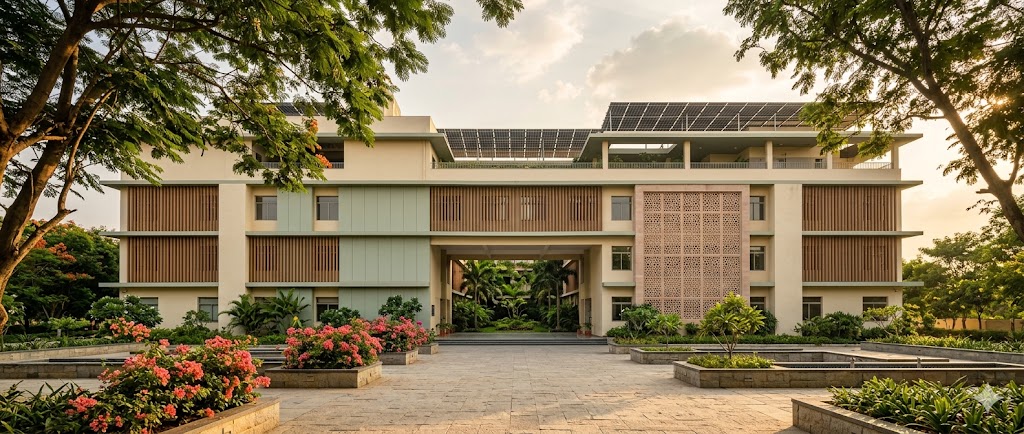
Hospital Façade & Daylight Design in India
An Architect's Working Reference — Climate-Responsive Envelope · India's Five Climate Zones · WWR by Programme · Daylight Strategy & Glare Control · Shading Device Library (Overhang · Fin · Jaali · Brise-Soleil · Verandah · BIPV) · Courtyard Organisation · ECBC 2017 Compliance · BIPV Integration · Cyclone-Zone Specs · Acoustic Envelope
Hospital architecture is fundamentally an envelope problem. The interior programme — patient rooms, OT suites, ICU, OPD — is broadly the same at any latitude, but the façade that wraps the programme must be radically different in Jaisalmer (Zone V hot-dry, 45°C summer) than in Trivandrum (hot-humid coastal, 90% RH, monsoon-heavy) than in Leh (cold high-altitude, −20°C winter). A single "Indian hospital façade" does not exist; the country's five climate zones each demand a distinct envelope strategy, and the architect who imports a glass-curtain-wall solution from international corporate practice produces a hospital that costs 30–40% more to operate and discomforts patients in ways that no amount of HVAC retrofit can fix.
This guide is the closer of the Studio Matrx healthcare architecture series back-of-house and architectural-typology cluster. It assumes the reader has read the pillar regulatory reference, the biophilic and healing environments guide, and the sustainable healthcare buildings guide. Here we focus on what is specific to hospital façade and daylight — the climate-zone-specific envelope strategy, the window-to-wall ratio (WWR) by programme, the daylight zoning of hospital floor plans, the shading device library, the courtyard organisation patterns, the layered envelope section, ECBC compliance, BIPV integration, the cyclone-zone specifications, the acoustic envelope, the failure modes that recur across Indian projects, and the pre-design audit framework.
The position this guide takes is specific: hospital façade should be designed climate-first, not aesthetic-first. The aesthetic emerges from the climate response done well; an aesthetic imposed against the climate produces a building that is both visually arbitrary and operationally costly. The architect who internalises the climate-zone strategy, sizes WWR per programme, employs the shading device appropriate to orientation, organises courtyards for cooling and healing, layers the envelope through five distinct strata, achieves ECBC compliance as a starting point not an end point, integrates BIPV for daytime grid offset, and treats the cyclone-zone façade specification as non-negotiable in coastal India — produces a hospital that reads as architecturally serious and operates as energy-efficient. The architect who shortcuts these produces an envelope that the patient experiences as discomfort and the operator experiences as cost.
"India does not have one climate. It has thirty. The hospital façade that pretends otherwise has been designed by neither the climate nor the architect, but by an imported software preset." — Ar. Charles Correa (1930–2015), architect, paraphrased remark on Indian healthcare envelope
"Daylight in healthcare is not architectural decoration. It is clinical medicine. The window over the bed is part of the treatment, not part of the cost." — Roger Ulrich (b. 1946), environmental psychologist, paraphrased from his 1984 Science paper
1. Why Hospital Envelope is its Own Typology
Five characteristics make hospital envelope design distinct from general commercial or residential architecture:
- 24×7 operation. A hospital runs continuously. Heat gain in summer cannot be addressed by closing the building at 6 pm; the AC runs all night. Heat loss in winter cannot be tolerated; patients are immobile and cannot put on a sweater. The envelope must perform across the entire daily and seasonal cycle.
- Mixed thermal needs. The same hospital has rooms that need to be cool (OR, ICU at 22°C), rooms that need to be warmer (newborn nursery 26°C), and rooms that need to be cooler-and-drier (BMT). The envelope strategy cannot optimise for one set-point.
- Daylight as clinical instrument. Patient rooms, family lounges, OPD waiting, and reading rooms benefit from daylight (Ulrich evidence: faster recovery, lower analgesia request, improved staff satisfaction). The envelope must let daylight in for these spaces while excluding it from OT and imaging.
- Glare and clinical workspaces. Reading rooms (radiology), nurse stations, and computer-heavy spaces are intolerant of glare. The envelope must control daylight quantity and direction for these spaces.
- Acoustic and cyclone exposure. Urban hospitals face traffic noise; coastal hospitals face cyclone wind loads up to 55 m/s basic wind speed. The envelope is the acoustic and structural barrier; both must be addressed.
The composite effect is that hospital envelope is a multi-objective optimisation: thermal performance + daylight admission + glare control + acoustic isolation + structural cyclone resilience + BIPV potential + cultural appropriateness. No single architectural rule satisfies all simultaneously; the architect synthesises a strategy from many parts.
2. India's Five Climate Zones — Envelope Strategy
India's five climate zones each demand a distinct envelope strategy. The same hospital programme produces fundamentally different facades in different zones.
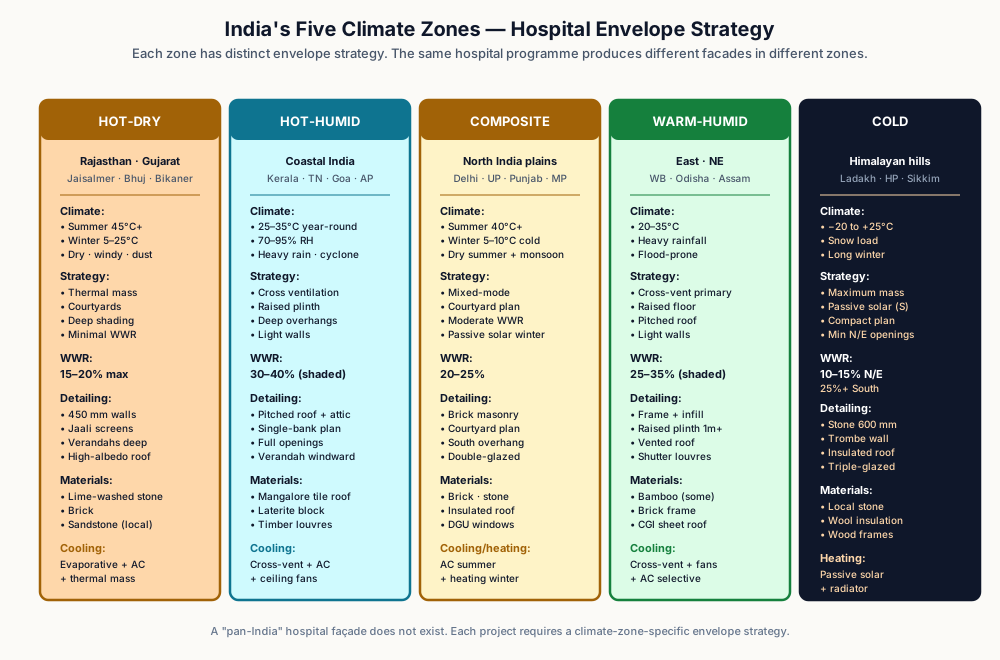
Hot-Dry (Rajasthan, Gujarat, parts of MP). Summer 45°C+; winter 5–25°C; dry, windy, dusty. Strategy: thermal mass, courtyards, deep shading, minimal WWR (15–20% max). Detailing: 450 mm walls, jaali screens, deep verandahs, high-albedo roofs. Materials: lime-washed stone, brick, local sandstone. Cooling: evaporative + AC + thermal mass.
Hot-Humid (Kerala, coastal AP, TN, Goa, coastal Maharashtra). 25–35°C year-round; 70–95% RH; heavy rain; cyclone exposure. Strategy: cross ventilation, raised plinth, deep overhangs, light walls (no thermal mass), WWR 30–40% (shaded). Detailing: pitched roof with vented attic, single-banked plan, full-height openings, verandah on prevailing-wind side. Materials: Mangalore tile, laterite, timber louvres. Cooling: cross-vent + AC + ceiling fans.
Composite (Delhi, UP, Punjab, Haryana, north MP). Summer 40°C+; winter 5–10°C cold; dry summer + monsoon. Strategy: mixed-mode operation, courtyard plan, moderate WWR (20–25%), passive solar in winter. Detailing: brick masonry, courtyard plan, south-facing overhangs, double-glazed windows. Materials: brick, stone, insulated roof, DGU. Cooling/heating: AC summer + heating winter.
Warm-Humid (West Bengal, Odisha, north-east, Assam). 20–35°C; heavy rainfall; flood-prone. Strategy: cross-vent primary, raised floor (1m+) against flooding, pitched roof, light wall, WWR 25–35% (shaded). Detailing: bamboo or RCC frame with infill, raised plinth, vented roof, shutter louvres. Materials: bamboo (some), brick frame, CGI sheet roof. Cooling: cross-vent + fans + selective AC.
Cold (Ladakh, Himachal hills, Sikkim, Arunachal, J&K, Uttarakhand high). −20 to +25°C; snow load; long winter. Strategy: maximum thermal mass, passive solar (south-facing), compact plan, minimum N/E openings, WWR 10–15% (N/E) but 25%+ (south for solar gain). Detailing: 600 mm stone walls, trombe wall, insulated roof, triple-glazed windows. Materials: local stone, wool insulation, wood frames. Heating: passive solar + radiator backup.
The architect's read: a "pan-India" hospital façade does not exist. Each project requires a climate-zone-specific envelope strategy. The architect's first deliverable is the climate response note identifying the zone, the dominant strategy, and the modifications to any standardised drawing required.
3. Window-to-Wall Ratio (WWR) — by Climate & Programme
WWR drives heat gain in summer and heat loss in winter. Each clinical space has its own optimal range. The matrix is non-negotiable.
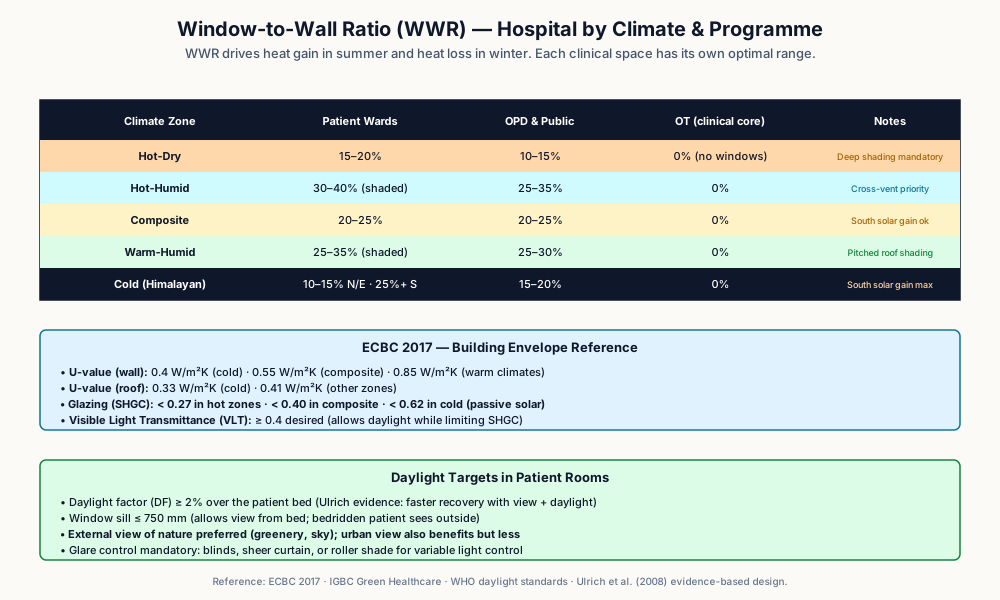
WWR by climate and programme:
| Climate Zone | Patient Wards | OPD & Public | OT (clinical core) | Notes |
|---|---|---|---|---|
| Hot-Dry | 15–20% | 10–15% | 0% (no windows) | Deep shading mandatory |
| Hot-Humid | 30–40% (shaded) | 25–35% | 0% | Cross-vent priority |
| Composite | 20–25% | 20–25% | 0% | South solar gain ok |
| Warm-Humid | 25–35% (shaded) | 25–30% | 0% | Pitched roof shading |
| Cold (Himalayan) | 10–15% N/E · 25%+ S | 15–20% | 0% | South solar gain max |
ECBC 2017 envelope reference:
- U-value (wall): 0.4 W/m²K (cold) · 0.55 W/m²K (composite) · 0.85 W/m²K (warm climates)
- U-value (roof): 0.33 W/m²K (cold) · 0.41 W/m²K (other zones)
- Glazing SHGC: < 0.27 in hot zones · < 0.40 in composite · < 0.62 in cold (passive solar permitted)
- Visible Light Transmittance (VLT): ≥ 0.4 desired (allows daylight while limiting SHGC)
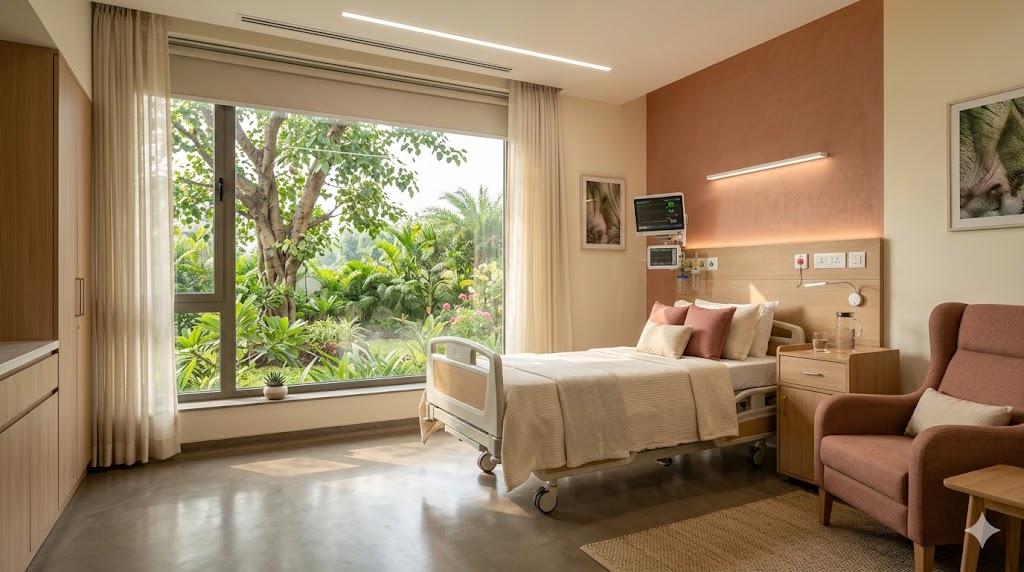
Daylight targets in patient rooms:
- Daylight factor (DF) ≥ 2% over the patient bed (Ulrich 1984: faster recovery with view + daylight)
- Window sill ≤ 750 mm (allows view from bed; bedridden patient sees outside)
- External view of nature preferred (greenery, sky); urban view also benefits but less
- Glare control mandatory: blinds, sheer curtain, or roller shade for variable light
4. Daylight Zoning — Hospital Floor Plan Strategy
Hospital floor plans should be daylight-zoned: high daylight in patient and public areas, controlled daylight in clinical zones, no daylight in OT and imaging.
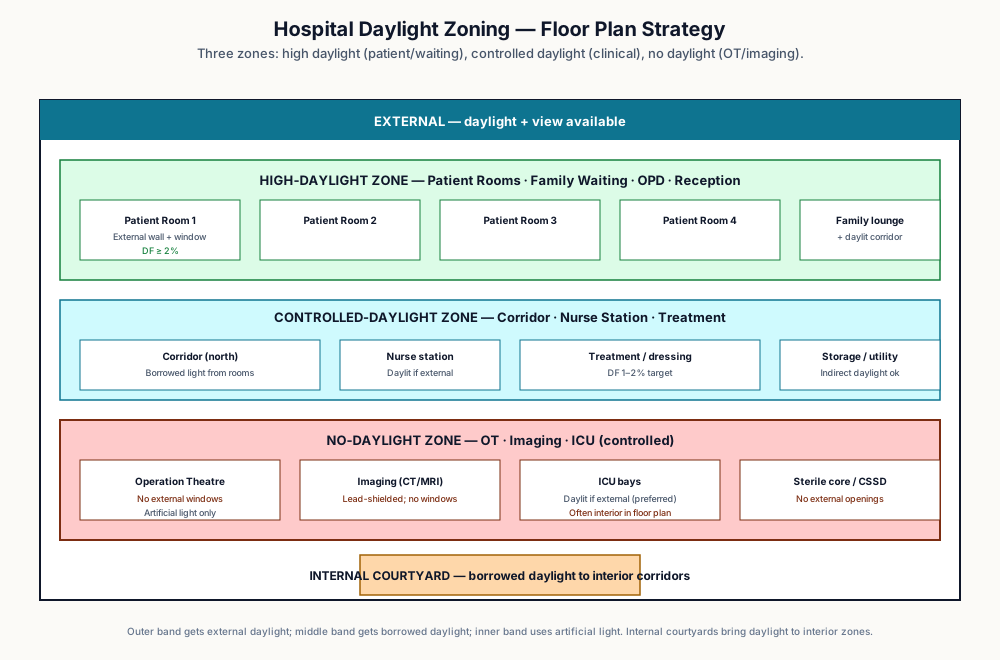
The three zones:
High-daylight zone — Patient Rooms · Family Waiting · OPD · Reception. Outer band of the floor plan. External walls with windows. DF ≥ 2% target. Patient bed faces window; family lounge has view; OPD waiting is naturally lit. The cooling cost premium (vs internal core) is offset by patient outcomes and operational savings on artificial lighting.
Controlled-daylight zone — Corridor · Nurse Station · Treatment. Middle band. Borrowed daylight from patient rooms, internal courtyards, or skylights. DF 1–2% target. Adequate for circulation and routine clinical work; not adequate for fine inspection (which moves to dedicated examination rooms).
No-daylight zone — OT · Imaging · ICU (controlled) · Sterile core / CSSD. Innermost band of the floor plan. Artificial light only. The OT and imaging rooms cannot have external windows (sterile/shielded requirements). The sterile core and CSSD are similarly internal. ICU is increasingly daylit where the floor plate allows external location.
The internal courtyard as daylight enabler. Where the floor plate is too deep for external daylight to reach all patient rooms, an internal courtyard brings daylight to interior corridors and to rooms facing the court. The courtyard does double duty — daylight admission + climate cooling (stack effect) + healing landscape.
5. Shading Device Library
Six shading typologies cover the hospital façade requirements. Selection by climate, orientation, and architectural language.
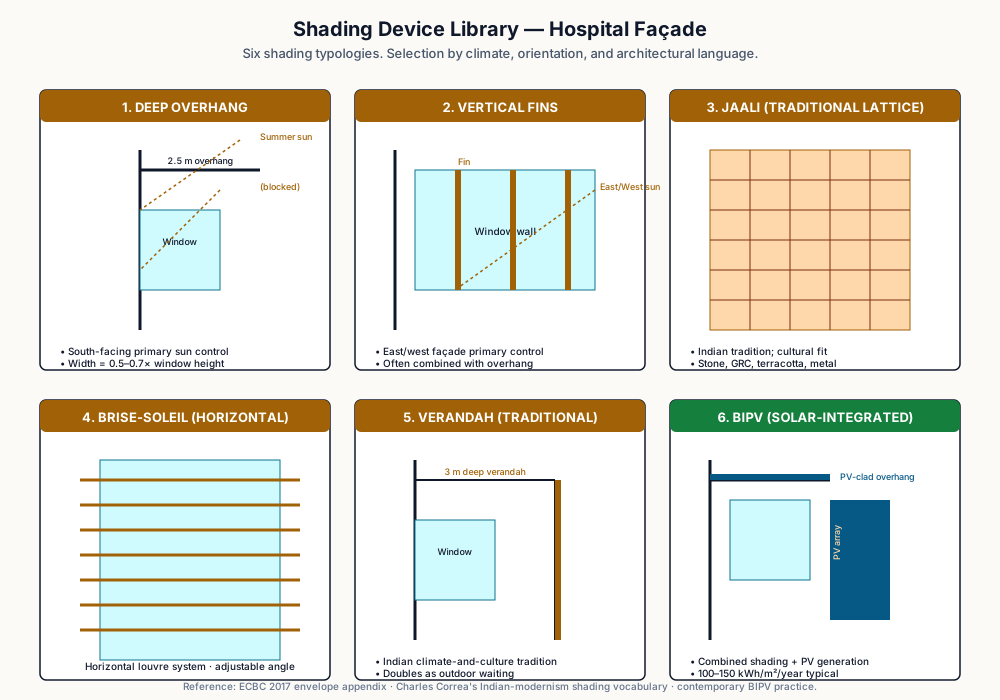
1. Deep Overhang. Horizontal overhang above window. Best for south-facing primary sun control (in northern hemisphere). Width = 0.5–0.7× window height typically. Cuts summer high-angle sun; admits winter low-angle sun.
2. Vertical Fins. Vertical projecting fins on east/west façade. Best for east/west sun (low-angle morning/evening sun that horizontal overhangs cannot block). Often combined with horizontal overhang for combined east/south or west/south façades.
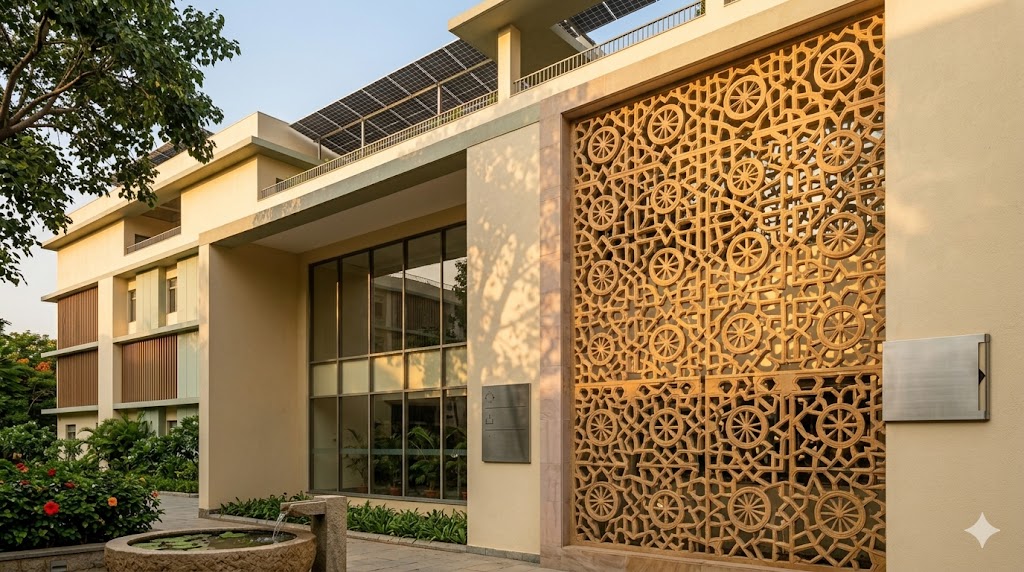
3. Jaali (Traditional Lattice). Indian tradition — perforated stone, GRC, terracotta, or metal screens. Cultural fit; visual privacy; partial sun control. Modern jaalis (parametrically designed) are increasingly used as iconic façade elements at premium hospitals (Apollo, NIMHANS).
4. Brise-Soleil (Horizontal Louvres). Horizontal louvre system; adjustable angle for seasonal control. Le Corbusier's invention; well-suited to all zones except cold. Common at large institutional hospitals.
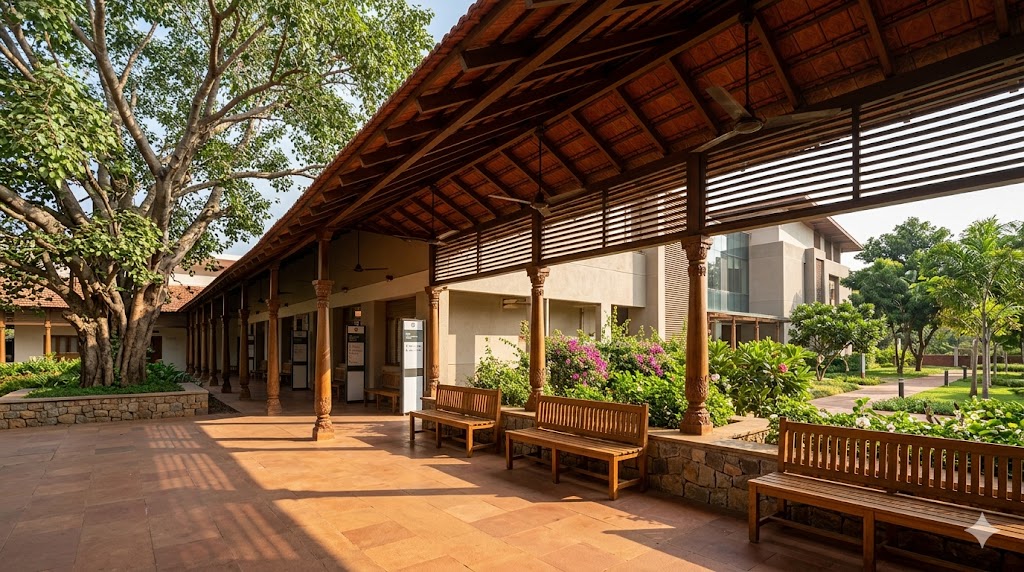
5. Verandah (Traditional Indian). Deep (3 m+) shaded zone outside the building skin. Indian climate-and-culture tradition. Doubles as outdoor waiting space at OPD. Cooling effect significant; hospitality value high.
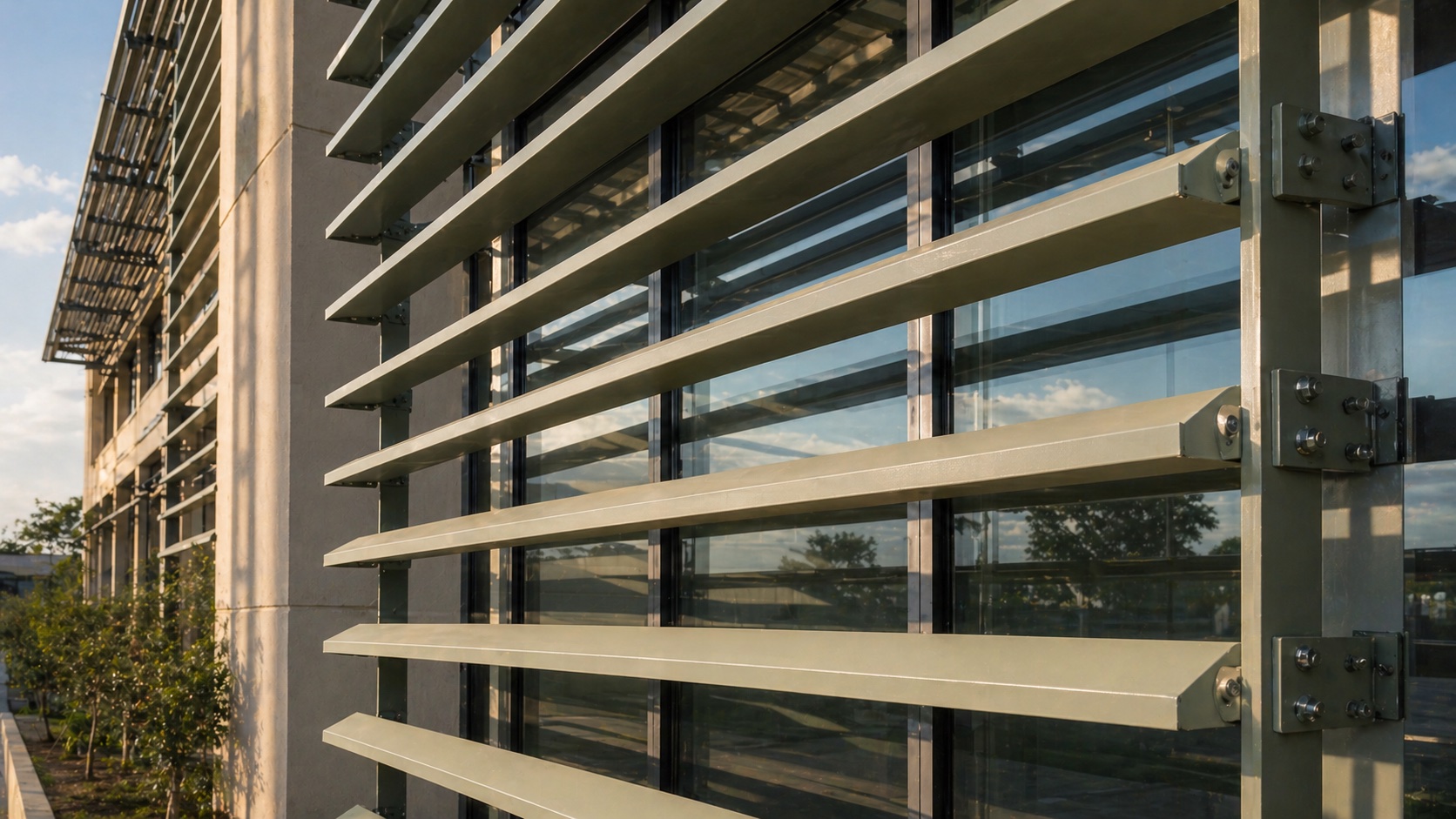
6. BIPV (Solar-Integrated). Photovoltaic panels mounted as shading devices — over windows as overhangs, on east/west façades as vertical PV walls, over parking as solar canopies. Combined shading + PV generation. 100–150 kWh/m²/year typical generation.
Selection rules:
- South façade (northern hemisphere): deep overhang
- East/west façade: vertical fins (or BIPV vertical panels)
- North façade: minimal shading (no direct sun)
- Hot-dry zone: jaali traditional
- Hot-humid zone: deep verandah
- Cold zone: minimal shading; admit south sun
- Premium / iconic: BIPV or parametric jaali
6. Courtyard Organisation
The Indian courtyard is climate technology and healing instrument simultaneously. Three patterns work for hospital scale.
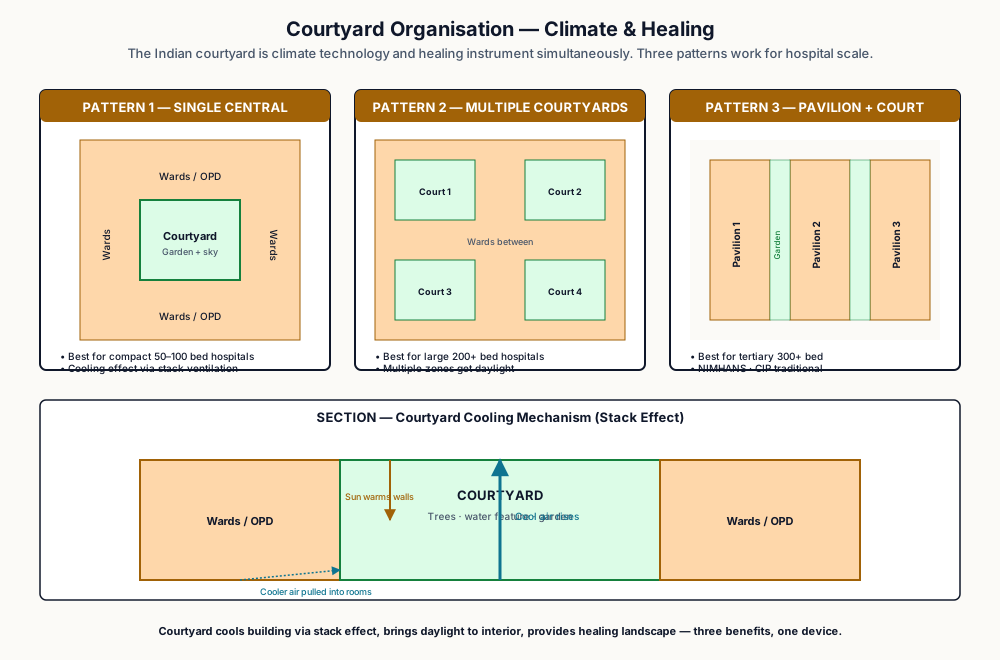
Pattern 1 — Single Central Courtyard. Best for compact 50–100 bed hospitals. One courtyard at the centre of the building footprint, surrounded by wards/OPD on all four sides. Cooling effect via stack ventilation; daylight to inner corridors; communal garden.
Pattern 2 — Multiple Courtyards. Best for large 200+ bed hospitals. Two or four courtyards distributed in the floor plate. Multiple zones get daylight; courtyards can specialise (waiting garden, healing garden, staff courtyard, paediatric play court).
Pattern 3 — Pavilion + Courtyards. Best for tertiary 300+ bed hospitals. Linear or radiating pavilions separated by courtyards/gardens. The NIMHANS Bengaluru and CIP Ranchi traditional model. Each pavilion gets daylight from two sides; courtyards provide cooling and landscape.
The courtyard cooling mechanism. Solar gain warms exterior walls; warm air rises in the courtyard; cooler air from interior rooms flows in to replace it. Stack ventilation cools the building passively. The effect is amplified by:
- Trees / shading in the courtyard (cools the air)
- Water feature (evaporative cooling)
- Tall courtyard (proportions favour stack effect)
- Open top (allows hot air to escape)
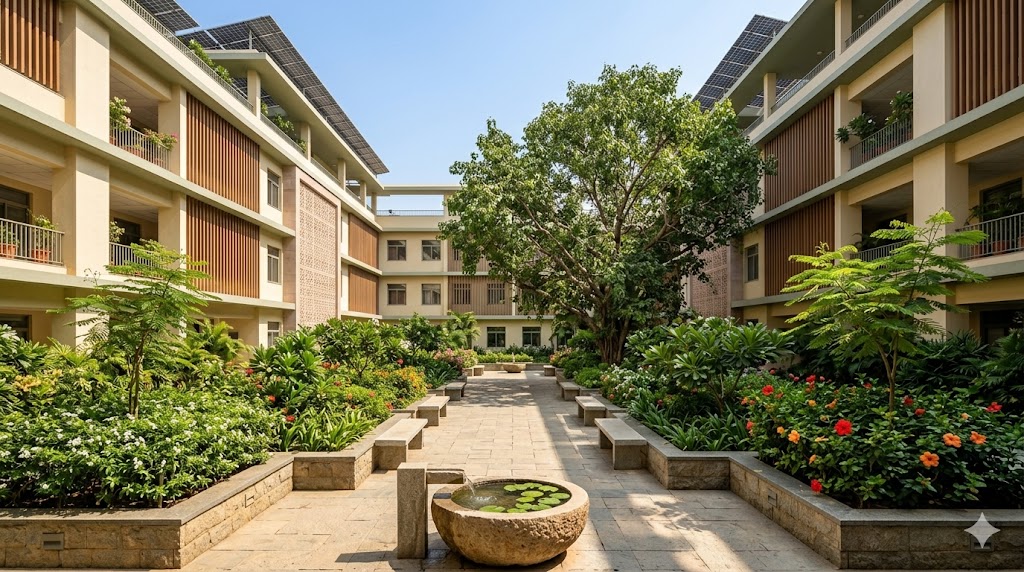
The healing garden role. Patients, families, and staff use the courtyard for psychological rest. Ulrich's research shows view of nature reduces patient pain medication request by 7–12%. Indian families typically spend hours in hospital with patients; the courtyard absorbs them and reduces stress on the indoor wards.
7. The Layered Envelope Section
The hospital envelope is best understood as five layers from inside to outside. Each addresses a specific environmental load.
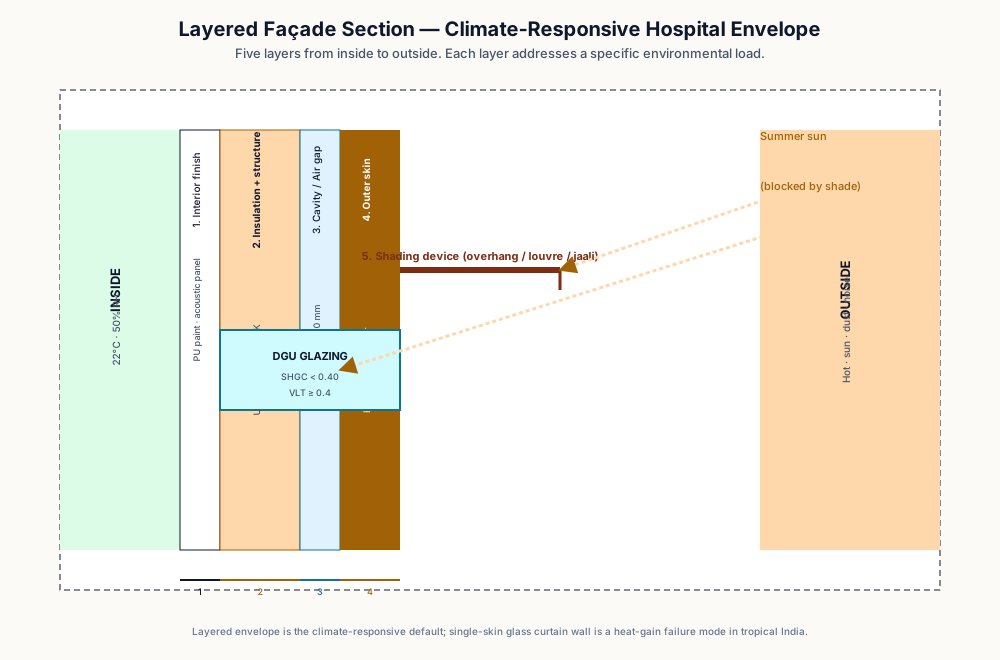
Layer 1 — Interior finish. PU paint, acoustic panel, washable surface. Indoor air quality interface. Standard hospital wall finish.
Layer 2 — Insulation + Structure. Brick / concrete / steel frame with insulation. Carries structural load; provides U-value performance. ECBC target: 0.55 W/m²K typical; 0.4 in cold zones.
Layer 3 — Cavity / Air Gap. 50–100 mm air gap between inner structure and outer skin. Ventilated cavity dissipates rain water; provides thermal break.
Layer 4 — Outer Skin. Brick veneer, stone cladding, render. Aesthetic surface; weathering protection. Climate-zone-specific material (lime stone for hot-dry, terracotta for hot-humid, etc.).
Layer 5 — Shading Device. Overhang, louvre, jaali, fin, or BIPV. The first line of solar control. Reduces SHGC at the source rather than relying on glazing.
Glazing within the assembly:
- DGU (Double Glazed Unit) with low-e coating; SHGC < 0.40 in composite; VLT ≥ 0.4
- Triple-glazed in cold zones; SHGC < 0.62 (passive solar permitted)
- Laminated in cyclone zones (mandatory) and at AERB-shielded rooms
- Fritted for selective light control on large vision panels
The single-skin glass curtain wall failure. A glass curtain wall without external shading (popular in 2000s corporate architecture) is a heat-gain failure mode in tropical India. SHGC at clear glass = 0.86; 50% WWR with clear glass = effective SHGC contribution of 0.43 — far above ECBC 0.27 hot-zone limit. The glass curtain wall should be reserved for north façades and small areas; tropical Indian hospitals should have layered envelopes throughout.
8. ECBC Compliance + BIPV Integration
ECBC 2017 sets envelope minima; IGBC + Solar PV go beyond. BIPV (façade + roof) targets 100% daytime grid offset.
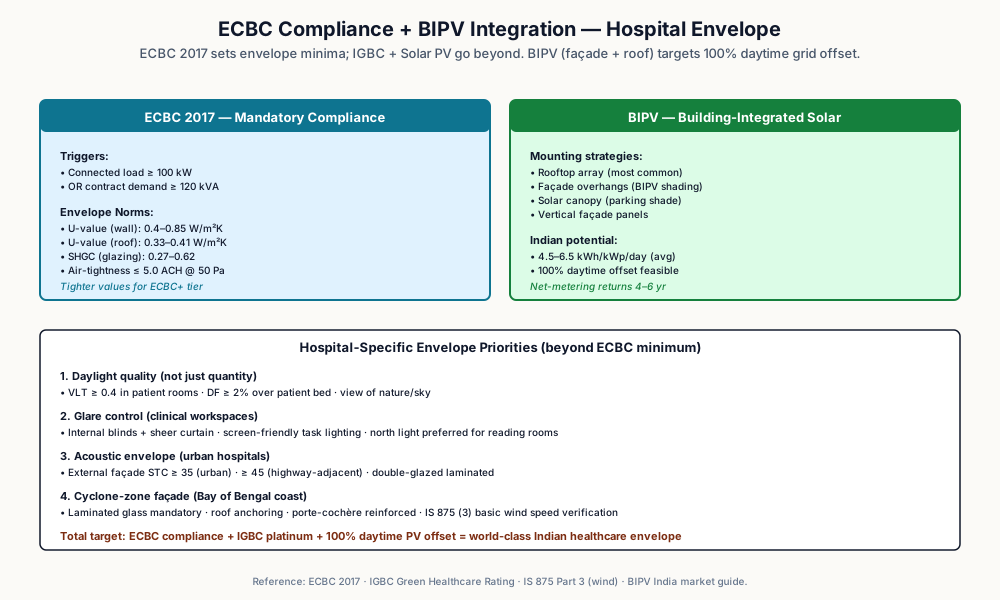
ECBC 2017 — Mandatory Compliance. Triggers: connected load ≥ 100 kW, OR contract demand ≥ 120 kVA. Most hospitals at SDH tier and above are ECBC-required. Envelope norms covered above; air-tightness ≤ 5.0 ACH @ 50 Pa.
BIPV — Building-Integrated Photovoltaic. Mounting strategies:
- Rooftop array — most common; 100–200 kW typical for tertiary hospitals
- Façade overhangs — BIPV-clad overhangs combine shading + generation
- Solar canopy — parking shade structures with PV; significant generation potential
- Vertical façade panels — east/west walls with vertical PV; lower efficiency but architectural integration
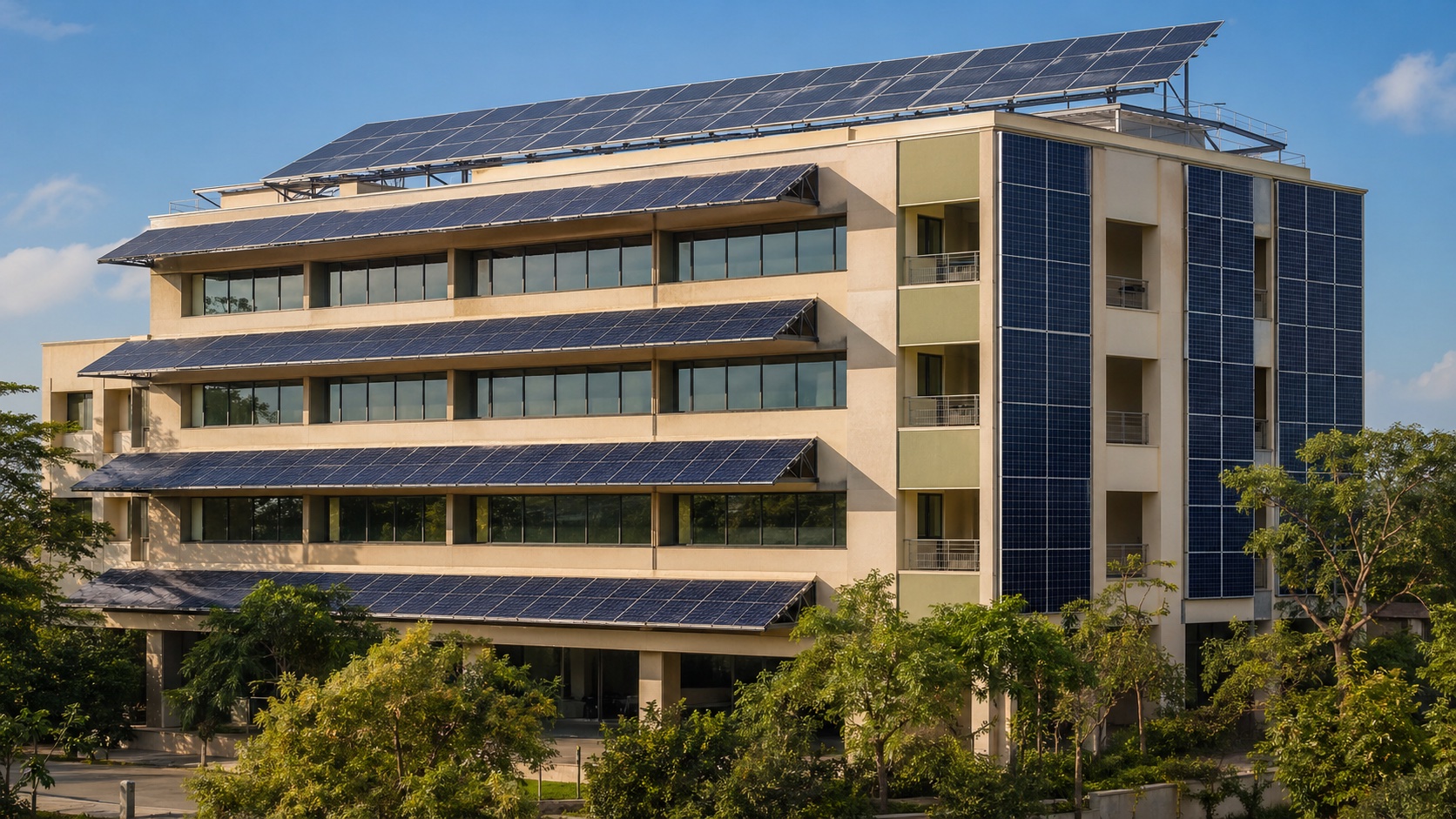
Indian solar potential. 4.5–6.5 kWh/kWp/day average; 100% daytime offset feasible for medium-tier hospitals; net-metering returns capital in 4–6 years.
Hospital-specific envelope priorities (beyond ECBC minimum):
1. Daylight quality (not just quantity) — VLT ≥ 0.4 in patient rooms; DF ≥ 2% over patient bed; view of nature/sky
2. Glare control (clinical workspaces) — internal blinds + sheer curtain; screen-friendly task lighting; north light preferred for radiology reading rooms
3. Acoustic envelope (urban hospitals) — external façade STC ≥ 35 (urban), ≥ 45 (highway-adjacent); double-glazed laminated
4. Cyclone-zone façade (Bay of Bengal coast) — laminated glass mandatory; roof anchoring per IS 875 (3); porte-cochère reinforced
Total target: ECBC compliance + IGBC platinum + 100% daytime PV offset = world-class Indian healthcare envelope.
9. Common Failure Modes — Hospital Façade Specific
A pattern audit of Indian hospital façade projects reveals recurring failures:
| # | Failure Mode | Root Cause | Consequence | Prevention |
|---|---|---|---|---|
| 1 | Glass curtain wall on tropical Indian site | Imported corporate aesthetic | Heat gain · 30–40% energy cost premium | Climate-zone-specific envelope from concept |
| 2 | WWR exceeds ECBC limit | Aesthetic-driven | Non-compliance · cooling cost | Calculate WWR before façade design |
| 3 | No external shading on south/east/west | Cost-driven | Direct sun on glazing · glare | Shading device library applied |
| 4 | Internal blinds without external shading | Generic spec | Heat already inside; blinds only address glare | External shading + internal blinds combined |
| 5 | Glazing SHGC > 0.40 in hot zone | Generic glass spec | ECBC fail; cooling cost | SHGC-specified glass at concept |
| 6 | Patient room window sill > 900 mm | Generic spec | Bedridden patient cannot see view | Sill ≤ 750 mm |
| 7 | OT with external windows | Brief overlooked sterile requirement | Cannot maintain ISO 7 | OT in interior core |
| 8 | Internal courtyard absent in deep floor plate | Massing-driven | Inner corridors dark · operational lighting cost | Courtyard at concept |
| 9 | Cyclone laminated glass missing in coastal site | Cost-driven | Glass shatters in cyclone · staff/patient injury | IS 875 (3) verification + laminated mandatory |
| 10 | Acoustic STC < 35 on urban façade | Generic single-glazed | Patients hear traffic; sleep disruption | DGU laminated for urban frontage |
| 11 | BIPV not in scope despite empty roof | Brief overlooked | Daytime grid dependence | BIPV at concept |
| 12 | West-facing patient rooms without fin shading | Generic façade design | Afternoon glare + heat in patient rooms | Vertical fins on west |
| 13 | Cold-zone hospital with low-WWR south wall | Generic Indian template | No passive solar in winter; high heating cost | South WWR 25%+ in cold zones |
| 14 | Verandah omitted in hot-humid zone | Generic envelope | OPD waiting in sun/rain | Verandah non-negotiable in tropical zones |
| 15 | Roof not insulated to ECBC | Cost-driven | Top floor uncomfortable; AC cost on top floor | Roof U-value 0.41 minimum |
10. Pre-Design Audit Framework for Hospital Façade Briefs
A 12-question audit at concept stage. Three or more "no" answers indicate the brief is not façade-ready.
| # | Audit Question | Why It Matters | Required Output |
|---|---|---|---|
| 1 | Is the climate zone identified? | All envelope decisions follow | Climate response note |
| 2 | Is WWR calculated per programme (ward / OPD / OT)? | ECBC + clinical compliance | WWR table |
| 3 | Is the daylight zoning of floor plan declared? | Outer / middle / inner band logic | Daylight zoning plan |
| 4 | Is the shading device strategy declared per orientation? | Sun control | Shading library applied |
| 5 | Is the courtyard organisation declared? | Climate + healing | Courtyard strategy |
| 6 | Is the layered envelope section drawn? | Performance | Five-layer section |
| 7 | Is glazing SHGC + VLT specified per ECBC? | Code compliance | Glazing schedule |
| 8 | Is U-value (wall + roof) specified per ECBC? | Code compliance | Insulation schedule |
| 9 | Is BIPV scope declared (rooftop / façade / canopy)? | Daytime grid offset | BIPV plan |
| 10 | Is acoustic envelope spec defined (urban / highway)? | Patient sleep | Acoustic schedule |
| 11 | Is cyclone-zone laminated glass specified (coastal)? | Storm resilience | Laminated glass scope |
| 12 | Is patient room window sill ≤ 750 mm? | View from bed | Window detail |
11. The Architect's Façade-Specific Compliance Deliverables
Beyond general healthcare deliverables (see pillar reference), the façade-specific deliverables are:
| # | Deliverable | Recipient | Stage |
|---|---|---|---|
| 1 | Climate response note (zone + strategy) | Client | Concept |
| 2 | WWR table per programme zone | ECBC cell · Client | Preliminary |
| 3 | Daylight zoning floor plan | Client | Preliminary |
| 4 | Shading device specification per orientation | Detailing consultant | Detailed |
| 5 | Courtyard organisation drawings | Landscape consultant | Preliminary |
| 6 | Layered envelope section | Detailing consultant | Detailed |
| 7 | Glazing schedule (SHGC, VLT, type per zone) | Façade consultant | Detailed |
| 8 | Insulation schedule (wall + roof U-values) | Façade consultant | Detailed |
| 9 | ECBC compliance report | BEE / state ECBC cell | Pre-handover |
| 10 | BIPV layout (rooftop + façade + canopy) | Solar consultant | Detailed |
| 11 | Acoustic schedule (urban / highway façade) | Acoustic consultant | Detailed |
| 12 | Cyclone-zone laminated glass spec (coastal) | Façade consultant | Detailed |
| 13 | Patient room window detail (sill height + view) | Interior consultant | Detailed |
"The hospital façade is the architectural face that the city sees and the patient remembers. Get it right, and the building is a civic asset; get it wrong, and the building is an apology. The envelope is where seriousness is most visible." — Ar. B.V. Doshi (1927–2023), Pritzker laureate, paraphrased remark on healthcare projects
References
- Bureau of Energy Efficiency (2017) Energy Conservation Building Code 2017. New Delhi: Ministry of Power, Government of India.
- Bureau of Indian Standards (2015) IS 875 (Part 3): Code of Practice for Design Loads (Other than Earthquake) for Buildings and Structures, Part 3 — Wind Loads. New Delhi: BIS.
- Bureau of Indian Standards (2016) National Building Code of India 2016, Part 8 — Building Services; Part 11 — Approach to Sustainability. New Delhi: BIS.
- Charles Correa Foundation (2010) Charles Correa: A Place in the Shade — Essays on Indian Architecture. New Delhi: Penguin India.
- Doshi, B.V. (2011) Paths Uncharted. Ahmedabad: Vastu Shilpa Foundation.
- IGBC (2014) IGBC Green Healthcare Rating System. Hyderabad: Indian Green Building Council.
- Iyer, K. (2007) Boombay: From Precincts to Sprawl. Mumbai: Popular Prakashan.
- Krishan, A., Baker, N., Yannas, S. and Szokolay, S.V. (2001) Climate Responsive Architecture: A Design Handbook for Energy Efficient Buildings. New Delhi: Tata McGraw-Hill.
- Ulrich, R.S. (1984) 'View through a window may influence recovery from surgery', Science, 224(4647), pp. 420–421.
- Ulrich, R.S., Zimring, C., Zhu, X., DuBose, J., Seo, H.B., Choi, Y.S., Quan, X. and Joseph, A. (2008) 'A review of the research literature on evidence-based healthcare design', HERD: Health Environments Research & Design Journal, 1(3), pp. 61–125.
Author's Note: Hospital façade is where the climate-responsive architectural tradition of India meets the ECBC-driven contemporary practice. The author's intention with this guide is to support the architects who insist on climate-zone-specific envelope strategy from concept stage, who size WWR per programme, who employ the shading device library appropriately, who organise courtyards for both cooling and healing, who layer the envelope through five strata, and who go beyond ECBC compliance to deliver IGBC platinum + 100% daytime PV offset. The series will continue with deeper guides on individual envelope topics (passive cooling for hot-dry hospitals, cross-ventilation for hot-humid, BIPV-façade integration, jaali-screen detailing, and the parametric design of contemporary Indian shading devices).
Disclaimer: This article is for informational and educational purposes only. It does not constitute legal, regulatory, energy, structural, or professional architectural advice. Hospital façade design depends on site, climate zone, programme mix, ECBC compliance pathway, and applicable amendments at the time of design — all of which must be confirmed with the relevant statutory authorities (state ECBC cell, BIS, IGBC if pursuing certification), qualified façade and energy consultants, and qualified design consultants for the specific project. Statute references, U-values, SHGC values, WWR ratios, and infrastructure norms cited are indicative and subject to change. ECBC 2017, IS 875 Part 3, IGBC Green Healthcare, and other referenced standards are periodically revised; practitioners must verify current notifications before any binding design or construction commitment. Studio Matrx, its authors, and its contributors accept no liability for decisions made on the basis of the information contained in this guide, and recommend independent verification with the state ECBC cell, qualified façade consultants, and qualified design consultants before any binding project decision.
Interactive · Hospital facade orientation
N-facing · 35% glazing · DF 1.6% · Good clinical light
Patient-room facade direction
Typical patient-room WWR is 30-50%; ASHRAE 90.1 limits to 40% without trade-offs.
Target: ≥ 2% (NABH-preferred)
Target: ≤ 40 (low)
Target: ≤ 40 (manageable)
Target: ≥ 60 (good)
Verdict: Good clinical light
North-leaning facades: stable diffuse light, no direct sun, perfect for ward + ICU windows. Slightly lower DF — increase glazing if needed.
DF / solar / glare are first-pass estimates for north-Indian latitudes (~20-30°N). Detailed daylighting requires Climate Studio / Radiance simulation. Beauchemin's 1996 study showed sun-side rooms had 41% shorter cardiac LOS.
Export this guide
Related Guides — Deep-dive reading
Designing a Naturally Energy-Efficient Indian Home
Comfort first, gadgets last — passive design, orientation, insulation, ventilation and the climate wisdom that cuts Indian energy bills
SustainabilityFloor-to-Ceiling Windows (India): Maximum Light, and the Heat Trade-Off
Full-height glazing for Indian homes — how to win the daylight and view without losing the energy code, comfort or safety.
Windows & GlazingEnergy-Efficient Facades in India: How the Building Skin Cuts Your Cooling, Heating & Lighting Bills
How a building facade drives cooling, heating and lighting energy in India, the three levers of solar-heat-gain control, insulation and daylighting, U-value, SHGC, VLT and WWR in plain terms, ECBC and Eco-Niwas expectations, and real Indian green buildings.
Building FacadesRelated Tools — Try Free
Brise-Soleil Visualizer
Interactive horizontal-louvre cut-off angle calculator — sun altitude, louvre depth, and spacing inputs with a live shadow preview. Computes θ = arctan(spacing/depth) for façade shading, ECBC envelope compliance, hospital daylight design, and tropical sun-control detailing.
Sun Shading ToolHealing View Impact Calculator
Evidence-Based Design dashboard quantifying the recovery impact of nature view + daylight factor on analgesic use, length of stay, and HCAHPS patient-experience uplift. Calibrated against Ulrich 1984 (Science), Park & Mattson 2008, and the CHD EBD evidence base.
EBD CalculatorCross-Ventilation Analyzer
Estimate airflow and air changes per hour (ACH) from room size, window areas, layout, and local wind — with NBC 2016 Part 8 compliance check.
Ventilation Calculator