
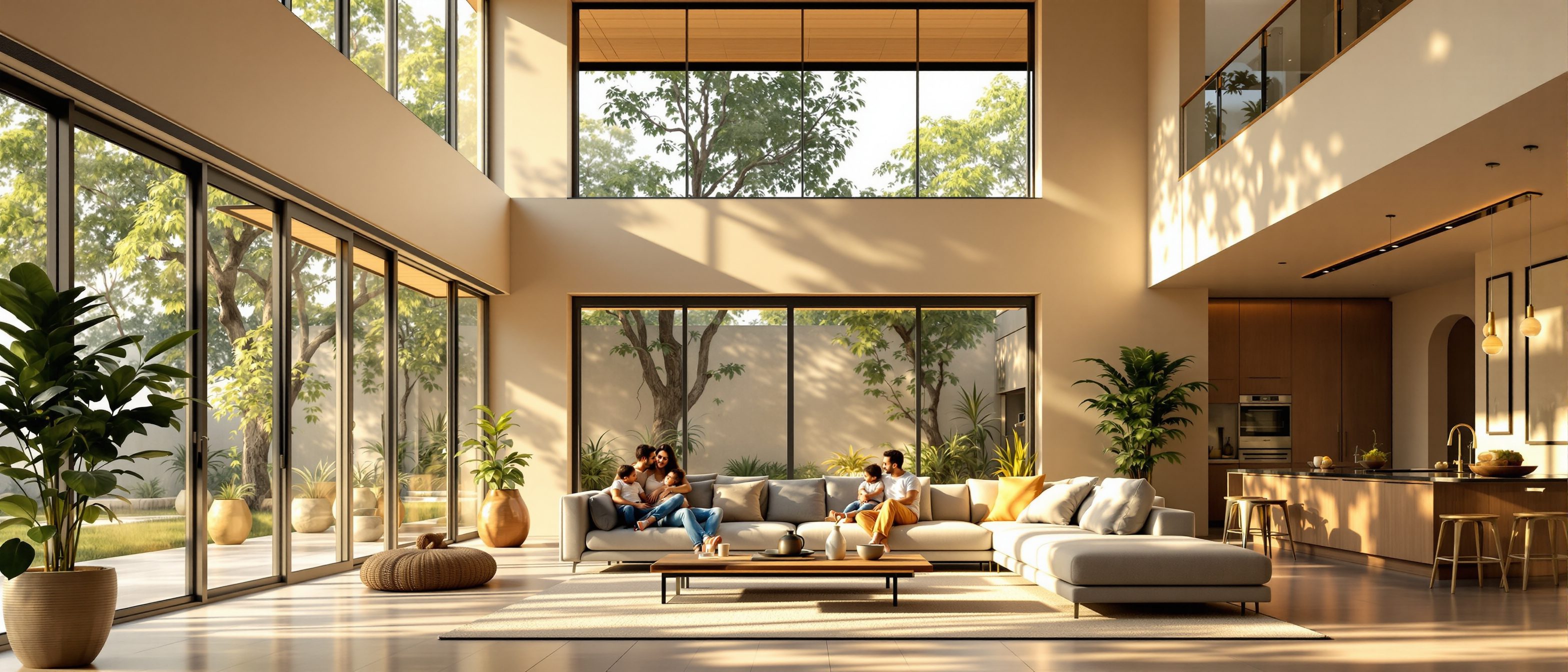
Window Design for Villas (India): Using the Freedom of All Four Sides
With walls free on all four sides, you can tune every window to its sun: north light for studies, east for bedrooms, shaded south for living, minimal west, plus feature windows, dual-aspect rooms and stairwell glazing.
A villa is the rare Indian home where the windows are not handed to you. In an apartment you inherit a fixed grid of openings the builder and the society decided years ago. In a villa, with walls free on all four sides, you choose where every window goes, which way it faces, how big it is and what it frames. That freedom is the whole point of building a villa, and it is also the easiest thing to waste. A wall of unshaded west glass looks magnificent in a render and turns the room into an oven by 4 pm. This guide is about using the four-sided freedom well, room by room.
In an apartment you design around the windows. In a villa you design the windows. The discipline is to treat each wall as a different climate.
If you only read one companion piece, read the planning pillar Window Placement Guide for Indian Homes, which covers sizes, sills and the National Building Code rules referenced throughout. This guide assumes that and adds the villa layer: tuning by orientation and adding feature windows. Its mirror image is Window Design for Apartments, where the constraint is that you cannot move the openings at all. Villa equals freedom; apartment equals making fixed openings work harder.
Tune each wall to its sun
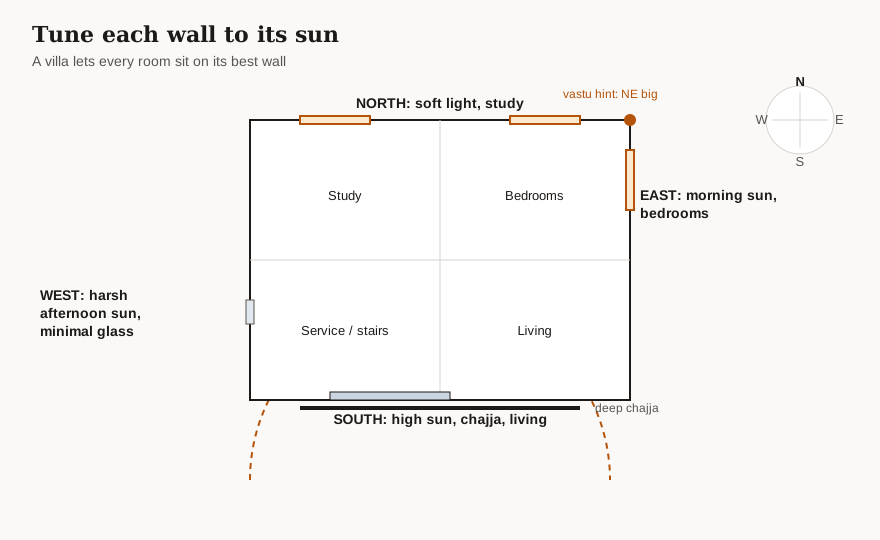
The single biggest villa advantage is that you can give every room the wall that suits it. India sits in the Northern Hemisphere, so the sun tracks across the southern sky; this fixes how each wall behaves.
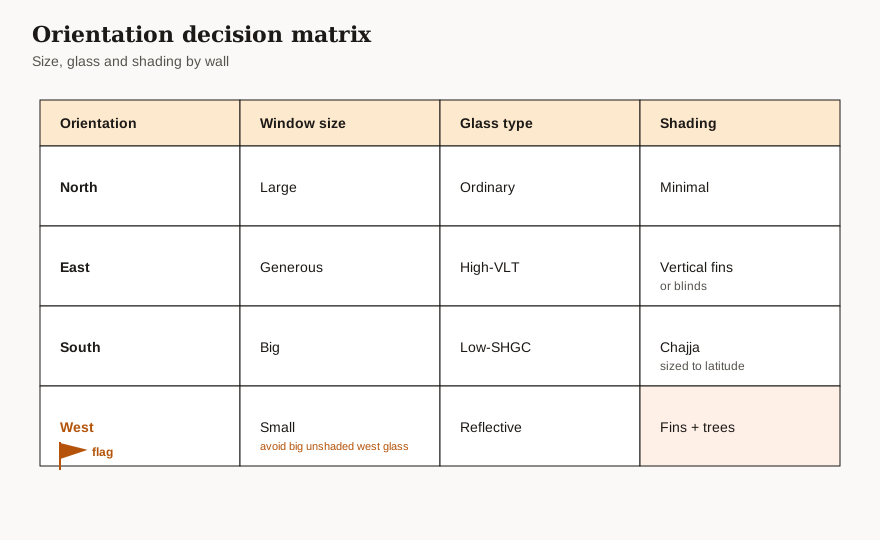
| Wall | Sun and light | Heat | Best rooms | Window strategy |
|---|---|---|---|---|
| North | Soft, even, glare-free, almost no direct sun | Lowest | Study, studio, art room, home office | Largest glass with least heat penalty; vastu also favours it |
| East | Gentle low-angle morning sun | Manageable | Bedrooms, breakfast nook, pooja | Generous glass; low sun is hard to shade with overhangs, use verticals or blinds |
| South | High midday sun | Controllable | Living, family room | Big glass fine if you add a horizontal chajja sized to the latitude |
| West | Harsh low-angle afternoon sun | Highest | Service, stairs, utility, bathrooms | Minimise glass; low-SHGC or reflective glass, vertical fins, deciduous trees |
The headline rule for villas: north light for thinking rooms, east light for waking rooms, shaded south for living, minimal west everywhere. Because north and east are also the coolest walls, building science and vastu largely agree here, vastu wants bigger windows to the north, east and north-east, medium to the north-west and south-east, small to the west and south, and nothing in the south-west. Reconcile that with the sun and you arrive at almost the same plan. For the deeper vastu reasoning see Vastu for Modern Homes; that guide is about the whole dwelling, this section is only about which wall a given window lives on.
Spend the freedom on feature windows
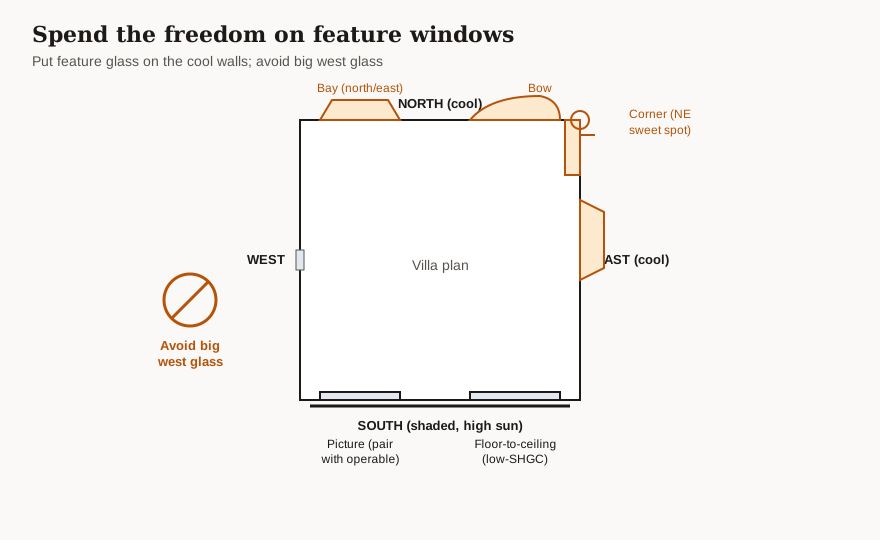
Standard windows in India run to a schedule, bedroom around 4 ft by 4 ft, living 5 to 6 ft by 4 ft, kitchen 4 ft by 3 ft, sills at 600 to 750 mm for living and bedrooms. A villa lets you break that schedule deliberately in a few rooms with feature windows. Used sparingly they give a house its character; used everywhere they wreck the energy bill.
| Feature window | What it does | Best placed | Watch out for |
|---|---|---|---|
| Bay | Three units project out, adds floor area, light from three angles, a window seat | Living room, master bedroom, north or east | Needs structural support and a small roof; do not face west |
| Bow | Four or five units in a gentle curve, panoramic, luxury | Formal living, garden side | Most expensive type; the same heat rules apply |
| Picture | Large fixed pane, maximum view, no ventilation | Framing a specific garden or hill view | No air; always pair with operable windows beside it |
| Corner | Two windows meet frameless at the building corner | Living or master, north-east corner | Structural corner post or structural glass; coordinate early |
| Floor-to-ceiling | Full-height glazing, sense of space | South or north living, opening to a deck | Raises window-to-wall ratio sharply; demands low-SHGC glass and shading |
The two feature types worth their own deep dives are covered separately, see Bay Windows in India for the structure, seat and costing, and Floor-to-Ceiling Windows in India for the glass and heat trade-offs. Place feature windows on the north and east walls by default. A corner window on the cool north-east corner is the villa sweet spot, a floor-to-ceiling wall facing unshaded west is the classic villa mistake.
Dual-aspect rooms, stairwells and deep plans
Because you control all four walls, design your main rooms to be dual-aspect, with windows on two different, ideally opposite, walls. This gives an inlet and an outlet for cross ventilation, the National Building Code wants openable area of at least 10 per cent of the room carpet area, and it lights the room from two sides so it never feels gloomy on one flank. Making the outlet larger than the inlet speeds the breeze through. The science of this lives in Cross-Ventilation in Indian Homes; here the villa move is simply that you can give almost every room two outside walls if you plan for it.
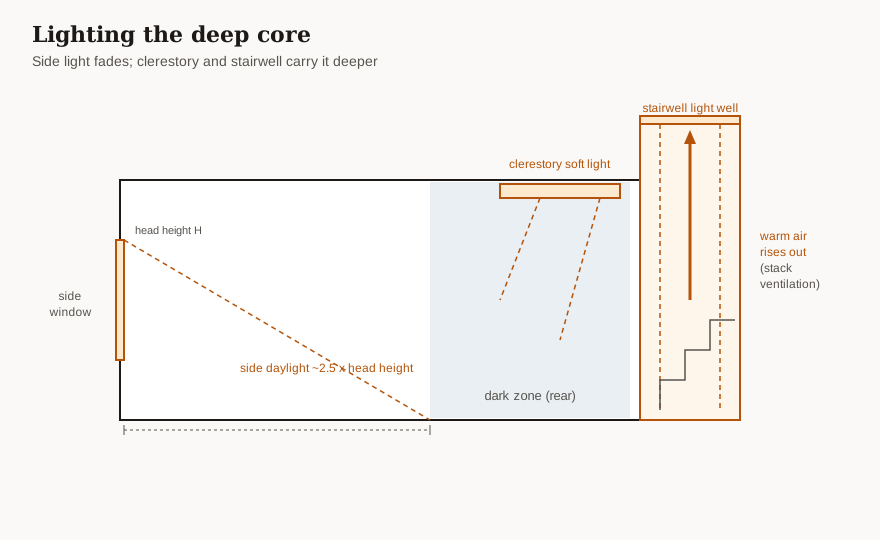
Daylight from a side window reaches only about 2 to 2.5 times the window head height into a room, so a deep villa living room or a kitchen at the core of the plan goes dark at the back. Two villa-specific answers:
- Clerestory windows, a row of glazing high on the wall above eye level, push soft, glare-free light deep into the room and let hot air escape high (stack ventilation). Perfect over a deep living room or a kitchen.
- Double-height glazing over the stairwell, the most rewarding feature in a villa, turns the staircase into a light well that drops daylight through the core of the house and pulls warm air up and out.
For the daylight maths and the Daylight Factor metric (per IS 2440 and BRE), see Daylight Factor for Indian Homes; that guide is the calculation, this is the villa fenestration that uses it.
Big glass means big heat: budget for shading and good glass
The freedom to use lots of glass comes with a bill. The Eco-Niwas Samhita, India's residential energy code, ties the two together: as your window-to-wall ratio rises, the code demands a lower minimum visible-light transmittance and better glass, and the wall envelope must stay at or below an RETV of 15 W per square metre. Windows are the biggest lever on that number.
| Window-to-wall ratio (WWR) | Minimum VLT required | Practical reading |
|---|---|---|
| 0 to 0.30 | 0.27 | Ordinary glass is fine |
| 0.31 to 0.40 | 0.20 | The comfortable villa sweet spot, 20 to 40 per cent |
| 0.41 to 0.50 | 0.16 | Now you need spectrally selective or double-glazed low-E |
| 0.51 to 0.60 | 0.13 | Big glass; serious glazing and shading non-negotiable |
| 0.61 to 0.70 | 0.11 | Glass walls; budget accordingly |
The takeaways for a villa budget:
- Shade before you glaze. A horizontal chajja or overhang sized to the latitude shades high south sun cheaply; vertical fins and louvres tackle low east and west sun; deciduous trees on the west shade in summer and let winter light through.
- Buy the glass the WWR demands. A double-glazed low-emissivity unit with a low solar-heat-gain coefficient keeps the daylight and rejects the heat. See Best Glass for Hot Climates in India.
- Privacy from neighbours. Even on a 30 by 50 plot the neighbour's wall can be metres away. Use clerestory and high-sill windows on overlooked walls, frosted or fluted glass for bathrooms (sill around 1500 mm), and jali screens that give privacy while cooling incoming air. Landscape the view, a feature window must frame a tree or a wall planter, not the boundary wall.
| Do | Avoid |
|---|---|
| North and east glass large; west small and shaded | A big unshaded floor-to-ceiling west window |
| Size the chajja to the south sun, then enjoy big south glass | Glass walls with no overhang or fins |
| Match glass VLT and SHGC to your WWR band | Single clear glass on a high-WWR elevation |
| Dual-aspect rooms for cross ventilation | Single-aspect rooms with no outlet |
| Clerestory and stairwell glazing for the deep core | Relying on one side window to light a deep room |
A room-by-room villa window plan
| Room | Best wall | Window move | Sill | Glass and shading |
|---|---|---|---|---|
| Study or home office | North | Large picture or bay, steady glare-free light | 600 to 750 mm | Ordinary glass is acceptable, lowest heat |
| Master bedroom | East or north-east | Corner window or bay, morning light | 600 to 750 mm | Low-E if large; vertical blinds for low east sun |
| Living and family | South | Floor-to-ceiling or picture behind a chajja | Floor level or 600 mm | Low-SHGC DGU, sized chajja |
| Kitchen | East | Operable window over the counter plus exhaust | 1050 to 1200 mm | Toughened; awning sheds light rain |
| Bathrooms | West or any overlooked wall | Small high awning or frosted | around 1500 mm | Frosted or fluted for privacy |
| Stairwell and core | Any, ideally north | Double-height glazing plus clerestory | High | Low-E; this lights the whole house |
| Service and utility | West | Minimal small openings | High | Smallest, most shaded glass |
Build this plan first, then let the elevations follow. A villa designed from the inside out, room by room to its best wall, with feature windows spent on the cool walls and glass and shading budgeted honestly, gives you the bright, cool, private home the four-sided freedom promised.
References
- BIS Guide for Using NBC 2016: https://www.bis.gov.in/wp-content/uploads/2022/08/Booklet-Guide-for-Using-NBC-2016.pdf
- Eco-Niwas Samhita 2018 (BEE/ECBC): https://ecbc.in/econiwas.html
- IS 3362, natural ventilation of residential buildings: https://law.resource.org/pub/in/bis/S03/is.3362.1977.pdf
- Standard door and window sizes in India (HouseYog): https://www.houseyog.com/blog/standard-door-window-sizes-india-schedule/
- Vastu for doors and windows (Livspace): https://www.livspace.com/in/magazine/vastu-for-house-doors-windows
Export this guide
Related Guides — Deep-dive reading
North-Facing Window Design (India): The Best Light With the Least Heat
Why the north wall gives soft, even, glare-free daylight with almost no heat, and how to design large, high-VLT windows that make the most of it.
Windows & GlazingWest-Facing Window Design (India): Taming the Harsh Afternoon Sun
Why the west wall is the hardest orientation to glaze, and how to minimise, shade and layer the defences against the low afternoon sun.
Windows & GlazingWindow Placement Guide for Indian Homes (2026): Where Windows Should Go
The planning pillar for where windows go: orientation, the inlet-outlet pair, daylight reach, sill heights, WWR balance and a room-by-room checklist for Indian homes.
Windows & GlazingRelated Tools — Try Free
Cross-Ventilation Analyzer
Estimate airflow and air changes per hour (ACH) from room size, window areas, layout, and local wind — with NBC 2016 Part 8 compliance check.
Ventilation CalculatorBrise-Soleil Visualizer
Interactive horizontal-louvre cut-off angle calculator — sun altitude, louvre depth, and spacing inputs with a live shadow preview. Computes θ = arctan(spacing/depth) for façade shading, ECBC envelope compliance, hospital daylight design, and tropical sun-control detailing.
Sun Shading ToolWindow Orientation Planner
Pick the best window type, glass and shading by wall direction — north, east, south and west.
Window Tool