

North-Facing Window Design (India): The Best Light With the Least Heat
Why the north wall gives soft, even, glare-free daylight with almost no heat, and how to design large, high-VLT windows that make the most of it.
North light is the quiet hero of window design. A window on a north wall in India sees almost no direct sun across the year, so the light it admits is soft, even, glare-free, and carries very little heat. That single fact flips the usual rulebook: where every other orientation is a balancing act between daylight and heat gain, the north wall lets you have generous glass and a cool, comfortable room. This guide is about designing the window itself on a north wall, not about orienting the whole house. For the house-level decision see the orientation house-plan guides; here we design the opening.
On a north wall you finally get to chase daylight without paying for it in heat. It is the best orientation for steady, usable light.
Why north light is the best light
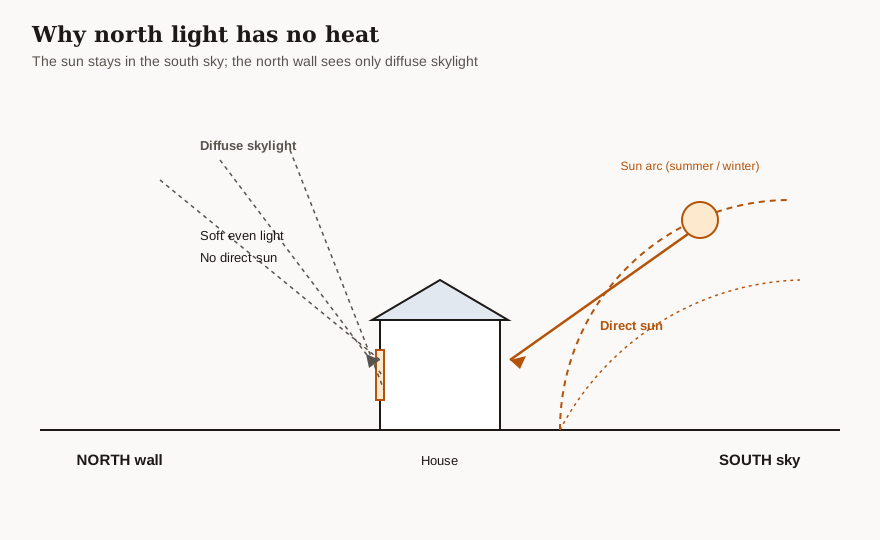
In the Northern Hemisphere the sun stays in the southern half of the sky. A true north-facing window therefore receives diffuse skylight almost all day, with only a brief, low grazing of direct sun on summer mornings and evenings near the solstice. The practical result is light that is:
- Even and steady through the day, with little change as clouds pass or hours go by.
- Glare-free, because there is no bright disc of sun to squint at or to wash out a screen.
- Cool, carrying a small fraction of the solar heat that an unshaded west or south window would.
- Colour-true, the reason artists, photographers and designers have prized "north light" for centuries.
This is why a north window suits work and craft far better than any other wall.
The one caveat: less warmth, cooler in winter
The flip side of "almost no direct sun" is no free solar warmth. In the cold northern states and hill stations, a north room is the coolest in the house and can feel chilly on winter mornings. Two responses: keep the glazing well insulated (a DGU, ideally Low-E) so heat does not leak out, and put the rooms that want winter warmth, such as a sit-out or a morning bedroom, on the south or east wall instead. In most of hot India this caveat barely registers; the cool north room is a feature, not a bug.
Room-by-room: what north light is for
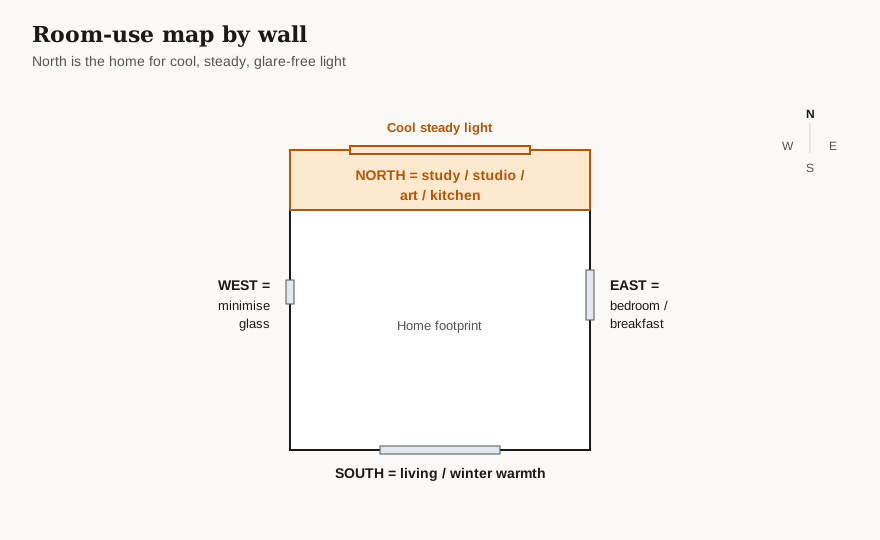
Match the window to the work. North light rewards tasks that need steady, glare-free illumination and rooms you want kept cool.
| Room / use | Why north suits it | Window move |
|---|---|---|
| Study / home office | Even light, no screen glare, no afternoon heat | Tall casement or picture window, low sill for a desk view |
| Studio / art / craft | True colours, constant light all day | Large glazing, even a clerestory band for depth |
| Kitchen | Cool prep zone, steady task light | Window above counter, sill 1050 to 1200 mm |
| Reading / living corner | Comfortable, glare-free, calm | Picture window plus an operable sash for air |
| Storage / utility | Heat-sensitive goods stay cool | Modest awning or louvre high on the wall |
Size and sill: go big with confidence
Because heat gain is low, the north wall is where you can push window size and window-to-wall ratio (WWR) hardest. Start from the NBC 2016 rule of thumb of openable area at least 10 per cent of the room's carpet area for light and ventilation, then add glass freely for the view and brightness. Standard sizes from the schedule (bedroom 4 ft x 4 ft, living 5 ft x 4 ft to 6 ft x 4 ft, kitchen 4 ft x 3 ft) are a floor, not a ceiling, on a north wall.
| Room | Sill height (indicative) | Note |
|---|---|---|
| Living / study / bedroom | 600 to 750 mm (2 to 2.5 ft) | Low sill for a seated desk or sofa view |
| Kitchen | 1050 to 1200 mm | Above the counter |
| Bathroom | ~1500 mm | Privacy |
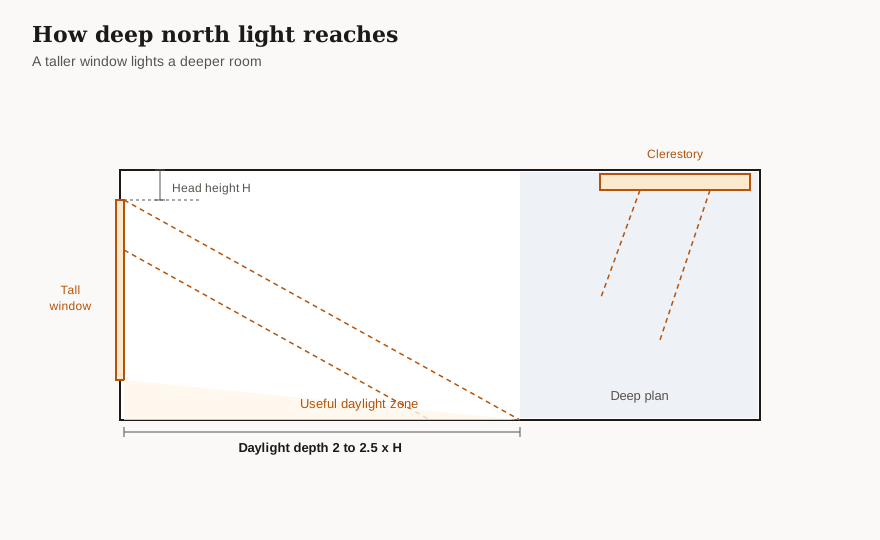
Remember that daylight from a side window reaches roughly 2 to 2.5 times the window head height into the room. A taller north window therefore lights a deeper room than a wide squat one; raise the head, and for very deep plans add a clerestory or a second aspect.
Glazing: prioritise light (VLT) over heat (SHGC)
This is the orientation where the usual glass priority reverses. On a west or south wall you fight heat, so a low SHGC (solar heat gain coefficient) dominates the choice. On a north wall there is little direct sun to reject, so you can prioritise VLT (visible light transmittance), picking clearer, brighter glass to make the most of soft skylight.
- Choose high-VLT glazing so the room reads bright, not gloomy.
- You still want a DGU, ideally with a Low-E coating, mainly for insulation (keeping winter warmth in and cutting outside noise), not for heat rejection.
- The Eco-Niwas Samhita sets a minimum VLT by WWR band (WWR 0 to 0.30 needs VLT at least 0.27, rising bands need less). On a north wall, going clearer than the minimum is the right instinct.
- The wall's RETV must stay at or below 15 W/m2; the low-heat north glass makes this easy to meet even with generous glazing.
Shading: the wall that barely needs it
Where a west window demands fins, louvres and trees, the north wall needs minimal shading. A modest overhang or chajja is enough to cut the brief low summer sun near sunrise and sunset, and to keep monsoon rain off the glass. Do not over-shade a north window; you will only dim the room you were trying to brighten. Save your shading budget for the west and south walls.
| Do | Avoid |
|---|---|
| Use large, high-VLT glazing for brightness | Treating north glass as a heat problem |
| Keep shading light (small overhang, rain only) | Heavy fins and deep chajjas that kill the light |
| Insulate the glass (DGU / Low-E) in cold regions | Single glazing where winters are cold |
| Put studies, studios, art, kitchens here | Wasting north light on storage you rarely enter |
| Raise the head height for deeper daylight | Squat, wide windows that light only the front |
Vastu and the north wall
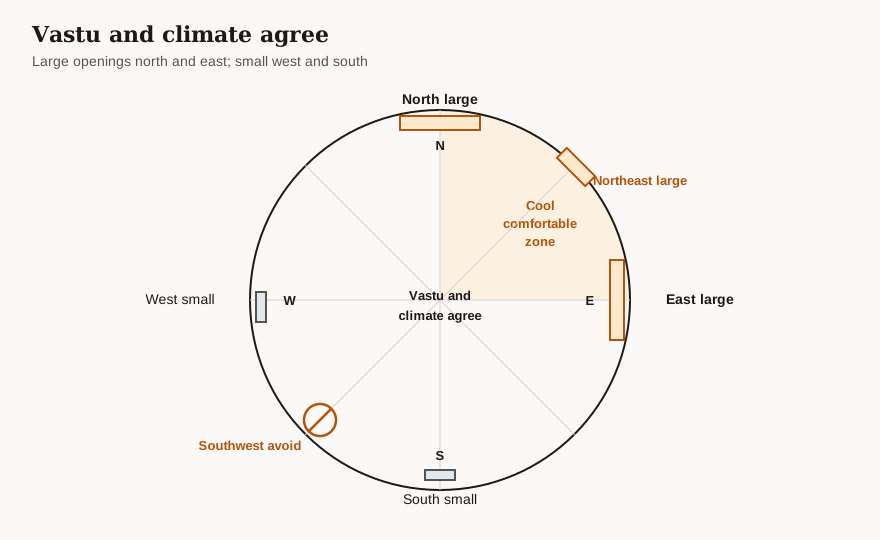
Vastu and building science largely agree here, which is rare and reassuring. Vastu favours bigger windows on the North, East and Northeast (associated with health, prosperity and good morning light) and only small openings on the West and South. Because north and east light is also the coolest and most comfortable, the vastu guidance and the climate logic point the same way: open up the north. Treat it as harmonised guidance, not as a constraint that fights the sun.
Putting it together
On a north wall, design for light, not heat: go large, raise the head height, pick high-VLT DGU glazing, keep shading minimal, and reserve the room for work or craft that loves a cool, even, glare-free light. The only thing to watch is winter cold in the hill states, answered by good insulating glass. It is the most forgiving wall in the house and the one place you can be generous with glass.
For the full method of placing and sizing every window in the home, start at the planning pillar Window Placement Guide for India. To complete the compass, compare the other three walls: South-Facing Window Design (the easiest to shade, with winter warmth), East-Facing Window Design (gentle morning sun) and West-Facing Window Design (the heat-and-glare problem wall). Reconcile the vastu side in Vastu for Home Windows, and choose the actual pane in Types of Glass for Windows.
Numbers here are indicative for June 2026; confirm sizes against local bye-laws and confirm glazing performance with itemised quotes from fabricators.
References
- BIS Guide for Using NBC 2016: https://www.bis.gov.in/wp-content/uploads/2022/08/Booklet-Guide-for-Using-NBC-2016.pdf
- Eco-Niwas Samhita 2018 (BEE/ECBC): https://ecbc.in/econiwas.html
- IS 3362 natural ventilation of residential buildings: https://law.resource.org/pub/in/bis/S03/is.3362.1977.pdf
- Standard door and window sizes in India (HouseYog): https://www.houseyog.com/blog/standard-door-window-sizes-india-schedule/
- Vastu for doors and windows (Livspace): https://www.livspace.com/in/magazine/vastu-for-house-doors-windows
Export this guide
Related Guides — Deep-dive reading
Window Design for Villas (India): Using the Freedom of All Four Sides
With walls free on all four sides, you can tune every window to its sun: north light for studies, east for bedrooms, shaded south for living, minimal west, plus feature windows, dual-aspect rooms and stairwell glazing.
Windows & GlazingWindow Design for Natural Light (India): A Brighter, Evenly Lit Home
How to size, place and glaze windows so every room is bright and evenly lit, without glare or gloom
Windows & GlazingWindow Placement Guide for Indian Homes (2026): Where Windows Should Go
The planning pillar for where windows go: orientation, the inlet-outlet pair, daylight reach, sill heights, WWR balance and a room-by-room checklist for Indian homes.
Windows & GlazingRelated Tools — Try Free
Cross-Ventilation Analyzer
Estimate airflow and air changes per hour (ACH) from room size, window areas, layout, and local wind — with NBC 2016 Part 8 compliance check.
Ventilation CalculatorBrise-Soleil Visualizer
Interactive horizontal-louvre cut-off angle calculator — sun altitude, louvre depth, and spacing inputs with a live shadow preview. Computes θ = arctan(spacing/depth) for façade shading, ECBC envelope compliance, hospital daylight design, and tropical sun-control detailing.
Sun Shading ToolWindow Orientation Planner
Pick the best window type, glass and shading by wall direction — north, east, south and west.
Window Tool