
Whirlpool Bathtub India: Jacuzzi-Style Spa Tubs, Jets, Pump, Cost & Hygiene
A practical India-first guide to whirlpool and jacuzzi-style spa bathtubs — water jets vs air jets vs combo, the pump and RCBO electrical rules, the biofilm hygiene problem, access panels, water and load, running cost and ₹ ranges.
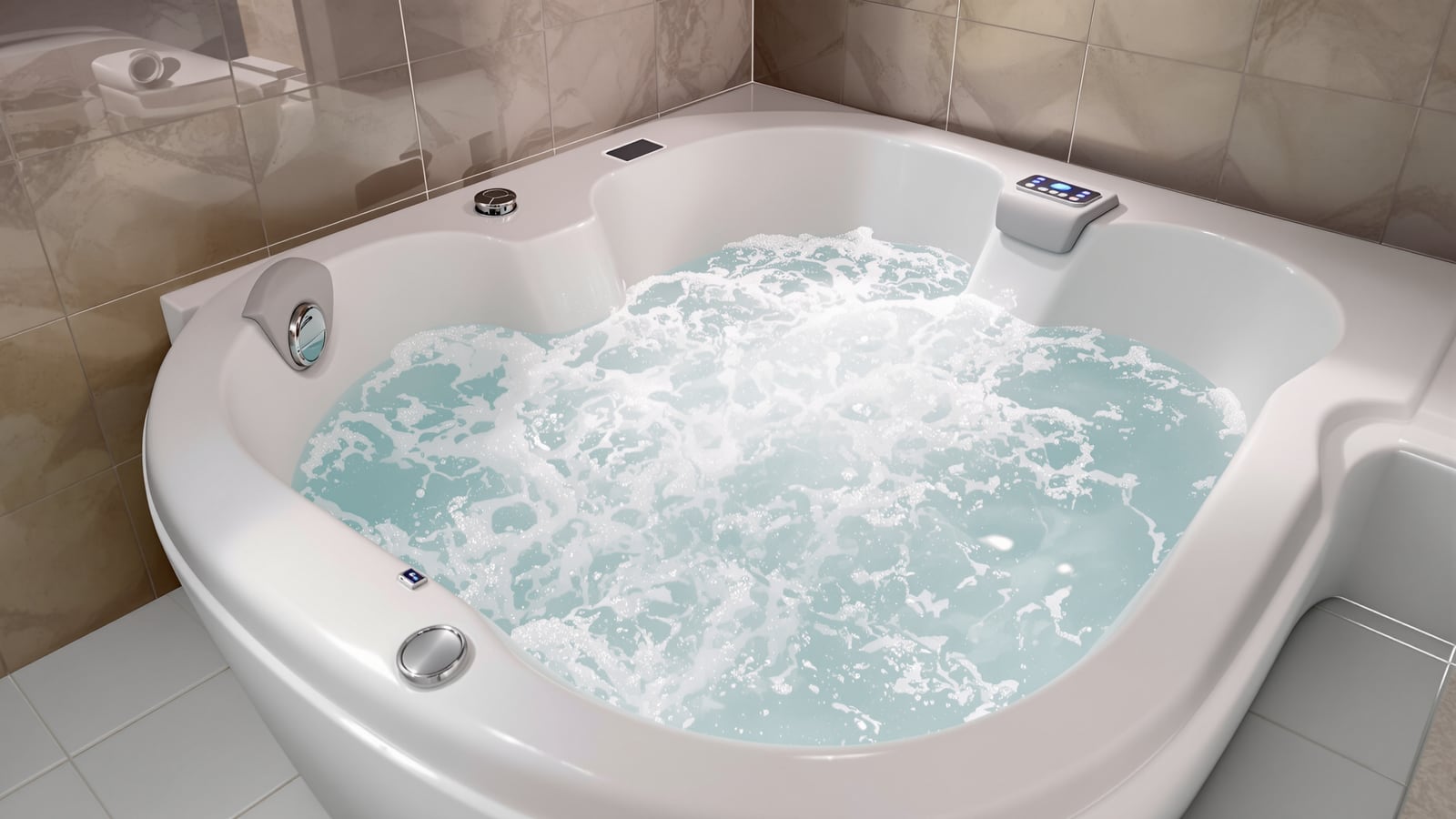
A whirlpool bathtub — what most Indian buyers call a jacuzzi — is a soaking tub with a pump that pushes water or air through nozzles to create a massaging current. "Jacuzzi" is a brand name that became a generic word, the way people say "Xerox" for a photocopy; the correct product category is a whirlpool or spa bathtub. Fitted well, it turns a bathroom into a genuine wellness room. Fitted badly, it becomes a heavy, noisy, hard-to-clean box that grows bacteria in pipes you cannot see. The difference is almost entirely in the plumbing, the electrical work and the hygiene design — not the tub itself.
This is the whirlpool-tub guide of the Studio Matrx bathroom hub. For choosing and sizing a plain soaking tub first, start with the complete bathtub guide for India. If your bathroom is compact, the corner bathtub guide shows how a triangular footprint frees floor space. To design the room around the tub as an experience, read the spa bathroom design guide, and for the material and fittings budget, the luxury bathroom design guide.
A whirlpool tub is 30% bathtub and 70% concealed system — a pump, jets, pipework and an electrical circuit. Get the concealed 70% right, or the beautiful 30% you can see will disappoint you within a year.
Water jets vs air jets vs combo
Every whirlpool decision starts here, because it changes the plumbing, the noise, the massage and the hygiene work. There are three systems.
- Water-jet (true whirlpool). A pump draws water from the tub and forces it back through a few large adjustable nozzles, mixing in air for a powerful, directional massage. Strong and satisfying, but the jets recirculate the same bathwater — soap, oils and skin cells — through internal pipes, which is the root of the hygiene problem below.
- Air-jet (air bath). A blower pushes warm air through many small holes in the base and sides, giving a soft, effervescent, all-over fizz rather than a targeted jet. Gentler on the body and much easier to keep clean, because a good air bath purge-dries its channels after every use.
- Combo (dual system). Both a water pump and an air blower, independently controlled. The most versatile and the most expensive, with two systems to power, service and clean.
| System | Massage feel | Noise | Hygiene effort | Typical extra over a plain tub |
|---|---|---|---|---|
| Water-jet whirlpool | Strong, directional | Moderate–high | High (recirculates bathwater) | ₹40,000–₹1,20,000 |
| Air-jet air bath | Soft, all-over fizz | Moderate | Low–moderate (self-purges) | ₹50,000–₹1,50,000 |
| Combo | Both, adjustable | High | High | ₹90,000–₹2,50,000+ |
For most Indian homes an air bath or a combo run mostly in air mode is the wiser buy: the massage is pleasant, and the hygiene burden — which is what makes people abandon these tubs — is far lower.
The pump and the electrics — where India goes wrong
A whirlpool tub is a wet appliance running a motor centimetres from a person sitting in water. The electrical work is not optional detail; it is the safety of the whole thing, and it is where Indian installations most often cut corners.
- Dedicated circuit. The pump/blower needs its own circuit run from the distribution board — not spurred off the geyser or lights. Motors draw 0.7–1.5 kW; sharing a circuit trips breakers and overheats wiring.
- RCBO / RCD protection. The circuit must be protected by a 30 mA residual-current device (RCBO or an RCD-plus-MCB), per IS 732 and NBC 2016 electrical practice. This is the single component that saves a life if water reaches a live part. Insist on it in writing.
- Equipotential bonding. The tub frame, pump body and any metal must be earth-bonded so no dangerous voltage can appear between them.
- IP-rated components inside the wet zone. Any junction box, motor terminal or connector within the tub enclosure should be at least IP55/IP65. Standard indoor connectors corrode and fail in the humid, splashy pump cavity.
- A local isolator. A switched, out-of-reach isolator lets you cut power for cleaning or service without going to the main board.
Because most Indian apartments are wired for lighting and geysers, budget for a new circuit and RCBO as part of the tub cost, and have a licensed electrician — not the tub fitter — do it. This is the same rigour the smart bathroom guide applies to any powered fixture near water.
The hygiene problem nobody mentions in the showroom
This is the real reason whirlpool tubs get abandoned. A water-jet tub recirculates your used bathwater — full of soap, body oil, skin cells and shampoo — through metres of internal PVC pipe. After you drain the tub, warm, nutrient-rich water stays trapped in those pipes. Within days it grows biofilm: a slimy bacterial layer coating the pipe walls. Run the jets a week later and the first burst can carry visible grey flakes and a smell into your clean bath. This is a documented, real maintenance issue, not a scare — it is why air baths (which purge-dry) and combo tubs run in air mode are easier to live with.
You cannot see the pipes, so you must design and operate for it.
- Purge cycle after every use. With the tub drained, run the pump briefly to blow standing water out of the lines. Air baths do this automatically; on a water-jet tub you do it manually.
- Fortnightly disinfection. Fill above the highest jets with warm water, add a whirlpool cleaner (or a measured dose of dishwasher powder plus a little bleach), run 10–15 minutes, drain, refill with clean water and run again to rinse. Never leave the tub bone-dry for months and then use it cold.
- Avoid bath oils and heavy bubble baths in water-jet mode — they coat pipes and feed biofilm.
- Prefer smooth, large-bore pipework and self-draining jets when you specify the tub; ask the vendor exactly how the system empties.
| Task | Frequency | Why it matters |
|---|---|---|
| Purge lines after bath | Every use | Removes standing bathwater before biofilm forms |
| Disinfection flush | Every 2 weeks | Kills biofilm already in the pipes |
| Clean suction/jet covers | Monthly | Prevents clogs and mould at the fittings |
| Inspect pump cavity | Every 6 months | Catches leaks, corrosion, loose bonding early |
Access panel, water and load — the build-in realities
Three build realities decide whether the tub is serviceable for a decade.
- Access panel is mandatory. The pump, unions and RCBO wiring must be reachable through a removable, watertight panel — ideally at the pump end, at least 400 x 400 mm. Tiling the pump permanently into a masonry box is the classic Indian mistake: when the pump fails at year three, you break the wall to reach it. Insist on a magnetic or screw-fixed tiled/acrylic access hatch.
- Water volume and heating. A whirlpool holds roughly 230–320 litres to cover the jets — far more than a shower bath. In a hard-water metro, that is a real load on the tank and geyser; size a 25 L or larger geyser or plan a hot-water line, and factor the water bill.
- Structural load. A filled tub plus a bather is 350–450 kg concentrated on a small footprint. On an RCC slab this is usually fine, but confirm with your structural engineer for terrace, balcony or upper-floor placements, and never assume an old chajja or cantilever can take it.
Prefab (skirted) vs built-in
- Prefab / drop-in with a moulded skirt arrives as a finished unit with the pump and access door already integrated. Faster, cleaner install, factory-tested plumbing, and the access panel comes designed-in. Best for apartments and renovations.
- Built-in (tiled surround) is set into a masonry or ferro-cement deck and tiled to match the room — the premium, seamless look. It demands disciplined waterproofing (see the waterproofing guide), a proper deck fall, and a deliberately planned access hatch. More beautiful, less forgiving.
What it costs in India
| Item | Budget prefab | Mid-range | Premium / built-in |
|---|---|---|---|
| Whirlpool/air tub unit | ₹55,000–₹1,10,000 | ₹1,10,000–₹2,50,000 | ₹2,50,000–₹7,00,000+ |
| Dedicated circuit + RCBO | ₹6,000–₹12,000 | ₹8,000–₹15,000 | ₹12,000–₹25,000 |
| Plumbing, hot line, valves | ₹8,000–₹18,000 | ₹15,000–₹30,000 | ₹30,000–₹60,000 |
| Waterproofing + tiled deck | — | ₹15,000–₹40,000 | ₹40,000–₹1,20,000 |
| Running cost (electricity) | ~₹3–6 per 20-min soak | same | same, plus heating |
The tub is only part of the spend — the circuit, plumbing, waterproofing and hot water together often add 40–70% on top. Running cost is modest: a 1 kW pump for a 20-minute soak is about a third of a unit, so a few rupees per bath, though heating 250+ litres of water is the larger recurring cost. Budget the whole system, plan the luxury bathroom around it, and you get a spa that still works — and stays clean — years later.
References
- NBC 2016 (National Building Code of India), Part 8 — electrical and wet-area installation practice for powered fixtures near water.
- IS 732 — Code of practice for electrical wiring installations, including RCD/RCBO protection and earthing for wet locations.
- IS/IEC 60529 — degrees of protection provided by enclosures (IP rating) for pump and connector selection.
- IS 2556 — sanitary appliances / ceramic and acrylic bathtub quality references.
- CPHEEO Manual on Water Supply and Treatment — hot and cold supply sizing and hygiene guidance relevant to high-volume fixtures.
- BIS — Bureau of Indian Standards, for current versions of the codes above.
Export this guide
Related Guides — Deep-dive reading
Built-In Bathtub India: Drop-In & Alcove Tubs, the Masonry Deck, Apron & Access Panel (2026)
How a built-in bathtub actually gets installed in an Indian bathroom — set into a tiled brick platform or an alcove, the load the deck must carry, the apron or skirt, the all-important access panel for the trap, tiling and sealing the rim, running a shower over the bath, real sizes, 2026 rupee costs, and an honest comparison with freestanding tubs.
BathroomsBody Jets Shower India: Body Spray Massage Systems, the Flow & Pressure They Really Need, and What It Costs (2026)
Wall-mounted horizontal body jets turn a shower into a spa massage — but every jet is a thirsty extra outlet. How many jets, at what heights, the big pump and geyser they force, the pipe sizing and concealed valves you must plan before tiling, the water and running cost, and exactly who it is worth it for.
BathroomsFreestanding Bathtub India: Materials, Floor Load, Concealed Plumbing & Cost (2026)
The statement centrepiece tub that stands free of every wall — how acrylic, stone-resin and cast-iron differ, the floor load a filled tub imposes, the concealed rough-in you must set out before the flooring goes down, the clear space it needs all around, drainage, and honest 2026 rupee costs.
BathroomsRelated Tools — Try Free
Electrical Safety & Load Audit
Home electrical audit — 10 categories, 65+ checkpoints across earthing, RCCB, MCB, wiring, switchboards, appliance circuits, DG/inverter backup.
Safety AuditRainwater Tank Sizer
How big should your rainwater tank be? Computes annual harvest, recommended tank capacity in litres, water-bill savings, and payback — for 10 Indian cities.
RWH CalculatorBathroom Renovation Cost Calculator
Cost to renovate an existing bathroom with a replace-vs-keep model — demolition, re-waterproofing, tiles, fittings and the money saved by keeping items.
Bathroom Calculator