
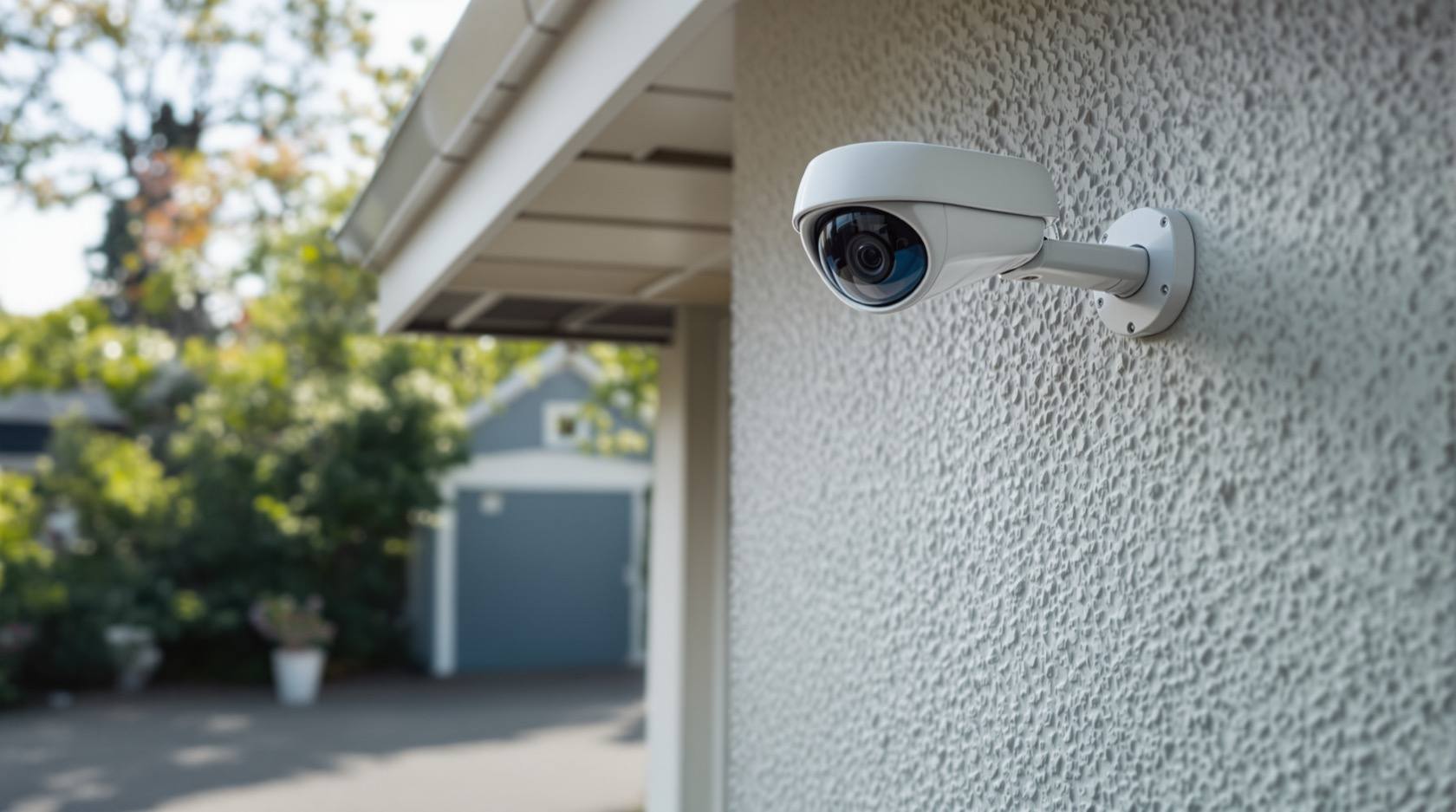
Where Not to Install CCTV in India (2026): The No-Go Zones
A camera is a powerful thing, and pointing it at the wrong place can turn a security measure into a serious intrusion. This is the plain, humane list of places a camera must never point, plus the borderline spots to think twice about.
There is a simple sentence that settles almost every camera-placement argument: point it at your stuff, not at people's private lives. A camera aimed at your own gate, your own porch, your own parked scooter is a reasonable security measure. The same camera nudged a few degrees the other way — into a neighbour's window, over a bathroom door, into the room where your domestic worker sleeps — stops being security and becomes surveillance. Knowing where not to install cctv matters just as much as knowing where to put it.
This guide is the "no-go zones" companion to the broader CCTV privacy guide for India. It is deliberately firm about the absolutes, because some placements are not a matter of taste or etiquette — they violate a person's dignity and can be unlawful. Around those absolutes sits a wider band of borderline spots where the honest answer is "be careful, give notice, and mask what you must not see."
Scope & how to read this. This is practical guidance for a home, flat or RWA, grounded in the spirit of the Digital Personal Data Protection Act, 2023 and the right to privacy — it is not legal advice. For anything with legal weight (a dispute with a neighbour, a tenancy, a workplace, a police request) take advice from a qualified lawyer. When a placement is in doubt, choose the least-intrusive option, or leave that spot uncovered.
The one rule everything else follows
Indian privacy thinking rests on a plain idea the courts have affirmed at a general level: people have a reasonable expectation of privacy, strongest where they are most exposed and least on guard. The Digital Personal Data Protection Act, 2023 pushes the same way with purpose limitation and data minimisation — collect only what a real, narrow purpose needs, and no more.
Put those together and you get a test to apply to any camera before you screw it to the wall:
- Whose space does the lens see? Yours, or someone else's private space?
- What is the genuine security purpose here — and does this exact framing serve it, or does it just happen to catch more?
- Could a reasonable person in view feel watched in a private moment?
If a placement fails those questions, it belongs in this guide's no-go or borderline list. "Because you can see it doesn't mean you should record it."
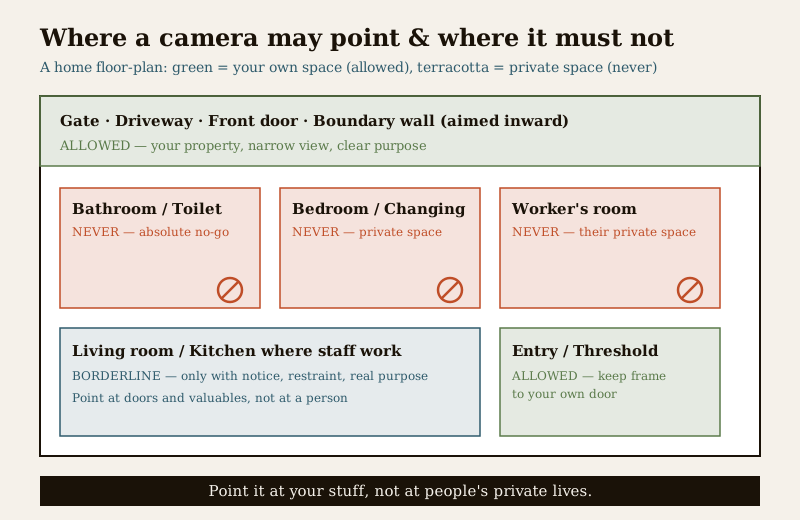
Absolute no-go zones: never, under any circumstances
Some places are off-limits for a camera, full stop. There is no "but it is my house" exception, no "but I only wanted to be safe" exception. A recording device in these spaces is a serious violation of dignity and can be unlawful.
- Bathrooms and toilets. Never. Not a "nanny cam", not a "just in case", not hidden, not visible. This is the clearest line there is.
- Bedrooms. A person's bedroom — yours, a family member's, a guest's, a child's — is private space. A camera there records people at their most unguarded.
- Changing areas and dressing rooms. Anywhere someone undresses is absolute no-go.
- Inside a domestic worker's room or quarters. If someone lives or sleeps in a room in your home, that room is their private space. A camera inside it is never acceptable, and doubly wrong because of the power imbalance.
- Anywhere a person reasonably expects privacy. A prayer room, a room a guest is sleeping in, a corner someone uses to change a baby or take a private call. If in doubt, treat it as private.
Dignity and rights, first. The people most likely to be filmed inside a home without a real say are the least powerful in it: domestic workers, children, elderly relatives, guests. A responsible camera-owner is a custodian, not a watcher. You never install a camera to monitor, control, punish or intimidate a person — and never in the private space of someone who cannot freely object.
Not into the neighbour's world
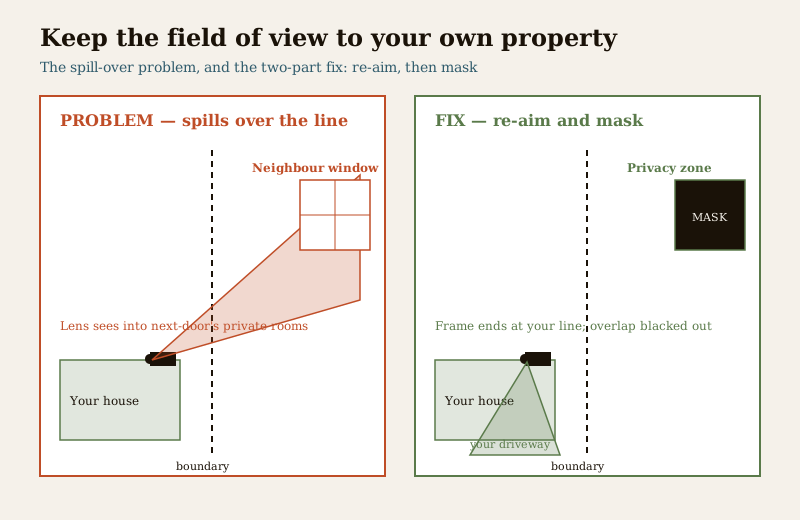
The most common real-world mistake is not a camera in a bathroom — it is an outdoor camera whose field of view spills over the boundary into a neighbour's window, balcony, door, garden or terrace. Even when your intent is entirely your own security, a lens that continuously records the family next door going about private life in their own home is an intrusion, and a frequent source of genuine disputes.
The principle is simple: keep the field of view to your own property.
- Aim so the frame ends at your boundary. Your gate, your wall, your driveway — not the neighbour's front door or their kitchen window across the gap.
- Watch the balconies and windows. A first-floor camera especially can see straight into a neighbour's rooms. That is exactly the private space to keep out of frame.
- Where some overlap is unavoidable, mask it. Most cameras support privacy zones (also called privacy masking) that permanently black out part of the frame in the recording itself, not just on screen. Use them to blank a neighbour's window or a slice of their garden that you cannot physically avoid. There is a full walk-through in the CCTV privacy masking guide.
- A gate shared with a neighbour needs a conversation, not a fait accompli — see the borderline section below.
This is the single change that prevents most neighbour conflicts: re-aim first, mask what remains, and record only your side of the line.
The public street and the over-the-wall problem
A camera at your gate will inevitably catch a sliver of the road or lane — usually unavoidable and generally accepted when the purpose is watching your own entrance. The problem is capturing far more of the public street than your security actually needs: sweeping the whole lane, recording every passer-by, every neighbour's car, the children playing outside.
Data minimisation applies here too. The question is not "can I see the street?" but "how much of it do I genuinely need?"
- Angle down, not out. Tilt the camera to watch your entrance and the approach to it, rather than staring flat down the road.
- Frame tightly. A camera covering your gate and a metre or two either side is defensible. One that surveils the whole street is over-reach.
- Mask the far pavement if the wide angle catches more public space than you can justify.
For flats and gated communities, the street-and-shared-space version of this — corridors, lobbies, lifts, the compound — is covered in CCTV in common areas, where the RWA, not an individual, usually owns the decision.
Covert cameras: why hidden recording is wrong
There is a special place in the no-go list for hidden cameras used to record family, guests, domestic workers or visitors without their knowledge. Two things make covert recording worse than an openly placed camera:
- It removes the person's ability to object or adjust. Notice — a visible camera, a sign — lets people know they are in view. A hidden lens strips that away.
- It is almost always aimed at someone with less power. The classic covert camera is disguised in a clock or smoke detector, pointed at a domestic worker or nanny — exactly the surveillance-of-the-vulnerable this guide exists to prevent.
Combine covert with a private space — a hidden camera in a room where a worker sleeps or changes — and it moves from unethical to a serious, potentially unlawful violation. The rule is plain: do not secretly record people in your home. If a camera is justified in a shared living area, it should be visible and known, with the household and any staff told it is there. Signage is part of doing this properly — see the CCTV signage guide.
When to get advice. A neighbour dispute, a landlord-tenant situation, monitoring anyone who works in your home, or any thought of using footage in a complaint or case — these carry real legal weight. Treat this guide as a starting point and speak to a qualified lawyer about your specific facts. Do not rely on covertly captured footage; how it was obtained matters.
Borderline zones: handle with care and notice
Between the absolute no-go list and the clearly-fine "your own gate" sits a band of places that are allowed only with restraint, notice and a real purpose. These are not banned, but they are easy to get wrong.
- Living rooms and hallways. A camera in a shared indoor space can be reasonable for security when nobody is around — but it films family and guests in their downtime. Prefer entry points over sofas; tell the household and guests; consider whether it needs to run when people are home at all.
- Kitchens and areas where staff work. If a domestic worker spends hours in your kitchen, a camera trained on them all day is monitoring, not securing. Point at the door or valuables, not at a person working; tell them it is there; never use footage to dock pay, accuse or intimidate.
- A gate or entrance shared with a neighbour. Because it is shared, it is not solely yours to surveil. Talk to the neighbour, agree the framing, and mask their side.
- Children's rooms. A baby monitor you actively watch for genuine care is different from a recording camera in an older child's private room. As children grow, their bedroom becomes their private space — the no-go rule takes over. Never leave recorded footage of children accessible or unsecured.
- Video door phones and doorbell cameras. These see the person at your door and often a slice of the shared landing or street. Keep the view to your threshold and follow the video door phone privacy guide.
The through-line for every borderline case: narrowest useful view, clear notice, real purpose, and never as a tool to control a person. Designing this in from the start is far easier than retrofitting it — the privacy-by-design guide shows how.
Allowed vs forbidden, at a glance
| Location | Camera? | Why |
|---|---|---|
| Your own gate / driveway / porch | Allowed | Your property, clear security purpose, narrow view |
| Your boundary wall (aimed inward) | Allowed | Watches your side; mask any neighbour overlap |
| Front door / entrance you own | Allowed | Legitimate; keep the frame to your threshold |
| Living room / hallway | Borderline | Notice, restraint, entry points not sofas |
| Kitchen where staff work | Borderline | Point at door/valuables, not at a person; tell them |
| Gate shared with a neighbour | Borderline | Not solely yours; agree framing, mask their side |
| Older child's bedroom | Forbidden | Private space; monitor becomes surveillance |
| Neighbour's window / balcony / garden | Forbidden | Their private space; mask if unavoidable |
| The whole public street / footpath | Forbidden | Over-reach; angle down, frame tightly |
| Domestic worker's room / quarters | Forbidden | Their private space; power imbalance |
| Bathroom / toilet | Never | Absolute no-go, full stop |
| Bedroom / changing / dressing area | Never | Absolute no-go, full stop |
| Any hidden camera on people in your home | Never | Covert recording removes notice and consent |
How to fix a camera that reaches too far
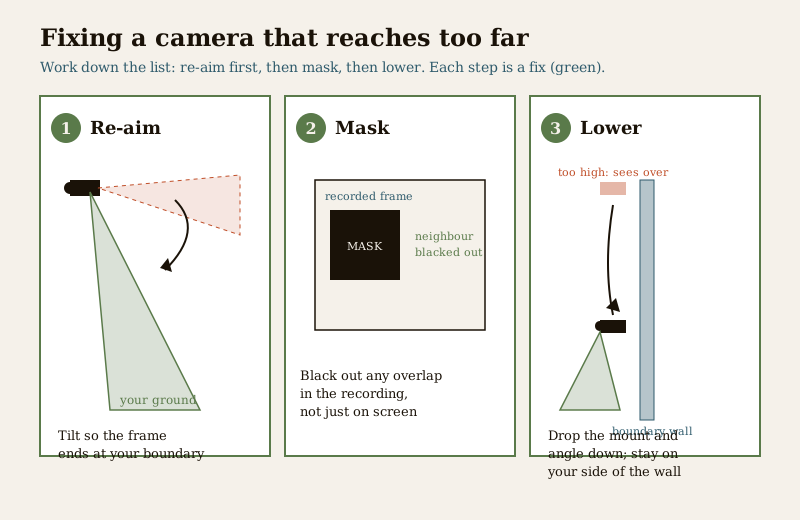
If you already have a camera catching more than it should, you do not need to rip it out — you usually need to re-aim, mask, lower or re-lens it. Work down this list:
- Re-aim. The first and best fix. Tilt and pan so the frame ends at your boundary and centres on what you actually protect. Most over-reach is solved here.
- Mask. Switch on the camera's privacy zones to permanently black out a neighbour's window, a slice of street or any private area you cannot avoid. The masked region should be absent from the recording, not just hidden on the live view.
- Lower the mount. A camera mounted very high sees over walls and into first-floor windows. Dropping it and angling down keeps the view on your ground and off the neighbours.
- Change the lens or field of view. A wide-angle lens that swallows the whole street can be swapped for a narrower one, or the digital field of view tightened, so it covers only your entrance.
- Reposition entirely. If no combination works, move the camera to a spot that can only see your own property.
After any change, review the actual recorded footage, not just the live preview — masks and angles sometimes behave differently once saved. Check at day and at night, because a wider night mode or a different IR spread can reveal areas your daytime check missed.
Checklist: get placement right
- Walk the plot before drilling. Stand where each camera will go and look at what the lens will actually see.
- Confirm no camera can see a bathroom, bedroom, changing area, a worker's room, or a neighbour's private space.
- End the frame at your boundary. Re-aim so you record your side, not theirs.
- Angle street cameras down and frame tightly. Watch your entrance, not the whole road.
- Turn on privacy masks for any unavoidable overlap; verify them in the saved recording.
- Make cameras visible and post notice; never record covertly.
- Tell everyone in the home, including staff, where cameras are and why.
- Review recorded footage day and night after install and after any change.
What NOT to do
- Do not put a camera in a bathroom, toilet, bedroom, changing area, or a domestic worker's room — ever.
- Do not aim a camera into a neighbour's window, balcony, door or garden.
- Do not surveil the entire public street when you only need your gate.
- Do not hide cameras to record family, guests or staff without their knowledge.
- Do not use a kitchen or living-room camera to monitor, time, accuse or punish a person who works for you.
- Do not leave recorded footage — especially of children or staff — unsecured or freely shared.
- Do not assume "it is my property" overrides another person's private space. It does not.
Key takeaways
- Point it at your stuff, not at people's private lives. That single rule resolves most placement questions.
- Some zones are absolute no-go: bathrooms, bedrooms, changing areas, a worker's room, and anywhere a person reasonably expects privacy. No exceptions.
- Keep the field of view on your own property. Do not point into a neighbour's private space; mask what unavoidably spills over.
- Do not over-reach onto the public street — angle down and frame tightly.
- Never record covertly. Cameras should be visible, known and, where sensible, signed.
- An over-reaching camera is usually fixable — re-aim, mask, lower or re-lens, then check the saved footage.
- This is guidance, not legal advice. For a dispute, a tenancy, workplace monitoring or a police request, consult a qualified lawyer.
References
- Digital Personal Data Protection Act, 2023 — collect personal data (including identifiable footage) only for a clear, legitimate purpose, with notice, and no more than needed; verify current text and rules before relying on it.
- Reasonable expectation of privacy — the right to privacy has been affirmed at a general constitutional level; recording people in private spaces or without a lawful basis raises serious issues. Seek qualified legal advice for your specific situation.
- Manufacturer documentation — confirm your camera supports privacy zones or masking and how to apply them permanently to the recording, not only the live view.
This is an educational overview, not legal advice. Whether a given camera placement is lawful depends on your exact facts — consult a qualified lawyer for anything with legal weight, and treat the absolute no-go zones as non-negotiable.
Export this guide
Related Guides — Deep-dive reading
Domestic Worker Privacy in India (2026): Security With Dignity
Maids, cooks, drivers, nannies and live-in help are people with rights, not permanent suspects to be watched. Use home cameras for real security, and never as a tool to monitor, control, shame or pressure the person who works in your home.
SecuritySecurity Privacy Assessment for Indian Homes
Getting the privacy side of home security right: camera placement ethics and limits, notice and consent, the extra caution audio demands, and treating footage as personal data you store, retain and delete responsibly under India's DPDP Act 2023 direction.
SecurityCCTV in Apartments in India (2026): Your Camera, Your Neighbour's Privacy
In a flat, walls are shared, doors face each other, and balconies overlook. A camera at your own door can be perfectly reasonable — as long as its view stops at your threshold. Here is how to protect your own entrance without watching the people next door.
SecurityRelated Tools — Try Free
CCTV Placement Compliance Checker
A quick DPDP-grounded privacy and safety self-check for where a camera is pointed — flags the items to fix.
ComplianceFull-Room BOQ — Living, Bedroom, Kitchen, Bath
Room-wise BOQ across living, bedrooms, kitchen, utility, and bathrooms with line-item pricing.
Full-Room BOQCCTV Camera Overlap Calculator
The overlap or blind gap between two adjacent cameras, from coverage width and spacing, plus the spacing for a target overlap.
Overlap