
CCTV in Common Areas in India (2026): The RWA Privacy Playbook
Shared-space cameras at the gate, lobby, lift and parking are normal and useful. The hard part is governance and proportion. Here is how a housing society runs common-area CCTV lawfully, fairly and with residents' dignity intact.
Almost every housing society and gated community in India runs cameras in its shared spaces, and for good reason. A camera on the main gate, in the lobby, on the parking ramp or inside the lift is a genuinely useful safety tool for everyone who lives there. The question is almost never "should we have common-area CCTV" — it is "are we running it fairly, or has it quietly drifted into watching our own neighbours".
This guide is about that second question: cctv in common areas done as a service to residents rather than as surveillance of them. The cameras are legitimate. What separates a well-run society from a resented one is governance — who decides, who can watch, how long footage is kept, what the signage says, and what a resident is entitled to ask. This sits inside Studio Matrx's privacy and ethics hub, and it pairs with the broader CCTV and privacy law guide.
Scope & how to read this. This is practical, community-minded guidance grounded in the spirit of the Digital Personal Data Protection Act, 2023 — not legal advice. A managing committee holds real responsibilities to residents, so for a written policy, a footage dispute, a data breach or a police request, take professional advice and follow due process. Throughout, choose the least-intrusive option that still meets a real safety need.
Where common-area CCTV is legitimate
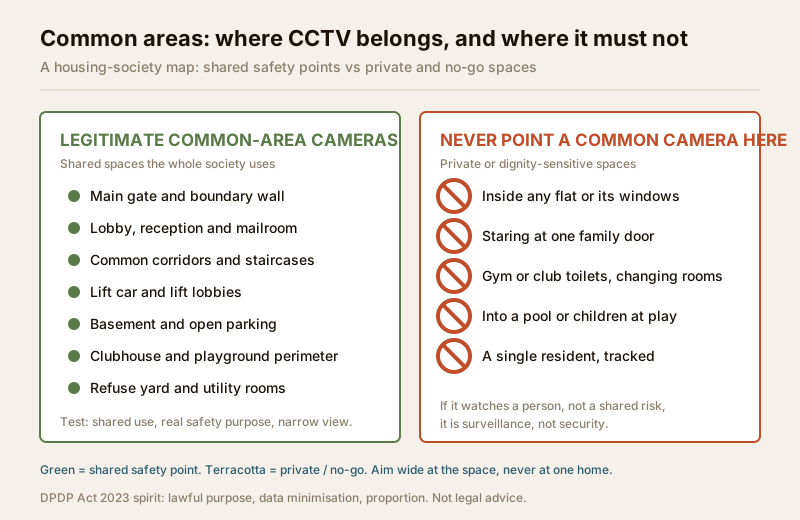
Common areas belong to everyone in the society, and covering them for shared safety is exactly what these cameras are for. The following are all normal, defensible places for a society camera:
- The main gate and boundary — who and what enters and leaves.
- The lobby, reception and mailroom — the building's front door and deliveries.
- Common corridors and staircases — shared circulation, not any one flat.
- The lift car and lift lobbies — a confined shared space where safety matters.
- Basement and open parking — vehicles and access points.
- The clubhouse, gym approach and the perimeter of the playground and pool — shared amenities, watched from a sensible distance.
- Refuse yards, pump rooms and utility areas — equipment and access.
The common thread is simple: the camera watches a space the whole society uses, for a real safety purpose, with the narrowest useful view. When all three hold, common-area CCTV is uncontroversial.
Where a common camera must NOT go
The same map has clear no-go zones. A common-area camera is not a licence to see everything, and some places are simply off-limits:
- Never into the private interior of a flat, or through its windows or balcony. A camera on a corridor must be aimed and, where needed, privacy-masked so it cannot see inside a home.
- Never a camera dedicated to staring at one flat's door. A corridor camera that happens to include several doors is fine; a camera positioned so that its whole job is to watch a single family's entrance is surveillance of that family, not the corridor.
- Never in toilets, bathrooms or changing rooms of the gym, clubhouse or pool. This is absolute — no camera, ever, regardless of who asks.
- Careful around the swimming pool and children's play area. Perimeter coverage for genuine safety can be justified, but a camera pointed to dwell on children at play or bathers is intrusive and hard to defend. Keep the view wide, distant and purpose-limited, and think hard about whether it is needed at all.
- Never audio, casually. Recording conversations in shared spaces is a separate and more sensitive decision — see the CCTV audio recording guide before any microphone is switched on.
The dignity test. If a camera is watching a shared risk, it is security. If it is watching a particular person or family, it has become surveillance — and no committee resolution makes that acceptable. When a resident says "that camera is on my door", treat it as a real problem to fix, not a complaint to dismiss.
The DPDP Act, in plain language, for a society
Footage that identifies a person is personal data, and the Digital Personal Data Protection Act, 2023 sets out principles that map neatly onto how a society should run its cameras. You do not need to be a lawyer to apply them:
| DPDP principle | What it means for common-area CCTV |
|---|---|
| Lawful purpose | Cameras exist for a stated safety reason, decided by the society, not for watching residents. |
| Notice | People are told, through clear signage, that shared areas are recorded. |
| Data minimisation | Narrowest useful field of view; no more cameras or coverage than the purpose needs. |
| Storage limitation | Footage is kept for a set window, then overwritten — not stored forever. |
| Security safeguards | The recorder is locked down; access is restricted; no casual copies. |
| Accountability | A named person answers for the system and for how footage is used. |
A society is a collective handling other people's data, so it should treat these as obligations, not aspirations. Where a purely personal, single-household camera might fall outside some formal duties, an RWA running dozens of cameras across a community clearly does not — the responsible posture is to follow all of the above.
RWA governance: turning cameras into a policy
The difference between a trusted CCTV system and a contentious one is a written policy, approved openly. Verbal understandings and one committee member's discretion are how footage gets misused. Put it on paper:
- A stated purpose per area. One line for each camera group: what it is for. If you cannot write the purpose, you do not need the camera.
- Committee or general-body approval. The policy is passed by the managing committee or the general body meeting and recorded in the minutes, so it is the society's decision, not one person's.
- A named custodian. One accountable role — often the secretary or a designated committee member — owns the system, holds access, and answers residents' questions. Diffuse responsibility means no responsibility.
- Notice and signage. Visible signs at the gate, lobby and lifts stating that CCTV is in operation. This is covered in detail in the CCTV signage guide. Signage is both a courtesy and a core DPDP step.
- Access rules. Written down: who may view footage, for what reasons, and that every viewing is logged.
- A retention window. A defined period the society agrees on, after which footage is overwritten. Do not keep everything indefinitely because the drive has space.
- Residents' rights. A stated route for a resident to ask what is recorded and to request footage of an incident involving them.
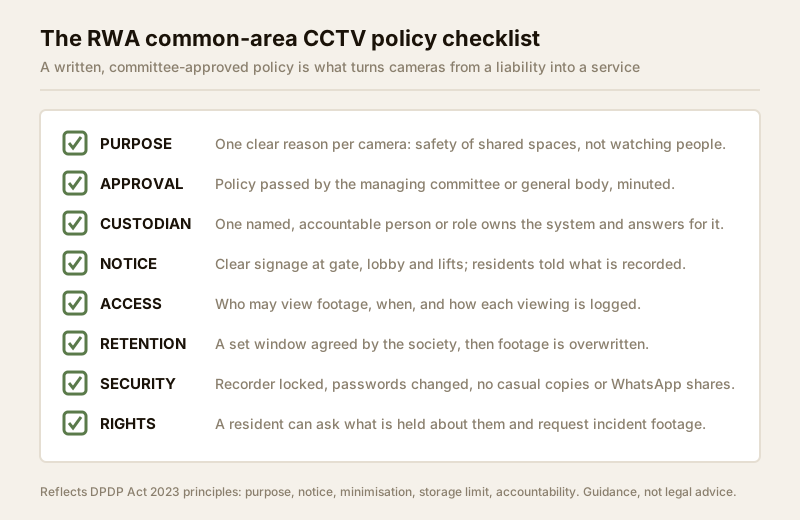
Adopting this is not bureaucracy for its own sake — it is what lets the committee say, honestly, that the cameras serve the community and are not a tool for factions, gossip or grudges. For a structured way to review an existing scheme against these principles, work through the security and privacy assessment guide.
Handling the footage: custodian, access and no forwarding
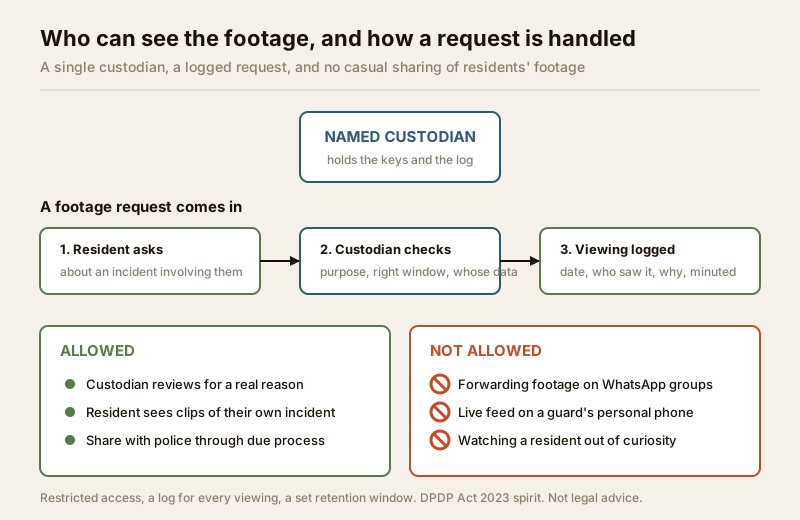
How footage is handled matters as much as where cameras point. A well-governed society keeps a tight loop around the recordings:
- One custodian holds access. The recorder and its passwords sit with the named custodian, not on a shared login everyone knows.
- A logged, reasoned process for viewing. When someone needs to see footage — a resident reporting an incident, the committee investigating damage — the custodian checks the reason, pulls the right window, and logs who viewed what, when, and why.
- Residents can request footage of incidents involving them. If something happened to a resident or their vehicle in a common area, they can ask for the relevant clip. Handle these fairly and promptly, mindful that a clip may also show other people.
- Sharing only through due process. Handing footage to the police should follow proper process, not a casual favour. For anything with legal weight, take advice.
- No WhatsApp-forwarding of residents' footage. This is the single most common failure. Clips of residents circulated in society WhatsApp groups, or a live feed mirrored to a guard's personal phone, are exactly the misuse DPDP-style safeguards exist to prevent. Footage is not community entertainment.
| Footage handling | Governed way | Misuse to avoid |
|---|---|---|
| Access | Custodian-only, logged | Shared login, guard's phone |
| Viewing | For a stated reason, minuted | Curiosity, monitoring a neighbour |
| Resident request | Clip of their own incident | Refusing outright, or over-sharing others |
| Retention | Set window, then overwritten | Kept forever "just in case" |
| Sharing | Police via due process only | Forwarding to WhatsApp groups |
Balancing one resident's demand against another's privacy
A recurring society flashpoint: one resident wants a camera added, another feels watched by it. This is a governance question, not a shouting match, and proportionality is the test.
- Start from the shared purpose. Does the proposed camera protect a common space and a shared risk, or is it really about one person's dispute or anxiety about a specific neighbour?
- Aim at the space, not the person. If a camera is genuinely needed, position and mask it so it covers the shared area and cannot dwell on any single door, window or family.
- Decide it collectively. New coverage that materially affects residents' privacy belongs to the committee or general body, under the written policy — not to whoever shouts loudest or funds it personally.
- Offer the least-intrusive fix. Often the real need is better lighting, a repositioned existing camera, or improved access control rather than a new camera trained on a person.
Fairness callout. A society's cameras are a shared trust. One resident's wish for more coverage does not outweigh another's right not to be singled out and watched. When the two collide, the answer is the narrowest measure that meets the genuine shared-safety need — and if the "need" is really about targeting a particular household, the answer is no.
The residents' rights box
Residents are the people these cameras watch, and they hold rights the society should honour plainly:
- The right to know. What is recorded, where cameras are, and the purpose — through signage and an accessible copy of the policy.
- The right to notice. No hidden cameras in common areas; recording is disclosed.
- The right to request their own incident footage. A fair, reasonably prompt route to ask for footage of an event involving them.
- The right not to be singled out. No camera dedicated to watching one resident, family or door.
- The right to raise a grievance. A named person to complain to, and an expectation of a real response.
- The right to dignity in sensitive spaces. Absolute privacy in toilets, changing rooms and inside their homes.
When to get legal or professional advice
Treat this guide as a starting point, and bring in help where it matters:
- Drafting the CCTV policy, or a data-protection question — take professional advice so the society's written policy and its handling of footage genuinely align with the DPDP Act 2023 and its rules as they stand.
- A police or court request for footage, or a suspected data breach — follow due process and take legal advice rather than acting on your own reading.
- A dispute between residents over a camera — where it cannot be resolved through the committee and policy, get independent advice.
- Installation, cabling and mains work — use a licensed installer and, for electrical work, a qualified electrician. Cameras and recorders must never block a corridor, doorway or fire-escape route.
Legal & ethics caution (not legal advice). A managing committee handling residents' footage carries real responsibilities. Adopt a written, approved policy; post clear notice; keep the purpose narrow; restrict and log access; set a retention window; and honour residents' rights. Do not point common cameras into private spaces or at individuals, and confirm anything with legal weight with a qualified professional.
Key takeaways
- Common-area CCTV is legitimate at the gate, lobby, corridors, lift, parking, boundary and amenity perimeters — the issue is governance and proportion, not the cameras themselves.
- Never point a common camera into a flat, at a single family's door, or into toilets and changing rooms, and be very careful around the pool and children's play.
- Governance is everything: a written, committee-approved policy, a named custodian, clear signage, restricted and logged access, a set retention window, and stated residents' rights.
- Handle footage tightly — custodian-only access, reasoned and logged viewing, and absolutely no WhatsApp-forwarding of residents' footage.
- Balance fairly: one resident's demand for a camera does not override another's privacy; aim at the space, decide collectively, use the least-intrusive fix.
- This is guidance, not law — for a policy, a dispute, a breach or a police request, take professional advice.
References
- Digital Personal Data Protection Act, 2023 — a housing society handling footage that identifies residents should apply its principles: lawful purpose, notice, data minimisation, storage limitation, security safeguards and accountability; verify current text and rules before relying on it.
- Reasonable expectation of privacy — residents retain privacy in their homes and in sensitive shared spaces; common-area cameras must not be aimed at individuals or into private areas. Seek qualified legal advice for a specific dispute.
- Society bye-laws and committee resolutions — a written, approved CCTV policy and access log are the society's own accountable record; adopt and minute them through due process.
This is an educational overview, not legal advice. How a society may lawfully run and share common-area CCTV depends on its exact facts and obligations — take professional advice for any policy, dispute, breach or police request, and engage licensed professionals for installation and electrical work.
Export this guide
Related Guides — Deep-dive reading
Security Privacy Assessment for Indian Homes
Getting the privacy side of home security right: camera placement ethics and limits, notice and consent, the extra caution audio demands, and treating footage as personal data you store, retain and delete responsibly under India's DPDP Act 2023 direction.
SecurityVideo Door Phone Privacy in India (2026): Aiming, DPDP and Good Neighbours
A door phone films everyone who visits, waits or passes by. This guide covers where to point it, what the DPDP Act asks of you, how long to keep footage, and how to be a good neighbour.
SecurityHousing Society CCTV Policy in India (2026): Writing the Rules Everyone Signs Up To
Cameras in a housing society are only as fair and lawful as the written policy behind them. Here is how a committee or RWA drafts, approves and publishes a CCTV policy that satisfies the DPDP Act, settles disputes, and earns resident trust.
SecurityRelated Tools — Try Free
CCTV Camera Coverage & Count Calculator
Estimate how many CCTV cameras you need, the NVR channels, storage in TB for your retention period, and an indicative all-in cost with GST.
CCTV CalculatorCCTV Placement Compliance Checker
A quick DPDP-grounded privacy and safety self-check for where a camera is pointed — flags the items to fix.
ComplianceApartment Interior Planning Checklist
51-item checklist across structural, ceiling, lighting, furniture, storage, electrical, kitchen, bathroom.
Checklist