
CCTV Privacy Guide for India (2026): Watching Responsibly, Lawfully and Decently
A camera is a powerful thing, and the footage of an identifiable person is personal data. This is the front door to using home, RWA and small-business CCTV with dignity, restraint and respect for the people it watches.
A security camera is one of the most powerful things you can install in an ordinary home. It watches without tiring, remembers without forgetting, and captures far more than the one moment you bought it for. That power is exactly why privacy matters here — not because you have done anything wrong, but because the footage of a person walking past your gate is, in plain terms, a record of a real human being. Under India's Digital Personal Data Protection Act, 2023 (the DPDP Act), footage that identifies a person is personal data, and the moment you press record you become its custodian.
This is the front door to Studio Matrx's privacy dossier. Its whole purpose is to help you be a good custodian: someone who uses cameras to keep a home, a society or a small shop safe, while treating the people caught in the frame — family, staff, neighbours, delivery workers, guests, passers-by — with the dignity they are owed. Being watchful and being decent are not in tension. This guide shows how to hold both.
Scope & how to read this. This is practical, India-grounded guidance grounded in the DPDP Act 2023 and the wider right to privacy — it is not legal advice. For anything with real legal weight (a police request, a genuine data breach, a workplace-monitoring policy, a tenant or employee dispute) take professional advice from a qualified lawyer or your Data Protection Officer. When in doubt, choose the least-intrusive option. Nothing here invents section numbers, penalties, retention days or fines.
Why privacy matters even for a "small home setup"
It is tempting to think privacy is a big-company problem — that a couple of cameras on a family gate are too small to count. They are not, for three reasons.
- Dignity. People behave differently when they know they are being recorded. A domestic worker, a child, a guest, a tenant all deserve to move through daily life without feeling watched and catalogued. A camera pointed at the wrong place quietly erodes that.
- Trust. The people around your home cooperate because they trust you. Cameras used quietly, fairly and openly protect that trust. Cameras used to catch people out, or aimed where they should not be, break it — and it rarely comes back.
- The right to privacy. India recognises privacy as part of the right to life and personal liberty under Article 21 of the Constitution, affirmed by the Supreme Court in the K. S. Puttaswamy judgment. At a general level, this means a person has a reasonable expectation not to be surveilled beyond what is genuinely justified. Your right to secure your property and their right to privacy both matter; good practice is where the two are balanced.
None of this asks you to give up security. It asks you to aim your security precisely, so it protects your home without quietly overreaching into other people's lives.
The DPDP Act 2023 in plain English, applied to cameras
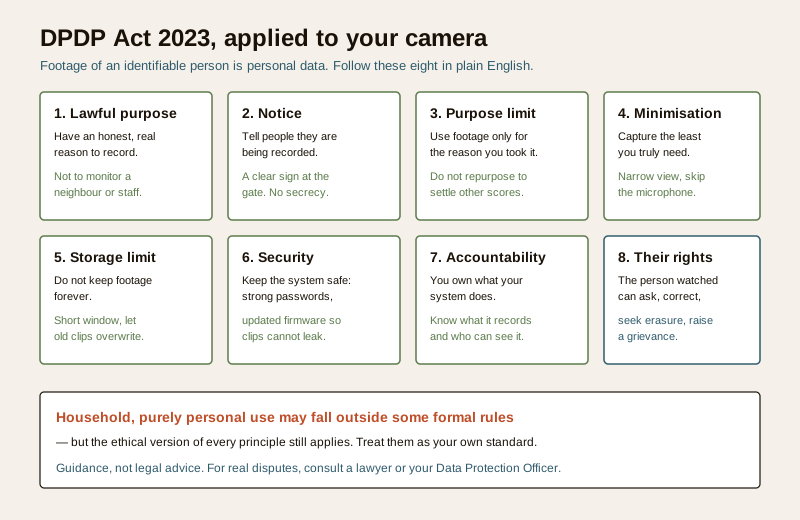
The DPDP Act sets out principles for handling personal data. You do not need to be a lawyer to follow their spirit. Here they are in everyday language, translated to a camera on a wall. A home running a couple of cameras for purely personal or domestic purposes may fall outside some of the Act's formal obligations — the law makes room for ordinary household use. But the ethical version of every principle still applies, and treating them as your own standard is simply good custodianship.
| DPDP principle | What it means for your camera |
|---|---|
| Lawful, legitimate purpose | Have a real, honest reason — deter theft, see who is at the gate. Not to monitor a neighbour or track staff. |
| Notice | Tell people they are being recorded. A clear sign at the entrance is the plainest form of respect. |
| Purpose limitation | Use footage only for the reason you collected it. Do not repurpose it to settle unrelated scores. |
| Data minimisation | Capture the least you need. Narrow the view, skip the microphone, avoid rooms you have no reason to see. |
| Storage limitation | Do not keep footage forever. Set a short, sensible retention window and let old clips overwrite. |
| Accuracy and safeguards | Keep the system secure — strong passwords, updated firmware — so footage cannot leak or be tampered with. |
| Accountability | You own the consequences of your system. Know what it records, where clips go, and who can see them. |
| Rights of the person watched | People can ask what you hold about them and, in fair cases, seek access, correction, erasure or raise a grievance. Respond with respect. |
That last row matters. The person in your footage is, in DPDP language, a data principal — they have rights, not merely a face on your screen. If a delivery worker, a tenant or a visitor asks whether they were recorded and what happens to that clip, the decent and lawful instinct is to answer plainly and help where it is reasonable, not to stonewall. For the design-level version of all this — building privacy into a system from day one rather than bolting it on — see privacy by design for security systems.
The proportionality test: because you can does not mean you should
Proportionality is the single idea that keeps a home CCTV setup on the right side of the line. It asks one question of every camera: is this the least-intrusive way to meet a genuine need? Run each camera through the ladder below, and adjust until you can answer yes.
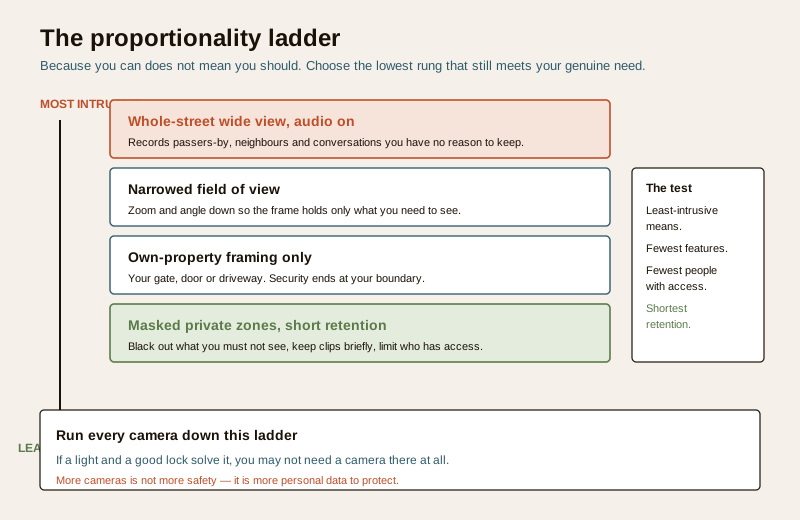
- Least-intrusive means. If a light and a sturdy lock solve the problem, you may not need a camera there at all. Reach for the gentlest tool that works.
- Narrowest view. Aim at your own gate, door or driveway — not a neighbour's window, balcony or garden, and not more of the public street than you truly need. Angle down, zoom in, and if a camera unavoidably overlooks a neighbour, black that area out with privacy masking.
- Fewest features. Leave the microphone off unless there is a specific, notified reason to record sound — audio is far more sensitive than video, as the CCTV audio recording guide explains. Switch off face recognition and other AI analytics unless a real, narrow need justifies them.
- Shortest retention. Keep clips only as long as a genuine purpose requires, then let them overwrite. Footage you no longer hold cannot leak, be subpoenaed by curiosity, or be misused.
- Fewest people with access. The app and recordings should be seen by the household member who needs them, on a strong password — not shared casually across a family group or a society WhatsApp.
For an RWA or a small society, proportionality also means resisting the urge to blanket every corridor, lift and lobby "just in case". More cameras is not more safety; it is more personal data to protect, more people watched, and more that can go wrong. A security and privacy assessment is the structured way to decide what each camera genuinely earns.
The responsible-owner checklist
If you do nothing else, do these. This is what being a good custodian looks like in practice.
- Write down your purpose for each camera in one honest sentence. If you cannot, you probably do not need that camera.
- Aim narrow, angle down. Frame your own property. Mask or physically re-aim anything that catches a neighbour's private space or too much street.
- Post clear notice. A visible sign at the entrance that recording is in progress — see CCTV signage. No secret cameras.
- Default the microphone off. Turn on audio only for a specific, notified, defensible reason.
- Set a short retention window and let old footage overwrite automatically.
- Secure the system. Change default passwords, use a strong unique one, keep firmware updated, and limit who has the app.
- Limit access to the fewest people who genuinely need it, and know exactly where clips are stored (device, cloud, or both).
- Be ready to answer respectfully if someone asks whether and why they were recorded.
- Review twice a year. Cameras drift, needs change, a hedge grows — re-check angles, retention and access.
What NOT to do — the lines you do not cross
Some things are simply off-limits. These are not grey areas; they are where a security setup becomes a violation.
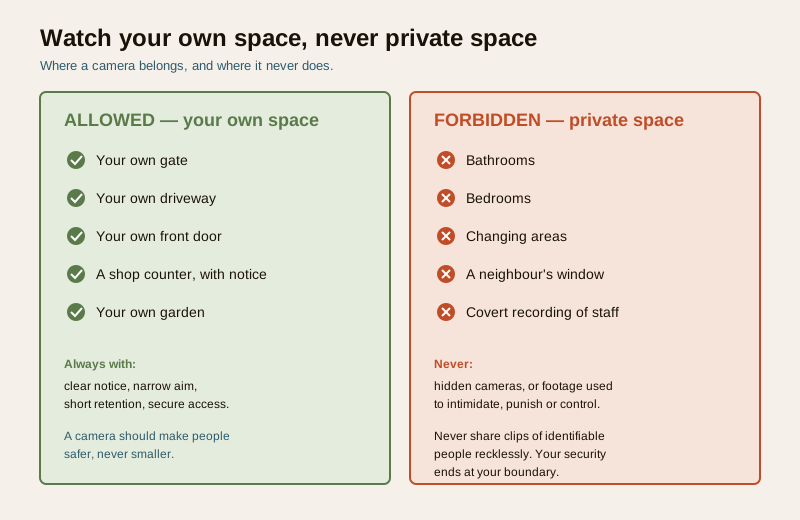
- Never place a camera in a bathroom, bedroom, changing area or any space where a person undresses or expects total privacy — no exceptions, no camera, ever.
- Never record staff, family, tenants or visitors covertly. Hidden cameras trained on the people who live and work around you are a betrayal of trust and can be unlawful. If a space records, people are told.
- Never point a camera to surveil a neighbour — their window, garden, door or comings and goings. Your security ends at your boundary.
- Never use footage to intimidate, punish or control. Not to dock a worker's wages, not to threaten a tenant, not to win a family argument, not to monitor a woman's or a child's every movement. Footage collected for safety must not become a tool of coercion.
- Never share footage recklessly. Do not post clips of identifiable people to WhatsApp groups or social media for entertainment, shaming or gossip. If a real incident needs reporting, share only with the police or the relevant authority, through due process.
Dignity and rights first. The people your camera sees are not suspects by default — they are neighbours, workers, children, guests and residents with their own right to privacy. A camera should make them safer, never smaller. If any use of your system would embarrass, corner or control a person rather than protect a place, that is the moment to stop and rethink.
Smart cameras, doorbells and AI — extra care
Modern kit does more than record. Cloud storage, phone alerts, face recognition and behaviour analytics all add convenience — and each adds personal data flowing off your premises to a company's servers. Treat these features as opt-in, not default. Turn on only what you will actually use, understand where the data goes, and keep AI analytics off unless a specific, narrow need justifies it. Automated systems make mistakes and carry bias, and no automated flag should ever trigger an adverse action against a person without a human calmly reviewing it first.
The dossier goes deeper on each of these — smart and cloud cameras, video door phones and intercoms, the ethics of AI surveillance and the special caution owed to facial recognition on residents, staff or children. You will find each of those dedicated guides through the privacy dossier linked below.
When to get legal or professional advice
This guide is a starting point for good decisions, not a substitute for advice on a real dispute. Bring in a professional when:
- A police or court request for footage arrives — follow due process, and if unsure, ask a lawyer before handing anything over.
- You suspect a data breach — your footage has leaked or your system was hacked. Take advice on your obligations, including any breach-reporting duties.
- You are an employer or a landlord and want to monitor a workplace or a tenancy — the rights of employees and tenants are involved, and this needs a lawyer or your Data Protection Officer, not a DIY policy.
- A neighbour objects to your cameras, or you feel a neighbour's cameras intrude on you — a calm conversation first, and legal advice if it does not resolve.
Cite the framework by name, not by invented detail: the DPDP Act 2023, the IT Act 2000, CERT-In directions on breach reporting, and the constitutional right to privacy under Article 21 as affirmed in Puttaswamy. Anyone quoting you an exact fine, a precise retention period in days, or a specific clause without showing the current text is guessing — verify with a professional.
Explore the rest of the privacy dossier
This overview sets the frame. Each topic below goes deeper, and together they form the rest of the privacy dossier — signage and notice, audio consent, footage retention and sharing, masking, vulnerable people, smart-camera and doorbell privacy, and the ethics of AI and facial recognition. Read the ones that touch your setup, and revisit this page whenever you add a camera.
Key takeaways
- Footage of an identifiable person is personal data, and installing a camera makes you its custodian — a role that carries responsibility, not just a view on a screen.
- The DPDP Act principles are your standard even where a household falls outside the formal rules: lawful purpose, notice, purpose limitation, data minimisation, storage limitation, security, accountability, and respect for the rights of the person watched.
- Proportionality is the test. Least-intrusive means, narrowest view, fewest features, shortest retention, fewest people with access.
- Some lines are absolute: no cameras in bathrooms, bedrooms or changing areas; no covert recording; no surveilling neighbours; no using footage to intimidate, punish or control; no reckless sharing.
- This is guidance, not legal advice — for police requests, breaches, workplace or tenancy monitoring, or any real dispute, consult a qualified lawyer or your Data Protection Officer.
References
- Digital Personal Data Protection Act, 2023 — handle personal data (including identifiable footage) only for a clear, lawful purpose, with notice, minimisation, storage limits, security and accountability; verify the current text and rules before relying on it.
- Constitution of India, Article 21, and K. S. Puttaswamy v. Union of India — privacy is part of the right to life and personal liberty; used here at a general level, not as a specific ruling on any facts.
- IT Act 2000 and CERT-In directions — general framework for information security and breach reporting; consult current text and a professional for any real incident.
- This is an educational overview, not legal advice. For any decision with legal weight, consult a qualified lawyer or your Data Protection Officer and follow due process.
Export this guide
Related Guides — Deep-dive reading
Security Privacy Assessment for Indian Homes
Getting the privacy side of home security right: camera placement ethics and limits, notice and consent, the extra caution audio demands, and treating footage as personal data you store, retain and delete responsibly under India's DPDP Act 2023 direction.
SecuritySmart Security Privacy in India: The System That Watches You More Than Any Burglar
A smart security system spends every hour of every day watching your family, your staff and your routines — and that footage and data, not a burglar, is the long-term risk most buyers never think about. Where cameras belong and where they must never go, where your video actually goes, what a smart home learns about you, your rights under the DPDP Act 2023, and the honest practice for keeping it all yours.
SecurityWhere Not to Install CCTV in India (2026): The No-Go Zones
A camera is a powerful thing, and pointing it at the wrong place can turn a security measure into a serious intrusion. This is the plain, humane list of places a camera must never point, plus the borderline spots to think twice about.
SecurityRelated Tools — Try Free
CCTV Placement Compliance Checker
A quick DPDP-grounded privacy and safety self-check for where a camera is pointed — flags the items to fix.
ComplianceApartment Video Door System Planner
Enter flats, entrances, floors and guard desk for a first-pass building intercom plan — door stations, indoor monitors, guard station, the right architecture and an indicative cost band.
Building PlannerCCTV Camera Coverage & Count Calculator
Estimate how many CCTV cameras you need, the NVR channels, storage in TB for your retention period, and an indicative all-in cost with GST.
CCTV Calculator