
Domestic Worker Privacy in India (2026): Security With Dignity
Maids, cooks, drivers, nannies and live-in help are people with rights, not permanent suspects to be watched. Use home cameras for real security, and never as a tool to monitor, control, shame or pressure the person who works in your home.
A person who cooks your meals, minds your children, cleans your rooms or drives your car spends hours inside the most intimate parts of your life. That closeness is exactly why domestic worker privacy deserves real thought before a single camera goes up. A home security system exists to protect a household from outside threats. The moment it becomes a way to watch, time, correct or pressure the person who works for you, it has stopped being security and become something meaner.
This guide is written plainly on the worker's side, because the power sits with the employer. She usually cannot object, negotiate the camera placement, or walk away easily. When one party holds the home, the wages and the recording, fairness has to be built in deliberately. So the reader here is the employer, and the job of the guide is to protect the worker.
Scope & how to read this. This is practical, humane guidance grounded in the spirit of the Digital Personal Data Protection Act, 2023 and the constitutional right to privacy, not legal advice. Where a worker's rights are genuinely engaged, or where a dispute could go to a lawyer or the police, take professional advice. Throughout, choose the least intrusive option that still keeps your home safe.
The dignity principle, and the power imbalance
Start from a simple idea: a domestic worker is a person with the same right to privacy and dignity as anyone else in the house. She is not a permanent suspect to be monitored, and the presence of a camera should never make her feel like one.
The relationship is unequal in ways that are easy to forget. The employer owns the space, sets the terms, controls the pay and holds the footage. A worker who feels watched all day rarely feels free to say so. That imbalance is precisely why the burden is on you to be restrained, honest and kind. The test running through this whole guide is short: because you can point a camera somewhere does not mean you should.
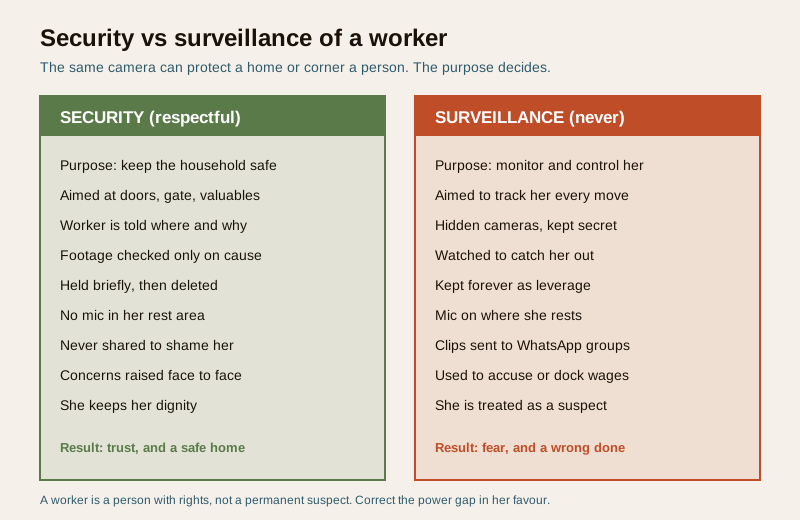
Home cameras are for security, watching the doors, the gate, the boundary and your valuables against intrusion or genuine risk. They are not a management tool for the person who works there. Using footage to check how long she took over lunch, to time her breaks, to build a case for cutting her pay, or to keep her anxious and compliant, is a misuse of a security system against a vulnerable person.
Hard limits: where a camera must never go
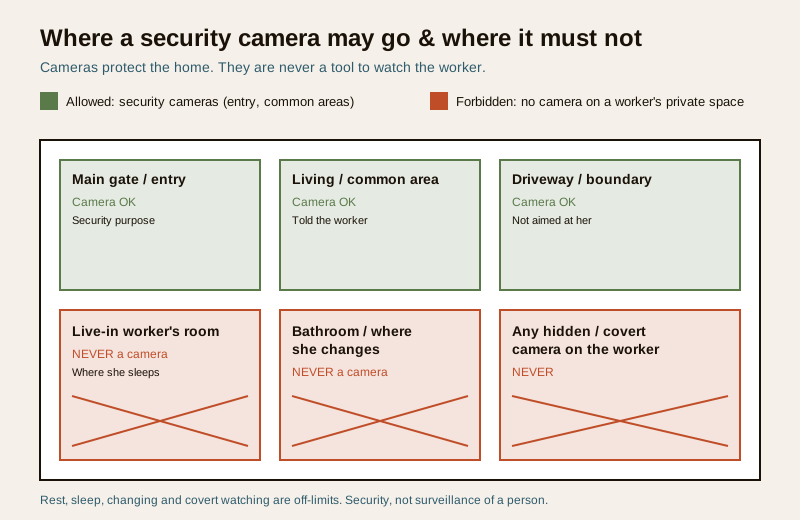
Some lines are not judgement calls. They are absolute, and they matter most for a live-in worker whose home is your home.
- Never a camera in a live-in worker's room. The room where she sleeps, rests and keeps her belongings is her private space, full stop. No camera, no exceptions, however the room is described.
- Never a camera in a bathroom, or anywhere she changes. This is non-negotiable for anyone, and recording a worker undressing is among the gravest violations possible.
- Never a covert or hidden camera on the worker. Secretly recording the person who trusts you inside your home is a betrayal, and hidden recording of someone in a private moment can cross into serious wrongdoing. If you would be ashamed to point out the camera to her, it should not be there.
- Never a microphone where she rests. Audio is more intrusive than video. Keep mics off in any space she uses to relax, and off entirely in her room. The detail on sound sits in the CCTV audio recording guide.
The general map of no-go zones for any household applies here too, and is worth reading in full in where not to install CCTV in India.
A dignity line you do not cross. No camera and no microphone in a domestic worker's room, in a bathroom, or where she changes, sleeps or rests, and never a hidden camera aimed at her. If a placement exists to catch her out rather than to keep the home safe, remove it.
Transparency and consent: tell her, in a language she understands
The opposite of covert watching is openness. A respectful employer tells the worker exactly where the cameras are, what they see, and why they exist, before she starts and whenever anything changes.
Do it in a language she actually understands, and in plain words, not a legal notice she cannot read. Walk her through the house, point at each camera, and explain that they watch the doors and the property for security, not her. Make clear what the cameras do not do: they are not in her room, they are not there to time her, and the footage is not shared around.
Under the Digital Personal Data Protection Act, 2023, footage that identifies a person is that person's data, and she is a data principal with rights, to be told what is collected and why, and in principle to ask about it, seek correction and raise a grievance. A private household running a couple of cameras for personal use may sit outside some formal obligations, but the ethical core, notice, honesty and restraint, still applies fully. Treat her as someone with rights, not as furniture that happens to be recorded. The general framing of these ideas is covered in the CCTV privacy guide for India.
Footage fairness: due process, no circulation, no hoarding
How you handle recordings matters as much as where the cameras point. Footage of a worker is powerful, and power over a vulnerable person calls for care.
- Do not accuse without due process. A clip is not a verdict. If something appears to have gone wrong, talk to her, hear her side, and treat her as you would want to be treated on the strength of a blurry frame. Never spring a recording on her as a trap.
- Do not circulate her footage or images. Sending clips or photos of your worker to a WhatsApp group, posting them, or forwarding them to warn other employers off her, can wreck her livelihood and reputation, often on a misreading. This is not your footage to broadcast.
- Do not keep it forever. Recordings for ordinary home security should be held briefly and then deleted, not archived as leverage. Storage limitation is a core idea of the DPDP framework, and hoarding footage of a person is both intrusive and pointless.
- Limit who can see it. The fewer people with access to your cameras, the better. That protects her, and it protects your household too.
For the wider household picture on apartment blocks and shared cameras, where footage can travel even further, see CCTV in apartments in India.
The nanny cam tension: child safety without spying on the carer
The hardest case is the nanny cam. Wanting to know your child is safe with a carer is a real, legitimate concern. But a camera trained on a nanny all day is also, unavoidably, surveillance of a worker, and honesty resolves most of the tension.
- Be open about it. Tell the nanny there is a camera in the child's areas, where it is, and that it is there for the child's safety. A carer who knows about the camera is being treated as an adult, not spied on. A hidden nanny cam turns a safety measure into a secret trap and poisons trust.
- Aim it at the child's spaces, not at her private moments. The living room, the play area and the nursery are reasonable. The room where she rests, and any bathroom, are never.
- Do not let it become constant monitoring. The point is the child's welfare, not a running log of the carer's every move to be picked over later.
- Keep the same footage rules. No circulating clips of the nanny, no keeping them forever, and no using them to pressure or shame her.
The child-facing side of this, and how children have their own privacy interests, is covered in childrens privacy and CCTV in India.
Audio and biometric attendance: consent and minimisation
Two features go further than plain video and deserve extra restraint.
Audio. Recording what a worker says, among herself and others, is a serious step beyond watching a doorway. Default microphones off in a home with help, tell her if audio is ever on anywhere, and never record sound where she rests. The full reasoning is in the CCTV audio recording guide.
Biometric attendance. Some employers use fingerprint or face-based attendance for staff. If you do, it must be with her clear consent and understanding, for the narrow purpose of attendance only, held securely, and never fed into wider face-tracking around the house. Biometric and face data is especially sensitive and hard to undo if leaked, so collect the minimum and think hard about whether you need it at all. The risks of face recognition specifically are covered in facial recognition and privacy in India.
Both features share one rule: the narrowest purpose, the least data, real consent, and the shortest retention.
Security with dignity: what to do, and what never to do
Pull it together into two lists. A respectful employer can run through both before a camera goes up in a home with help.
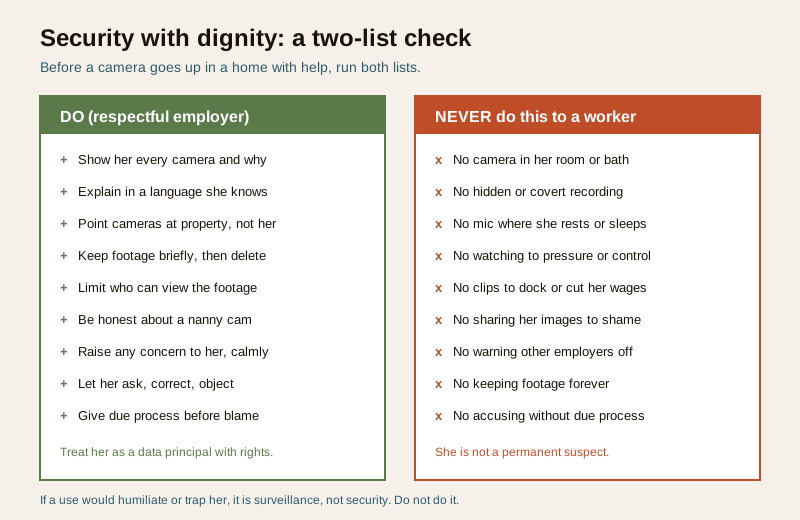
Security with dignity, do this:
- Show her every camera and explain, in her language, what it sees and why.
- Point cameras at the property, the entries and valuables, not at where she works, rests or moves all day.
- Keep no cameras in her room, any bathroom, or where she changes or rests.
- Hold footage only briefly, then delete it, and limit who can view it.
- Be honest about any nanny cam and aim it at the child's spaces.
- Raise any concern with her directly and calmly, and give her a fair hearing before any conclusion.
- Let her ask questions, seek a correction, and object, and take that seriously.
Never do this to a worker:
- Never install a camera in her room, a bathroom, or any place she changes, sleeps or rests.
- Never use a hidden or covert camera, or a microphone, aimed at her.
- Never use footage to time her, pressure her, control her, or dock or withhold her wages.
- Never circulate her images or clips, on WhatsApp, online, or to warn other employers.
- Never keep recordings of her indefinitely as leverage.
- Never accuse her on the strength of a clip without hearing her out.
To design a whole home security scheme that bakes in this restraint from the start rather than bolting it on, work through privacy by design for security systems in India, and use the privacy section hub to navigate the related guides.
When to take legal or professional advice
Most of this is about decency, which needs no lawyer. But some situations do call for professional help.
- If a real dispute arises, a theft allegation, a grievance, a possible dismissal, get advice before you rely on any footage against a worker, and follow due process.
- If you are unsure whether a placement or a biometric system crosses a line, treat the doubt as a signal to not do it, and seek advice.
- If footage has leaked or been shared and someone has been harmed, this is where labour, privacy and, potentially, criminal considerations meet, and a qualified professional should guide you.
The safe default in every uncertain case is the more restrained, more private option. You will never regret having watched a worker less.
Key takeaways
- A domestic worker is a person with rights, not a suspect. Cameras are for home security, never a tool to monitor, control, pressure or shame the person who works for you.
- Some places are absolute no-go. Never a camera or mic in her room, a bathroom, or where she rests, sleeps or changes, and never anything hidden aimed at her.
- Be open and get real consent. Tell her where the cameras are and why, in a language she understands, and treat her as a data principal with rights under the DPDP Act 2023.
- Handle footage fairly. No accusing without due process, no circulating her images, no keeping recordings forever, and few people with access.
- Nanny cams demand honesty. Protect the child openly, aim the camera at the child's spaces, and never let it become secret spying on the carer.
- When in doubt, restrain and ask. For any real dispute or rights question, take professional advice, and always choose the least intrusive option.
References
- Digital Personal Data Protection Act, 2023 - footage and biometrics that identify a person are personal data; collect only for a clear purpose, with notice, minimally, and do not keep longer than needed. Verify current text and rules before relying on it.
- Right to privacy (Constitution Art. 21, as affirmed by the Supreme Court in K.S. Puttaswamy) - privacy and dignity are protected interests; recording a person in private spaces raises serious concerns. Seek qualified legal advice for a specific situation.
- General labour and criminal law - covert recording, sharing of images, and using surveillance to coerce a worker can engage legal liability; consult a lawyer where a worker's rights are genuinely at stake.
This is an educational overview written to protect the dignity of domestic workers, not legal advice. Where a worker's rights are engaged, or a dispute could reach a lawyer or the police, consult a qualified professional and follow due process.
Export this guide
Related Guides — Deep-dive reading
Smart Security Privacy in India: The System That Watches You More Than Any Burglar
A smart security system spends every hour of every day watching your family, your staff and your routines — and that footage and data, not a burglar, is the long-term risk most buyers never think about. Where cameras belong and where they must never go, where your video actually goes, what a smart home learns about you, your rights under the DPDP Act 2023, and the honest practice for keeping it all yours.
SecuritySecurity Privacy Assessment for Indian Homes
Getting the privacy side of home security right: camera placement ethics and limits, notice and consent, the extra caution audio demands, and treating footage as personal data you store, retain and delete responsibly under India's DPDP Act 2023 direction.
SecurityWhere Not to Install CCTV in India (2026): The No-Go Zones
A camera is a powerful thing, and pointing it at the wrong place can turn a security measure into a serious intrusion. This is the plain, humane list of places a camera must never point, plus the borderline spots to think twice about.
SecurityRelated Tools — Try Free
AI Privacy Compliance Assistant
Make your CCTV and security setup privacy-respecting and DPDP-Act-2023-aligned — signage, a clear purpose, no cameras in private spaces, masking, limited retention and restricted access, with extra care for domestic workers and children. Guidance, not legal advice; a DPO or lawyer advises.
AI ToolCCTV Camera Coverage & Count Calculator
Estimate how many CCTV cameras you need, the NVR channels, storage in TB for your retention period, and an indicative all-in cost with GST.
CCTV CalculatorCCTV Placement Compliance Checker
A quick DPDP-grounded privacy and safety self-check for where a camera is pointed — flags the items to fix.
Compliance