
Vernacular Architecture of Bengal: The Curved Roof That Became the Bungalow
How a mud-bamboo-thatch hut on the Ganga delta gave the world the word and form 'bungalow' — and climbed into Mughal masonry and Bengal's terracotta temples
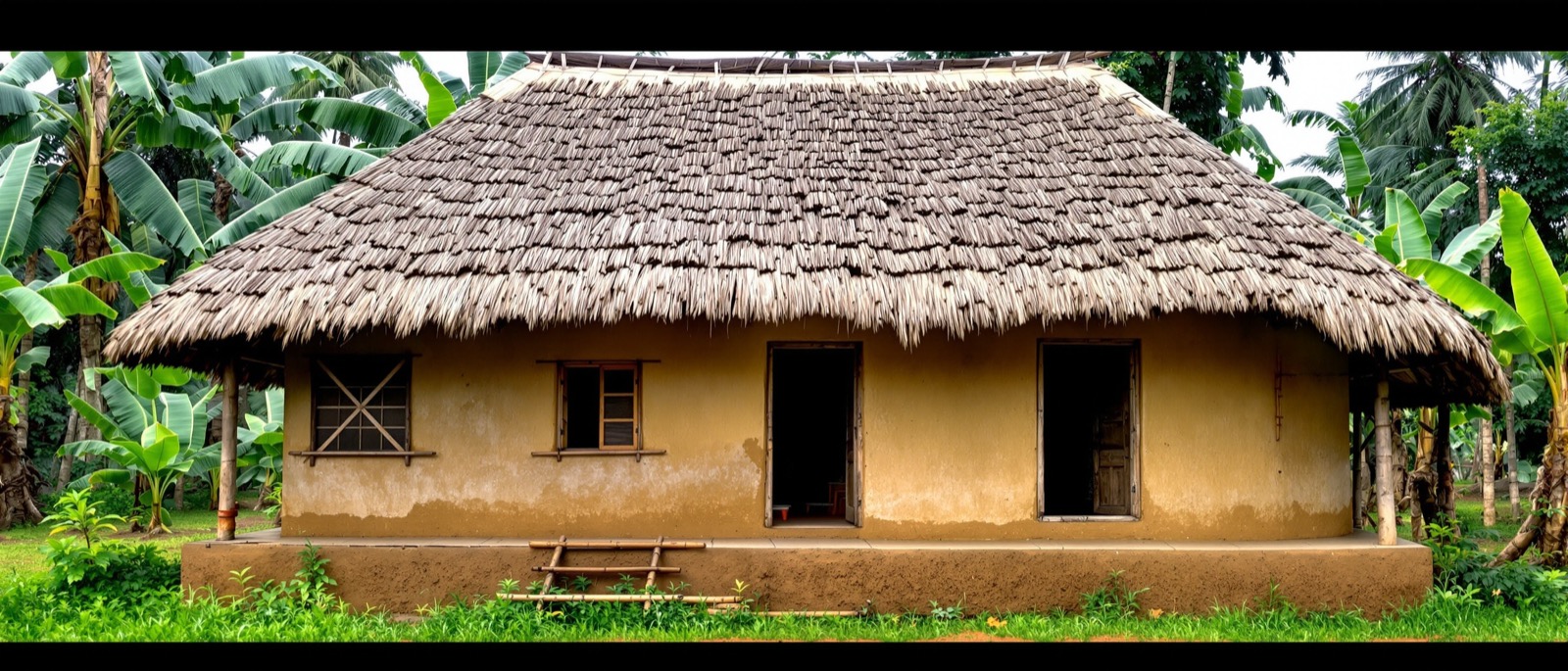
Stand in a Bengal village at the first crack of the monsoon and you will see a kind of quiet engineering. The rain does not fall so much as collapse out of the sky, in sheets, for hours. And on the thatched huts the water never lingers. It hits a roof that curves down and outward like the hull of an upturned boat, races off the steep slope, leaps past a deep overhanging eave, and lands clear of the wall and the raised earthen plinth on which the house sits. The mud walls stay dry. The family sits under the projecting eave — the verandah — and watches the deluge it has already defeated.
That curved roof is one of the most travelled forms in the history of building. It began as the humblest thing imaginable: a peasant's hut of mud, bamboo and straw on the flood-prone delta of the Ganga. Yet its silhouette climbed upward into the masonry of Mughal pavilions and Rajput palaces, hardened into the brick terracotta temples of Bengal, and — carried out on the tide of empire — gave the English language a word and the world a house type. We call it the bungalow.
The vernacular hut of Bengal — the "bangla" — is the rare folk form that migrated upward into elite temple architecture and outward into global domestic architecture, all on the strength of one climate-smart idea: a curved roof that sheds the monsoon.
This guide is for the B.Arch student tracing how form travels, the teacher who wants the etymology right, and the homeowner curious why "bungalow" sounds nothing like English. We cover the hot-humid deltaic climate and its logic, the bangla hut and the whole "chala" roof family, how bent bamboo makes the curve, the bangla-to-bungalow story, the form's upward migration into Mughal and temple architecture, the materials, the social meaning, real terracotta-temple towns, and what survives. It sits within our pillar on Indian vernacular architecture and beside its wet-tropics siblings — Kerala and the North-East.
A king's temple in Bishnupur and an Englishman's seaside cottage owe their shape to the same thing: a Bengali farmer's roof, bent by bamboo, built to beat the rain.
1. The Land: A Hot-Humid Delta That Floods
Bengal is, before anything else, water. It is the great deltaic plain where the Ganga, the Brahmaputra and the Meghna braid together and spill into the Bay of Bengal — flat, fertile, and saturated. The climate that shapes its architecture has three relentless features.
It is hot. It is humid — the air sits heavy and wet for much of the year, and damp is the enemy of every material. And it receives a heavy monsoon: intense, prolonged rainfall that turns fields to mirrors and rivers to seas. Add to this the deltaic reality of flooding — a low, soft landscape where rising water is a seasonal certainty, not an accident.
A house here cannot fight the climate with mass, as a desert house does. It must work with the wet: get the rain off fast, lift itself above the flood, let breezes move through to fight the humidity, and use materials that can be cheaply rebuilt when the river finally wins. Every feature of the bangla hut answers one of those demands.
| Climate force | The problem it creates | The vernacular response |
|---|---|---|
| Heavy monsoon rain | Water pooling, leaking, eroding mud walls | Steep, curved thatch that sheds rain fast |
| High humidity | Damp, mould, stagnant hot air | Light breathable materials; cross-ventilation; deep shaded verandah |
| Deltaic flooding | Standing water at ground level | Raised earthen plinth lifting the floor clear |
| Strong sun & rain on walls | Wall erosion and overheating | Deep overhanging eaves shading and protecting the wall |
| Frequent rebuilding | Permanent materials are wasted | Mud, bamboo and thatch — cheap, local, renewable |
The genius of Bengal's vernacular is that a single architectural move — the steep curved roof carried out far beyond the wall — solves the rain, shades the wall, and creates the verandah, all at once.
2. The Logic of the Curved Roof
To understand why the Bengali roof curves, look at the rest of India's pitched roofs, which are mostly straight planes. The bangla roof is different: its slope is concave, swooping down and flaring out near the eave like the inside of a wave or the bottom of a boat. This is not decoration. It is the honest signature of the material that builds it.
The roof is made of bamboo. Bamboo is light, strong, abundant in the delta, and — crucially — flexible. When long bamboo members are lashed together and bent over the ridge of the hut, holding them in place puts them under tension. A material under tension does not sit in a straight line; it bows into a smooth curve. The builder is not carving a shape; the bamboo finds the curve on its own, and the thatch laid over it follows.
That curve does real work. A roof that is steepest near the ridge throws water off quickly, while the gentler flare near the eave slows and directs the runoff so it leaps clear of the wall. And because the bamboo naturally springs outward at the bottom, the eave projects well beyond the wall line. That projection, deepened and supported, becomes the verandah — the shaded, rain-protected outdoor room that is the social centre of the Bengali house.
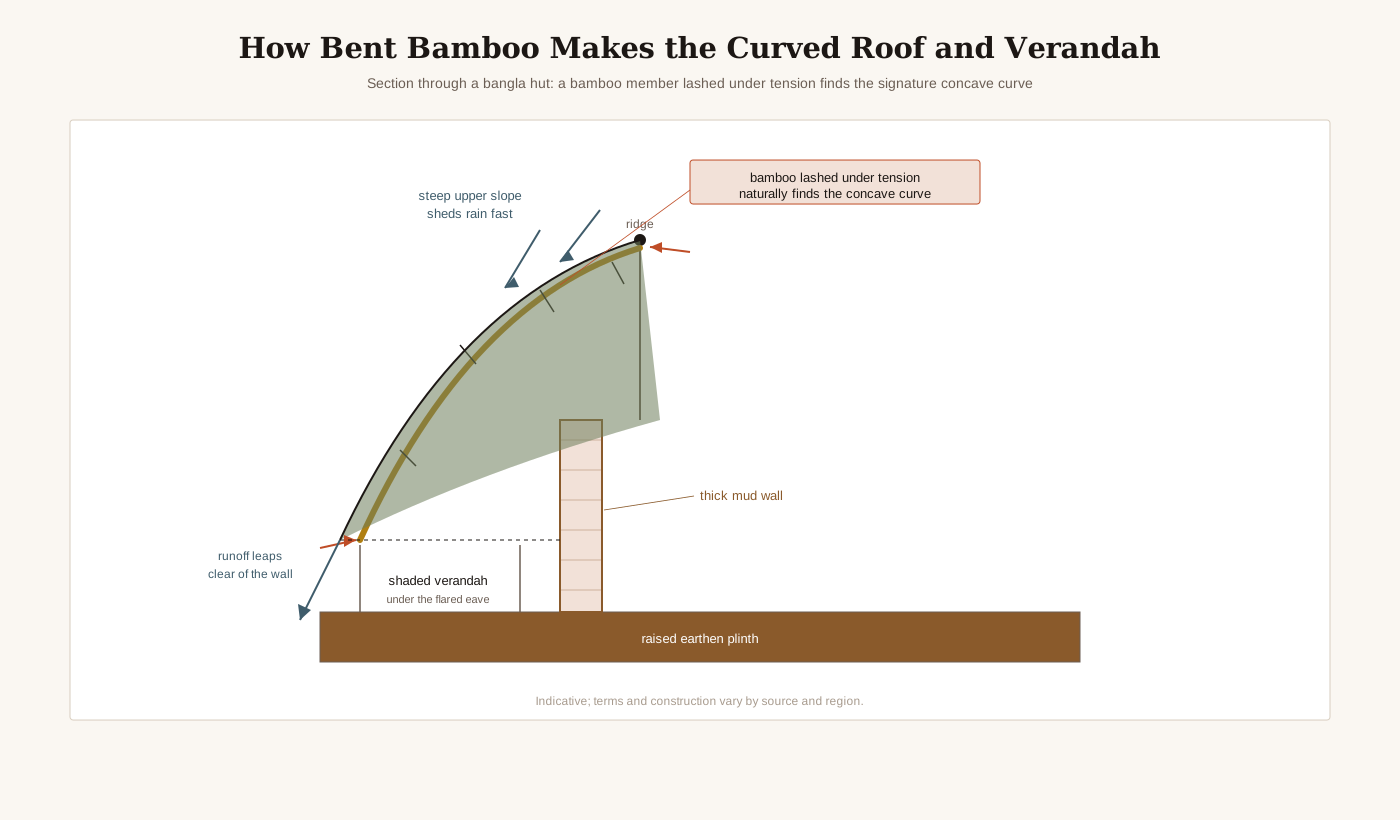
So the famous Bengali curve is what engineers would call a form-found shape — the geometry that the material wants to take under load. Centuries later, masons would carve this same curve into solid brick and stone, where it had no structural reason to exist at all. They copied it because, by then, the curve had become the look of Bengal.
3. The Typologies: The "Chala" Roof Family
Bengali roof forms are named by their chala — the word for a roof-slope or roof-segment. A hut is classified by how many slopes its roof has and how they are arranged. This vocabulary is precise, and it later became the formal grammar of Bengal's temple architecture, so it is worth learning carefully.
| Type | Literal sense | Form | Where it migrated |
|---|---|---|---|
| Do-chala | "two slopes" (do = two) | Two curved slopes meeting at a central ridge — the basic hut roof | Copied by the Mughals; the source of the curved cornice |
| Char-chala / Chau-chala | "four slopes" (char = four; chau a colloquial variant) | Four slopes, hipped, meeting at a point — no exposed gable | Common in larger huts and brick temples |
| At-chala | "eight (roof) corners" | A double char-chala in two tiers — an upper roof rising above a lower one | A signature of Bengal temple roofs |
| Jor-bangla | "joined bangla" | Two do-chala units joined together (often back-to-back) | A distinctive twin-roofed temple type |
A few notes on the terms, since spellings vary across sources. Char-chala and chau-chala both refer to the four-sloped roof — char is the standard Bengali "four", chau a colloquial variant — and both are acceptable. The at-chala is essentially one char-chala roof set on top of another, giving a two-tiered, eight-cornered profile that reads as grander and taller. The jor-bangla literally joins two bangla (do-chala) units, producing a memorable double-humped silhouette that the temple builders prized.
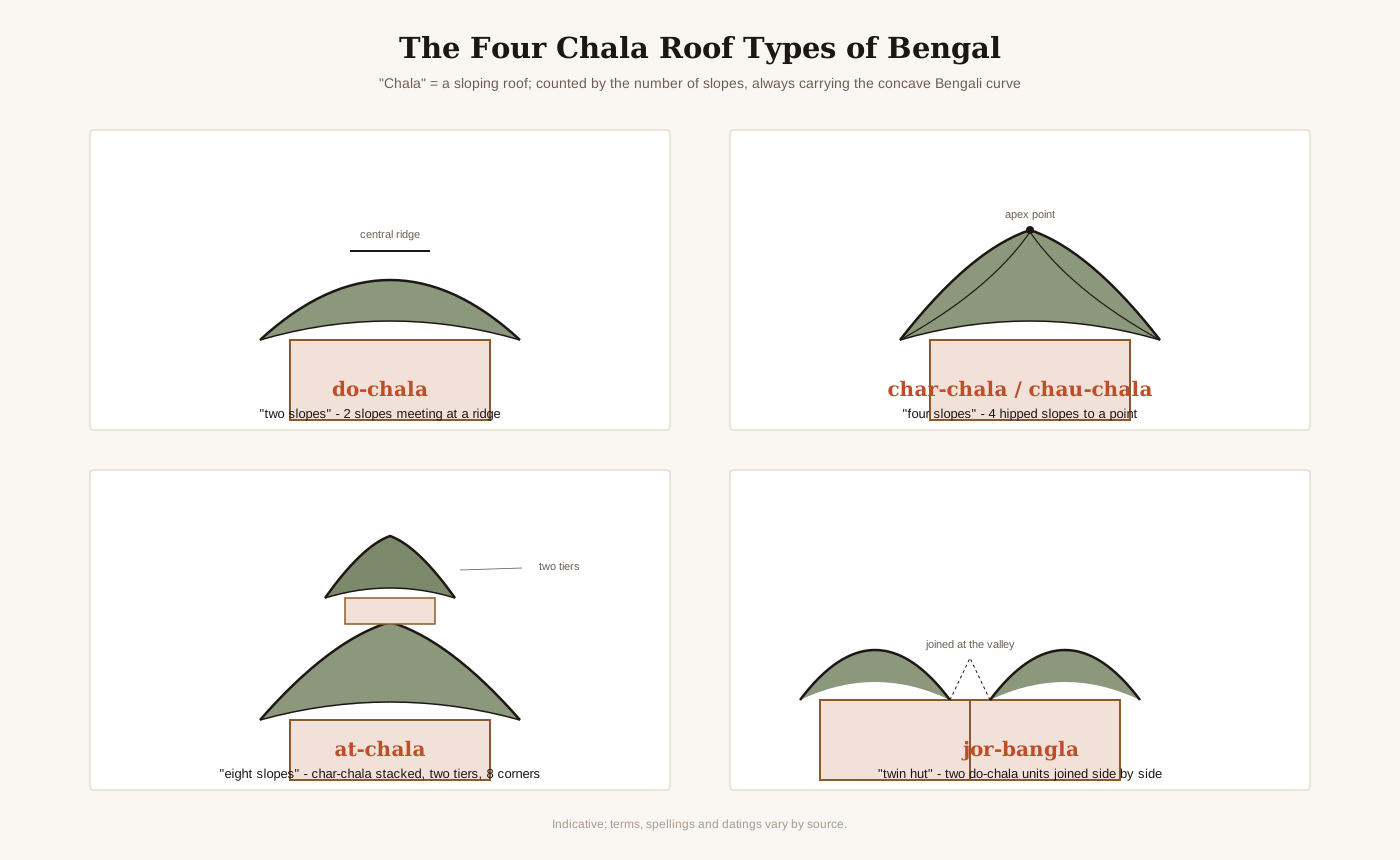
The single most important member of this family is the do-chala, the plain two-sloped hut roof. It is the literal ancestor of everything that follows — the Mughal pavilion roof, the curved cornice on a Rajput palace, and the word "bungalow" itself.
4. From Hut to Word: The Bungalow
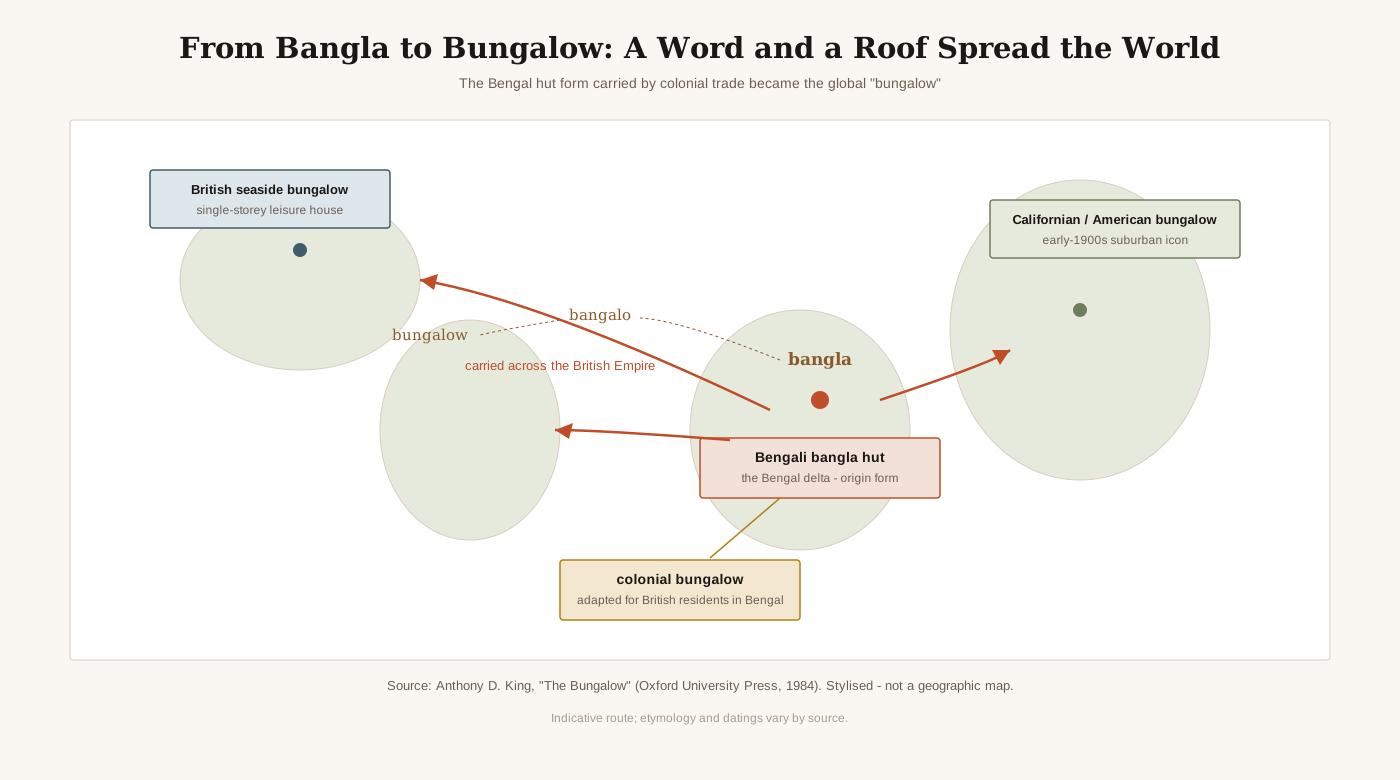
The English word bungalow is a Bengali word wearing a colonial accent. It comes from the Hindustani and Bengali bangla (also rendered bangalo), meaning, quite simply, "(a house) in the Bengal style" — that is, in the manner of the rural mud-bamboo-thatch hut, low and single-storeyed with a wide roof and an encircling verandah.
When Europeans arrived in Bengal, they encountered these low, verandah-wrapped dwellings as the obvious sensible house for a hot, wet country, and they borrowed both the form and its name. The definitive scholarly account of this journey is Anthony D. King's The Bungalow: The Production of a Global Culture (Oxford University Press, 1984), which traces how a Bengali peasant house type was adopted by colonial administrators, exported across the British Empire, and eventually became a worldwide category of suburban home — from the English seaside bungalow to the Californian bungalow of the early twentieth century.
No other Indian vernacular form has travelled so far. The bhunga stayed in Kutch and the rabsal stayed in Ladakh; the bangla circled the planet and lost its accent on the way.
There is a deep irony in this. The bungalow became, in the West, a symbol of leisured, low-density, single-family living — a status object. Its origin was the opposite: the cheapest, most utilitarian shelter a Bengali farmer could raise from the materials around the rice field. The form's defining features in its global afterlife — the single storey, the broad sheltering roof, and above all the verandah — are exactly the climate-responses the hut had evolved for the delta.
| Stage | What it was | What carried over |
|---|---|---|
| Bengali "bangla" hut | Mud-bamboo-thatch peasant dwelling | Low profile, wide roof, verandah |
| Colonial Bengal | European-adapted "bungalow" residence | The name; the verandah; the single storey |
| British Empire | Administrators' and planters' houses worldwide | The type, spread along imperial routes |
| Britain & USA (19th–20th c.) | Seaside and suburban "bungalow" | The word and form as a domestic category |
5. The Form Climbs Upward: Mughal Masonry and the "Bangla" Cornice
If the bungalow is the bangla's journey outward, its journey upward — from peasant hut to imperial and princely architecture — is just as remarkable.
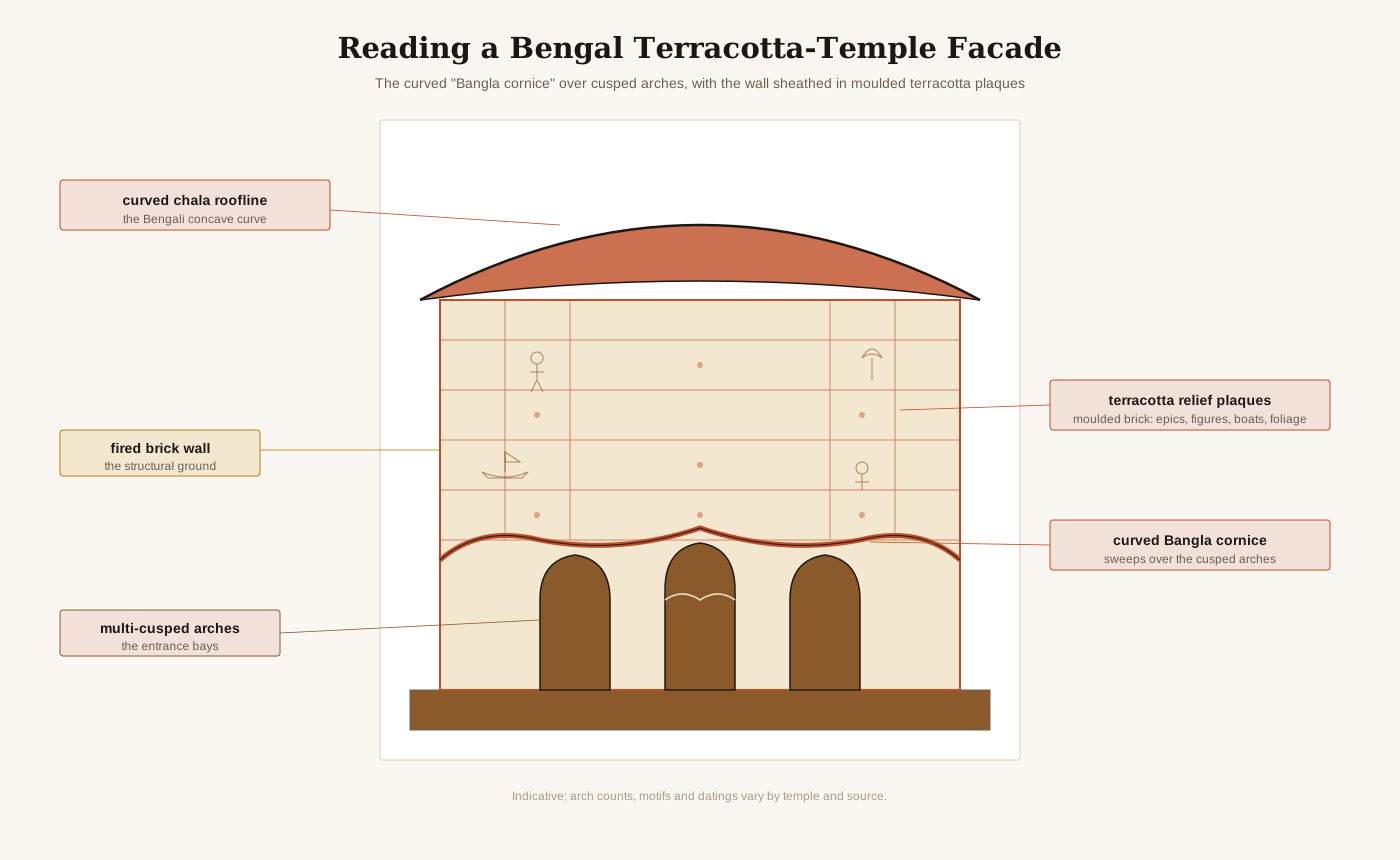
The Mughals, ruling a North India of straight-edged domes and trabeated pavilions, found the curved Bengali roof striking and adopted it. They copied the do-chala in masonry, building pavilions whose roofs curve in solid stone exactly as the bamboo-and-thatch hut roofs curved in tension. From there the motif spread as the curved "Bangla cornice" (sometimes simply called the bangla in the architectural vocabulary): an eave-line that dips down at the centre or sweeps in a gentle concave curve, deployed over gateways, balconies and pavilions.
This curved cornice became a recognisable feature of Indo-Islamic architecture and was taken up in Rajput palace building as well — appearing far from Bengal, in regions with no monsoon to shed and no bamboo to bend. By then the curve had become a purely formal, aesthetic quotation: architecture saying "Bengal" in stone, long after the structural reason for the shape had been left behind in the delta.
It is a clean illustration of how vernacular forms become style. A shape that begins as the inevitable result of a material and a climate gets admired, abstracted, and re-built in materials and places where it no longer makes structural sense — purely because it has come to mean something.
6. The Form Hardens into Brick: Bengal's Terracotta Temples
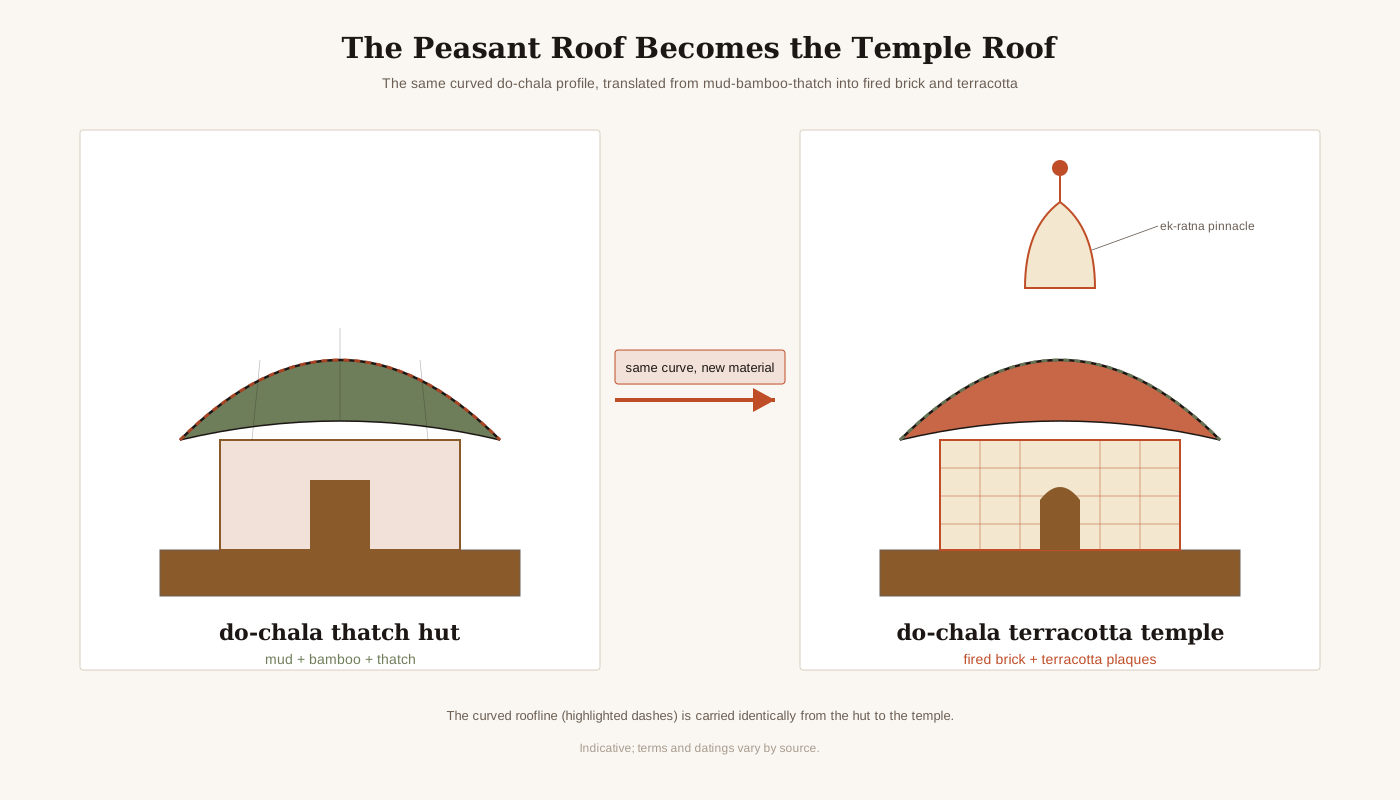
Nowhere did the hut's curve harden more completely than in Bengal's own terracotta temples. Lacking good building stone, the delta builds in brick — and brick can be moulded, before firing, into intricate relief. From roughly the sixteenth and seventeenth centuries, Bengal produced a remarkable tradition of brick temples whose surfaces are covered in terracotta plaques and whose roofs deliberately reproduce the chala forms of the village hut.
This is the crucial point: the temple builders did not invent a new sacred architecture. They took the everyday hut — the do-chala, the char-chala, the at-chala, the jor-bangla — translated its curved, water-shedding profile into permanent fired brick, and elevated it into the home of a god. A peasant roof became a temple roof. The curved cornice, the flared eaves, the steep slopes all reappear, now structurally unnecessary in solid brick but unmistakably Bengali.
To these chala bodies the builders added a distinct vocabulary of pinnacles, or ratna ("jewel"), set on the flatter-topped temples:
- Ek-ratna — a single tower (ek = one) rising over the temple.
- Pancha-ratna — five towers (pancha = five), one central and four at the corners.
The result is a layered classification: a temple is described by both its roof form (its chala) and its pinnacle count (its ratna), so that the names of village roofs and the names of temple towers together form a single Bengali architectural grammar.
| Temple element | Bengali term | Meaning | Origin |
|---|---|---|---|
| Two-sloped roof | Do-chala | Two curved slopes | The basic hut roof |
| Four-sloped roof | Char-chala / chau-chala | Four hipped slopes | The larger hut roof |
| Two-tiered roof | At-chala | Eight-cornered, double char-chala | A grand hut profile |
| Twin roof | Jor-bangla | Two joined bangla units | Joined huts |
| Single pinnacle | Ek-ratna | One "jewel" tower | Temple addition |
| Five pinnacles | Pancha-ratna | Five "jewel" towers | Temple addition |
A closer look at a temple façade shows the second great craft of Bengal: the terracotta plaque. Because brick can be carved or moulded while still soft, the temple walls are clad in panels of fired clay depicting scenes from the epics, court life, hunts, boats and processions — a folk visual encyclopaedia in baked earth, wrapping a hut-shaped roof.
7. Materials and Construction
The bangla hut is built from what the delta freely gives, and its material logic is the inverse of a stone or earth-mass building: light, breathable, renewable, replaceable.
- Mud / cob — the walls. Earth, sometimes puddled into cob, raised into low walls and, critically, into the raised plinth that lifts the floor above flood level. Cheap, cool, breathable, and easily repaired or remade after a flood.
- Bamboo — the frame and the roof structure. The flexible, strong, fast-growing skeleton of the house; the member whose tension creates the signature curve.
- Thatch — the roof skin. Usually straw laid thick over the bamboo. In the coastal Sundarbans, the thatch is often golpata — the leaf of the Nypa palm — a gentle reminder that the material shifts with the local ecology, from inland straw to tidal-estuary palm.
- Terracotta brick — the permanent material. Where mud and thatch were impermanent and humble, fired clay brick was the medium of the durable, the sacred and the elite, and the surface for the moulded terracotta plaques of the temples.
| Material | Used for | Why it suits the delta |
|---|---|---|
| Mud / cob | Walls & raised plinth | Cheap, cool, breathable, flood-repairable |
| Bamboo | Frame & roof structure | Light, strong, flexible — bends into the curve |
| Thatch (straw / golpata) | Roof covering | Sheds rain, insulates, renewable; golpata on the coast |
| Terracotta brick | Temples & durable building | Mouldable for relief; durable where mud is not |
The whole hut is, in effect, a renewable consumable. When the river takes it, the family rebuilds from the same field and forest. That impermanence is not a weakness — it is a strategy, matched exactly to a landscape that floods.
8. The Social Life of the Form
The most extraordinary thing about the bangla is not any single feature but its social trajectory. Most vernacular forms stay where they are born, bound to one community and one climate. The bangla did the opposite: it moved across the full social spectrum and then across the world.
It began at the bottom — the dwelling of the peasant, the cheapest shelter the delta could raise. From there it climbed upward: its curved roof was admired and copied by the Mughal court, written into the vocabulary of Indo-Islamic and Rajput palace architecture, and finally enshrined in fired brick as the form of Bengal's own temples — the literal house of the gods built in the shape of the farmer's house. And it moved outward: borrowed by colonial Europeans, carried along imperial routes, and reborn as the global bungalow, a worldwide category of domestic architecture.
So a single folk form encodes a remarkable cultural fact. The aesthetic of the rice-field hut became, simultaneously, the language of elite temples in Bengal and the template for suburban houses on three continents. Few buildings anywhere can claim to have furnished both a god's residence and the English language's word for "house in the country".
9. Where to See It: Terracotta-Temple Towns
The clearest surviving record of the hut-to-temple translation is in Bengal's temple towns, where the chala-and-ratna grammar stands built in brick.
| Place | What it is | Period & builders | Why it matters |
|---|---|---|---|
| Bishnupur (West Bengal) | Major terracotta-temple town | 16th–17th c., Malla dynasty | The great showcase of varied chala & ratna temple styles in moulded brick |
| Kalna / Ambika Kalna (Bardhaman, WB) | A terracotta-temple town | Bengal temple-building era | A second important concentration of Bengal's brick-temple craft |
Bishnupur is the centrepiece. Built up by the Malla dynasty across the sixteenth and seventeenth centuries, it preserves a whole landscape of brick temples that range across the chala types and ratna counts — do-chala and char-chala roofs, at-chala towers, jor-bangla twins, and ek- and pancha-ratna pinnacles — every surface worked in terracotta relief. It is the place to read the entire grammar of this guide standing in one town.
Kalna (Ambika Kalna, in Bardhaman district) is a second renowned terracotta-temple town, another dense concentration of Bengal's brick-and-clay temple craft. (Specific attributions, dedications and dates for individual Kalna temples vary between sources, so we treat Kalna here as a temple town rather than asserting contested particulars — the cited scholarship below is the place to verify any single building.)
10. Decline, and What Survives
The living hut tradition is in retreat. Across Bengal, RCC (reinforced concrete) and corrugated tin have displaced mud, bamboo and thatch. Concrete reads as permanent, modern and prestigious; thatch reads as poor and temporary, and demands constant renewal that fewer households want to do. The skills of bending bamboo and laying thatch are fading with the generation that held them, and the curved roof is vanishing from the everyday landscape that invented it.
The terracotta temples, meanwhile, face the slow violence of the climate they were built in. Fired brick and moulded clay weather hard under heavy monsoon and high humidity; plaques erode, surfaces flake, structures lean. Conservation here falls to bodies such as the Archaeological Survey of India (ASI) and the Indian National Trust for Art and Cultural Heritage (INTACH), whose work is the difference between a legible temple and a ruin.
And yet the form is far from dead. It survives in two places at once. It survives at home, hardened into the temple heritage of Bishnupur and Kalna, where the hut's curve will stand in brick long after the last thatched hut is gone. And it survives abroad, in the most unlikely afterlife any Indian vernacular form has ever had: the global bungalow, a word and a house type carried so far from the Bengal delta that most of the people who live in one have no idea they inhabit a translation of a rice-farmer's hut.
The lesson for building today is not to thatch our roofs again — RCC will not be un-invented. It is to notice what the hut got right and ask the same questions: get the rain off fast, lift the floor above the flood, shade and protect the wall with a deep eave, make a verandah, build breathable, and use what is local and renewable where you can. Those are not nostalgia. They are the same climate questions the delta still asks. For how to carry these instincts into a contemporary plan, see Lessons from Vernacular for Modern Indian Homes and Tropical Architecture in India.
References & Further Reading
Foundational / Theory
- Anthony D. King, The Bungalow: The Production of a Global Culture (Oxford University Press, 1984) — the definitive study of how the Bengali bangla became a worldwide house type and an English word.
Regional / Indian sources
- Banglapedia, Temple Architecture — the chala and ratna typology (do-chala, char-chala, at-chala, jor-bangla; ek-ratna, pancha-ratna).
- Sahapedia, Terracotta Temples of Bishnupur — the Malla-period brick-and-terracotta temples of Bishnupur.
- Wikipedia, Architecture of Bengal — the chala roof types and the Mughal adoption of the curved "Bangla" roof and cornice.
Companion Studio Matrx Guides
- Pillar: Indian Vernacular Architecture
- Wet-tropics siblings: Vernacular Architecture of Kerala · Vernacular Architecture of North-East India
- Thematic: Why Vernacular Design Is Returning in India
- Related: Lessons from Vernacular for Modern Indian Homes · Tropical Architecture in India · Modern vs Traditional Indian House Architecture
- Explore plans: House Plans · Architects · All Guides
Author's Note: I keep coming back to the bamboo. A farmer did not set out to invent a form that would shape Mughal pavilions and Pasadena suburbs — he set out to keep the rain off the mud. He lashed bamboo over a ridge, the bamboo bowed because that is what bamboo does under tension, and a curve was born that the whole world would eventually borrow. There is a humility in that I find moving: the best architecture often is not designed at all, but discovered, by people listening closely to a material and a sky. — Amogh
Disclaimer: Vernacular terms, spellings and datings vary across sources and regions — chala and ratna names, the bangla/bungalow etymology, and the dating and attribution of individual temples (including those at Kalna) are recorded differently by different authorities. Examples and conservation status change over time. This is an educational overview, not a conservation or structural assessment; verify any specific building, date or term against the cited scholarship before relying on it. No liability is assumed for decisions made on the basis of this article.
Export this guide
Related Guides — Deep-dive reading
The Terracotta Temples of Bishnupur: Where Bengal Built Its Epics in Baked Clay
How a land without stone made an entire architecture out of brick and moulded terracotta — temples shaped like the curved roofs of thatched huts, their walls covered in clay reliefs telling the whole of the Hindu epics
Architectural WondersHathigaon: How RMA Built a Village for Elephants and Their People by Repairing the Ground First
In the ravaged sand quarries below Amber Fort, Rahul Mehrotra's RMA Architects rebuilt a landscape before it built a single house — harvesting monsoon water, growing a forest, and clustering low-cost mahout dwellings around the pools where keeper and elephant bathe. A case study in multispecies architecture, landscape-as-infrastructure, and what equity housing can be.
The Future of ArchitectureLouis Kahn's Façade Signature: Wrapping Ruins, Brick Arches, and Monumental Light
How Louis Kahn shaded the glass behind giant geometric screen walls, asked the brick to be an arch, and built monumental façades of fair-faced concrete and light — and what that hot-climate logic teaches Indian builders today.
Building FacadesRelated Tools — Try Free
Brise-Soleil Visualizer
Interactive horizontal-louvre cut-off angle calculator — sun altitude, louvre depth, and spacing inputs with a live shadow preview. Computes θ = arctan(spacing/depth) for façade shading, ECBC envelope compliance, hospital daylight design, and tropical sun-control detailing.
Sun Shading ToolCross-Ventilation Analyzer
Estimate airflow and air changes per hour (ACH) from room size, window areas, layout, and local wind — with NBC 2016 Part 8 compliance check.
Ventilation CalculatorBefore & After Studio
Generate AI before-and-after renders to preview how your redesign could look.
DesignAI