
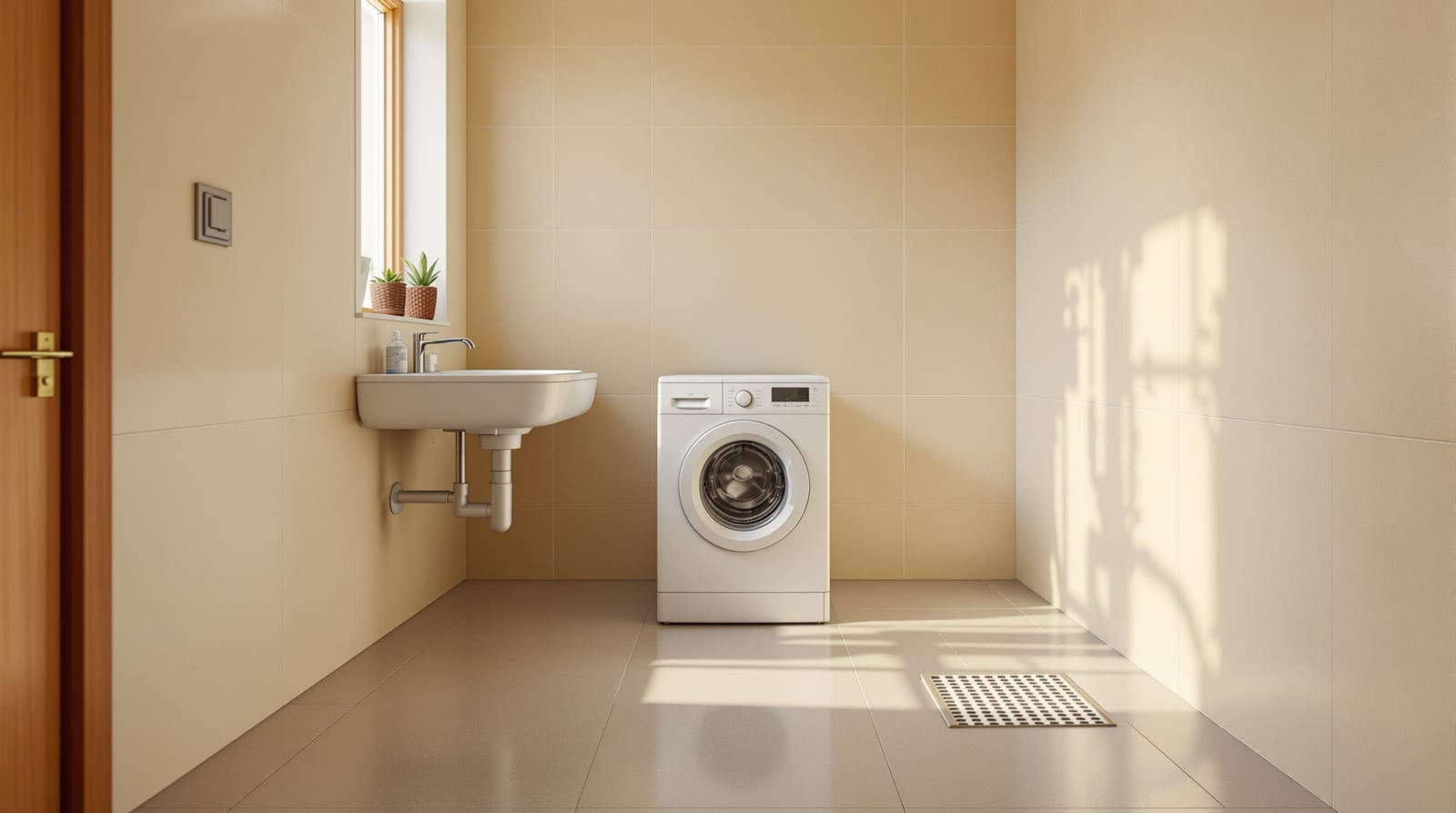
Utility Room Flooring in India: Best Anti-Skid, Waterproof Floors for the Wash & Laundry Area
Anti-skid ceramic, vitrified, epoxy and kota for the wettest, hardest-working, most-neglected corner of the Indian home — with the must-do slope and floor trap.
The utility area is the floor everyone forgets and the floor that suffers most. Your washing machine vibrates and overflows here, the sink splashes detergent water all day, wet clothes drip, and someone is forever walking in with wet feet. Yet builders hand it over with the cheapest leftover tiles and almost never a proper drain. Get this floor right and it shrugs off a decade of water, soap and scrubbing; get it wrong and you get a slippery, stained, ponding mess that quietly rots the slab below.
This guide ranks the floors that actually survive an Indian utility, wash or laundry zone — anti-skid ceramic and vitrified, seamless epoxy, and budget-tough kota or shahabad stone — and walks you through the two things that matter more than the tile itself: the slope to drain and the waterproofing underneath.
What the utility area really demands
Before picking a material, be clear about the loads this small space takes. The utility floor is not like a bedroom; it is closer to a bathroom that works overtime.
- Constant water and detergent. Spills, machine drain water, hand-washing, mopping. The floor and its grout must be water-resistant and not stain or etch when caustic detergents and bleach sit on them.
- Slip safety. Wet floor plus soap is the classic fall surface. You need genuine anti-slip texture, not a glossy tile. Target a matte, textured finish — in DIN 51130 terms an R10 to R11 rating is right for a domestic wet area.
- Easy cleaning. Lint, soap scum, mud and the odd dye stain. A non-porous, low-maintenance surface that wipes and mops clean beats anything that needs sealing every few months.
- Durability under point loads. A loaded front-load washer can cross 90 kg and vibrate; the floor must not crack or hollow under it.
- Drainage. This is the one most homes miss. Without a slope and a floor trap, water sits, breeds mosquitoes, seeps into grout lines and eventually into the slab. A good material on a flat, undrained floor still fails.
- Budget honesty. It is a back-of-house space. You want maximum water-resistance and grip per rupee, not showroom looks.
The top picks, ranked for a wet utility
1. Anti-skid ceramic or vitrified tile — the default winner. For most Indian homes this is the right answer: cheap, fully waterproof in the tile body, and available in matte, textured anti-skid finishes made exactly for wet zones. Use a matte ceramic tile if budget is tight, or a tougher vitrified tile (lower water absorption, harder surface) if you can stretch. Specify an R10-R11 anti-skid matte tile, not a polished or glazed gloss one. Grout is the weak link, so use epoxy grout, not cement grout, so detergent water cannot wick through the joints.
2. Epoxy — seamless and washable. Epoxy flooring gives you a single continuous, jointless, fully waterproof surface with no grout lines to stain or leak — laundry rooms in modern apartments increasingly use it. Add an anti-slip aggregate broadcast into the topcoat so it does not turn glassy when wet, and run a coved (curved) skirting up the wall so water cannot creep into the wall-floor junction. It costs more than tiles and needs a sound, dry screed beneath, but for hygiene and zero-joint cleaning it is hard to beat.
3. Kota or shahabad stone — budget durable. If you want a natural, very hardy, low-cost stone, kota stone or shahabad stone are traditional utility and wash-area choices across India. They are dense, take heavy use, and a honed (matte, leathered) finish gives reasonable grip — never use mirror-polished stone here. They are slightly porous, so they need periodic sealing to resist detergent staining, but per square foot they are among the cheapest durable options.
What to avoid: polished/glazed gloss vitrified (dangerously slippery wet), wood, laminate, and most carpet — water kills them. Soft natural stones like Italian marble etch under detergent. For the slip side of this decision, see anti-slip flooring for wet areas, and use the anti-slip rating selector to confirm the R-rating you actually need.
Material comparison for the utility area
| Material | Wet grip (target finish) | Water resistance | Durability | Cleaning | ₹/sq ft (installed, 2026) | Best for |
|---|---|---|---|---|---|---|
| Anti-skid ceramic | Good — matte R10 | Body waterproof; grout is weak point | Good | Easy (epoxy grout) | 50-110 | Tight budgets, most homes |
| Anti-skid vitrified | Good — matte R10-R11 | Very high; near-zero absorption | Very good | Very easy | 80-220 | The all-round default |
| Epoxy (with anti-slip topcoat) | Good — only if aggregate added | Excellent — fully seamless | Very good | Easiest, no joints | 120-350 | Hygiene, no-joint, modern flats |
| Kota / shahabad (honed) | Fair-Good — honed only | High when sealed | Excellent | Easy; reseal periodically | 60-150 | Budget durable, traditional |
| Polished gloss tile / Italian marble | Poor — slippery / etches | Mixed | Varies | — | — | Avoid in a utility |
Costs are indicative installed ranges for 2026; confirm against local rates with the flooring cost per square foot guide. For how the utility fits into the whole home, see the room-by-room flooring guide.
The two non-negotiables: slope and floor trap
This is where utility floors fail. The material is rarely the problem — the missing slope and trap are. Lay the floor with a fall of about 1 in 80 (roughly 12 mm per metre) running toward a floor trap (nahani trap) so every drop of spill, machine drain and mop water leaves on its own. Below the screed, a waterproofing membrane must turn up the walls 150-300 mm so the wet zone is a sealed tray, not a sponge sitting on your slab.
If your utility doubles as a wash zone exposed to monsoon damp or sits on a balcony edge, also read the monsoon-ready flooring notes on drainage and grout.
Design and care tips
- Choose a mid-tone, matte tile. Pure white shows lint and dye stains; very dark shows soap film. A speckled grey, beige or stone-look matte hides daily mess and gives grip.
- Epoxy grout, always. It is the single biggest upgrade to a tiled utility — it does not absorb detergent water, does not blacken, and seals the joints that would otherwise leak.
- Cove the skirting. A curved tile or epoxy skirting at the wall junction means no sharp corner for water and grime to collect.
- Put the washer on a hard, level base. Vibration on a flexing floor cracks grout; a dense screed and solid tile keep it stable.
- Keep the trap clean. Lint clogs the floor trap fast. A removable jali (grating) over it makes monthly cleaning easy and stops ponding.
- Reseal stone. If you chose kota or shahabad, reseal every year or two — see the floor resealing guide. For day-to-day care, the floor cleaning guide covers detergent-safe mopping.
Frequently asked questions
What is the best flooring for a utility or wash area in an Indian home?
For most homes, an anti-skid matte vitrified or ceramic tile (R10-R11) with epoxy grout is the best balance of price, waterproofing and grip. If you want a seamless, joint-free surface, epoxy with an anti-slip topcoat is excellent. On a tight budget, honed kota or shahabad stone is very durable.
Do I really need a slope and floor trap in the utility?
Yes — this is the most important detail. A fall of about 1:80 toward a floor trap drains spills, machine water and mop water so nothing ponds. Without it, water sits, stains grout, breeds mosquitoes and seeps into the slab even if the tile itself is waterproof.
Is epoxy flooring good for a laundry room?
Very good. Epoxy is seamless and fully washable with no grout joints to leak or stain, which suits a wet, detergent-heavy zone. Just specify an anti-slip aggregate in the topcoat so it does not become slippery when wet, and a coved skirting so water cannot enter the wall junction.
Why should I avoid glossy tiles in the utility?
Polished and glazed gloss tiles become dangerously slippery the moment soap and water hit them, exactly the conditions a utility floor lives in. Always pick a matte, textured anti-skid finish (R10 or higher) for any wet area to reduce fall risk.
How much does utility area flooring cost in India?
As a rough 2026 guide: anti-skid ceramic 50-110, vitrified 80-220, honed kota/shahabad 60-150, and epoxy 120-350 per sq ft installed. The small size of most utilities keeps the total modest, so spend on the right anti-skid tile, epoxy grout and proper waterproofing rather than cutting corners.
Export this guide
Related Guides — Deep-dive reading
Anti Slip Flooring for Bathroom and Wet Areas in India: R-Ratings, Finishes and Genuinely Safe Tile Choices
How to choose genuinely safe flooring for bathrooms, kitchens, balconies, pools, entrances and elderly- or child-friendly homes — the R-rating system, finishes that grip wet feet, anti-skid natural stone, slope to drains and the tiles to avoid.
Flooring & SurfacesBathroom Flooring Guide India: Anti-Skid Tiles, Stone, Vinyl & Epoxy Compared
Every bathroom floor material for Indian homes in one place — anti-skid ceramic and vitrified tiles, natural stone, mosaic, vinyl (SPC/LVT) and epoxy — with a full comparison table, slip ratings, ₹/sq ft costs and the safety and slope rules that keep a wet floor from becoming a hazard.
BathroomsEpoxy Grout vs Cement Grout for Tiles in India: Which to Specify (2026)
A plain-English guide to tile grouts for Indian homes: what grout does, how cementitious grout compares with epoxy grout on cost, stain and water resistance, hygiene and durability, and exactly where each one belongs - kitchens, bathrooms, pools, dry rooms and more.
Building MaterialsRelated Tools — Try Free
Flooring Cost Calculator
Estimate the all-in cost of a floor — material, laying, wastage, skirting and GST — by area and material.
Flooring CalculatorFlooring Material Selector
Get the best flooring material for your room, budget and climate, with anti-slip checks for wet areas.
Flooring ToolMonsoon-Readiness Checklist
Pre-rain home audit across 9 categories — terrace, drains, waterproofing, electrical, HVAC, pest, vehicles, documents.
Seasonal Audit