
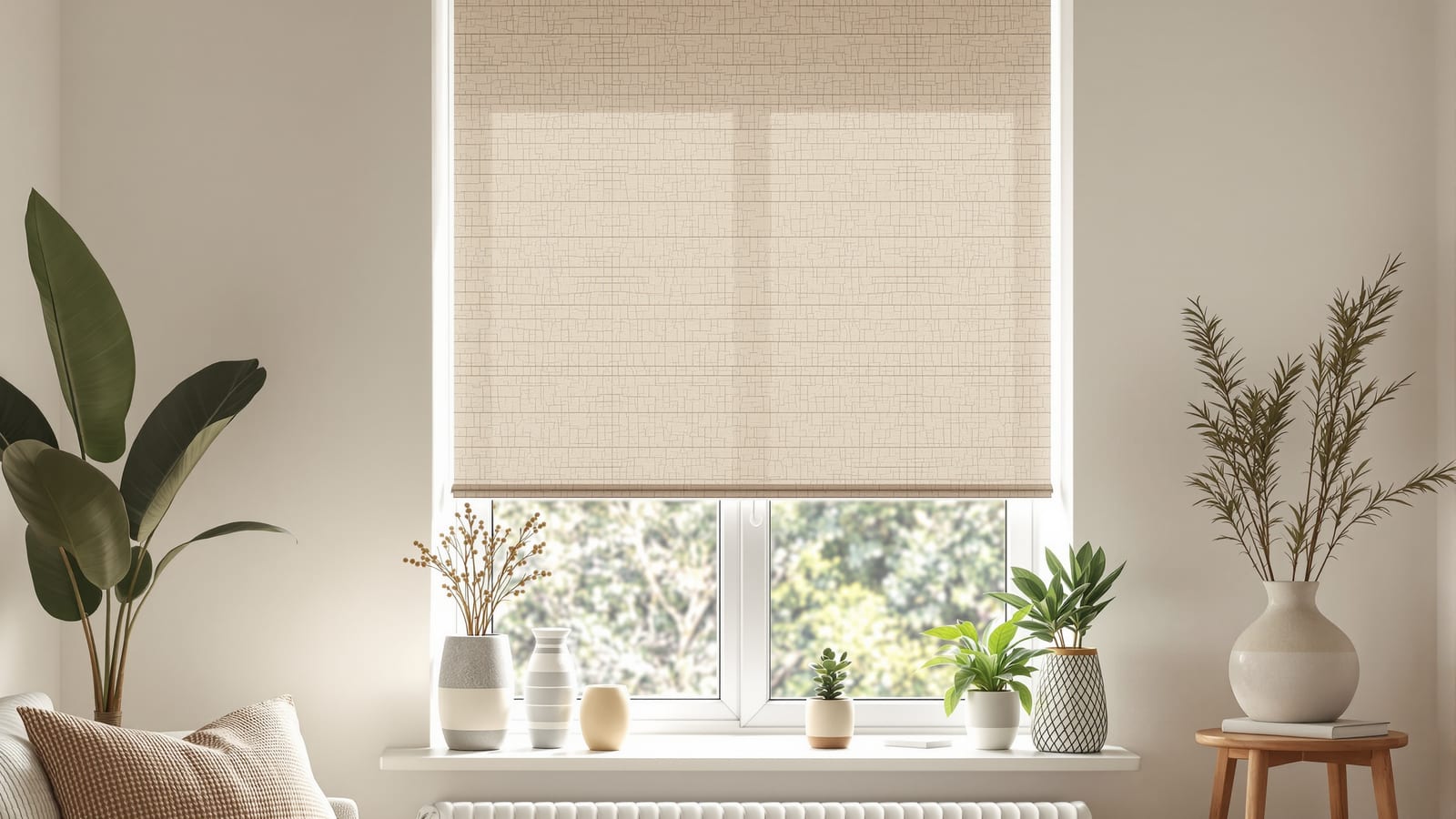
Types of Window Blinds: The Complete Guide for Indian Homes (2026)
Roller, roman, venetian, vertical, zebra, honeycomb, wooden, bamboo and smart blinds — every type compared on privacy, light, room fit and real Indian cost, so you pick once and pick right.
A blind does the same five jobs a curtain does — light, privacy, heat, looks, and a little acoustics — but it does them with hard slats or tightly rolled fabric instead of soft folds. That single difference changes everything: a blind sits flat against the glass, takes almost no wall space, and gives you precise, dial-in control over how much light enters. For Indian homes fighting harsh sun, fine dust and small windows, that precision is often exactly what you want. The trouble is that "blinds" is not one product. It is ten very different products wearing the same word, and buying the wrong one is the single most common window mistake we see.
A blind is not a cheaper curtain. It is a different tool — one that trades softness for precision and floor space for fingertip light control. Pick the type for the job, not the price tag.
This guide walks every blind type sold in India, compares them honestly in one table, explains how blinds differ from curtains, settles the inside-versus-outside mount question, and ends with a simple way to choose. Each type also points to its own deep guide, so you can stop at the depth you need.
Blinds vs curtains: which is even the right call?
Before choosing a type of blind, make sure a blind is the right family at all. The short version:
- Blinds give precise, adjustable light control, sit flush to the glass, suit small or odd-shaped windows, and wipe clean — ideal for kitchens, bathrooms, studies and humid rooms.
- Curtains give softness, warmth, better acoustics and a more "finished" living-room feel, and they hide an ugly window frame.
Plenty of well-designed Indian homes use both — blinds on the glass for control, a soft curtain layered over for looks and night-time warmth. If you are torn, read the dedicated curtains vs blinds comparison and the complete curtain guide before you commit. If you have decided on blinds, read on.
Every type of window blind, compared
Here is the honest comparison. Treat the costs as indicative per-window ranges for a standard window — fabric grade, brand, motorisation and city move them a lot.
| Blind type | Privacy | Light control | Best room | Indicative cost |
|---|---|---|---|---|
| Roller | Medium–High | Sheer to full blackout (by fabric) | Bedroom, study, kitchen | Low |
| Roman | High | Soft, layered, dim-out | Living room, bedroom | Medium |
| Venetian (aluminium) | High | Precise, tilt slats | Kitchen, bathroom, balcony | Low |
| Vertical | Medium–High | Tilt + draw, large spans | Balcony doors, wide windows | Low–Medium |
| Zebra / dual / day-night | Medium–High | Sheer-to-solid by alignment | Living room, dining | Medium |
| Honeycomb / cellular | High | Dim-out to blackout + insulation | Bedroom, west windows | Medium–High |
| Wooden | High | Warm, precise tilt | Living room, study | Premium |
| Faux-wood | High | Same look, humidity-proof | Bathroom, kitchen, humid coasts | Medium |
| Bamboo / woven | Medium (day) | Dappled, natural filter | Balcony, sit-out, ethnic decor | Low–Medium |
| Smart / motorised | Type-dependent | App, voice & schedule control | Living room, tall/awkward windows | Premium |
Now, what each one actually is and where it shines.
Roller blinds
A single flat sheet of fabric that rolls up onto a tube at the top. The simplest, most popular and most economical blind — and the most versatile, because the fabric decides everything from a light-filtering sheer to a total blackout. Clean, modern, takes almost no space, and the natural choice for a first-time buyer. The trade-off is that one flat sheet looks plain and gives you only "rolled up" or "rolled down" — less mid-range finesse than slatted types. See the roller blinds guide.
Roman blinds
Fabric that folds up into soft, stacked horizontal pleats as it rises. This is the blind that looks most like a curtain — warm, tailored and rich — which is why it is the designer favourite for living rooms and bedrooms where you want softness with a blind's tidy footprint. It costs more than a roller and the folds collect dust, but nothing else gives a blind this much character. See the roman blinds guide.
Venetian blinds
Horizontal slats — usually aluminium — that tilt to aim light up at the ceiling or down at the floor, and lift fully out of the way. The tilt is the magic: you get privacy and a view at the same time, dialled to the degree. Aluminium is cheap, wipe-clean and unbothered by kitchen steam or bathroom damp, which makes Venetians the workhorse of Indian utility rooms. The slats do collect dust and need wiping. See the venetian blinds guide.
Vertical blinds
Venetian's logic turned 90 degrees: vertical fabric or PVC vanes that tilt and also draw to one side. They are built for wide spans — balcony sliders, full-height glass, office-style windows — where a single roller or roman would be impractical. Practical and affordable for big openings; less loved aesthetically, as the vanes can sway and clatter in a breeze. See the vertical blinds guide.
Zebra / dual / day-night blinds
A clever modern hybrid: alternating sheer and solid horizontal bands on a double layer. Slide the layers so the solid bands line up and you have privacy and shade; offset them and the sheer bands align for a soft, filtered view. One blind, two moods — which is why "zebra" blinds have become a trendy living-and-dining favourite. They sit at a mid price and give the most flexible everyday light control of any fabric blind. See the zebra blinds guide.
Honeycomb / cellular shades
Pleated fabric folded into hollow hexagonal cells (seen edge-on, they look like a honeycomb). Those trapped-air cells are genuine insulation — they cut heat coming through a hot west window and hold cool air conditioning in, which in much of India is a real comfort and electricity saving, not a marketing line. They come in dim-out and blackout and look clean and contemporary. The most expensive fabric type, and the cells need gentle care. See the honeycomb / cellular shades guide.
Wooden & faux-wood blinds
Wide horizontal slats in real timber (or a wood-look composite) that tilt like a Venetian but read warm and premium instead of utilitarian. Real wooden blinds are beautiful in a living room or study but they warp in steam and damp — never put them in a bathroom or a humid coastal kitchen. Faux-wood gives the same look in moisture-proof composite at a lower price, which makes it the smart, honest pick for Indian bathrooms, kitchens and anywhere near the sea. See the wooden & faux-wood blinds guide.
Bamboo & woven blinds
Natural bamboo, jute, reed or grass woven into a roll-up shade that throws a beautiful dappled light. They suit balconies, sit-outs and ethnic or rustic interiors, age gracefully, and are eco-friendly and affordable. The honest caveat: a single woven layer gives privacy by day but little at night, and it filters rather than blocks light — pair it with a liner or a curtain where you need real darkness or privacy after dark. See the bamboo & woven blinds guide.
Smart / motorised blinds
Any of the above types, fitted with a motor and a remote, app or voice control. A schedule can lower the blinds against the afternoon sun and lift them at dawn; voice control reaches the tall, awkward or behind-the-sofa window you would otherwise never adjust. Motorisation is genuinely useful on the windows you use most and a luxury on the ones you do not — so motorise selectively. See the smart blinds guide.
Inside mount vs outside mount
Every blind is fitted one of two ways, and getting this wrong is the most common installation regret:
- Inside mount — the blind sits inside the window recess, against the glass. It looks neat, tailored and architectural, and leaves the wall and frame visible. It needs a recess deep enough for the headrail, and it lets a thin sliver of light leak around the edges — which matters in a bedroom you want fully dark.
- Outside mount — the blind is fixed on the wall above and around the opening, covering the whole frame. It blocks edge light far better (the right choice for blackout bedrooms), makes a small window look bigger, and hides an ugly or out-of-square frame. It does project into the room a little.
Rule of thumb: inside mount for a clean, built-in look on deep, square recesses; outside mount when you need maximum darkness, a bigger-looking window, or cover for a poor frame. Measure twice — inside-mount measurements must be exact to the millimetre.
A quick word on Indian conditions
Three local realities should steer your choice. Dust is relentless, so flat roller and fabric blinds wipe down faster than slatted Venetians or pleated honeycombs that catch grime in every gap. Humidity and steam rule out real wood in bathrooms and coastal kitchens — choose faux-wood, aluminium Venetian or PVC vertical there. And harsh sun on west and south windows argues for insulating honeycombs or blackout rollers, not thin woven shades. The window treatment selector factors your room, orientation and priorities into a recommendation, and the curtain & blind cost calculator sizes the material and prices the window.
How to choose your blind, in five moves
1. Name the window's two priorities — privacy, light control, heat, looks or easy cleaning. That one sentence eliminates half the options.
2. Check the room's conditions — wet or steamy? Skip real wood. Dusty and busy? Favour flat, wipe-clean fabric. Hot west glass? Lean to honeycomb or blackout roller.
3. Match a type from the table — roller for simple value, roman for soft looks, Venetian/vertical for tilt-and-view utility, zebra for flexibility, honeycomb for insulation, wood/faux-wood for warmth, bamboo for natural light.
4. Pick the mount — inside for a clean built-in look, outside for blackout and bigger-looking windows.
5. Decide on motorisation last — only the windows you use daily, on a smart ecosystem you already run.
Do these in order and the colour and material — the part everyone starts with — becomes the easy, fun, final decision.
Find your blind with Studio Matrx. Let the window treatment selector match a blind to your room, orientation and priorities, then size and price it with the cost calculator. Compare the soft-vs-precise trade-off in the curtains vs blinds guide, browse the full Window Treatments hub and the complete curtain guide, and explore decorative window treatments when you are ready to layer looks over function.
Export this guide
Related Guides — Deep-dive reading
Wooden Blinds Guide: Real Wood vs Faux-Wood for Indian Homes (2026)
The warmth of timber slats versus the humidity-proof sense of faux-wood — how to choose horizontal wooden blinds that survive Indian monsoons, coastal damp and west-sun heat.
Window TreatmentsCurtains vs Venetian Blinds: Precision vs Softness (India 2026)
Tilt-precise venetians or warm, quiet curtains? A room-by-room, rupee-by-rupee verdict for Indian homes — including the dust and wind caveats nobody mentions, and the combo that beats both.
Window TreatmentsHoneycomb (Cellular) Shades: The Insulating Blind Explained (India 2026)
The pleated blind whose hollow cells trap a layer of still air — for real thermal and acoustic insulation on harsh windows. Single vs double cell, light-filtering vs blackout, top-down/bottom-up and cordless, plus honest Indian costs.
Window TreatmentsRelated Tools — Try Free
Window Treatment Selector
Curtains, blinds or a layered system? Answer five questions about your room and get a specific recommendation.
SelectorFalse Ceiling Cost Estimator
Live ₹/sqft across 8 ceiling types — POP, gypsum, designer, metal, PVC, wooden — with cove and spot lighting for 20 Indian cities.
Cost CalculatorWindow Material Comparison Tool
Compare uPVC, aluminium, wood, steel and composite windows on cost, life, upkeep and insulation.
Compare