
Decorative Window Treatments in India: Curtains, Blinds and Drapes
Dressing the window with soft furnishings, layering sheer and heavy for light, privacy and India-proof practicality
A bare window is a finished sentence with no punctuation. The glass, the frame, the grille all do their work, but it is the curtain, the blind and the chick that turn a window into a room's softest gesture, controlling light at dawn, privacy at night, glare in May and the slap of dust through an open monsoon evening. This guide is about dressing the window, the soft-furnishing layer, not the window itself. For the look of the frame, the glazing pattern and the grille, see the pillar and the type guides linked below. Here we stay with cloth, slat, chick and rod.
A treatment is not decoration alone. In an Indian home it is climate equipment that happens to be beautiful.
What "window treatment" actually covers
There are four families, and a well-dressed Indian window usually borrows from two or three of them.
| Family | What it is | Best for |
|---|---|---|
| Curtains and drapes | Loose fabric panels on a rod or track | Living, bedroom, dining, drama and softness |
| Blinds | Slatted or rolled units (roller, Roman, Venetian, bamboo-chick) | Light precision, compact spaces, kitchens, balconies |
| Toppers | Valance, pelmet, cornice over the curtain head | Hiding hardware, formal finish |
| Hardware | Rods, tracks, finials, tie-backs, holdbacks, motors | The skeleton everything hangs on |
The word drape usually means a heavier, lined, floor-pooling panel; curtain is the lighter everyday word. Chick is the Indian bamboo or reed roll-up blind, cheap, breathable and made for our verandahs.
The single most useful idea: layering
If you remember one thing, remember the layered window. A sheer plus a heavy panel on a double track gives you the full range of light and privacy from one window, which a single curtain never can.
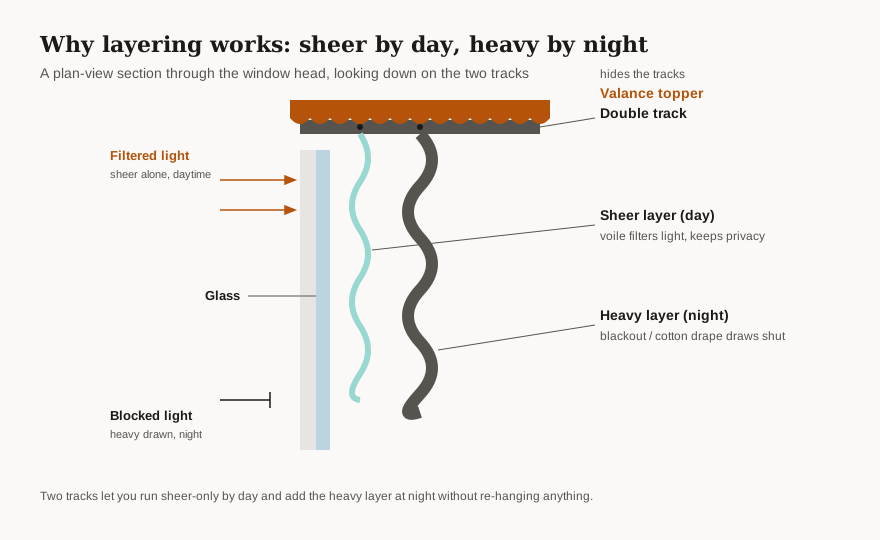
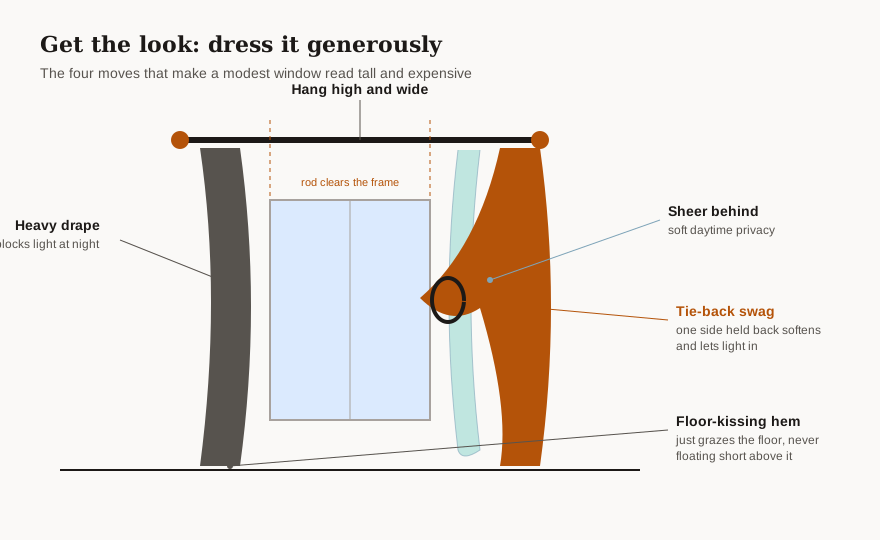
- Sheer layer (back): voile, net or fine linen. Filters harsh light, keeps daytime privacy from the street, lets breeze through. Draw this by day.
- Heavy layer (front): cotton, linen blend, velvet or blackout-lined. Blocks light and view, adds warmth and acoustic softness. Draw this by night or for an afternoon nap.
- Topper (optional): a valance or boxed pelmet hides the tracks and gives a formal head.
The layered approach is also the honest answer to a question we get often, "will curtains keep my room cool?" Modestly. Internal fabric stops glare and daytime heat gain through the room, but most of the sun's heat has already crossed the glass before it reaches the cloth. For real thermal control you shade outside the glass. We cover that fully in our shading and energy guides, linked at the end, and it is worth reading before you spend on blackout fabric expecting an air-conditioning effect.
Curtains: the soft choices
Curtain styles, by light intent
| Curtain type | Light control | Where it shines |
|---|---|---|
| Sheer / voile / net | Filters, never blocks | Living rooms, daytime privacy, paired layer |
| Cotton / linen panel | Soft block, breathes | Most rooms, hot-dry and humid alike |
| Blackout-lined drape | Full dark | Bedrooms, home theatre, west-facing rooms |
| Cafe curtain (lower half only) | Privacy below, light above | Kitchens, ground-floor street windows, bathrooms |
| Velvet drape | Rich block, heavy | Formal living, AC rooms, cooler months and hill homes |
A cafe curtain, covering only the lower half of the window on a slim rod, is underused in India and ideal where you want the street kept out at eye level but the sky kept in above.
Heading and length notes
- Eyelet (ring-top) headings give clean even folds and slide fast, the easy modern default.
- Pinch pleat reads more formal and tailored, good for drapes and pelmet-topped windows.
- Length: floor-kissing (just touching) is the safe, crisp choice; a small "puddle" looks luxurious but collects dust, a real consideration in Indian cities.
- Hang the rod higher and wider than the window, near the ceiling and past the reveal, so the window reads taller and the glass is fully revealed when open.
Blinds and the Indian chick
Blinds give you slat-level precision and suit compact, wet or utilitarian spaces where billowing fabric is wrong.
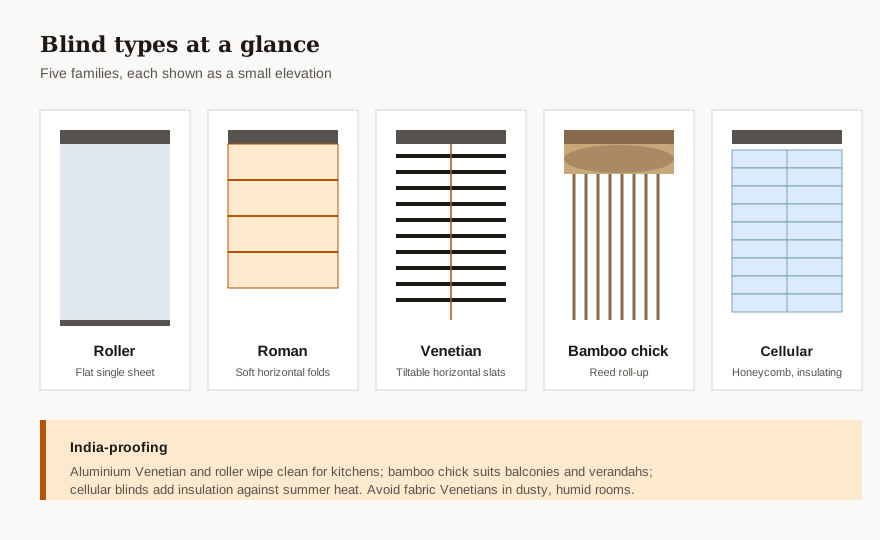
| Blind | Look and feel | Notes for India |
|---|---|---|
| Roller | Flat, minimal, modern | Solar/sunscreen fabric versions cut glare; easy to wipe |
| Roman | Soft fabric folds, dressy | Bridges blind precision and curtain warmth; needs washing care |
| Venetian (slats) | Crisp, adjustable, office-clean | Aluminium for kitchens/baths; wood/faux-wood for living rooms |
| Bamboo chick | Earthy, breathable, traditional | Verandahs, balconies, low cost; lets air through, ages with sun |
| Cellular / honeycomb | Soft, insulating | Premium; modest heat and sound benefit |
The humble bamboo chick deserves respect: it shades a balcony, lets the breeze through, costs little and looks right with cane, terracotta and plants. It is also the closest soft treatment to an external shade, because you can hang it outside the glass.
Fabric, the climate decision
In an Indian home the fabric question is really a maintenance and weather question.
| Fabric | Look | Climate verdict |
|---|---|---|
| Cotton | Casual, breathable, washable | All-rounder; fades in strong sun, choose mid tones |
| Linen / linen blend | Textured, relaxed, premium | Breathes well; creases (part of the charm) |
| Velvet | Rich, light-blocking, formal | Lovely in AC and hill homes; traps dust and heat in the plains |
| Polyester / poly-blend | Crisp, cheap, colourfast | Most fade-resistant and washable; least breathable |
| Sheer voile / net | Airy, diffusing | The daytime layer; rinses easily |
Practical rules for our conditions:
- Dust is relentless, so favour washable cottons and polys over dry-clean-only silk and heavy velvet in everyday rooms.
- Fading punishes deep reds and purples on south and west windows; mid-tones and weave-dyed fabrics hold colour longer.
- Monsoon means damp, so avoid full puddling, keep hems off wet sills, and air heavy drapes to prevent that musty smell.
- Heat: light colours reflect, but remember the real heat fight is at the glass, outside, not at the cloth.
Hardware and the finishing layer
The rod and its accessories are jewellery for the window.
- Rods read decorative; tracks disappear and suit ceiling-mount and motorised runs.
- Finials (the rod's end caps) set the tone, simple ball for modern, ornate for traditional.
- Tie-backs and holdbacks sweep the curtain aside in a soft swag for daytime, a tiny detail with a big effect.
- Valance vs pelmet: a valance is a soft fabric topper; a pelmet (or cornice) is a rigid boxed head that hides the track crisply, the more formal of the two.
- Motorised treatments, on a remote or app, earn their cost on tall, wide or hard-to-reach windows and in bedrooms; pair with a layered sheer-plus-blackout setup.
Room by room
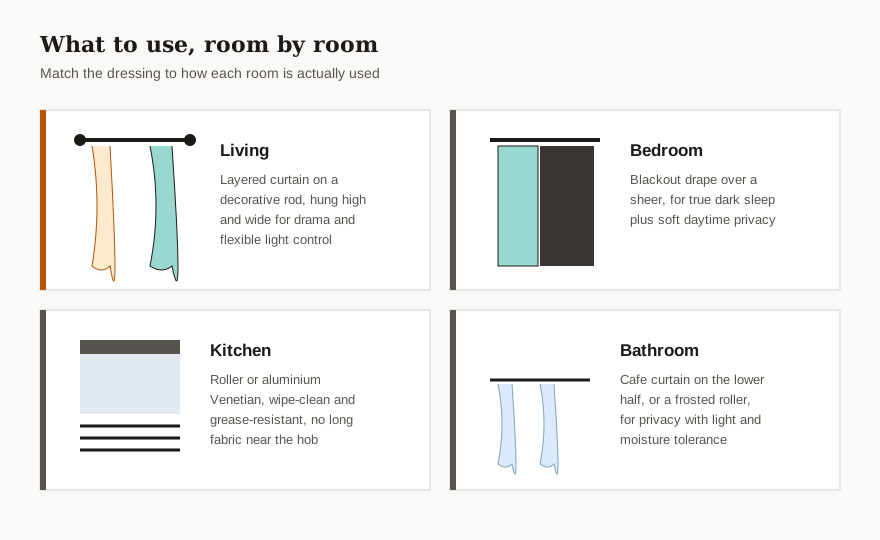
| Room | Recommended treatment | Why |
|---|---|---|
| Living / drawing | Sheer plus heavy layered curtain, decorative rod | Flexible light, the room's showpiece |
| Bedroom | Blackout drape over sheer, or roller plus curtain | Dark sleep, soft morning option |
| Kitchen | Roller or aluminium Venetian, or cafe curtain | Wipe-clean, fire-aware, no billowing near flame |
| Bathroom | Frosted-look roller or cafe curtain | Privacy with light, moisture-tolerant |
| Balcony / verandah | Bamboo chick or outdoor roller | Breathable shade, weather-honest |
| Pooja / study | Cafe or light cotton | Calm filtered light |
A get-the-look sequence that rarely fails: choose the layer plan first (sheer-only, sheer-plus-heavy, or blind-plus-curtain), then the fabric for your climate and washing reality, then the hardware finish to match the room's metals, then the topper only if you want formality.
Do and avoid
| Do | Avoid |
|---|---|
| Hang high and wide to enlarge the window | Rod sitting tight on the frame, shrinking it |
| Layer sheer plus heavy for full control | One mid-weight curtain trying to do both jobs |
| Washable fabrics in dusty, everyday rooms | Dry-clean velvet at a kitchen window |
| Outside shading for actual cooling | Expecting blackout cloth to replace external shades |
| Chick or outdoor roller on balconies | Indoor silk drapes exposed to monsoon spray |
Where this sits in the window story
This is the styling of the dressing. For the window element's own look, frame colour, glazing pattern and proportion, start at the design pillar Modern Window Design Ideas, and for how the windows themselves work and what they cost, see Types of Home Windows in India. The crucial complement to this guide is thermal: because internal fabric is far weaker than shading outside the glass, read Window Shading Strategies and Energy-Efficient Windows before you rely on curtains for cooling. Those guides answer the performance question; this one answers the light, privacy and beauty question.
References
- Bureau of Energy Efficiency, ECBC residential (Eco Niwas Samhita): https://beeindia.gov.in/
- The Hindu, on Goa's vanishing oyster-shell windows and craft traditions: https://www.thehindu.com/
- INTACH, conservation notes on Indian domestic architecture and fenestration: https://www.intach.org/
Export this guide
Related Guides — Deep-dive reading
Curtains vs Blinds: The Complete Comparison for Indian Homes (2026)
Light, privacy, heat, noise, cleaning, cost and looks — a head-to-head verdict on curtains and blinds, plus the under-rated answer most good designers actually use: both.
Window TreatmentsKitchen Curtains & Window Treatments (India 2026)
The practical window: easy-clean, grease- and flame-aware fabrics, short cafe curtains vs roller and venetian blinds near the hob, moisture, light over the sink — and why blinds usually beat long curtains in an Indian kitchen.
Window TreatmentsVelvet Curtains: Heavy, Luxe & Sound-Absorbing (India 2026)
Why velvet's sheer mass gives you near-blackout, thermal and acoustic benefits in one panel — plus the honest dust, heat and weight caveats for Indian homes, and what it costs per metre.
Window TreatmentsRelated Tools — Try Free
Window Treatment Selector
Curtains, blinds or a layered system? Answer five questions about your room and get a specific recommendation.
SelectorCurtain Fabric Comparison
Compare curtain fabrics side by side — drape, opacity, care, durability and cost — and get a quick recommendation.
Comparison ToolCurtain Layering Planner
Get the right layer stack — sheer, dim-out, blackout or a blind — and the track type for your window.
Planner