
Venetian Blinds Explained: Slats, Materials & Light Control (India 2026)
Horizontal-slat blinds decoded for Indian homes — aluminium, real wood and faux-wood, the 25/35/50 mm slat sizes, the tilt mechanism that gives precise light and privacy, honest pros and cons, real rupee costs and dust-smart care.
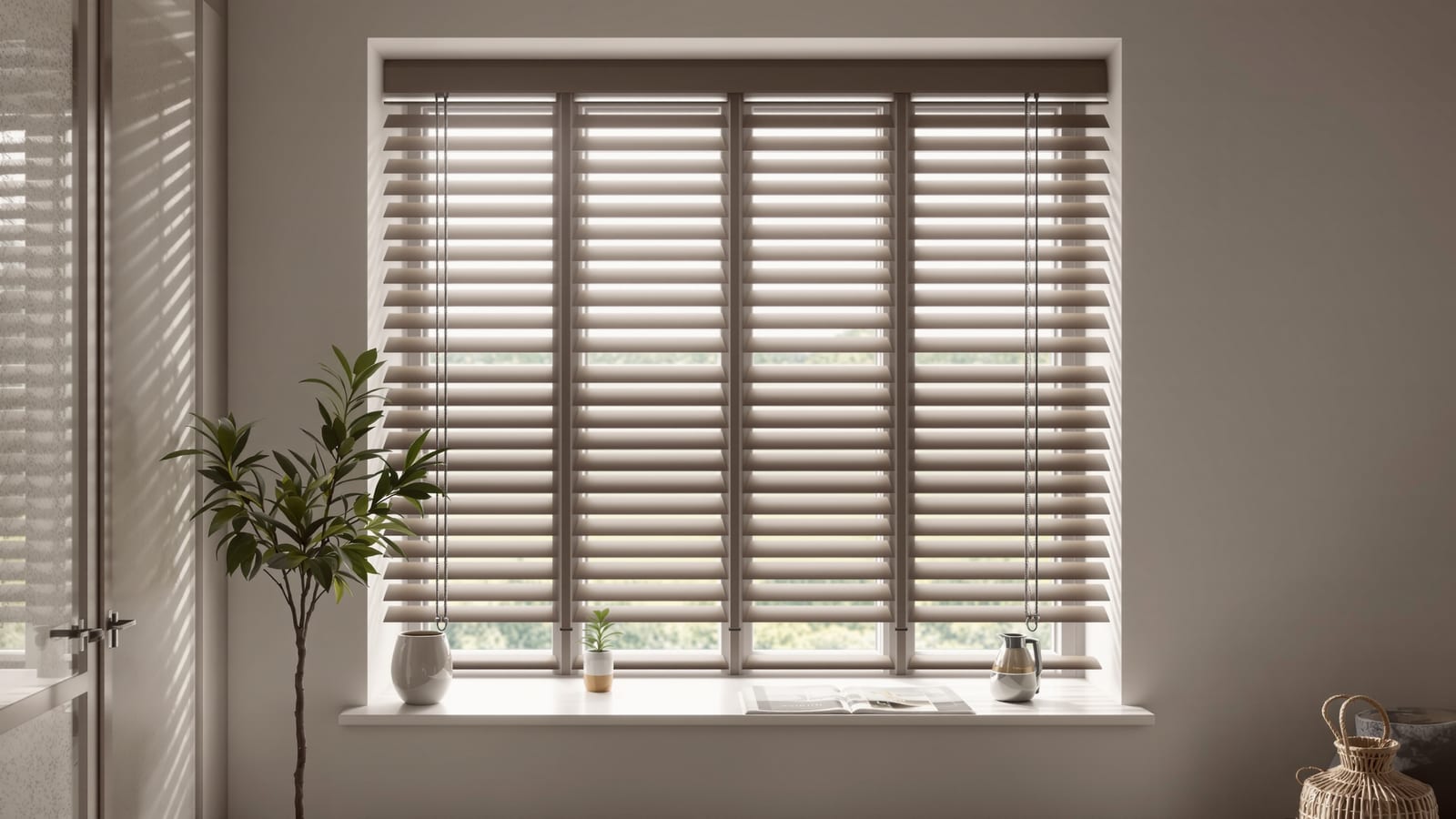
Venetian blinds are the blind everyone pictures first: a stack of horizontal slats that tilt open and shut on a thin cord ladder. That tilt is the whole point. Where a curtain is either open or closed, a venetian blind lets you angle the slats to skim light off the ceiling, throw it down to the floor, or close them flat for privacy — all without moving the blind up at all. For an Indian home juggling harsh afternoon sun, nosy balconies opposite and a permanent layer of dust, that fine control is genuinely useful, but it comes with trade-offs worth knowing before you buy.
A venetian blind is the only common window treatment that lets you keep the daylight and lose the glare at the same time — the tilt is doing work no curtain can.
This guide walks the materials, the slat sizes, how the tilt actually works, the honest pros and cons, what they cost in rupees, and which rooms they suit. For where venetian blinds sit against every other option, the complete curtain and window treatment guide is the pillar, and the types of window blinds guide maps the full family.
How the tilt mechanism works
Every slat hangs on a ladder cord — two vertical strings with rungs the slats rest on. A separate lift cord runs through holes in the slats to raise and lower the whole stack. Twist the wand (or pull the tilt cord), the ladder shifts, and all the slats rotate together.
That gives you three positions from one blind:
- Tilted up — slats angled so light bounces off the ceiling; bright room, but no one outside can see in.
- Tilted down — light spills toward the floor; softer, and screens the view from a higher floor opposite.
- Closed flat — slats overlap for near-full privacy and the most light blocked (though never total blackout — light leaks at the cord holes and edges).
If you want genuine room-darkening for a bedroom, a venetian blind alone will not get you there. Pair it with a blackout curtain, or choose a different treatment — the curtains vs blinds comparison lays out when each wins.
The three materials, compared
The material decides almost everything about how a venetian blind looks, lasts and survives Indian conditions. There are three to know.
| Material | Look | Humidity tolerance | Weight & noise | Indicative cost |
|---|---|---|---|---|
| Aluminium | Slim, modern, cool metal | Excellent — won't warp | Light, but rattles in wind | Lowest |
| Real wood | Warm, premium, natural grain | Poor — warps and cracks if wet | Heavy, quiet | Highest |
| Faux wood (PVC / composite) | Looks like wood, slightly thicker | Excellent — waterproof | Heavier than aluminium | Mid |
Aluminium is the workhorse: cheap, rust-resistant, available in fine 25 mm slats, and completely happy in a steamy kitchen or bathroom. Its weakness is acoustic — thin metal slats clatter against the frame in a draught or under a ceiling fan.
Real wood is the looker, with genuine grain and a warmth metal can't fake, but it is the wrong choice for wet or humid rooms — Indian monsoon damp and bathroom steam will bow and split timber slats over time. Keep real wood to dry living rooms and studies. The dedicated wooden blinds guide goes deep on species, finishes and care.
Faux wood is the quiet hero for India. It mimics the wood look but is moulded PVC or a wood-polymer composite, so it shrugs off humidity completely. In a country where the same window may face monsoon spray one season and dust the next, faux wood in wet rooms is almost always the smarter buy than real timber.
Slat sizes: 25, 35 and 50 mm
Slat width changes both the look and the function. The three common sizes:
- 25 mm — the classic narrow slat. Tidy and discreet, ideal for small windows, offices and aluminium blinds. More slats means more dust-collecting surfaces, but a cleaner, more technical look.
- 35 mm — the in-between. A good middle ground for medium windows where 25 mm feels busy and 50 mm feels heavy.
- 50 mm — the wide slat, almost always wood or faux wood. Fewer slats, so a clearer view out when open, a bolder traditional look, and less to dust. The default for a wood-look living-room blind.
A rough rule: narrow slats (25 mm) read modern and minimal; wide slats (50 mm) read warm and classic. Wider slats also let in a touch more light when tilted and give a less obstructed view through the window.
Pros and cons — the honest version
What venetian blinds do well:
- Precise light control. The tilt is unmatched for dialling glare up or down through the day — a real asset on a screen-facing home-office window.
- Slim profile. They sit flat against the glass or inside the reveal, eating no floor space and leaving sills usable. Good for compact flats.
- Easy privacy on demand. Tilt closed and you are screened instantly, without losing the whole window the way a drawn curtain does.
- Humidity-proof options. Aluminium and faux wood handle kitchens and bathrooms that would ruin fabric or timber.
What to go in with eyes open about:
- Dust. This is the big one in India. Every slat is a flat ledge that collects dust, and a full blind has dozens of them. They need wiping far more often than a curtain needs washing. Plan for it.
- Noise. Light aluminium slats rattle in a breeze or under a fan. If a window is always open to the wind, this gets irritating.
- Not true blackout. Light leaks through the cord holes and around the edges. Bedrooms that need full dark want a curtain layer.
- Cords and tangles. Tilt and lift cords can tangle, and looped cords are a safety concern around small children — choose cordless or wand-tilt versions where kids are about.
What venetian blinds cost in India
Prices vary with material, size, brand and whether it is custom-made, so treat these as honest ranges, not quotes:
- Aluminium 25 mm — the cheapest, often roughly the low-to-mid hundreds of rupees per square foot for ready sizes; the entry point into blinds.
- Faux wood (50 mm) — mid-range, materially more than aluminium per square foot for the wood look without the wood risk.
- Real wood (50 mm) — the premium tier, the highest per square foot, plus you are paying for a material you must protect from damp.
Custom sizes, cordless mechanisms and motorisation all add to the figure. To put a number on your specific windows and compare against fabric, run the curtain cost calculator — it sizes the window and prices the treatment so you can weigh a blind against a curtain on the same window. The curtain cost guide breaks down the hidden costs in more detail.
Best rooms for venetian blinds
Match the material to the room's real conditions:
- Home office / study — the venetian's natural home; tilt to kill screen glare while keeping the room bright. Aluminium 25 mm or a smart faux wood.
- Kitchen — choose aluminium or faux wood, never real timber. Both wipe clean of grease and shrug off steam; keep slats clear of any open flame.
- Bathroom — faux wood or aluminium only, for the humidity. The slim profile suits small frosted-glass windows.
- Living room — a 50 mm wood or faux-wood venetian looks premium; if you want softness and full darkness too, layer a roller blind or a dress curtain alongside.
- Bedroom — fine for daytime privacy, but pair with blackout fabric for sleep; the slats alone leak light.
Not sure a venetian is the right call for a given window? The window treatment selector walks you through light, privacy and room conditions and points to the treatment that fits.
Care: keeping slats clean in a dusty country
Dust is the price of venetian blinds in India, so build a simple habit:
- Weekly — close the slats flat and run a microfibre cloth or a duster across the face, then tilt the other way and do the reverse side. A blind brush with prongs that wraps several slats at once speeds this up.
- Monthly — wipe with a barely damp cloth (water for aluminium and faux wood; almost-dry only for real wood, which hates moisture).
- Deep clean — aluminium and faux-wood blinds can be taken down and gently hosed or wiped panel by panel. Never soak real wood.
Keep the lift and tilt cords clean and untangled, and dust slats before they get greasy near a kitchen, when removing the film gets much harder.
The single best thing you can do for venetian blinds in an Indian home is wipe them little and often — let a month of dust bake on near a kitchen and it becomes a weekend job.
The verdict
Venetian blinds earn their place where precise daytime light control and a slim profile matter most — offices, kitchens, bathrooms and modern living rooms. Choose aluminium for the cheapest, most humidity-proof option, faux wood for the wood look in any wet or damp room, and reserve real wood for dry rooms where you will protect it. Go in knowing they need regular dusting and do not blackout a bedroom on their own. For everything else — and to see how a blind pairs with fabric — start from the window treatments pillar guide.
Decide it in two clicks. Use the window treatment selector to confirm a venetian blind suits your window, then explore the full family on the Window Treatments pillar guide.
Export this guide
Related Guides — Deep-dive reading
Wooden Blinds Guide: Real Wood vs Faux-Wood for Indian Homes (2026)
The warmth of timber slats versus the humidity-proof sense of faux-wood — how to choose horizontal wooden blinds that survive Indian monsoons, coastal damp and west-sun heat.
Window TreatmentsCurtains vs Venetian Blinds: Precision vs Softness (India 2026)
Tilt-precise venetians or warm, quiet curtains? A room-by-room, rupee-by-rupee verdict for Indian homes — including the dust and wind caveats nobody mentions, and the combo that beats both.
Window TreatmentsBathroom Window Treatments: Privacy & Moisture (India 2026)
Why fabric curtains fail in the bathroom, the moisture-proof covers that actually last, how to get privacy without killing daylight, and how to keep mould and rust away — for the humid, hard-water Indian bathroom.
Window TreatmentsRelated Tools — Try Free
Window Treatment Selector
Curtains, blinds or a layered system? Answer five questions about your room and get a specific recommendation.
SelectorWindow Material Comparison Tool
Compare uPVC, aluminium, wood, steel and composite windows on cost, life, upkeep and insulation.
CompareAcoustic Privacy (STC) Visualizer
Indian healthcare acoustic visualizer — compare wall assemblies and noise sources, see received SPL after STC attenuation, and check FGI 2018 / IS 1950 / NABH speech-privacy compliance with live dual-canvas waveform.
Acoustic Tool