
Curtains vs Venetian Blinds: Precision vs Softness (India 2026)
Tilt-precise venetians or warm, quiet curtains? A room-by-room, rupee-by-rupee verdict for Indian homes — including the dust and wind caveats nobody mentions, and the combo that beats both.
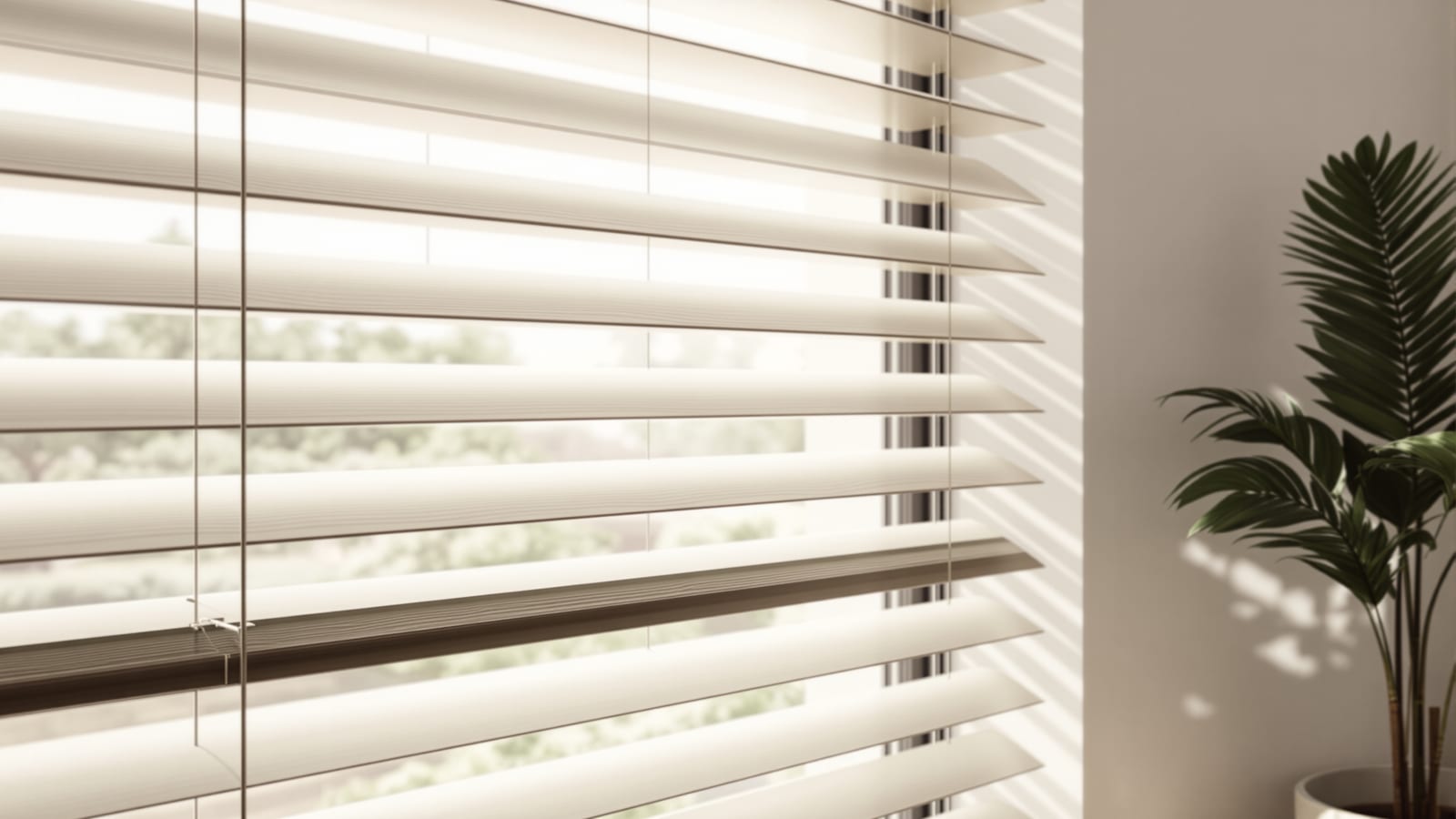
Stand in front of a window and you are really choosing between two philosophies. A venetian blind is precision — horizontal slats you tilt by a degree to slice the light exactly where you want it, see out while screening in, and wipe clean with a cloth. A curtain is softness — a length of cloth that warms a room, swallows noise, blacks out for sleep and finishes the wall. Both are good. Neither is good at everything. This is the honest comparison most showrooms skip.
If you have not yet decided between fabric and slats at all, the broader curtains vs blinds fork is the place to start; this guide zooms into the most common slat-versus-cloth fight — the venetian — and settles it room by room.
A venetian blind is a tool. A curtain is a comfort. The question is never which is better — it is which job this particular window most needs done.
The head-to-head, job by job
Here is the scorecard, with nothing hidden. No column sweeps every row, and the rows where venetians lose are the ones nobody warns you about.
| Job | Venetian blinds | Curtains |
|---|---|---|
| Light control | Tilt-precise, slat by slat; best daytime fine-tuning | Layered (sheer + blackout) for the widest total range |
| Privacy | See out while screening in; angle to taste | Excellent at night when lined; a lone sheer leaks after dark |
| Blackout / sleep | Never truly dark — light leaks between slats | Lined blackout panel gives near-total darkness |
| Heat | Wood/faux-wood ok; aluminium slats re-radiate heat | Heavy lined curtains are real thermal insulation |
| Acoustics | Hard slats reflect sound; no benefit | Soft, full fabric measurably softens noise and echo |
| Cleaning | Wipe each slat; brilliant near kitchen/bath grease | Vacuum + occasional wash or dry-clean; dust holds in folds |
| Footprint | Slim; sits inside the recess, barely projects | Bulkier; needs stacking space beside the window |
| Dust & wind | Slats collect dust fast; clatter and bend in a breeze | Quiet; no clatter, but holds dust in the weave |
| Look | Crisp, architectural, "clean" rooms | Warm, tall, finished, "soft" rooms |
| Cost | Aluminium cheap; wooden/faux-wood climb | Wide range; fullness and lining drive price up |
Read down your two priorities, not the whole grid. A home office that needs glare control on a screen reads one way; a west-facing bedroom that needs heat and sleep reads the exact opposite.
Where venetian blinds genuinely win
Venetians earn their place on the windows where control and cleaning matter more than warmth:
- Tilt precision. No other treatment lets you bounce daylight off the ceiling, cut a screen's glare, or dim by degrees with a single twist of the wand. For a home office or study, this is decisive.
- See-out privacy. Angle the slats and you watch the street while the street cannot watch you — a trick curtains cannot do without going fully opaque.
- Wipe-clean hygiene. A damp cloth along the slats beats taking curtains down to wash. This is why kitchens and bathrooms so often go to venetians (faux-wood or aluminium, never real wood near steam).
- Slim footprint. They sit inside the recess and barely project, which suits small rooms, deep sills and a minimal, architectural look.
Where venetian blinds quietly lose
Now the half showrooms skip — the reasons people who live with venetians sometimes regret them:
- They are never truly dark. Light leaks through the slat gaps and the tilt holes, so a venetian alone will not black out a bedroom for daytime sleep or a baby's nap. For real darkness you need a blackout curtain or roller behind it.
- Dust is relentless. Every slat is a flat ledge, and in dusty Indian conditions they grey over fast. They are easy to wipe but they ask to be wiped often.
- Wind makes them noisy. On a breezy window, balcony or with the fan on, slats clatter and rattle, and over time they bend, kink and stop sitting flat — the single most common venetian complaint.
- Aluminium re-radiates heat. A sun-struck metal slat heats up and throws that warmth into the room. On a hot west or south window, choose wood or faux-wood, or a curtain, over bare aluminium.
- No acoustic help. Hard slats reflect sound; if the room is noisy or echoey, fabric is the only one of the two that does real work.
For the full slat story — aluminium versus wood versus faux-wood, sizes and pricing — see the dedicated venetian blinds guide.
Where curtains win
Curtains take the rooms where you want to feel comfortable, not just control light:
- Blackout for sleep. A lined blackout panel, with the centre overlapped, is the only honest answer for a bedroom you sleep in by day or a child's room.
- Warmth and scale. Floor-length fabric makes a room read taller and more finished; a venetian, however neat, always reads as hardware.
- Quiet. Full, soft fabric is the only treatment here that measurably softens traffic noise and echo.
- Heat on hot windows. A dense lined drape is genuine thermal protection — useful on the very west and south windows where aluminium venetians backfire.
The opacity, pleat and heading vocabulary that makes all of this work lives in types of curtains, and the full system in the complete curtain guide.
Room by room, in one line
- Home office / study — venetian blind; tilt control on screen glare with see-out privacy is its home turf.
- Kitchen — faux-wood or aluminium venetian; wipes clean of grease, keep it clear of flames.
- Bathroom — moisture-tolerant aluminium or faux-wood venetian over fabric.
- Living room — curtains, usually floor-length; warmth, scale and acoustics matter more than tilt.
- Bedroom — curtains, blackout-lined; a venetian alone will never make it dark enough.
- Balcony / breezy windows — curtains or a roller; venetians clatter and bend in wind.
What each actually costs in India
Both span a wide range, so treat these as honest brackets, not quotes:
- Aluminium venetian blinds are usually the cheapest tidy option per window.
- Wooden and faux-wood venetians climb into the middle — often above a comparable simple curtain.
- Curtains are priced by fabric per metre times fullness times drop, plus lining and stitching; the cost driver people underestimate is fullness and lining, not the print.
A venetian's price is mostly the material and the window size; a curtain's price is mostly the fabric and how full you make it. To turn your own window into fabric metres and a per-window rupee figure, run the curtain cost calculator before you commit.
The combo that beats both
Here is what most genuinely well-dressed Indian windows do — and rarely choose between. They run a venetian (or roller) blind at the glass and a dress curtain beside it:
1. The venetian does the real work inside the recess — tilt-precise light, see-out privacy, easy cleaning, slim footprint.
2. A floor-length dress curtain, often mostly left open, frames the window, adds height, softens the acoustics, blacks out the slat gaps for sleep, and finishes the room.
You get the blind's engineering and the curtain's warmth, each covers the other's weakness — the blind handles glare and the curtain handles darkness and noise — and on the rooms you live in most, it is almost always worth the extra. The pillar Window Treatments hub shows how this layering plays across a whole home.
How to decide, honestly
Work it in this order and the answer falls out:
1. Name the window's two priorities — light, privacy, heat, acoustics, blackout, looks.
2. If "glare," "see-out privacy," "easy cleaning" or "slim" lead — venetian, in wood or faux-wood on hot windows.
3. If "darkness," "warmth," "quiet" or "heat" lead — curtains, lined.
4. If it is breezy, balcony-facing or fan-blown — avoid venetians; they clatter and bend.
5. If it is a room you live in daily — seriously consider both: blind at the glass, curtain beside it.
Two honest caveats. Every cost and dimension here is indicative — measure your own windows and price slats and fabric locally before committing. And Vastu colour or direction preferences are cultural guidance, not physics; follow them if they matter to you, but never at the cost of light or heat control.
Not sure which way your window leans? Let Studio Matrx settle it. Answer a few questions in the window treatment selector for a treatment matched to your room, orientation and priorities — then read the complete curtain and window-treatment guide to plan the rest.
Export this guide
Related Guides — Deep-dive reading
Curtains vs Blinds: The Complete Comparison for Indian Homes (2026)
Light, privacy, heat, noise, cleaning, cost and looks — a head-to-head verdict on curtains and blinds, plus the under-rated answer most good designers actually use: both.
Window TreatmentsVenetian Blinds Explained: Slats, Materials & Light Control (India 2026)
Horizontal-slat blinds decoded for Indian homes — aluminium, real wood and faux-wood, the 25/35/50 mm slat sizes, the tilt mechanism that gives precise light and privacy, honest pros and cons, real rupee costs and dust-smart care.
Window TreatmentsCurtains vs Roller Blinds: Which for Your Window? (India 2026)
A head-to-head on light, privacy, heat, acoustics, cost and cleaning — when a roller blind wins, when curtains win, and the quiet trick of using both on the same window.
Window TreatmentsRelated Tools — Try Free
Curtain Cost Calculator
Get the fabric metres you need plus the total curtain cost by window size, fabric, pleat, lining and hardware.
Curtain CalculatorWindow Treatment Selector
Curtains, blinds or a layered system? Answer five questions about your room and get a specific recommendation.
SelectorCross-Ventilation Analyzer
Estimate airflow and air changes per hour (ACH) from room size, window areas, layout, and local wind — with NBC 2016 Part 8 compliance check.
Ventilation Calculator