
Using Treated STP Water for Gardening: A Safe Reuse Guide
How to safely put treated STP water on home and apartment-complex gardens — the quality you actually need, why drip beats sprinklers, the salt and chlorine traps that quietly kill plants, and the dual-plumbing basics that make it all work.
Every apartment complex with a sewage treatment plant is sitting on a small river of water. An STP typically recovers 80–85% of what a building consumes, and the single easiest place to put that water back to work is the garden. Lawns, hedges, flowerbeds and avenue trees drink enormous quantities of water — and none of it needs to be drinking-quality. Feeding them treated STP water instead of fresh borewell or tanker water is one of the quickest ways an association cuts its water bill and its groundwater draw at the same time.
But "treated water" is not one thing. Water that is perfectly safe for flushing a toilet can slowly damage a rose bed. This guide is the practical middle ground: what quality you actually need for treated water for gardening, how to deliver it without harming plants or people, and the plumbing that makes reuse reliable rather than a maintenance headache.
Treated STP water is a fertiliser and an irrigation source rolled into one — it carries nitrogen and phosphorus plants love. The risk is never the water being "dirty"; it is salt, chlorine and pathogens getting to the wrong place. Manage those three, and your garden will often grow better on reuse water than on fresh.
Is treated STP water safe for plants?
Yes — provided the plant is running well and the water is used the right way. A properly functioning STP producing tertiary-treated water (filtered and disinfected) gives you water that is clear, low in organic load, and mildly nutrient-rich. For most ornamental landscaping — lawns, shrubs, hedges, flowering plants and trees — that is not just safe, it is genuinely good irrigation water.
The cautions are specific, not general:
- It is non-potable. Nobody should drink it, and it should not touch anything eaten raw. Keep it off the leaves of edible salad crops and away from herb patches people pick and eat.
- Quality must be consistent. A well-run STP is fine; a plant that is upset, overloaded or skipping disinfection produces water that can smell, foul drippers and spread pathogens. Reuse is only as good as the STP behind it — which is why understanding how an STP works matters before you commit to garden reuse.
- Salt accumulates. This is the quiet, long-term risk that catches most complexes off guard, and it deserves its own section below.
The quality numbers that matter for gardens
You do not need lab-grade water, but you should know four numbers. Ask your STP operator for the monthly test report and look for these.
| Parameter | Comfortable range for gardening | Why it matters to plants |
|---|---|---|
| BOD | Below 10 mg/L | High BOD means under-treated water — it will smell, foul emitters and go anaerobic in storage |
| TSS | Below 10–20 mg/L | Suspended solids clog drip emitters and micro-sprinklers; the finer the irrigation, the cleaner the water must be |
| TDS / salinity | Ideally below 1500–2000 mg/L | The make-or-break number for plant health over the long run — high TDS is dissolved salt |
| Residual chlorine | A trace only (well under 1 mg/L at the plant) | Free chlorine is toxic to leaves and soil microbes; over-chlorinated water browns foliage |
These sit comfortably inside the treated-water quality most Indian STPs are designed and permitted to hit under CPCB reuse expectations. If your reports show BOD and TSS in single digits and TDS under about 2000, you have garden-grade water. If TDS is climbing past that, you have a salt problem to design around — see below.
Drip vs sprinkler: how you apply it decides everything
The method of irrigation matters as much as the water quality, for two reasons — human exposure and salt behaviour.
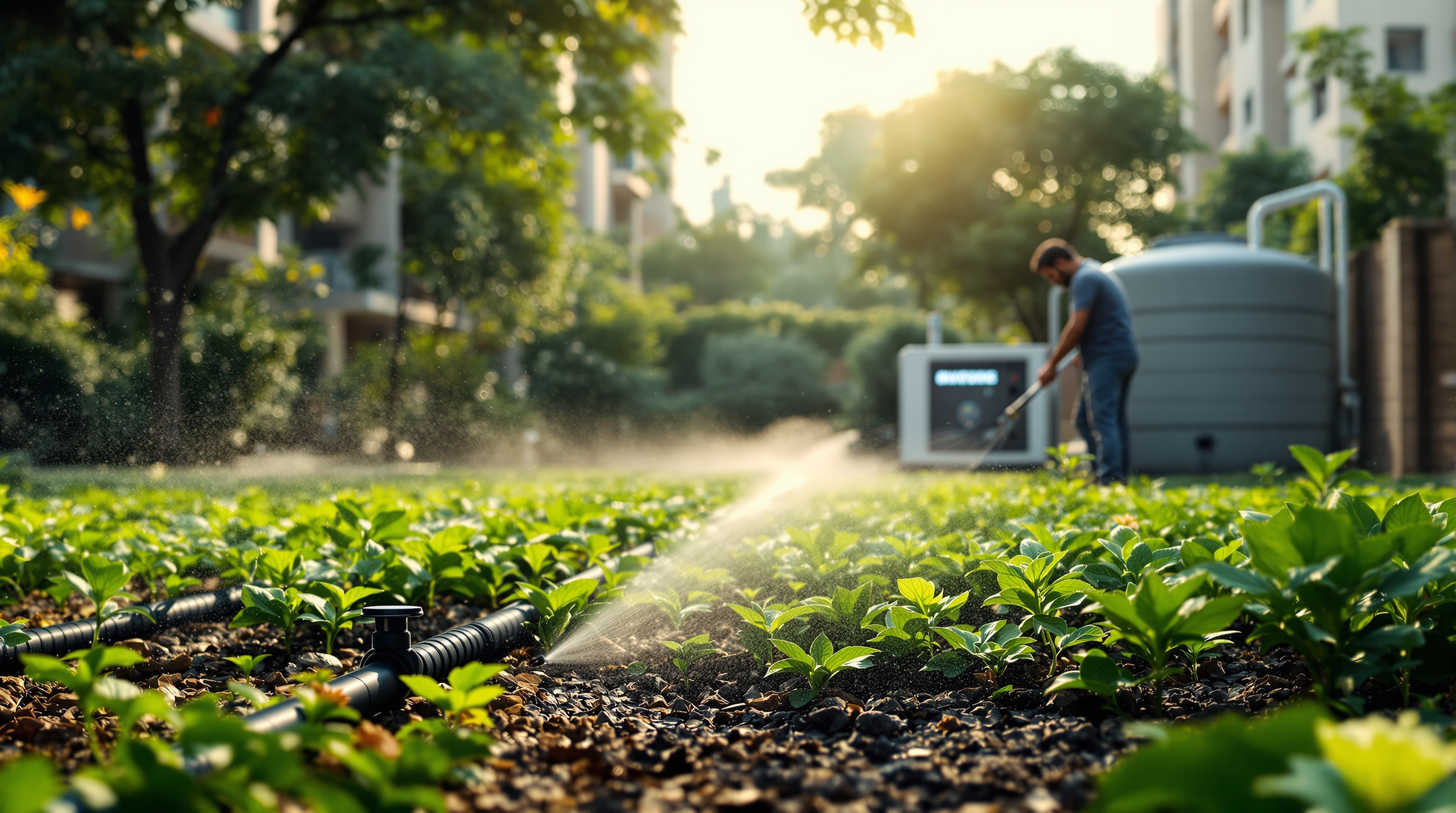
Drip and sub-surface irrigation is the right default for treated water. It delivers water at the root zone, close to the soil, with almost no spray or aerosol. That means:
- Minimal human contact — no mist drifting across footpaths, play areas or balconies.
- Far less evaporation, so less water is wasted and less salt is left concentrated on the surface.
- No wet foliage, which keeps leaf diseases and chlorine-burn off the plants.
Sprinklers and micro-sprinklers throw treated water into the air as a fine spray — and that aerosol is the main pathogen-exposure pathway for reuse water. If you must use sprinklers on a large lawn, run them at night or early morning when nobody is around, keep them well away from seating, walkways and windows, and make sure disinfection at the STP is never skipped. Many housing societies simply mandate drip for treated water and reserve any sprinkler zones for early-morning cycles only.
There is a filtration consequence too: drip emitters are fussy about solids. Treated water going into drip lines usually needs a screen or disc filter at the header and periodic line flushing, because even 15–20 mg/L of TSS will slowly block emitters. A sand filter and activated carbon filter in the STP's tertiary stage makes drip reuse far more trouble-free.
The salt and chlorine cautions — the two silent killers
These are the failures that show up months later, so they are worth understanding before you plumb anything.
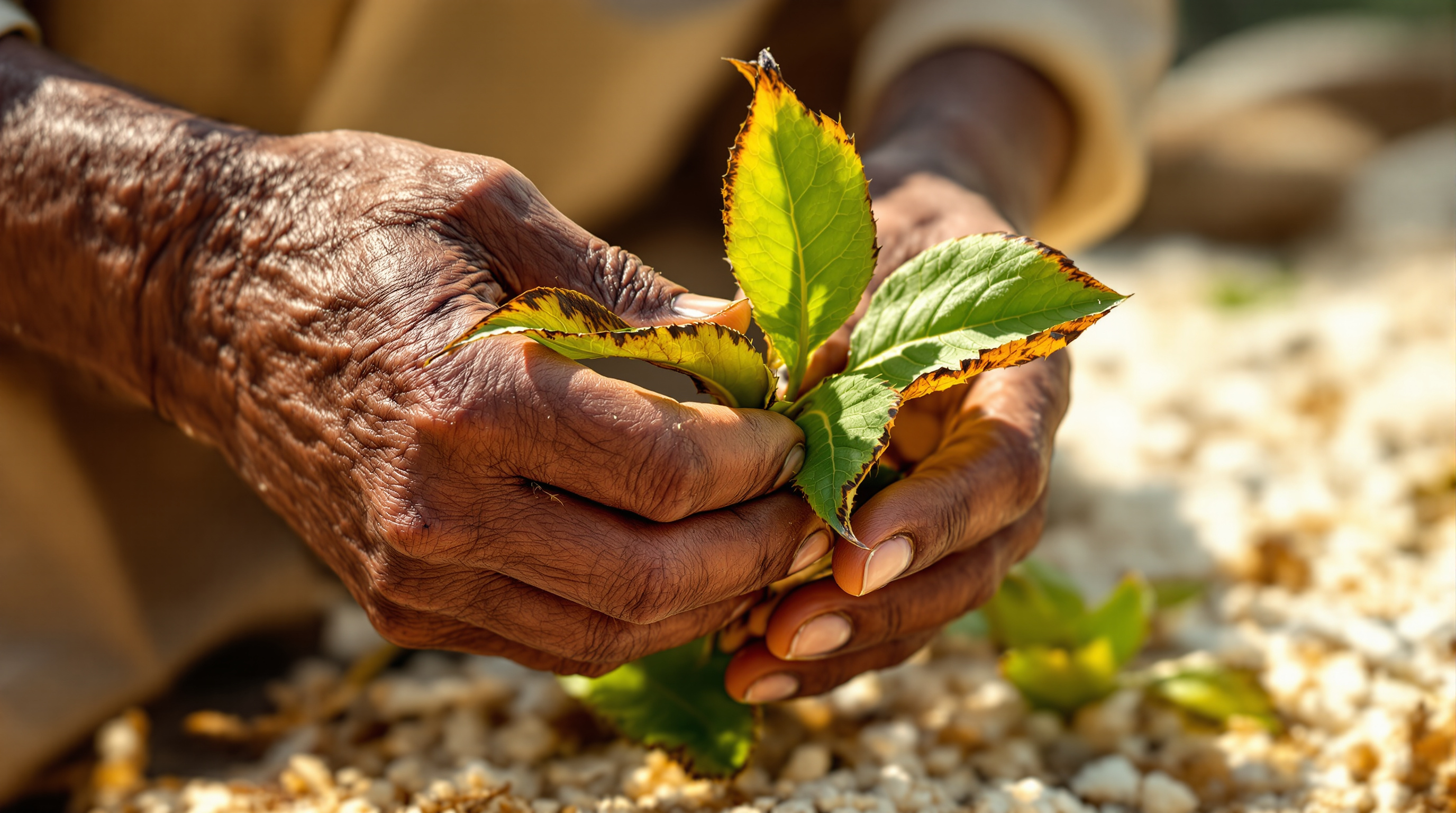
Salinity (TDS) is cumulative. Every litre of irrigation water leaves its dissolved salt behind in the soil when the water evaporates or is taken up by the plant. Treated sewage water usually carries a higher TDS than fresh water — softeners, detergents and kitchen waste all add salts. Over a dry season, salt builds in the root zone, and salt-sensitive plants respond with leaf-tip burn, stunted growth and eventually death. Manage it by:
- Choosing salt-tolerant species for the beds fed by treated water — many hardy Indian landscaping plants, hedges and grasses cope well.
- Leaching periodically — a deep flush of fresh water, or a good monsoon, washes accumulated salt below the root zone.
- Ensuring soil drains freely — salt only builds where water sits.
Chlorine is a short-term but real hazard. STPs disinfect with chlorine to kill pathogens, but free residual chlorine is phytotoxic — it scorches leaves and kills the beneficial microbes that keep soil healthy. A well-run plant doses chlorine to leave only a trace by the time water reaches the garden, and any residual dissipates quickly once water is exposed to air in an open tank. If your complex uses UV disinfection instead of chlorine, this problem largely disappears — UV leaves no chemical residue, which is one reason it is increasingly preferred where garden reuse is the priority. Where chlorine is used, holding treated water in an intermediate tank before irrigating lets residual chlorine off-gas naturally.
Dual-plumbing basics: keeping the two waters apart
Reuse only works safely if treated water can never be mistaken for or cross-connect with drinking water. That is what a dual-plumbing (two-pipe) system guarantees, and it is the non-negotiable engineering rule of any reuse scheme.
The essentials:
- A separate distribution line for treated water — its own pump, its own storage tank, its own network to garden hydrants and drip headers, entirely independent of the potable supply.
- A clear colour code. Non-potable reuse lines are conventionally run in a distinct colour (often purple/lilac for recycled water) so no plumber ever cross-connects them by accident.
- Labelled, lockable garden taps marked non-potable, so residents and gardeners never fill a bucket or drinking pot from them.
- No physical cross-connection, ever — the two systems must be air-gapped, with no valve that could let treated water into the fresh-water mains.
In a new building this is designed in from day one, which is far cheaper than retrofitting. If you are planning an apartment project, get the dual line into the drawings early — the broader logic is covered in apartment STP planning. For an existing complex, a garden-only reuse line is usually the simplest retrofit, because the garden network is separate from the domestic plumbing to begin with.
Making the numbers work
Gardening is often the reuse that pays for itself fastest, because landscape irrigation is thirsty and the alternative — tanker or borewell water — is expensive and shrinking. Before you commit, it is worth sizing both the supply and the saving:
- Check how much treated water your plant actually produces with the STP Capacity Calculator.
- See how the treated water splits across flushing, gardening and other uses with the Water Balance Calculator.
- Put a rupee figure on the tanker water you would avoid with the Water Reuse Savings Calculator.
For many complexes, garden reuse alone offsets a meaningful share of the STP's running cost within the first year — before you even count flushing.
The bottom line
Treated STP water is excellent garden water when three conditions are met: the plant reliably produces low-BOD, low-TSS, disinfected water; you apply it through drip at the root zone rather than spraying it around people; and you stay ahead of salt build-up with tolerant plants, free-draining soil and periodic leaching. Wrap it all in a properly separated, colour-coded dual-plumbing system so treated and drinking water never meet, and your garden becomes the place your building's recovered water does the most visible good.
To go deeper on the reuse side of the picture, continue through the Sewage Treatment Plants guide library, or read the companion guides on treated water for landscape irrigation and toilet flushing — the other two places every drop of your STP's output should be going.
Export this guide
Related Guides — Deep-dive reading
Treated Water for Toilet Flushing: The Complete STP Reuse Guide
How dual plumbing, a dedicated flush tank and pump, colour-coded lines, and residual chlorine turn STP effluent into the single biggest water saving a building can make — done safely, without a single cross-connection.
Sewage Treatment PlantsDual Water Supply for Indian Buildings: Dual Plumbing, Colour-Coded Networks & Cross-Connection Control
How a dual water supply splits a building into two independent lines — fresh potable water for drinking and bathing, treated/recycled water for WC flushing, gardening and washdown — with colour-coded piping, separate storage, and the backflow protection that keeps the two from ever mixing.
PlumbingTreated Water for Landscape Irrigation: Distribution, Storage, Quality & Salinity
How to irrigate large lawns, planted podiums and campus landscapes with STP-treated water — the distribution network, storage sizing, the quality numbers that keep plants alive, and how to manage salt build-up in the soil over the years.
Sewage Treatment PlantsRelated Tools — Try Free
Landscape Cost Calculator
Estimate a garden's cost — hardscape, softscape, lawn, irrigation, lighting and annual upkeep — by area, tier and city.
Budget CalculatorWater Reuse Savings Calculator
Estimate the money you save by reusing STP-treated water instead of buying fresh supply, with daily, monthly and annual savings.
STP CalculatorWater Carbon Savings Calculator
Estimate the CO2 emissions you avoid each year by reusing treated water instead of fresh supply, with annual tonnes saved and a tree-equivalent.
Sustainability