
Time-Attendance Integration in India (2026): One Reader for Door and Payroll, Done the DPDP Way
How the same access-control reader that opens a door can also log staff in and out for payroll, and how to run employee biometric attendance lawfully under India's DPDP Act, 2023.
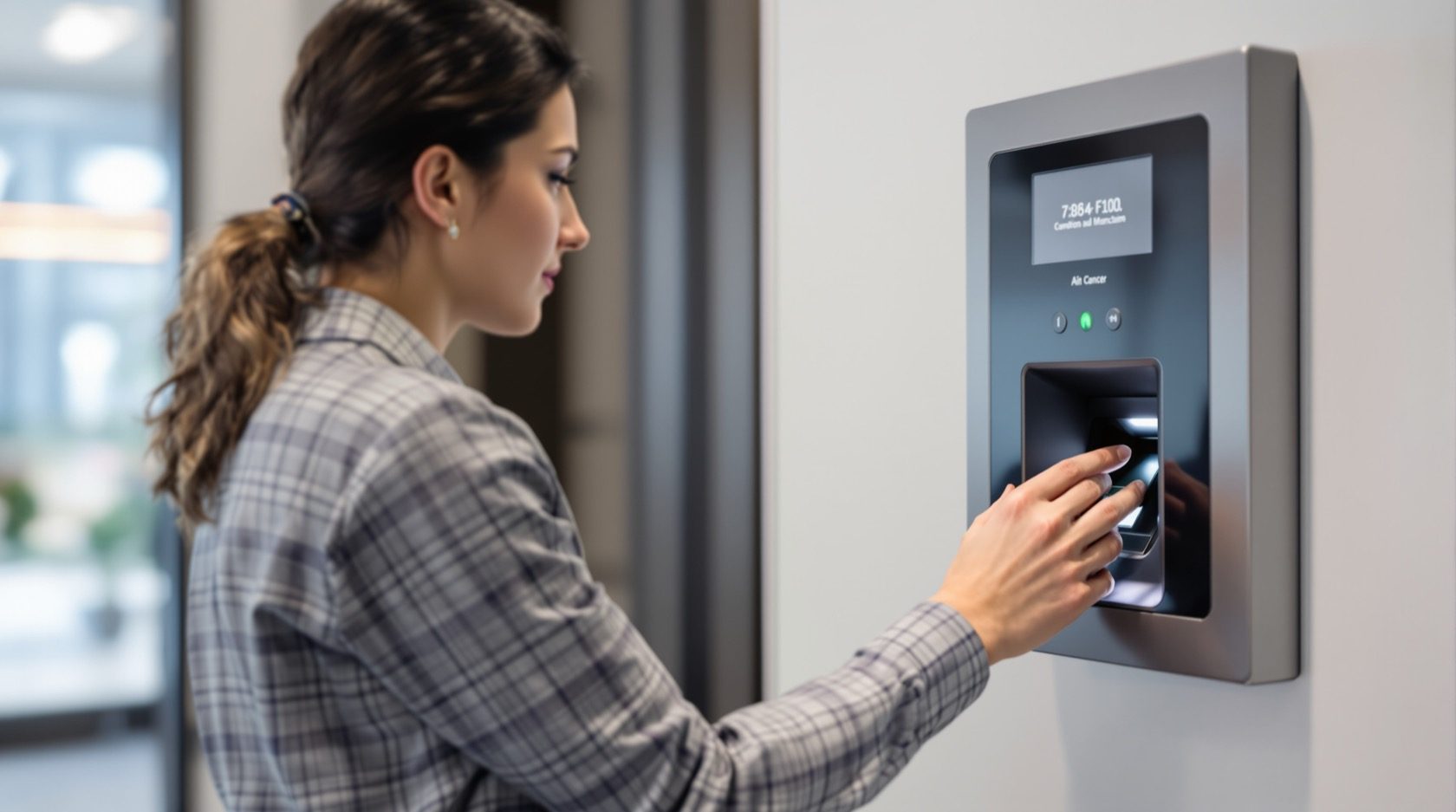
The reader on your office or factory door is doing one job you see — opening the door for the right person — and it can quietly do a second: recording exactly when each person arrived and left. That second job is time-attendance integration: using the same access-control reader that grants entry to also log in and out times and feed them to payroll and HR. One device on the wall serves both security and human resources, and the ₹15,000 stand-alone punch machine in the corner becomes unnecessary.
This is the attendance guide in Studio Matrx's access-control library. It sits alongside the guides on the reader itself, the card credential, and the audit trail that all this data lands in. The upside is real — accurate hours, no buddy-punching, one less device — but attendance is where an access system stops being about doors and starts holding employee personal data, some of it biometric and legally sensitive. So this guide leads with getting that right, then covers how the plumbing works.
Scope & safety. This guide helps you plan and specify an attendance-integrated access system and run it lawfully. The reader, its mains and network wiring, and the fire-egress interlock are a licensed professional's job. Two things are non-negotiable. First, attendance never overrides free exit: a door on an escape route must release on power loss and on a fire-alarm signal, integrate with the fire panel, and have a manual emergency release — no one is ever trapped because the system wanted a clean out-punch. Second, employee biometric attendance is sensitive personal data under the Digital Personal Data Protection Act, 2023 — it needs a lawful basis, clear notice, genuine consent, a non-biometric alternative, and a retention limit. This is educational guidance, not legal advice.
How one reader becomes a time clock
Every time a valid credential is presented at an access reader, the controller already creates a small record: who, which door, and the exact timestamp. Access control uses that record to decide whether to unlock. Attendance integration simply keeps and interprets the same records — the first read of the day at an entry door is an in-punch, the last read at an exit door is an out-punch, and the attendance software does the arithmetic in between.
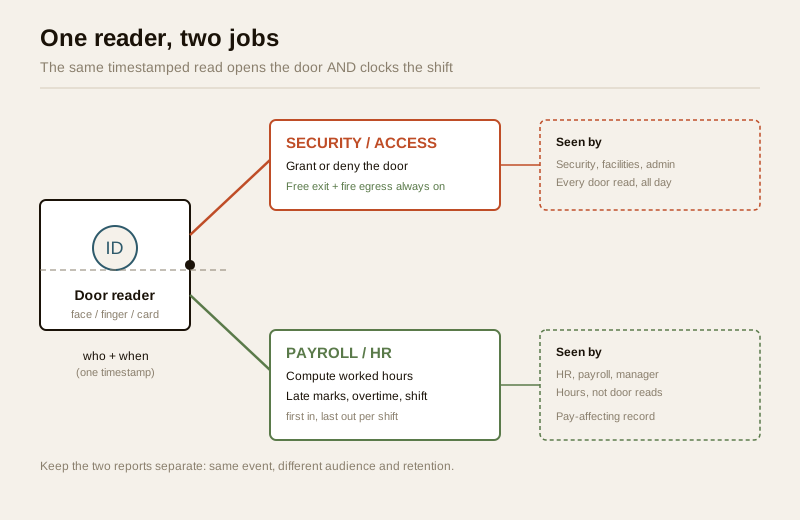
Nothing extra is fitted to the door. What changes is the software layer behind it:
- The reader (fingerprint, face, card or mobile) captures identity and time — the same read that biometric or card-based access already performs.
- The controller logs the event, timestamped, and — if attendance is enabled — tags whether it was an entry or exit point.
- The attendance engine (a module of the access software, or a linked HR product) turns raw reads into worked hours, late marks, early-outs, overtime and shift compliance.
- The payroll/HR system receives a periodic export — daily, or a monthly muster — and pays people accordingly.
Because the identity check has already happened for the door, attendance rides along at almost no extra cost. The catch is that a door-opening event and a pay-affecting event are not the same thing, and treating them as identical causes most of the disputes covered later.
What you gain over a separate punch machine
| Separate punch machine | Integrated with the door reader | |
|---|---|---|
| Hardware | Extra device, wiring, power, wall space | None — the door reader already exists |
| Accuracy | People forget to punch; queues form | Punch is automatic on entry/exit |
| Buddy-punching | Easy with shared cards/PINs | Hard with biometric or mobile credentials |
| Data path | Second silo to reconcile | One event stream, split into two reports |
| Cost | ₹8,000–₹40,000+ per device | Software licence only |
| Maintenance | Two systems to service | One reader to maintain |
The single biggest operational win is the end of buddy-punching — one worker clocking in for an absent colleague. A face or fingerprint read cannot be handed to someone else the way a swipe card or a shared PIN can, which is precisely why many factories and offices move attendance onto biometric readers. That same strength is the reason the data is legally sensitive, which is the subject of the next section.
Lead with the law: employee attendance under the DPDP Act, 2023
Attendance data is not neutral. It reveals when a named individual was and was not at work, and when it is captured by fingerprint or face, it is biometric data — a category the Digital Personal Data Protection Act, 2023 treats as personal data that a business (the "data fiduciary") must handle with a lawful basis, notice and, in the employment context, care around consent. An employer who bolts biometric attendance onto a door without addressing this is exposed, and — more importantly — is treating staff badly. Get this designed in from day one; it is far harder to retrofit consent onto a system people were made to enrol in.
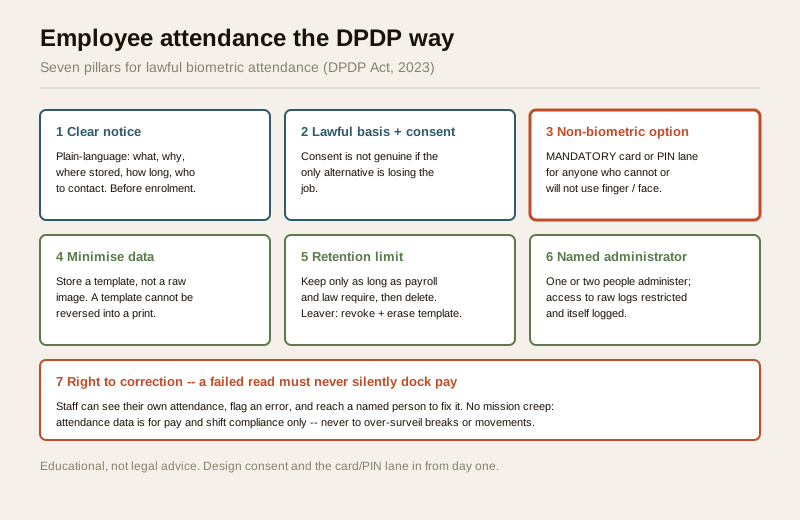
The practical checklist for running attendance lawfully:
- Clear notice. Before anyone enrols, tell staff in plain language what is collected (fingerprint template / face template / card taps), why (attendance and payroll), where it is stored, how long it is kept, and who to contact. A poster and a signed one-pager, in a language people read.
- A lawful basis and genuine consent. Consent in an employer–employee relationship is delicate: it is not "genuine" if the only alternative is losing your job. Which is exactly why the next point matters so much.
- A non-biometric alternative — mandatory. Anyone who cannot use biometrics (worn fingerprints from manual labour, a hand injury, a religious or personal objection) or simply refuses must have an equally usable way to mark attendance — an RFID card or a PIN. Refusing biometrics must never cost someone their attendance record or their pay. Design the card/PIN lane as a first-class path, not a grudging exception.
- Data minimisation. Store a mathematical template, not a raw fingerprint image or a stored face photo, wherever the device allows — a template cannot be reversed into a usable print. Do not collect more than attendance needs; see the fingerprint-lock guide on how sensors template rather than image.
- A retention limit. Keep attendance records only as long as payroll, statutory and dispute needs require (often a few years for wage records), then delete. On the day a person leaves, revoke their access and schedule deletion of their biometric template — a departed employee's fingerprint has no business staying in your system.
- A named administrator and access control on the data. One or two named people administer attendance; access to the raw logs is restricted and itself logged. The attendance data lives in the same governed store as the audit trail.
- No mission creep. Attendance data is for pay and shift compliance — not for tracking every movement, timing tea breaks, or profiling who talks to whom. Using door logs to over-surveil staff is both a trust-killer and a DPDP purpose-limitation problem.
Getting the biometric alternative wrong is the most common failure. If your rollout plan does not have a working card-or-PIN lane on day one, it is not ready to deploy — no matter how good the face reader is.
Separating "security access" from "HR attendance"
A door event and a pay event look identical in the log, but they must feed two different reports with two different audiences. The security team cares about who went where and when for safety and investigations; HR cares about hours worked for pay. Blur them and you get both bad security and bad payroll — and you widen the DPDP exposure by letting more people see more than they need.
| Aspect | Security / access reporting | HR / attendance reporting |
|---|---|---|
| Question it answers | Who accessed which door, when | How many hours did this person work |
| Who sees it | Security, facilities, admin | HR, payroll, the employee's manager |
| Granularity | Every door read, all day | First-in, last-out, totals per shift |
| Retention | Per security/audit policy | Per payroll/statutory policy |
| Sensitivity | Access-control log | Pay-affecting personal record |
Good systems let you enable attendance only on the doors that mark presence — a main entry turnstile, a shop-floor gate — while inner doors stay pure access control and never touch payroll. This keeps the attendance dataset small (minimisation again) and stops an incidental "went to the server room at 3 pm" read from becoming an HR data point.
Making attendance accurate — and fair
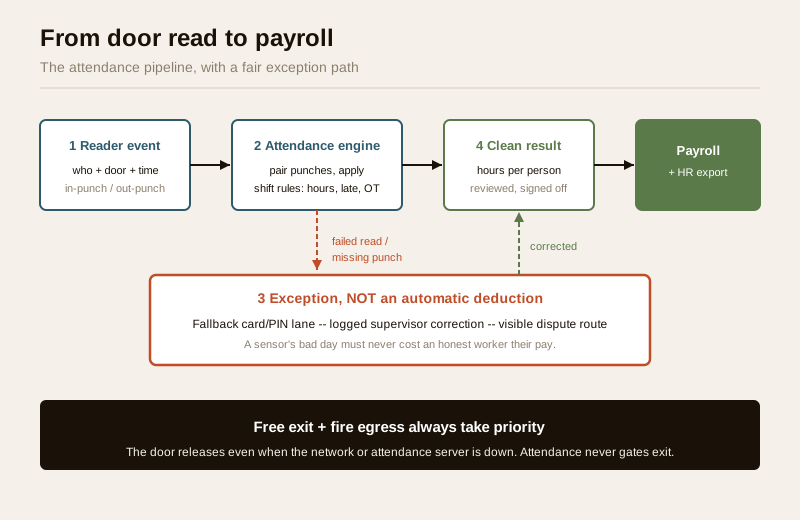
The engine that turns reads into hours is where fairness lives or dies. A failed read must never silently dock pay. Fingerprint sensors misread wet, dry, cut or worn fingers; face readers struggle in glare or with a mask; a card gets left at home. If the system quietly logs "no in-punch = absent," an honest worker loses money for a sensor's bad day. Three safeguards:
- A fallback lane at every attendance point — the card/PIN alternative doubles as the recovery path when biometrics fail.
- A manual-correction workflow — a supervisor can add a missed punch, with a reason, and the correction is itself logged. This is the same governed edit trail the audit-trail guide describes.
- A visible dispute route — the employee can see their own attendance and flag an error, and there is a named person to fix it.
Shifts, factories and throughput
Multi-shift workplaces put real demands on an attendance-integrated door:
- Shift-change throughput. At a factory gate, a whole shift arrives and leaves in a few minutes. A slow one-to-many face match or a single fingerprint reader becomes a bottleneck and a safety pinch-point. Specify enough readers, or a fast card tap for the crowd with biometrics reserved for higher-security inner doors, and coordinate lane count with the door hardware installer. See the commercial-buildings security guide for entrance planning.
- Multi-shift rules. The engine must know each person's roster to decide what "late" means — a 6 am general-shift reader and a 2 pm second-shift reader are the same door with different rules. Configure shift windows, grace periods and overtime thresholds explicitly.
- Night shifts crossing midnight. An out-punch after midnight belongs to the previous day's shift; the engine must pair punches by shift, not by calendar date, or every night worker looks absent one day and double-counted the next.
- Overtime and compliance. Let the engine compute overtime against your policy, but treat those numbers as an input to payroll review, not an automatic instruction — a human signs off.
Connecting to payroll and HR software
The attendance engine rarely pays anyone directly; it hands clean numbers to payroll. Three common integration patterns:
| Pattern | How it works | Best for |
|---|---|---|
| File export | A daily/monthly muster (CSV/Excel) imported into payroll | Small offices, simple payroll |
| API / connector | The attendance product pushes hours to payroll via an integration | Mid-to-large, established HR software |
| All-in-one suite | Access, attendance and payroll are modules of one platform | Organisations wanting a single vendor |
Whichever you choose, insist on: a clear field for who worked how long (not raw door reads); a way to see and correct before pay runs; and a data-processing understanding with the software vendor that respects the DPDP notice you gave staff — the payroll vendor becomes another handler of the same sensitive data. For the reader-and-network side of the build, the access-control pillar and the electrical hub cover the physical layer.
Fire egress: attendance never wins
It bears repeating on its own because it is a life-safety absolute. A door on an escape route must free-exit regardless of attendance state. No one may be blocked from leaving because they did not out-punch, because the network is down, or because the attendance server is unreachable. The egress side of the door releases on power loss and on a fire-alarm signal, is wired to the fire panel, and has a manual release — exactly as the access-control pillar and NBC / fire code require. Attendance is a reporting feature layered on top of access; it never has a vote on whether a person can get out. Coordinate the egress interlock with a licensed fire and electrical professional, and test it.
When to bring in a professional. Specify the policy — which doors mark attendance, the consent notice, the non-biometric lane, retention, shift rules — yourself or with HR and legal. Hand the reader and controller fitting, mains and network wiring, the fire-egress interlock and fire-panel integration, and the payroll data connector to licensed installers and your HR-software vendor. Have a professional test that every attendance-enabled door still free-exits with the network and server down, and get a written data-processing understanding from any payroll vendor who receives the records. Plan the layout with the access-control system designer and price it with the cost estimator.
Key takeaways
- One reader, two jobs. The access reader that opens a door already timestamps every read — attendance integration keeps and interprets those reads, so a separate punch machine becomes unnecessary and buddy-punching gets much harder.
- Lead with DPDP. Employee biometric attendance is sensitive personal data under the Act, 2023 — give clear notice, a lawful basis and genuine consent, store a template not an image, set a retention limit, name an administrator, and never let attendance data creep into over-surveillance.
- A non-biometric alternative is mandatory. Anyone who cannot or will not use a fingerprint or face must have an equally usable card or PIN lane; refusing biometrics can never cost someone their pay.
- A failed read must never dock pay. Build a fallback lane, a logged manual-correction workflow, and a visible dispute route, and keep security-access reporting separate from HR-attendance reporting.
- Fire egress always wins. Attendance is a reporting layer, never an exit gate — the door free-exits on power loss, on a fire signal, and when the network or server is down; interlock and test it with a licensed professional.
References
- Digital Personal Data Protection Act, 2023 — governs employee attendance and biometric data: notice, lawful basis and consent, purpose limitation, data minimisation, storage limitation and the rights of the individual; treat attendance records as sensitive and set retention and deletion in writing.
- Manufacturer specifications — verify on the reader and attendance-software datasheet whether the device stores a reversible image or an irreversible template, its throughput (matches per minute) for shift-change sizing, and the payroll export/API options before specifying.
- National Building Code of India (SP 7), Bureau of Indian Standards, and local fire bye-laws for the fire-egress interlock and free-exit requirements on any access-controlled escape-route door; verify the current edition via the BIS catalogue: https://www.services.bis.gov.in/
This is an educational overview, not legal advice. Reader and controller fitting, mains and network wiring, the fire-egress interlock and payroll integration are qualified professional tasks — engage licensed installers and your HR-software and legal advisers, and verify any standard's current status via the BIS catalogue before relying on it.
Export this guide
Related Guides — Deep-dive reading
Access Control Maintenance in India (2026): Readers, Locks and Fail-Safe Egress
How to keep a card, keypad, fingerprint or face access-control system reading reliably and locking securely — and, above everything, how to test that its doors still release on a fire alarm and on power loss, so an access-controlled door never becomes a life-safety trap.
SecurityBiometric Access Control in India (2026): Fingerprint, Face and Palm Systems Done Right
A professional's guide to networked biometric access control for buildings: fingerprint, face and palm readers on many doors, tied to attendance, planned around the DPDP Act, fire-egress fail-safe and honest field limits.
SecurityOffice Access Control in India (2026): Zones, Credentials and Fire-Safe Egress
How to plan access control for an office: employee credentials, zones by sensitivity, time schedules, visitor management, time-attendance for payroll, CCTV and HR integration, and doors that always fail safe for escape.
SecurityRelated Tools — Try Free
Emergency-Egress Checker
A life-safety self-check that access-controlled doors on escape routes still let people out in an emergency.
Egress CheckWindow Hardware Cost Calculator
Estimate window hardware cost — hinges, handles, locks, rollers and multipoint gears.
Window CalculatorAccess-Control Schedule Generator
Build the time schedules that decide when each access group can enter — an editable list for your integrator.
Time Schedules