
Sustainable Lighting Design: Low-Energy, Low-Waste, Human-Friendly (2026)
How to make an Indian home's lighting genuinely sustainable — use less energy, buy fewer and better fixtures, design for daylight, power the garden with sun, protect the night sky, keep the light human-friendly, and dispose of old lamps responsibly.
Lighting is the easiest room in the house to make sustainable — and the easiest to get wrong by throwing money and gadgets at it. Sustainable lighting is not a shopping list of "eco" bulbs; it is a way of designing so the home draws less power, buys fewer fixtures over its lifetime, leans on free daylight, spills less light into the night sky, and stays kind to the eyes and the sleep of the people living in it. Do it well and the electricity bill, the e-waste pile and the eye strain all fall together.
This guide sits in the Lighting hub as the "do it responsibly" companion. It gathers seven pillars — use less energy, buy better and waste less, design for daylight, go solar outdoors, cut light pollution, keep the light human-friendly, and dispose of the old kit responsibly — and points you to the deeper technical and controls guides at each hand-off. It is deliberately design-led: it helps you plan and specify a sustainable scheme, not rewire your house.
Scope & how to read this. Every figure here — wattages, lux levels, cost bands, savings — is typical and indicative to help you plan, budget and brief a professional, not a firm quote or a guarantee; get local quotes and confirm ratings on the actual product. This is a design and specification guide. The wiring, circuits, dimmer install and any electrical work are safety-critical and must be done by a licensed electrician — never DIY them. Solar install (panel sizing, batteries, any grid tie) belongs to a qualified installer, and automation to the Smart Home hub. We name standards like IS 3646, NBC (SP 7:2026), ECBC and BEE star ratings generally — check the current version and the product's actual label.
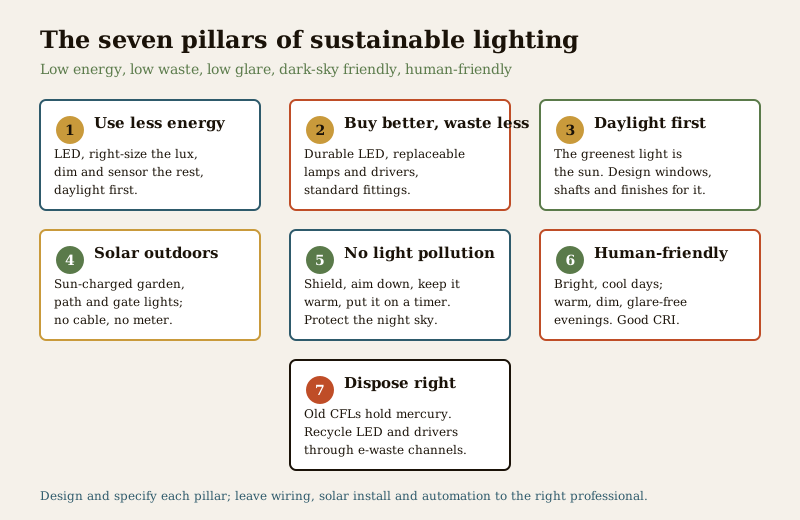
The one-page picture: seven pillars
Sustainable lighting is these seven moves, roughly in order of impact:
1. Use less energy — the biggest lever, and mostly free design decisions.
2. Buy better, waste less — durable, repairable fixtures instead of cheap throwaways.
3. Daylight first — the greenest light is the sun; design so lamps stay off by day.
4. Solar outdoors — power the garden, path and gate from the sun.
5. No light pollution — shield, aim down, warm the colour, put it on a timer.
6. Human-friendly — bright cool days, warm dim glare-free evenings.
7. Dispose right — recycle dead LEDs and never bin mercury CFLs carelessly.
The rest of the guide takes them one at a time.
Pillar 1 — Use less energy (the biggest lever)
Most Indian homes have already swapped to LED, so the next wins come from using less light, not just efficient light. There are five moves, and they stack:
- LED everywhere, chosen well. LED is 6-8x more efficient than the old incandescent bulb and far ahead of CFL. The deep how-to-buy detail — lumens, watts, CRI, driver quality — lives in the energy-efficient lighting guide; this guide assumes you start there.
- Right-size the light — do not over-light. More fixtures is the commonest waste. A cosy bedroom needs far less than a kitchen counter. Design to the task and use IS 3646 interior-illumination lux levels as a floor, not a target to double. Over-lighting burns power and flattens the mood.
- Controls, sensors and dimming. A dimmed lamp draws less power and lasts longer; occupancy sensors in stores, utility areas, stairs and toilets kill the "left on all day" bill; daylight sensors dim perimeter fixtures when the sun does the work. The full playbook is in lighting controls and dimming design. (Dimmer wiring is the electrician's job; automation is Smart Home.)
- Daylight-first layout. Design so daytime needs no lamps at all — covered in Pillar 3.
- Solar for outdoors. Take the garden and boundary off the meter entirely — Pillar 4.
| Sustainability lever | What you do | Effort | Relative impact |
|---|---|---|---|
| Switch to good LED | Replace any remaining CFL/halogen with quality LED | Low | High |
| Right-size the lux | Design to task levels, resist over-lighting | Design-time | High |
| Dimming | Put living, bedroom and dining on dimmers | Low-Medium | Medium |
| Occupancy sensors | Auto-off for stairs, stores, toilets, utility | Medium | Medium |
| Daylight sensors | Dim perimeter fixtures as daylight rises | Medium | Medium |
| Daylight-first design | Windows, shafts, pale finishes; lamps off by day | Design-time | High |
| Solar outdoors | Sun-powered path, garden, gate lights | Medium | Medium |
| Warm, targeted evening scenes | Fewer fixtures on, lower and warmer at night | Low | Medium |
Put your before/after into the LED savings calculator and the lighting electricity bill calculator to see the rupees, and read energy-efficient home design for the whole-home picture.
Pillar 2 — Buy better, waste less
The hidden cost of cheap lighting is that you buy it again and again. A Rs 120 downlight that dies in a year is dearer over a decade than a Rs 400 one that lasts — and it makes ten times the e-waste. Sustainable buying is about durability and repairability, not the lowest sticker.
- Durable, honest LED over cheap throwaway. A trusted brand with a real warranty, a proper heat sink and an honest lumen and life claim will outlast a bargain lamp several times over. Look for a BEE star rating and be sceptical of unbranded "highest brightness" claims.
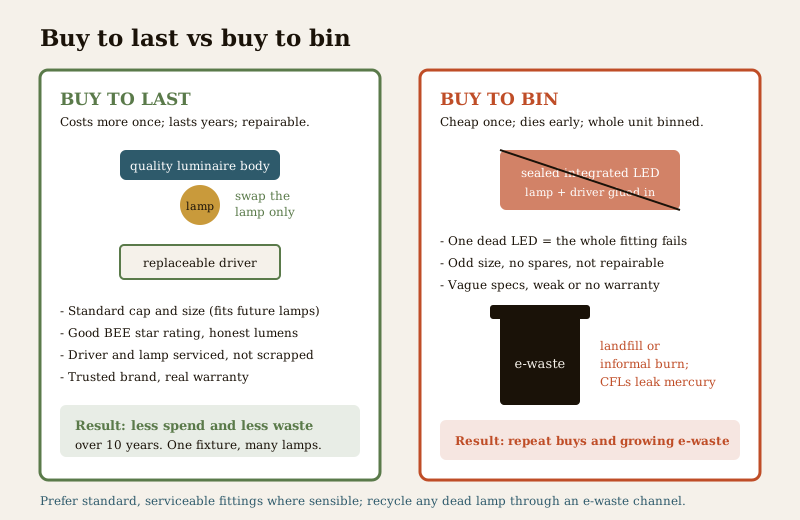
- Repairable and replaceable-lamp fixtures. Where sensible, prefer a fixture that takes a standard replaceable lamp (a normal B22/E27 bulb, a standard GU10 spot) over a sealed integrated LED where the whole fitting is scrapped when one diode fails. Integrated fixtures earn their place in slim coves and profiles where nothing else fits — just know the trade-off.
- Replaceable drivers. The LED driver often dies before the diodes. A fixture with an accessible, standard-format driver can be serviced for a few hundred rupees; a potted, glued-in one becomes landfill. Ask before you buy.
- Standard fittings and sizes. Standard cap types, standard cut-out diameters and common colour temperatures mean you can swap and match for years without re-buying whole sets.
- Avoid the e-waste in the first place. Every fixture you do not over-buy, and every lamp you can replace instead of the whole unit, is waste that never happens.
| Buy to last | Buy to bin | |
|---|---|---|
| Upfront cost | Higher once | Lowest, repeatedly |
| Lifespan | Long; rated honestly | Short; optimistic claims |
| When a diode fails | Swap the lamp | Scrap the whole fixture |
| Driver | Replaceable, standard | Sealed / potted in |
| Fittings | Standard cap and cut-out | Odd, proprietary, no spares |
| Warranty | Real, honoured | Vague or none |
| 10-year cost & waste | Low | High — repeat buys, more e-waste |
Buying to last also means it stays working: a fixture you can clean, re-lamp and re-driver keeps its output up. The lighting maintenance guide covers keeping a scheme bright and long-lived, and the homeowner's guide to lighting frames the whole buy-run-maintain cycle.
Pillar 3 — Daylight is the greenest light
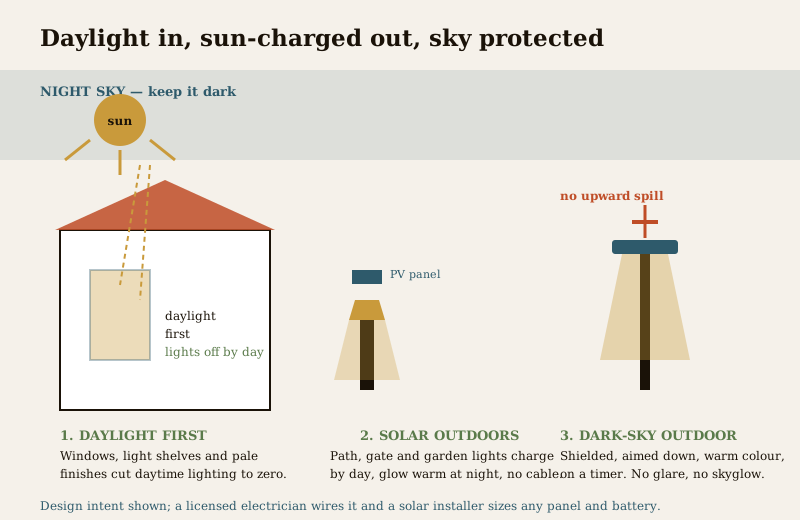
No lamp beats a well-placed window. A room designed for daylight can run lamp-free through most of an Indian day, which is the single largest saving available — and daylight is the healthiest, highest-CRI light there is. This is a design decision made early:
- Windows and openings sized and placed so working areas and living spaces get usable daylight without glare or heat gain.
- Light shelves, shafts and clerestories to push daylight deeper into a plan.
- Pale ceilings and walls that bounce daylight around instead of soaking it up, so you need fewer lamps at night too.
- Daylight-linked controls so perimeter fixtures dim or switch off automatically when the sun is doing the work.
The architecture of daylight — window sizing, orientation, shading against the Indian sun — is its own subject; see daylighting design and windows. Design for it first, then let electric light fill only the gaps daylight leaves.
Pillar 4 — Solar and renewable-powered outdoors
Outdoor lighting is the easiest place to go fully renewable, because garden, path, gate and boundary fixtures are low-load, run only at night, and are far from the meter. Sun-charged fixtures with a small panel and battery need no cabling and add nothing to the bill — ideal for a path light, a bollard, a garden accent or a gate lamp.
- Where solar shines: path and step lights, garden and plant accents, bollards, gate and nameplate lights, and low-level ambience where you do not need guaranteed brightness every single night.
- Where mains still wins: security floods that must fire reliably, and any bright, must-work task light — here a good efficient mains LED on a timer or sensor is the sustainable choice.
- Buy quality here too. Cheap solar garden lights are classic throwaways; a fixture with a replaceable battery and a decent panel lasts years instead of one monsoon.
Panel sizing, batteries and any wiring are for a qualified solar installer and electrician — not a DIY job. The design side of exterior schemes is in facade and exterior lighting design, and the whole-home renewable picture in sustainability and green buildings.
Pillar 5 — Light pollution and the dark sky
Sustainable lighting does not stop at the meter — it respects the night. Badly aimed outdoor light wastes energy lighting the sky, washes out the stars, spills into neighbours' bedrooms and disturbs sleep and wildlife (birds, insects, the fireflies that used to visit the garden). The fix is simple and costs nothing extra if you specify it up front:
- Shield and aim down. Use fixtures that throw light downward onto the path or wall, not upward or sideways into the sky. A shielded fixture with a flat glass and a cap is dark-sky friendly.
- Warm colour outdoors. Warm white (around 2700K, and warmer amber near sleeping areas and wildlife) scatters and disturbs far less than cold blue-white. Save the cool light for daytime interiors.
- Only as bright as needed. More lumens outdoors rarely means more safety; it means more glare and more skyglow. Right-size here too.
- Timers and sensors. Light the garden when someone is in it, not from dusk to dawn. A timer, an occupancy sensor or a simple "off by 11pm" rule cuts both bill and skyglow.
Aim, shield, warm and time every outdoor fixture and you protect the night sky, your neighbours' sleep and your own — while spending less. This pairs directly with facade and exterior lighting design.
Pillar 6 — Human-friendly, healthy light
Sustainable also means the light suits the humans under it — a scheme that strains eyes or wrecks evenings is not one anyone keeps. Keep this practical and non-clinical:
- Warm and dim in the evening. As the day winds down, lower the level and warm the colour (2700K or below). A bright cool room at 10pm feels wrong and keeps you wired; a soft warm one settles the house.
- Bright and neutral by day. Daylight and neutral-to-cool light (or actual daylight) suits work, kitchens and mornings. This day-to-night shift is the everyday version of "human-centric" lighting — no gadget required, just a dimmer and warm lamps.
- Good colour rendering (CRI). A high-CRI lamp (aim for CRI 90 or above where you see faces, food and fabric) makes skin, cooking and interiors look true. Poor CRI makes a home look sickly however bright it is.
- Glare-free. A bare bright source in the eyeline is tiring and unsustainable in the human sense. Recess, shield, frost or bounce it; light the task, not the eye.
Set a few warm dim evening scenes so the sustainable, low-glare setting is the easy default — see mood and scene lighting. The colour-temperature and CRI technicals sit in the Electrical hub; keep no medical claims — this is comfort and good practice, not therapy.
Pillar 7 — Dispose of old lamps responsibly
The last pillar is what happens when a lamp dies. India has a real e-waste stream and specific hazards, so this matters:
- Old CFLs and tube lights contain mercury. Never smash them, never toss them in the household bin. A broken CFL releases mercury vapour. Keep dead ones aside and hand them to an e-waste collector, a municipal hazardous-waste point or a retailer take-back where available.
- LEDs are e-waste too. They have no mercury but do contain electronics and metals worth recovering. Route dead LEDs and drivers to an authorised e-waste recycler, not the bin.
- Prefer take-back and buy-back. Some brands and retailers accept old lamps and fixtures; use them where you can.
- Design out the waste. This closes the loop back to Pillar 2 — the more repairable and re-lampable your fixtures, the less you ever have to dispose of.
Responsible disposal is the least glamorous pillar and the one most homes skip; a single labelled box in the utility area for dead lamps makes it effortless.
Certifications and ratings — a quick map
You do not need to memorise the codes, but knowing the names helps you buy and brief:
- BEE star rating — the Bureau of Energy Efficiency star label on LED products; more stars, more efficient. A simple shorthand at the shop.
- ECBC (Energy Conservation Building Code) — sets lighting power density (LPD), a cap on watts per square metre. Mostly a commercial concern, but a useful discipline for a large home: light the space within a sensible power budget.
- IS 3646 / NBC (SP 7:2026) — recommended interior illumination (lux) levels; use them to right-size, not to over-light.
- Green-building credits — rating systems (the well-known Indian and international green-building programmes) award points for efficient lighting, daylight, controls and low light pollution. Even if you never certify, their checklist mirrors these seven pillars.
Name these generally and confirm the current version and the product's actual label; never trust an unbranded claim over a verified rating.
How it connects
- Start at the Lighting hub pillar, then go deep on efficiency in the energy-efficient lighting guide.
- Cut runtime with lighting controls and dimming design, and keep the scheme long-lived with the lighting maintenance guide.
- Design for the sun with daylighting design and windows, and handle the outside — solar, shielded, dark-sky — via facade and exterior lighting design.
- See the whole picture in the homeowner's guide to lighting and the sustainability and green buildings hub.
- Cost the change with the LED savings calculator and the lighting electricity bill calculator.
Key takeaways
- Sustainable lighting is a design method, not a bulb — use less energy, buy better, lean on daylight, respect the night, keep it human-friendly and dispose responsibly.
- The biggest lever is using less light: right-size the lux, dim, sensor and daylight-link — do not just swap in efficient lamps and over-light.
- Buy to last, not to bin — durable, honest LED with replaceable lamps and drivers and standard fittings beats cheap throwaways on both cost and e-waste over a decade.
- Daylight is the greenest light — design windows and pale finishes so lamps stay off by day, and go solar for garden and path lighting.
- Protect the dark sky — shield outdoor fixtures, aim down, keep the colour warm and put them on timers.
- Keep it healthy without medical claims — warm dim glare-free evenings, bright neutral days, and CRI 90+ where you see faces and food.
- Dispose right — mercury CFLs and all e-waste go to authorised recyclers, never the household bin.
- Every figure here is indicative — get local quotes, confirm ratings on the product, and leave wiring, solar install and automation to the right professional.
References
- IS 3646 — code of practice for interior illumination (recommended lux levels; named generally).
- National Building Code of India, NBC (SP 7:2026), Bureau of Indian Standards — general lighting and illumination provisions.
- ECBC (Energy Conservation Building Code), Bureau of Energy Efficiency — lighting power density (LPD) guidance for buildings.
- BEE (Bureau of Energy Efficiency) star-rating programme for LED and lighting products — relative efficiency labelling.
- IS 16107 / IEC 60598 — LED luminaire performance and safety (named generally); IP ratings per IS/IEC 60529 for outdoor fixtures.
- E-waste handling and hazardous-waste rules for mercury-bearing lamps (CFL/tube) and electronic waste — route to authorised recyclers; confirm the current national and local provisions.
- A licensed electrician, qualified solar installer and lighting professional for all wiring, solar sizing, controls install and product selection.
All wattages, lux levels, cost bands and savings here are indicative planning aids only; confirm the governing values against IS 3646, NBC (SP 7:2026), ECBC and the product's actual BEE rating and label, get local quotes, and have a licensed electrician and qualified solar installer carry out any wiring, solar or control installation — none of it is DIY work.
Export this guide
Related Guides — Deep-dive reading
Energy-Efficient Lighting: Bright Homes, Lower Bills (2026)
A homeowner's design playbook for lighting an Indian home beautifully while cutting the electricity it burns — the LED switch, right-sizing so you never over-light, controls as the efficiency multiplier, daylight and solar first, and how to measure and lower the bill.
LightingLighting Controls & Dimming Design: Zones, Scenes & Switches (2026)
How to plan lighting control so an Indian home's light is flexible — split each room's layers onto separate switches, choose dimmers that actually work with LEDs, add two-way switching where you need it, and layer scenes on top. The design decisions you must settle before the electrician wires.
LightingSecurity Lighting Cost in India (2026): What Fixtures, Sensors and Wiring Really Add Up To
A homeowner's honest, indicative-band guide to what security lighting costs in India — the floodlights, wall-packs, bollards and motion lights, plus the sensors, the hidden wiring and the running electricity — with capex-versus-opex thinking, the mains-versus-solar-versus-motion trade-off, and why over-lighting wastes money and annoys the neighbours.
SecurityRelated Tools — Try Free
Circadian Light Meter
Patient-centric circadian lighting visualizer for Indian healthcare design — time-of-day × intensity → CCT, melanopic lux (EML / mEDI), melatonin suppression, and an alertness curve. Calibrated against WELL v2 L03 Circadian Lighting Design, CIE S 026:2018, Brainard 2001, and Lucas et al. 2014.
Circadian ToolCross-Ventilation Analyzer
Estimate airflow and air changes per hour (ACH) from room size, window areas, layout, and local wind — with NBC 2016 Part 8 compliance check.
Ventilation CalculatorBrise-Soleil Visualizer
Interactive horizontal-louvre cut-off angle calculator — sun altitude, louvre depth, and spacing inputs with a live shadow preview. Computes θ = arctan(spacing/depth) for façade shading, ECBC envelope compliance, hospital daylight design, and tropical sun-control detailing.
Sun Shading Tool