
STP Trial Runs & Bacterial Culture Development: Commissioning the Living Plant
Why a new STP cannot simply be switched on at full load — and how engineers grow the bacterial culture, watch MLSS, DO and settleability, and ramp sewage up over weeks of patient trial runs.
When the civil work is cured, the pumps are wired and the blowers spin on command, it is tempting to think the STP is finished. It is not. Everything built so far is only the hardware. The part that actually cleans water — a dense, living population of bacteria eating the pollution in the aeration tank — does not exist yet. It has to be grown. That growing-up period, run under gradually increasing load and watched daily, is the STP trial run, and it is the single most misunderstood, most rushed, and most consequential phase of the whole project.
An STP is not a machine you switch on; it is a culture you raise. Feed the bacteria too much too soon and they die or wash out. Feed them patiently and they multiply into the workforce that will run the plant for the next twenty years.
Skip or hurry this phase and you get a plant that looks complete, passes a cursory glance, and then fails its performance test three months later because the biology was never properly established. This guide explains what actually happens during trial runs, what you measure, and why it simply cannot be compressed.
Why you cannot start at full load
A brand-new aeration tank is just water and air. The organic load in incoming sewage is food, but with almost no bacteria present, there is nobody to eat it. Dump full design flow into an empty tank and the sewage passes straight through, barely treated, while the handful of microbes that do arrive are overwhelmed — a condition engineers call organic shock loading. The culture never gets a foothold.
The whole logic of trial runs is the opposite: give the bacteria a small, steady meal, let them breed until their numbers match the food, and only then increase the food. Population and load rise together, in step, over weeks. Before any of this, confirm the plant was handed over clean and mechanically sound using the commissioning procedure — trial runs assume every pump, blower and diffuser already works.
Step one: seeding the culture
You rarely grow a culture from nothing. You seed it — introduce a starter population of the right bacteria so multiplication begins on day one instead of day ten. In Indian practice the seed is almost always:
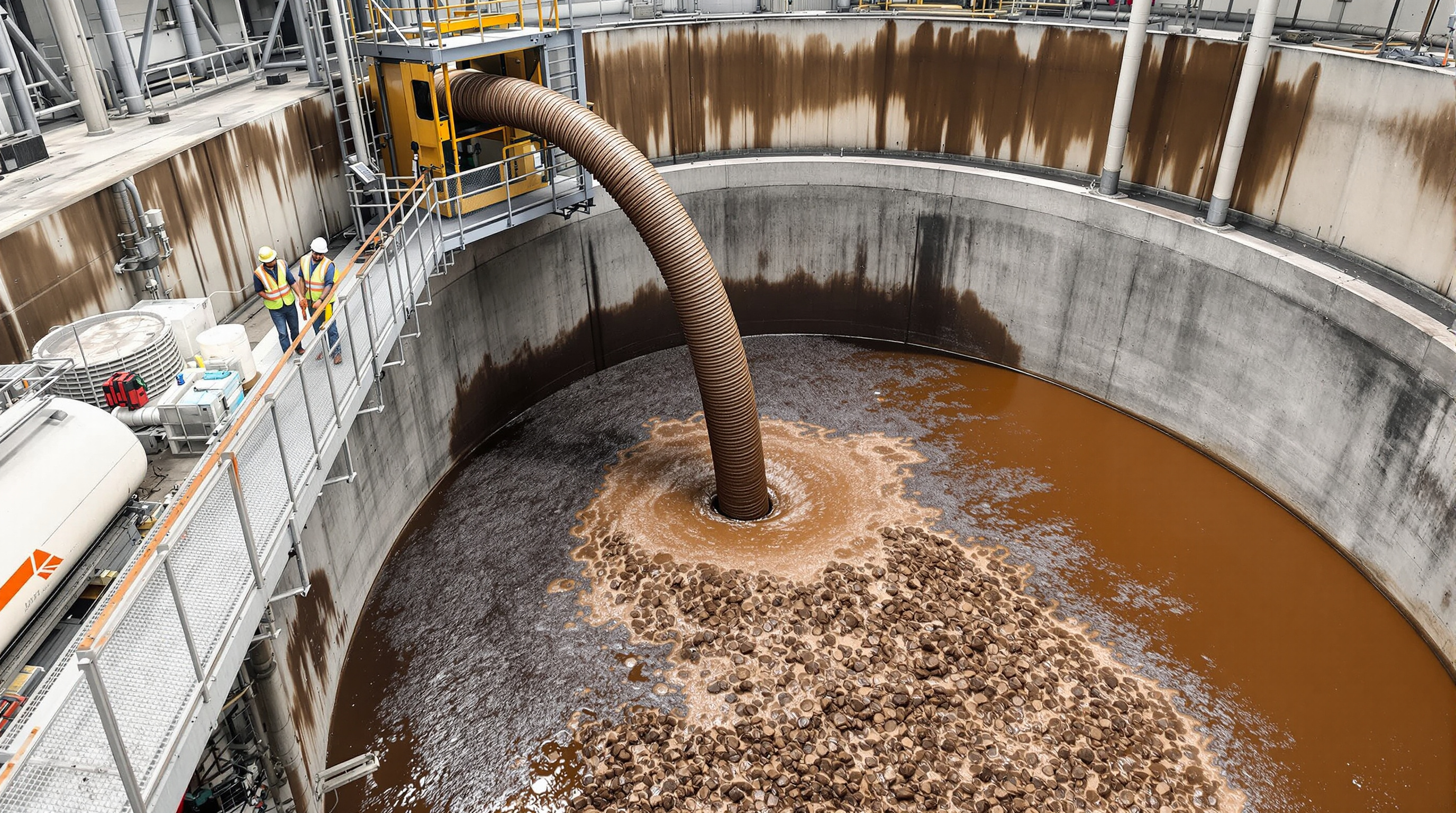
- Return activated sludge from a working STP nearby — a tanker of settled biomass from a healthy plant of similar character. This is the fastest, most reliable seed and the industry default.
- Cow dung slurry — a traditional, cheap booster rich in anaerobic and facultative organisms, sometimes added alongside sludge seed, especially for smaller apartment plants.
- Commercial bio-culture sachets — dosed bacterial blends, useful as a top-up but slower on their own.
The seed is charged into the aeration tank, aeration is started, and the plant is run on recirculation — often with a modest amount of sewage — so the organisms acclimatise before real feeding begins.
Step two: building MLSS
The central number of the entire trial run is MLSS — Mixed Liquor Suspended Solids — the concentration of biomass (in mg/L) suspended in the aeration tank. It is a direct proxy for "how many workers do we have." A healthy conventional STP runs at roughly 2,500–4,000 mg/L; an MBBR carries much of its biomass on media so its suspended MLSS reads lower, while an MBR deliberately runs far higher, often 8,000–12,000 mg/L.
At startup MLSS might be only a few hundred mg/L. The job of the trial run is to grow it into the target band. You do this by feeding sewage, aerating, letting the biomass settle in the clarifier, and returning that settled sludge to the aeration tank instead of wasting it — so the population accumulates day by day. MLSS is measured every day; a steady upward climb is the sign the culture is taking hold.
The four numbers you watch every day

Trial runs live and die on a short daily log. These are the parameters that tell you whether the biology is healthy and whether it is safe to increase load.
| Parameter | Healthy range (conventional ASP) | What it tells you |
|---|---|---|
| MLSS | 2,500–4,000 mg/L | Size of the bacterial workforce; must climb toward target |
| DO (Dissolved Oxygen) | 1.5–2.5 mg/L in the aeration tank | Whether bacteria have enough oxygen to work without wasting power |
| Settleability (SV30 / SVI) | ~30% settle in 30 min; SVI 80–150 mL/g | How well biomass clumps and settles — the make-or-break for clear effluent |
| F/M ratio | ~0.2–0.4 (kg BOD / kg MLSS·day) | Food-to-microbe balance; high early on, falling as biomass grows |
DO is watched because it is both a health check and the biggest running cost. Too little and the culture suffocates and turns septic; far too much and you are burning electricity on the blowers for nothing. Trial runs are where you learn the real airflow the plant needs — knowledge that later tunes the instrumentation and controls.
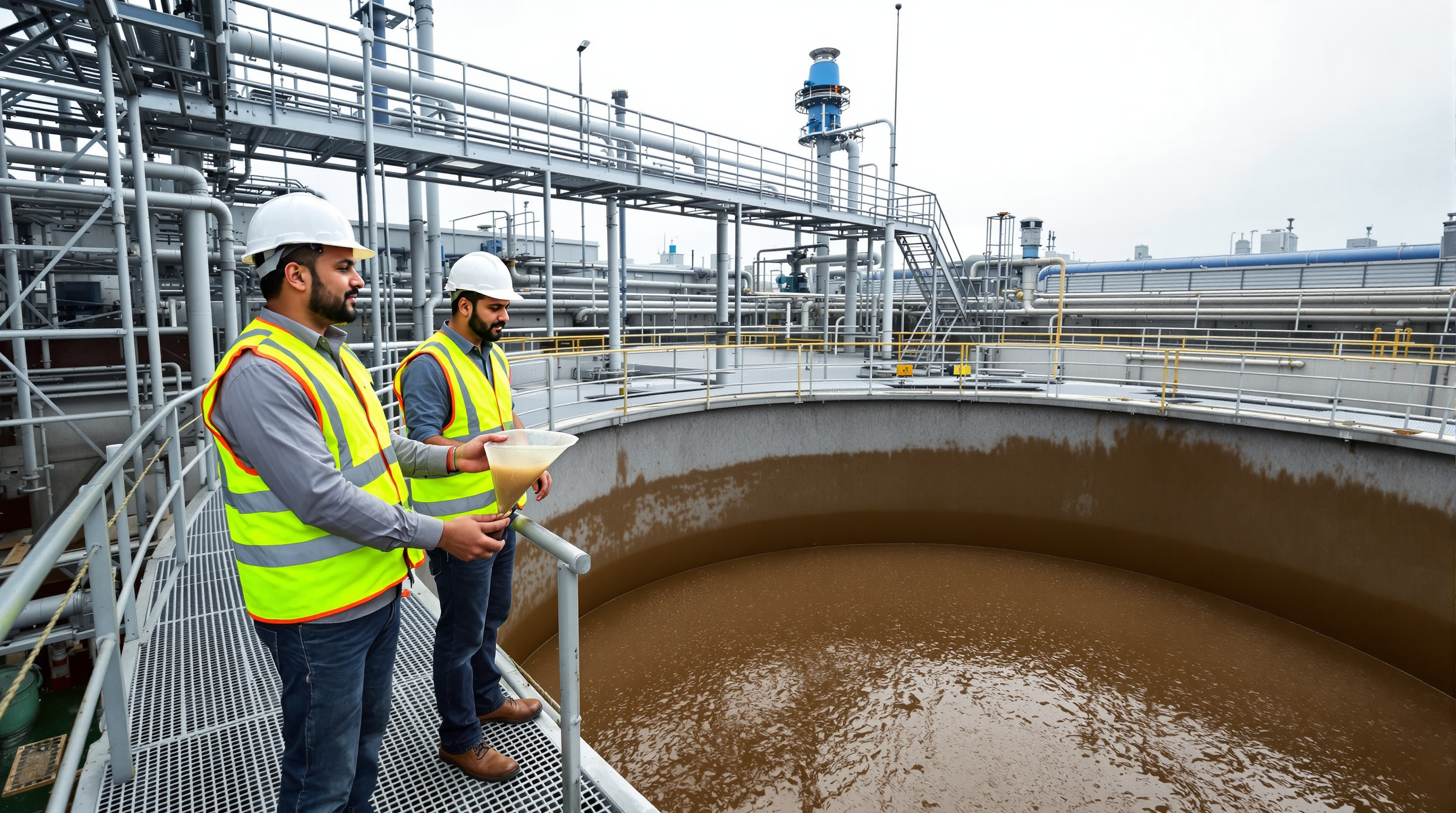
Settleability is checked with the humble settling-cone test: fill a one-litre cone with mixed liquor, wait 30 minutes, read how much settles. Good sludge forms a compact brown blanket and leaves clear liquid above. A sluggish blanket, or one that will not settle (bulking), warns you the culture is unbalanced — often from overfeeding — long before the effluent turns cloudy.
Step three: ramping the load
With a seed established and MLSS climbing, you begin increasing the sewage load in deliberate stages — never in one jump. A typical, patient ramp looks like this:
- Week 1 — 20–25% of design flow. Seed acclimatises; MLSS begins to build; watch for septicity and pH swings.
- Week 2 — up to ~50%. Only if MLSS is rising and settleability is good. Sludge blanket becomes visibly firmer.
- Week 3 — up to ~75%. BOD and TSS in the effluent start dropping meaningfully; DO demand rises with the biomass.
- Weeks 4–6 — approaching 100%. MLSS reaches target, the culture matures, and effluent begins consistently meeting norms.
Each step up is earned, not scheduled. If MLSS stalls, settleability worsens, or the effluent degrades, you hold — or step back — until the culture recovers. Rushing to hit an occupancy deadline is how plants get commissioned on paper and fail in practice. Weather matters too: cultures grow faster in warm conditions, so a winter startup is genuinely slower.
What "mature" looks like
The trial run is over — the plant is stabilised — when the numbers hold steady at full load for a sustained stretch, typically after four to eight weeks:
- MLSS sits in its target band and holds without wild swings.
- The sludge settles into a firm, dark, compact blanket with a clear supernatant.
- Effluent BOD, COD and TSS consistently meet CPCB discharge norms — BOD comfortably in single digits, TSS well within limits.
- DO holds in range at a stable, predictable airflow.
- The plant shrugs off the daily peak-flow surge instead of being knocked over by it.
Only now is it fair to run the formal performance test and move toward handover. A plant handed over before stabilisation is handing the association a science experiment, not a working asset.
The patience it demands
The hardest part of an STP trial run is not technical — it is temporal. Builders want the completion certificate; residents want to move in; nobody wants to hear that the tank of brown water needs another fortnight. But biology keeps its own schedule. You cannot pay the bacteria to breed faster, and no amount of pressure shortens the weeks the culture needs to reach full strength.
The engineers who commission plants well treat this phase as non-negotiable, log their four numbers every single day, and resist every temptation to jump the load. The reward is a plant whose treated water is genuinely reusable — for toilet flushing, landscape irrigation and more — from the day the residents arrive.
To see how the whole plant fits together before you commission it, start from the Sewage Treatment Plants guide library; and to check that your design capacity matches the load you are about to raise a culture for, spend a minute with the STP Capacity Calculator.
Export this guide
Related Guides — Deep-dive reading
STP Commissioning Procedure: A Step-by-Step Guide to Starting a Plant
How a finished sewage treatment plant is brought to life — from clean-water leak tests and equipment run-checks to seeding the biological culture and loading it gradually until the treated water meets norms.
Sewage Treatment PlantsAeration Tank: The Biological Heart of an STP
The tank where blowers push oxygen into billions of microbes that eat the sewage's organic load — how it works, what DO, MLSS, F/M and HRT mean, and why it quietly runs up the biggest electricity bill in the plant.
Sewage Treatment PlantsBiological Culture Management in an STP: The Heart of Good O&M
The microbes in your aeration tank do the actual work of cleaning sewage. Keep them healthy — the right MLSS, food, oxygen and nutrients — and everything else falls into place. Here is how operators manage the living culture, diagnose bulking and foaming, and recover after a crash.
Sewage Treatment PlantsRelated Tools — Try Free
Apartment STP Planner
Plan an apartment complex sewage treatment plant from flats and occupancy — get population load, sewage flow, recommended STP capacity in KLD, treatment technology and approximate space.
PlannerCCTV Commissioning & Handover Checklist
An interactive go/no-go checklist to run at handover — cameras day and night, recording, alerts, passwords and documents — before you clear the final bill.
Handover ChecklistSTP Compliance Checklist Tool
Interactive self-audit that ticks off STP consents, discharge norms, reuse metering, online monitoring and O&M records to give a live compliance readiness score.
Checklist