
Smart Toilet India: Electronic Bidet Seats, Washlets, Cost & The Point Beside the WC
A practical India-first guide to smart toilets and electronic bidet seats — warm-water wash, warm-air dryer, heated seat, auto lid, deodoriser and night light — plus the electrical point, water tapping and IP protection you must plan beside the WC, and how hard water and voltage swings decide whether yours lasts.
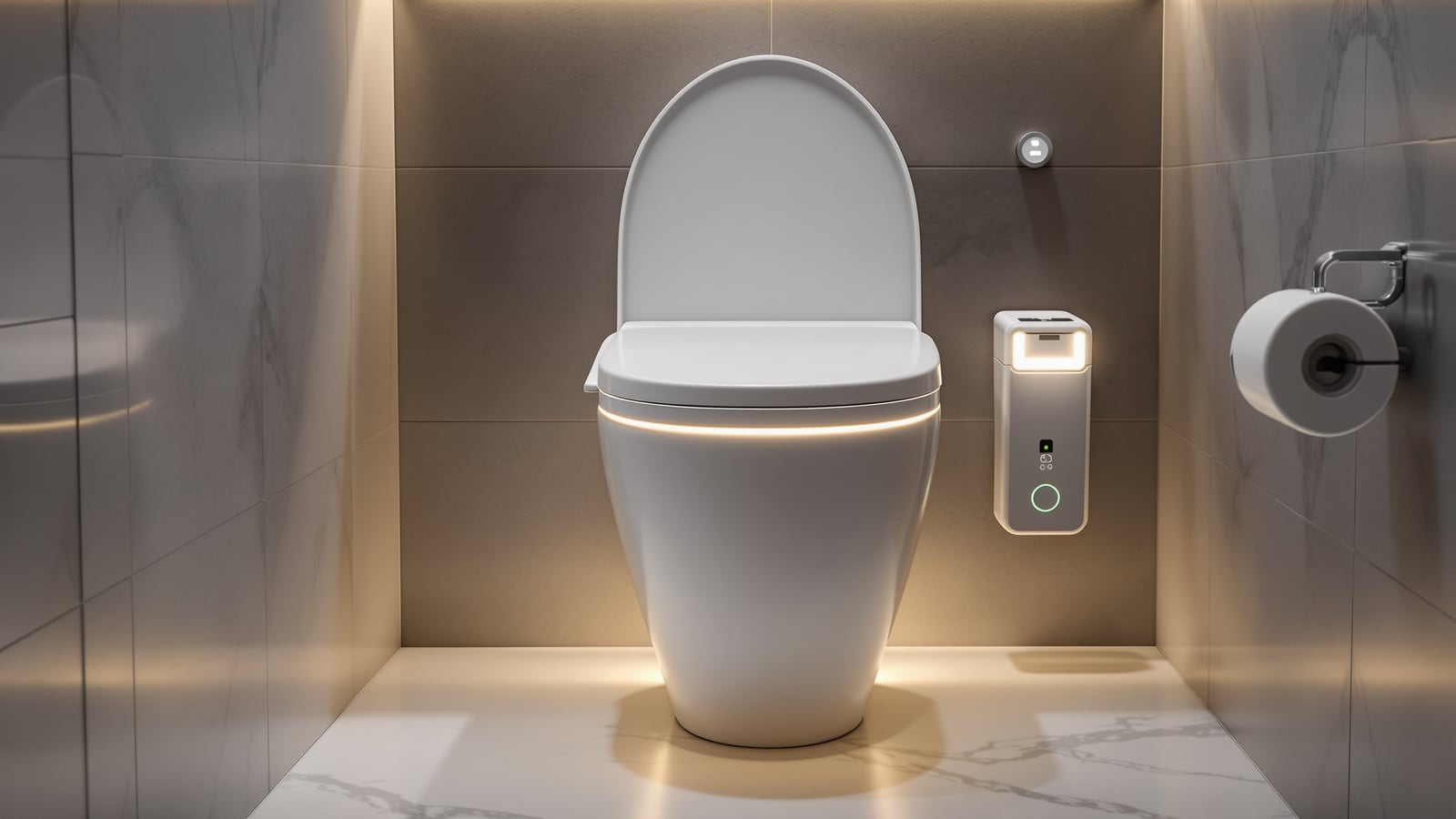
A smart toilet does quietly, at the touch of a button, what a health faucet does with a hose: it washes with water instead of paper. But it also warms the seat on a cold morning, dries you with warm air, closes its own lid, deodorises the bowl and lights a soft path at 3 a.m. For a growing number of Indian homes — premium apartments, villas, hotels and the parents' bathroom in a multi-generational house — the electronic bidet seat has moved from novelty to genuinely wanted comfort.
The catch is that a smart toilet is an electrical appliance sitting in the wettest, hardest-water, most voltage-unstable corner of an Indian home. Buy one without planning a power point, a water tapping and proper protection beside the WC, and you either cannot install it or you shorten its life to a couple of years. This component guide explains exactly what a smart toilet does, the two ways to get one (a retrofit seat versus a full smart WC), the services you must rough in beside the pan, and how to defend the electronics against hard water and India's power supply.
This sits inside the Studio Matrx bathroom hub. For the wider connected-home picture read the smart bathroom guide for India; for choosing the pan itself see the bathroom and toilet guide for India; and if you are weighing a seat against the humble spray, the bidet and health faucet guide is the honest companion to this page.
A smart toilet is a plumbing fixture and an electrical appliance at once. Decide the wash comfort you want first, then rough in the power point, water tapping and IP protection beside the WC before tiling — retrofitting services later is the expensive part, not the seat.
What a smart toilet actually does
Strip away the marketing and an integrated washlet — whether a full smart WC or a bidet seat clipped onto an ordinary pan — bundles a set of genuinely useful functions:
- Warm-water wash. A retractable nozzle delivers an adjustable, warm, aerated jet for rear and (on most units) front feminine washing. Pressure, temperature, nozzle position and oscillation are set from a side panel or remote. This is the core function; everything else is comfort around it.
- Warm-air dryer. After washing, a warm-air blower dries you, reducing or removing the need for paper. The weakest function on cheaper units — slow and gentle — but improving.
- Heated seat. A thermostatically warmed seat, a small daily luxury in a cold north-Indian or hill-station winter and pleasant everywhere in an air-conditioned bathroom.
- Automatic lid and seat. Proximity or motion sensors raise the lid as you approach and close it after — hygienic and hands-free. Better units close the seat and flush automatically.
- Deodoriser. A small fan draws bowl air through a carbon filter, cutting odour at source instead of masking it.
- Night light. A soft LED under the lid lights the bowl for night use without switching on the harsh main light.
- Self-cleaning nozzle and UV / electrolysed-water sanitising. The nozzle rinses itself before and after each use; premium units mist the bowl with electrolysed water to keep it clean between manual cleans.
The hygiene case is real: water-washing is gentler and cleaner than paper, the touch-free lid and self-rinsing nozzle reduce contact, and for elderly users or anyone with limited mobility, a warm-water wash and dryer restore dignity and independence. That last point is why smart seats appear so often in elderly-friendly bathrooms and premium master bathrooms.
Two ways to get one: retrofit seat vs full smart WC
You do not have to buy a ₹1.5-lakh integrated toilet to get warm-water washing. There are two routes, and for most Indian homes the retrofit seat is the smarter first step.
Retrofit electronic bidet seat. You remove your existing toilet seat and clip on an electronic one, connecting it to a nearby water line and a power point. It fits most standard Indian pans provided the bolt spread and bowl shape (elongated vs round) match — always check the fitment chart. Ideal for an existing bathroom, a rented flat where you may take it with you, or trying the concept before committing. This is where most Indian buyers should start.
Full integrated smart WC. A one-piece unit where pan, cistern (or concealed tank) and electronics are engineered together — cleaner lines, tankless direct-flush options, better dryers and the most complete feature set. It only makes sense at new-build or full-renovation stage, because you are replacing the pan and committing the services. This is the specification for a luxury bathroom or a signature hotel suite.
The point beside the WC — what you must rough in
This is the part almost every Indian buyer discovers too late. A smart toilet needs three things brought to within about 300-400 mm of the pan, and all three are far cheaper to place before tiling than to chase in afterwards.
| Service | Requirement | Notes for India |
|---|---|---|
| Power point | 5A / 16A socket, IP44+ rated, RCCB-protected | Mount 300 mm beside the WC, above splash height; dedicated point, not a shared extension |
| Water tapping | 15 mm cold-water angle valve / T-off | Tap off the existing flush supply; a bidet mixing valve gives warm feed if wanted |
| Earthing + RCCB | 30 mA earth-leakage protection per IS 732 | Non-negotiable — mains electricity in a wet zone |
| Clearance | ~50 mm behind pan for the flexible connections | Wall-hung pans need the point planned around the concealed frame |
- A concealed, IP-rated socket is the single most-missed item. NBC 2016 and IS 732 treat the area around the WC as a wet zone; the socket should be sealed, splash-protected (IP44 or better) and set above likely splash height, fed on a dedicated circuit with 30 mA RCCB / earth-leakage protection. A smart toilet on an unprotected socket beside a wet pan is a shock risk — do not compromise here.
- Water is tapped off the flush supply, usually with a small angle valve and a T-piece, so the seat draws clean cold water. Most units heat the water on demand internally, so a cold feed is enough; a few take a warm feed from a mixing valve.
- Plan for the wall-hung case. If the WC hangs on a concealed cistern frame, coordinate the socket and water point with the frame and the tile layout early, or you will be cutting finished tiles later.
Bring these to the wall at the same time you plan the wet and dry zones of the bathroom, and the smart toilet becomes a clean swap rather than a demolition job.
Hard water and voltage — the two things that kill smart toilets in India
An electronic bidet seat that lasts a decade in Tokyo can fail in two years in Chennai or Delhi. The reasons are entirely Indian, and both are manageable if you plan for them.
- Hard water scales everything. Most Indian municipal and borewell water is hard, and the fine nozzle, solenoid valve and on-demand heater of a bidet seat are exactly what calcium scale clogs. Symptoms are a weak or misdirected jet, a slow-to-warm heater, then failure. Defence: an inline sediment filter on the feed, ideally softened water in hard-water cities, and running the unit's self-descale cycle on schedule. Do not skip the maintenance — it is the difference between five years and two.
- Voltage swings fry boards. India's supply spikes, sags and surges — especially around load-shedding and generator changeovers — and the delicate control board is the casualty. Defence: feed the socket through a voltage stabiliser or at least a good surge protector, exactly as you would a fridge or TV. In areas with frequent outages this single ₹1,500-3,000 device pays for itself.
- Warranty and service. Buy a brand with a real Indian service network and spare parts. An imported grey-market seat with no local support is a gamble when the board or nozzle eventually needs attention.
What it costs in India
Prices span an enormous range because "smart toilet" covers everything from a basic warm-wash seat to a spa-grade integrated WC. Brands such as Jaquar, Hindware, Cera, Kohler, TOTO and Roca all offer options at different tiers — treat these as examples, not endorsements.
| Option | Typical ₹ range | Feature level |
|---|---|---|
| Non-electric bidet seat (cold water, no power) | ₹3,000-8,000 | Manual wash only; the gateway option |
| Entry electronic bidet seat | ₹12,000-30,000 | Warm wash, heated seat, basic dryer |
| Mid electronic bidet seat | ₹30,000-60,000 | Auto lid, deodoriser, night light, remote |
| Full integrated smart WC | ₹80,000-2,00,000 | Seamless unit, strong dryer, self-clean |
| Premium / luxury smart WC | ₹2,00,000-4,00,000+ | Tankless flush, UV sanitising, app control |
| Add-ons: point + water rough-in | ₹3,000-8,000 | Socket, angle valve, RCCB (do at build) |
| Add-ons: stabiliser + filter | ₹2,500-6,000 | Protects the electronics; strongly advised |
For most Indian homes the sweet spot is a mid electronic bidet seat on an existing good-quality pan, backed by the electrical point, a water filter and a stabiliser. That gives you nearly all the daily comfort of a ₹2-lakh integrated WC at a fraction of the cost and with an easy upgrade path.
Smart toilet vs the health faucet — an honest word
India already washes with water. The health-faucet jet spray beside every WC does the essential job for a few hundred rupees, and it never needs power, never scales shut and never fries a board. A smart toilet does not replace that logic — it adds warm water, hands-free operation, a dry finish and a heated seat on top of it, at a real cost in money and planning.
So specify a smart toilet where comfort, hygiene for elderly or less-mobile users, or a premium experience justify it — and keep a simple health faucet elsewhere in the house. Read the bidet and health faucet guide side by side with this page before you decide, and plan the whole thing as part of a coherent smart bathroom rather than a bolt-on gadget.
References
- NBC 2016 (National Building Code of India), Part 8 & Part 9 — building services, electrical installations and plumbing for wet areas.
- IS 732 — Code of practice for electrical wiring installations; earthing and 30 mA RCCB / earth-leakage protection in wet zones.
- IS 2556 — Sanitary appliances (vitreous china) specifications, relevant to the WC pan the seat mounts on.
- IS 1172 — Basic requirements for water supply, drainage and sanitation.
- CPHEEO Manual on Water Supply and Sanitation — Government of India guidance on domestic plumbing practice.
- BIS product certification — check for IS-marked electrical safety and IP ratings on any imported bidet seat.
Export this guide
Related Guides — Deep-dive reading
Smart Toilet vs Normal Toilet: Which Is Better for India? (2026)
An honest head-to-head between an electronic smart toilet / washlet and a conventional WC with a health faucet — hygiene and comfort, the power point and water tapping each needs, hard-water and voltage reliability, running cost, the huge price gap, repairs, and whether it is actually worth it in an Indian home.
BathroomsSmart Bathroom Mirror India: Touch Display, Voice, Defogger, Cost & Is It Worth It
A practical India-first guide to smart bathroom mirrors — the embedded touch display showing time, weather and news, the Bluetooth speaker, voice assistant, mood-lighting scenes and defogger — plus the power and optional data point behind the glass, the IP and electrical safety it demands, how hard water and monsoon humidity decide whether it lasts, and whether it is really worth the money over a good LED mirror.
BathroomsHow to Choose a Toilet in India: A Buyer's Guide to WCs, Traps, Flush & Budget (2026)
The make-or-break trap and rough-in check, floor-mounted vs wall-hung, one-piece vs two-piece, flush type and water use, seat and rimless upgrades, good/better/best rupee tiers, what's actually in the box, and how to spot a fake before you pay.
BathroomsRelated Tools — Try Free
Electrical Safety & Load Audit
Home electrical audit — 10 categories, 65+ checkpoints across earthing, RCCB, MCB, wiring, switchboards, appliance circuits, DG/inverter backup.
Safety AuditApartment vs Villa Interior Planning Guide
Compare ceiling height, structural flexibility, lighting, storage, and services between apartments and villas.
Planning GuideBathroom Renovation Cost Calculator
Cost to renovate an existing bathroom with a replace-vs-keep model — demolition, re-waterproofing, tiles, fittings and the money saved by keeping items.
Bathroom Calculator