
Health Faucet vs Bidet India: Jet Spray, Bidet Seats & Washlets (2026)
Why the health faucet dominates every Indian bathroom, how it compares with a standalone bidet fixture and an integrated bidet/washlet seat — water point, pressure, hygiene, installation and honest rupee costs.
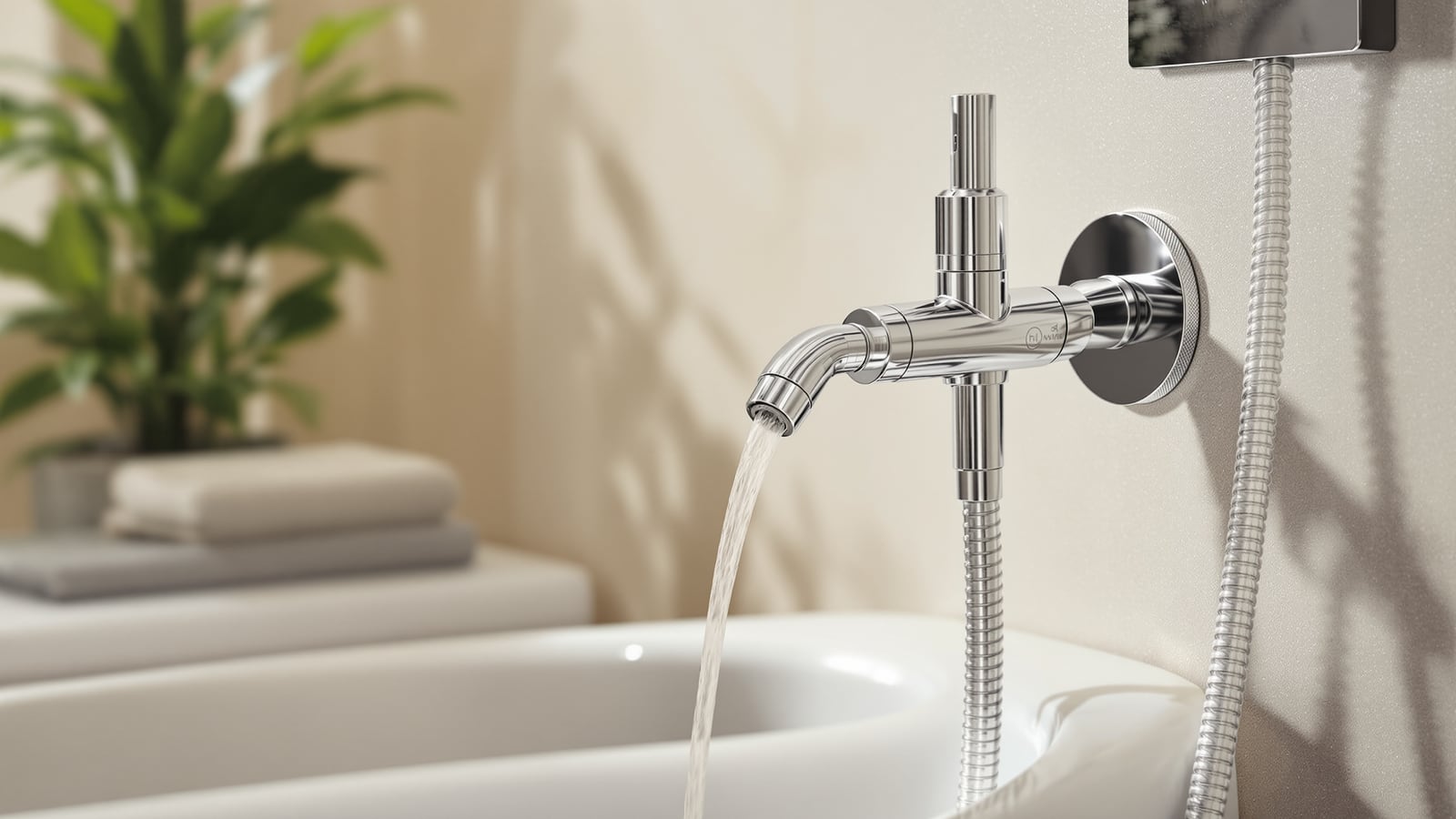
Walk into almost any Indian bathroom and you will find the same small chrome trigger-nozzle on a flexible hose hanging beside the WC. This is the health faucet — also sold as a jet spray, hand shower or bidet shower — and it is the single most-used cleaning fixture in the country. The freestanding bidet, that separate porcelain bowl common in French and Italian bathrooms, is almost unheard of in Indian homes. And a newer third option, the integrated bidet or washlet seat, is arriving in premium projects. This guide sorts out what each one is, why the health faucet won India so completely, and when spending more on a bidet seat is genuinely worth it.
It sits under the toilet pillar — read it alongside the bathroom and toilet guide for India for WC selection, the smart toilet guide for automatic washlets, and the elderly friendly bathroom guide, because for seniors and limited-mobility users the cleaning method is a real dignity and safety question, not a luxury.
In India the debate is not "bidet or no bidet" — water washing is already the norm. The real choice is which delivery device fits your plumbing, your pressure and your budget: the ubiquitous health faucet, a rare standalone bidet, or a bidet seat.
The three options, and what each actually is
- Health faucet / jet spray (bidet shower). A hand-held trigger nozzle on a 1–1.2 m flexible hose, fed from an angle valve tapped off the flush water supply. You aim and control it yourself. Cheap, universal, and the reason India never needed a separate bidet bowl.
- Standalone bidet fixture. A second floor-mounted ceramic bowl beside the WC, with its own hot/cold mixer and a dedicated drain. You straddle it after using the WC. Common in Europe, very rare in India — it needs floor space, a second waste connection and a habit Indians never formed because the health faucet does the same job at the WC itself.
- Integrated bidet / washlet seat. A replacement toilet seat (electric or non-electric) with a retractable wand that sprays warm or ambient water at the press of a button or turn of a dial. Electric versions add warm water, warm air drying, a heated seat and a remote — this is the "smart toilet" territory covered in the smart toilet guide.
Why the health faucet dominates Indian bathrooms
The health faucet is not a compromise — for Indian conditions it is arguably the best-fit device, and the numbers explain why it is on virtually every WC.
- It matches an existing habit. Water washing is the cultural default. The health faucet delivers it with user control and no second fixture — so it slotted in without changing behaviour or floor plans.
- It is astonishingly cheap. A decent branded unit with hose and angle valve is a few hundred to a couple of thousand rupees, versus tens of thousands for a bidet seat or a standalone bidet with its own drain.
- It needs no electricity. With frequent load-shedding and no earth-leakage worries, a purely mechanical spray is more reliable than any electric washlet.
- It taps the existing flush line. No new drain, no new bowl, no extra floor area — critical in tight Indian bathrooms and apartment layouts.
- It doubles as a cleaning tool. People use it to rinse the WC, the floor and the child's potty. That utility cemented it further.
The trade-offs are real but tolerable: the user controls aim and pressure (a learning curve for guests), water can splash, the hose and trigger are wear parts, and a leaking angle valve or perished washer is a common low-grade nuisance. None of this outweighs the cost and simplicity, which is why the standalone bidet never gained a foothold — it solves a problem the health faucet already solved, while demanding space, a second drain and a habit shift.
Installation, water point and pressure
All three options live or die on the water connection. The health faucet is deliberately simple; the bidet seat needs a little more thought.
- Health faucet. A dual-outlet or separate angle valve (also called a two-way/three-way angle cock) is tapped into the 15 mm CPVC/PEX cold line that feeds the flush tank or cistern. The hose screws to the valve, the nozzle clips to a wall hook. That is the whole job — a plumber does it in under an hour.
- Standalone bidet. Needs hot and cold supply, a wall or deck mixer, and its own 32–40 mm waste into the drainage stack — effectively a second basin's worth of plumbing per IS 2556 sanitaryware fitting practice. This is why it is only ever planned at construction stage, and rarely at all in India.
- Bidet / washlet seat. A T-valve splits the cold line to feed the seat. Non-electric seats need nothing more. Electric washlets also need a nearby 6/16 A socket on an earthed, RCBO-protected circuit (see smart toilet guide) — plan the point during construction, because retrofitting a safe wet-area socket behind the WC is ugly and often non-compliant.
Pressure matters. A gravity overhead tank on a low floor may give weak spray; most Indian homes are fine, but a booster or a properly sized supply helps. Non-electric bidet seats simply pass through mains pressure, so they feel strong only if your line does. Electric washlets have an internal pump and give a consistent, adjustable stream regardless — one reason to pay for electric where pressure is unreliable.
Hygiene, and when a bidet seat is worth it
On hygiene, water washing of any kind beats dry paper, and all three devices clean well. The differences are in comfort and control:
- Warm water and drying (electric washlets) matter most in cold-climate homes and North Indian winters, and for anyone who finds cold spray unpleasant.
- Adjustable, aimed nozzle on a washlet gives a repeatable position — genuinely useful for elderly, post-surgery, pregnant, arthritic or limited-mobility users who struggle to twist and hold a health-faucet trigger. This is the strongest case for spending on a bidet seat, and it ties directly to the elderly friendly bathroom guide.
- Self-cleaning nozzle and antibacterial surfaces on good seats reduce the maintenance grime that collects on a hose trigger.
- Hard water is the enemy of every nozzle. Scale blocks fine spray holes; a health faucet is trivial to descale or replace, a washlet wand needs its built-in descale cycle run, and a standalone bidet's aerator needs periodic soaking. Factor Indian hard water into whatever you choose.
A bidet seat is worth it when: you want warm water and drying, someone in the household has limited mobility, or you are already buying a premium WC and the incremental cost is small. Stick with the health faucet when: budget is tight, power is unreliable, or the bathroom is a guest/second toilet where simplicity wins. A non-electric bidet seat is a sensible middle path — no socket, adjustable aimed spray, low cost.
| Option | Water point | Power | Warm water | Best for | Typical cost (2026) |
|---|---|---|---|---|---|
| Health faucet / jet spray | Angle valve off flush line | None | No | Every bathroom, budget, guest WC | ₹350–₹3,000 |
| Standalone bidet bowl | Own hot/cold + 32–40 mm drain | None | Via mixer | Very rare in India; European-style baths | ₹8,000–₹40,000 + plumbing |
| Non-electric bidet seat | T-valve off flush line | None | No | Aimed spray without a socket | ₹2,000–₹8,000 |
| Electric bidet / washlet seat | T-valve + earthed RCBO socket | Yes | Yes | Comfort, elderly, cold climate | ₹12,000–₹60,000+ |
| Integrated smart WC | T-valve + earthed socket | Yes | Yes | Premium new build | ₹45,000–₹3,00,000+ |
A quick buying checklist
- For most homes, a good health faucet plus a quality two-way angle valve is all you need — spend on the valve and hose, they are what fail.
- Choose brass or good-grade nozzle internals over the cheapest plastic; hard water kills flimsy sprays fast.
- Add a stop/isolation feature so you can service the hose without shutting the whole bathroom.
- Considering a bidet seat? Decide electric vs non-electric first, then plan the socket and T-valve at construction — retrofitting a wet-area socket is the hard part.
- Skip the standalone bidet unless you specifically want the European fixture and have the floor space and drain for it.
References
- National Building Code of India (NBC 2016) — Part 9 Plumbing Services: water supply, angle valves and drainage connections for sanitary fixtures.
- IS 2556 — Ceramic/vitreous sanitary appliances specification (WCs, bidets and fittings).
- IS 1172 — Code of basic requirements for water supply, drainage and sanitation (fixture water demand and waste).
- IS 732 — Code of practice for electrical wiring installations, relevant to earthed, RCBO-protected sockets for electric washlets in wet areas.
- CPHEEO Manual on Water Supply and Sanitation (Ministry of Housing and Urban Affairs) — plumbing and sanitation practice references.
- BIS — Bureau of Indian Standards, for current sanitaryware and plumbing standard numbers and revisions.
Export this guide
Related Guides — Deep-dive reading
Smart Toilet India: Electronic Bidet Seats, Washlets, Cost & The Point Beside the WC
A practical India-first guide to smart toilets and electronic bidet seats — warm-water wash, warm-air dryer, heated seat, auto lid, deodoriser and night light — plus the electrical point, water tapping and IP protection you must plan beside the WC, and how hard water and voltage swings decide whether yours lasts.
BathroomsBathroom Water Supply India: Cold & Hot Feed, Pipe Sizing, Pressure & Booster Pumps (2026)
How water actually reaches your fixtures in an Indian home — gravity-fed cold from the overhead tank, hot from the geyser, the pipe sizes that decide whether your shower gushes or dribbles, isolation valves at every fixture, booster pumps and hard-water protection, all mapped to IS 1172.
BathroomsBasin Mixer Tap India: Single-Lever Buying Guide, Spout Height, Cartridge & Cost (2026)
How a single-lever basin mixer blends hot and cold on one control — what supplies it needs, the spout height that matches your basin, the ceramic cartridge that decides its life, pop-up waste, tall vessel mixers, finishes, flow rate, and rupee tiers versus separate pillar taps.
BathroomsRelated Tools — Try Free
Child & Elder Home-Safety Audit
Room-by-room safety audit for households with children or seniors — 10 categories, 70+ checkpoints tagged by audience.
Safety AuditPlumbing Pressure-Test & Leak Checklist
Pre-closure pressure and leak test — 9 categories, 60+ checkpoints across water supply, drainage, fixtures, waterproofing, hot water, tanks.
Pre-Closure TestElectrical Safety & Load Audit
Home electrical audit — 10 categories, 65+ checkpoints across earthing, RCCB, MCB, wiring, switchboards, appliance circuits, DG/inverter backup.
Safety Audit