
PVC Doors in India: The Cheapest Waterproof Bathroom & Utility Door (2026)
Why lightweight hollow and foam-core PVC plastic doors are the budget waterproof choice for bathrooms, toilets and utility areas — and exactly where they fail (and how they differ from uPVC).
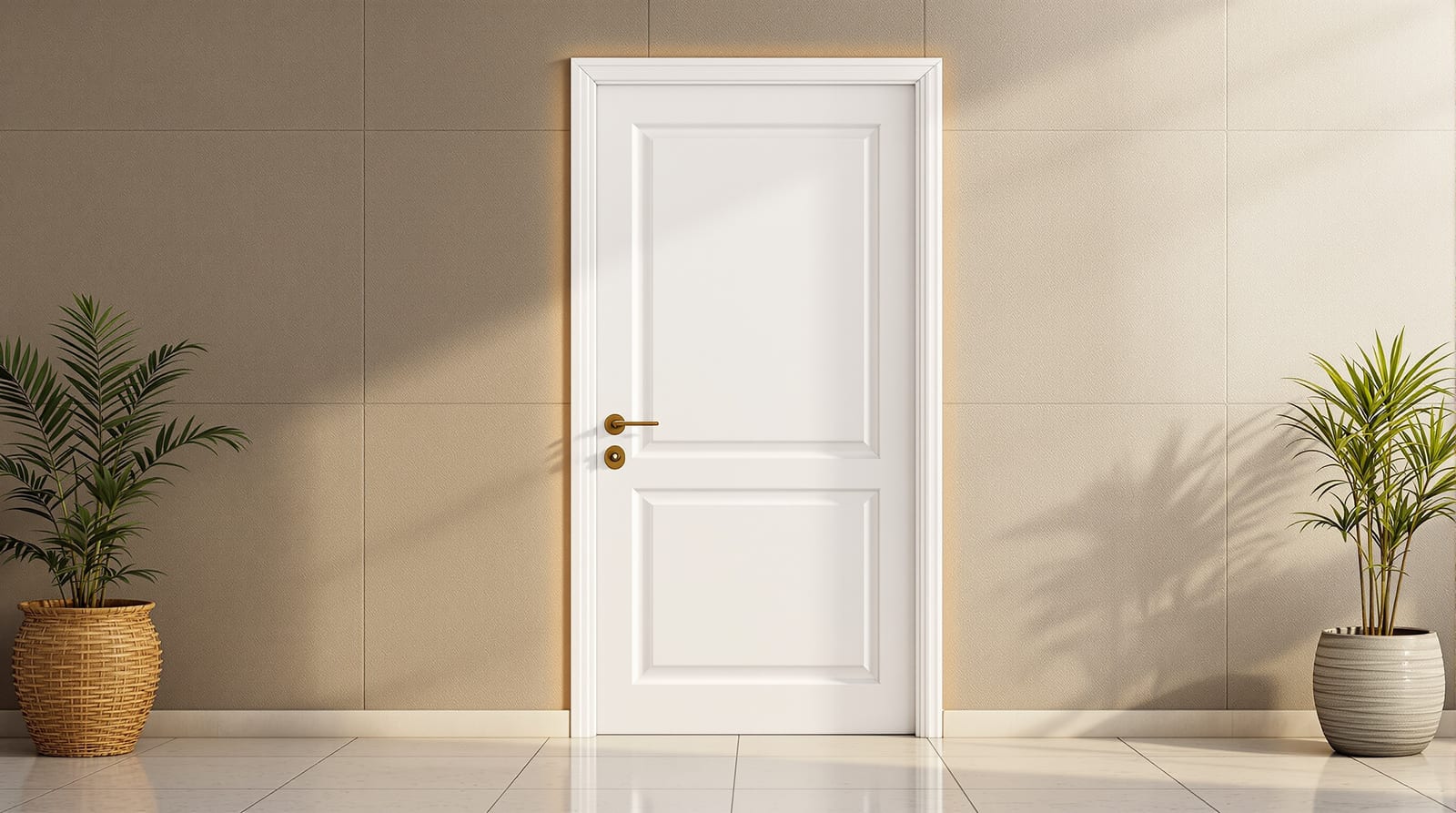
A PVC door is the cheapest fully waterproof door you can hang in an Indian home — a lightweight plastic leaf, often hollow, that simply does not care about splashing water, steam or termites. For a bathroom, a toilet or a utility-area opening on a tight budget, that is a genuinely sensible buy: it will outlast a swollen plywood flush door for a fraction of the money. But "cheap and waterproof" is the whole story. A PVC door is flimsy, warps in direct heat and sun, offers almost no security and looks plasticky up close, so it belongs only in wet, low-traffic, low-stakes openings. Get that placement right and a ₹1,200–3,500 PVC door is excellent value; get it wrong by hanging one as a main or external door and you will regret it within a season.
PVC is not uPVC — clear this up first
This is the single most important thing to understand before you shop, because shopkeepers blur the two constantly.
- A PVC door is a lightweight, usually hollow (sometimes foam-filled) plastic door leaf made of thin extruded or moulded PVC sheets. It is a budget product aimed at bathrooms, toilets and utility areas. It is light enough to lift with one finger.
- A uPVC door is a completely different, premium product: rigid un-plasticised PVC profiles welded into a framed, often steel-reinforced, multi-chamber system, used for external doors, balcony doors and windows. It is heavy, structural and weather-rated.
Same three letters of chemistry, totally different doors. Think of plain PVC as the plastic of a cheap pipe or a flexible sheet, and uPVC as the plastic of a structural window frame. If a quote says "PVC door" at ₹1,500 it is the lightweight bathroom kind; if it says "uPVC door" at ₹400–700 per square foot of opening it is the framed external system. For that heavier system, read uPVC doors in India; the rest of this guide is about the lightweight bathroom-grade PVC door. The full plastic-and-composite map sits in our door materials comparison.
How a PVC door is built
Almost all PVC bathroom doors fall into two construction types, and the difference matters for how long they last and how solid they feel.
- Hollow PVC door: two thin PVC face sheets bonded to an internal lattice of plastic ribs or a honeycomb, with air in between. This is the cheapest version. It is feather-light, perfectly waterproof, but easy to flex, dent or punch through, and it sounds hollow when you knock it.
- Foam-core / solid PVC door: the cavity is filled with rigid PVC foam (or the leaf is moulded as a denser solid sheet). This is noticeably heavier and stiffer, resists denting and warping better, and feels closer to a real door. It costs a little more and is the version worth paying for if you can.
Most leaves are about 24–30 mm thick and hung in a matching PVC frame (chowkat) rather than a timber one — the frame is part of the appeal, because a wooden frame in a wet bathroom is itself prone to rot and termites. Hardware is minimal: a light tower bolt or a basic cylindrical latch, plastic or zinc handles, and ordinary butt hinges screwed into the frame. The screws bite into thin plastic, which is exactly why these doors should never carry heavy hardware or a serious lock.
The real strengths: waterproof, termite-proof, cheap
Within its niche, a PVC door does three things better than almost anything at the price.
- Completely waterproof: PVC does not absorb water, so the leaf cannot swell, rot, delaminate or grow that black fungal line along the bottom edge the way a plywood or low-grade flush door does in a splash-zone bathroom. You can sluice it down when you wash the floor.
- Termite-proof and rot-proof: there is no organic material for termites or fungus to eat — a real advantage in humid coastal and monsoon-heavy regions where wooden bathroom doors fail fastest.
- Cheapest waterproof option: at roughly ₹1,200–3,500 for a standard bathroom leaf (frame sometimes extra), it is the lowest-cost way to get a genuinely water-immune door. A WPC or FRP door does the same job more solidly but costs more; see the comparison below.
- Zero maintenance: no polishing, no varnishing, no annual planing of a swollen edge. Wipe it clean. It comes pre-coloured (white, woodgrain print, pastels) so there is nothing to paint.
- Light and easy to fit: any carpenter can hang one in an hour with basic tools, and the matching PVC frame avoids putting timber into a wet wall.
The real weaknesses: flimsy, heat-sensitive, insecure
The same lightness that makes a PVC door cheap and waterproof also makes it a poor choice almost everywhere except wet interior openings.
- Flimsy and easily damaged: a hollow PVC leaf flexes under a firm push and can be dented, cracked or even kicked through. It is not a barrier so much as a privacy screen that keeps water out.
- Warps in heat and direct sun: PVC softens and bows when it gets hot. A PVC door in afternoon sun — on a terrace, a balcony or any west-facing external opening — will warp, twist and discolour within a season or two. This alone disqualifies it from external use.
- Low security: the thin skins hold screws poorly, so a real lock has little to bite into and the leaf itself can be forced. Never use a PVC door where security matters — a main door, a flat entrance or a store room with valuables.
- Looks cheap up close: the printed woodgrain and plastic surface read as exactly what they are. Fine for a toilet; out of place as the door a guest sees on arrival.
- Hardware limits: it will not hold a heavy handle set, a closer or a multipoint lock. Keep hardware light.
- Sags over time: cheaper hollow leaves can develop a slight droop on the latch side as the hinges work loose in the thin frame.
PVC vs WPC vs FRP for wet areas
For bathrooms, toilets and utility doors you have three waterproof contenders. PVC is the cheapest and lightest; WPC feels most like a normal door; FRP is the toughest. Pick by budget and how much abuse the door will take.
| Feature | PVC (hollow / foam-core) | WPC (wood-plastic composite) | FRP (fibreglass) |
|---|---|---|---|
| Waterproof | Yes — fully | Yes — fully | Yes — fully |
| Termite / rot proof | Yes | Yes | Yes |
| Weight & feel | Very light, hollow, flimsy | Medium — feels like a real flush door | Light–medium, rigid shell |
| Strength / impact | Low — dents, flexes, cracks | Good — solid, screws hold | Good — rigid, tough skin |
| Security (lock holding) | Poor | Fair–good | Fair |
| Heat / sun tolerance | Poor — warps in sun | Fair (still keep indoors) | Good — handles outdoors better |
| Looks | Plasticky | Convincing wood-like flush look | Moulded, functional |
| Indicative cost (leaf) | ₹1,200–3,500 | ₹2,000–4,500 (≈ ₹75–150/sq ft) | ₹1,500–4,000+ |
| Best for | Toilet, bathroom, light utility on a tight budget | Bathroom, kitchen, all internal wet/dry — best all-rounder | Wet, corrosive or slightly tougher-use back/utility doors |
The takeaway: choose PVC when the budget is tight and the door is a low-traffic wet opening; step up to WPC when you want a waterproof door that still feels and behaves like a proper flush door (it is the best all-round bathroom door for most homes); and choose FRP when the door needs to be a bit tougher or sits somewhere corrosive. Full prices for every type are in the door cost guide, and you can model a set with the door cost calculator.
Sizes, cost and lifespan in India
Standard sizes. PVC doors are made to ordinary Indian door dimensions, so they drop straight into existing openings:
| Opening | Typical leaf size | Notes |
|---|---|---|
| Bathroom / WC | 700–750 mm × 2000–2100 mm (≈ 2'3"–2'6" × 7') | The most common PVC door size |
| Utility / store | 750–800 mm × 2100 mm | Light-duty only |
| Standard height | 2100 mm (7') | Frame adds ~50–75 mm |
Anything wider or external is outside what a lightweight PVC leaf can sensibly carry. For the full picture of standard openings, see door size standards in India.
Cost (indicative, varies by city and vendor). A standard PVC bathroom leaf runs roughly ₹1,200–3,500, with hollow leaves at the low end and heavier foam-core/solid PVC leaves higher. A matching PVC frame (chowkat) is sometimes bundled and sometimes adds ₹1,000–2,500. Fitting labour is minimal at around ₹500–1,200, and hardware (a light latch or tower bolt and handle) is a few hundred rupees. Add 18% GST on materials. That makes a complete fitted PVC bathroom door achievable for well under ₹5,000 — the reason it dominates budget and rental projects.
Lifespan. Used correctly — indoors, in a bathroom or toilet away from direct sun — a decent foam-core PVC door lasts comfortably, with the latch and hinges (not the waterproof leaf) usually being the first to need attention. A cheap hollow leaf may start to sag or crack sooner with rough use. Used wrongly, in sun or as an external door, it can warp within a single hot season.
Where to use PVC — and where never to
Use a PVC door for: bathrooms, toilets, washrooms, light utility and wash areas, servant-toilet doors, and budget or rental fit-outs where you want a cheap, waterproof, termite-proof door and security and looks are not priorities. It is the default budget bathroom door across India for exactly these reasons.
Do not use a PVC door for: the main door or any flat/house entrance (no security, looks cheap); any external, terrace, balcony or sun-facing door (it will warp and fade); bedroom doors where you want a solid, quality feel — choose a flush or WPC door instead; store rooms with valuables (too easy to force); and any door that must take a closer, a heavy lock or a security upgrade. For a dedicated treatment of the wet-room opening, see our bathroom door guide and the utility door guide.
A practical rule: if water is the enemy and money is tight, PVC wins; if security, looks or sun exposure enter the picture, walk it up to WPC, FRP or a proper framed system. For the whole house seen as one system, start from the complete guide to home doors in India, and compare materials side by side with the door material comparison tool.
Frequently asked questions
What is the difference between a PVC door and a uPVC door?
They are different products. A PVC door is a lightweight, usually hollow plastic leaf for bathrooms, toilets and utility areas — cheap and waterproof but flimsy. A uPVC door is a rigid, often steel-reinforced framed PVC profile system used for external doors and windows — heavy, structural and weather-rated. Always confirm which one a quote means.
Is a PVC door good for a bathroom?
Yes — it is one of the most popular bathroom doors in India because it is completely waterproof, termite-proof and the cheapest option. A foam-core (solid) PVC door is worth the small premium over a hollow one for durability. For a more solid, longer-lasting bathroom door, a WPC door is the better all-rounder if your budget allows.
How much does a PVC door cost in India?
Indicatively ₹1,200–3,500 for a standard bathroom leaf, with hollow leaves cheaper and foam-core/solid leaves dearer. A matching PVC frame may add ₹1,000–2,500, plus fitting of ₹500–1,200 and 18% GST. Prices vary by city and vendor, so get a written quote that states hollow versus foam-core.
Can I use a PVC door as a main door or external door?
No. PVC doors are flimsy, offer almost no security and warp and fade in heat and direct sun, so they are unsuitable for main doors, flat entrances or any external, balcony or terrace opening. Use a solid wood, steel, composite or uPVC framed door there instead.
How long does a PVC door last?
Used indoors in a bathroom or toilet, a decent foam-core PVC door lasts well, with the latch and hinges usually needing attention before the waterproof leaf does. A cheap hollow leaf can sag or crack sooner with rough handling, and any PVC door used in sun or outdoors can warp within a single hot season.
Export this guide
Related Guides — Deep-dive reading
The Complete Home Door Guide for Indian Homes (2026): Types, Materials, Cost, Security & Vastu
Everything an Indian homeowner needs to specify the right door for every opening — from main entrance to bathroom — with real 2026 prices, IS/NBC standards and Vastu sense.
Home Doors & EntrancesGuest Room Door in India: Privacy, Quiet and Smart Picks Without Overspending (2026)
How to choose a guest bedroom door for an Indian home - privacy and acoustics so visitors feel comfortable, but budget-sensible for a room used only now and then: solid-core flush for quiet, panel or laminate for looks, the right privacy lock, simple soundproofing, and a finish that matches the rest of your doors - with picks ranked and indicative rupee costs.
Home Doors & EntrancesBest Door Material in India (2026): The Right Choice for Every Room & Climate
A situation-by-situation verdict on the best door material for Indian homes - teak or steel for the main entrance, WPC or uPVC for bathrooms and coasts, engineered flush for bedrooms - with a by-location decision table and budget-vs-premium picks.
Home Doors & EntrancesRelated Tools — Try Free
Door Cost Calculator
Estimate the all-in cost of a door — leaf, frame, hardware, fitting and GST — by type, material and size.
Door CalculatorDoor Material Comparison Tool
Compare 2–4 door materials on cost, durability, maintenance, security and moisture resistance.
Comparison ToolWindow Hardware Cost Calculator
Estimate window hardware cost — hinges, handles, locks, rollers and multipoint gears.
Window Calculator